Feminism: core ideas and principles (OCR A-Level Politics): Revision Notes
📚 Revision Notes
14.1.6 Intersectionality
Key Definition
infoNote
Intersectionality: argues that black and working-class women's experiences of patriarchy in state, society, and the economy are different from those of white, middle-class women. It highlights the impact of this newer strand of feminism on wider feminist thinking.
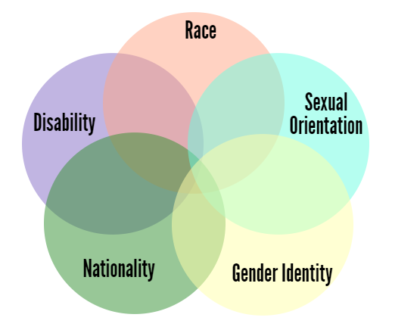
intersectionality diagram
Feminism Occurred in Waves
- 1st Wave (1850s - 1940s): Focused on voting rights.
- 2nd Wave (1960s - 1980s): Recognised that the removal of legal and political inequalities had not eliminated other forms of injustice.
- 3rd Wave: Acknowledged that traditional feminism had primarily focused on white women.
- 4th Wave: Argued to have emerged in media portrayals.
infoNote
Overview
Intersectionality is a framework used within feminist theory to understand how various forms of social inequality—such as race, class, gender, sexuality, and disability—intersect and create unique experiences of oppression and privilege. The concept emphasises that different aspects of a person's identity cannot be examined in isolation, as they interact to shape their overall experience of power and marginalisation.