Hardware (Grade 10 NSC Matric Computer Application Technology): Revision Notes
📚Revision Notes
Green Computing
What is green computing?
Green computing focuses on using technology in ways that protect our environment and conserve resources. This approach aims to minimise the harmful effects that computers and technology can have on our planet whilst maximising their efficiency.
Note
Core Principle of Green Computing
Green computing works by making computers more efficient and ensuring they're built using environmentally safe materials. This helps reduce the overall environmental impact of our digital world.
The main goals of green computing include:
- Reducing the use of dangerous materials in computer manufacturing
- Making computers and software more energy-efficient
- Encouraging proper recycling of old computers and electronic equipment
- Using materials that break down naturally when disposed of
Examples of green computing practices
There are many practical ways that green computing principles are already being implemented across the technology industry.
Example
Practical Green Computing Implementation
Power management features: Computers can automatically enter "sleep" mode when they haven't been used for a while. This significantly reduces electricity consumption during inactive periods.
Storage improvements: Solid State Drives (SSDs) consume much less electricity compared to traditional hard disc drives, whilst also providing faster access to stored information.
Better processor design: Modern CPU designs are engineered to require less electrical power whilst still delivering excellent performance for computing tasks.
Efficient software: Well-designed programmes use less processing power and storage space, which in turn requires less electricity to run.
Smart resource management: In large data centres, unnecessary computers can be automatically switched off when they're not needed, saving substantial amounts of electricity.
Note
These improvements have already made a significant difference in reducing the energy consumption of computers worldwide, demonstrating that green computing practices deliver real environmental benefits.
Going green when printing
Printing has a considerable negative impact on the environment, and it's important to understand how we can minimise this effect.
The environmental cost of printing: Much of the paper used for printing gets wasted - most printed documents are simply discarded after a single use. This creates unnecessary demand for paper production and increases waste.
Important
Critical Environmental Impact
Never throw printer cartridges into regular rubbish bins, as this can cause serious environmental damage. Instead, look for special disposal points that have designated collection bins for different types of waste materials.
Practical printing solutions:
- Only print documents when absolutely necessary
- Send and store documents electronically (such as through email) instead of printing
- Use double-sided printing to reduce paper consumption by half
- Recycle used paper appropriately
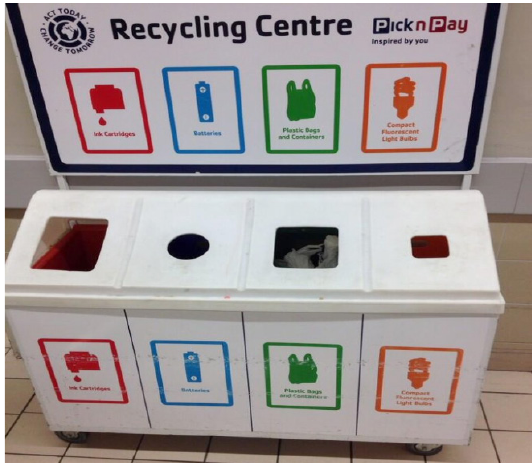
Many supermarkets and shopping centres now provide recycling stations like the one shown above, where you can properly dispose of different types of waste including printer cartridges and other electronic components.
Benefits of green computing
The positive changes brought about by green computing practices have already created measurable improvements in how much energy computers use. As more people and organisations adopt these practices, the environmental benefits continue to grow.
Green computing isn't just good for the environment - it often saves money too. Using less electricity, printing less paper, and making computers last longer all reduce costs whilst helping protect our planet.
Note
Long-term Impact
When millions of people adopt green computing practices, the individual small changes accumulate into significant environmental benefits that make a real difference to our planet's health.
Summary
Key Points to Remember:
- Green computing aims to reduce environmental impact by making computers more efficient and using eco-friendly materials
- Simple power-saving features like sleep mode and efficient processors can dramatically reduce electricity use
- Think before you print - consider whether documents really need to be on paper or can be shared electronically
- Proper recycling is essential- never throw printer cartridges and electronic waste in regular bins
- Small changes make a big difference - when millions of people adopt green computing practices, the environmental benefits add up significantly