World Population Growth (Grade 10 NSC Matric Geography): Revision Notes
📚Revision Notes
World Population Growth
Understanding world population growth
The study of human populations and how they change over time is crucial for understanding our planet's future. A demographer is a person who studies populations, helping us understand patterns of growth, decline, and distribution across the globe.
World population growth affects the demand for resources - both natural and human resources. Planners need to understand whether populations are growing, how quickly this is happening, and how rapidly people's needs for resources are increasing. This knowledge helps governments and organisations manage growth effectively when necessary.
Note
Understanding population trends is essential for resource planning, environmental management, and sustainable development. The data collected by demographers helps predict future needs and challenges facing our planet.
Historical patterns of world population growth
For most of human history, the world's population remained remarkably small and stable. From the beginning of recorded time (AD) until around 1700, population numbers stayed close to zero on a global scale, showing only minimal growth over many centuries.
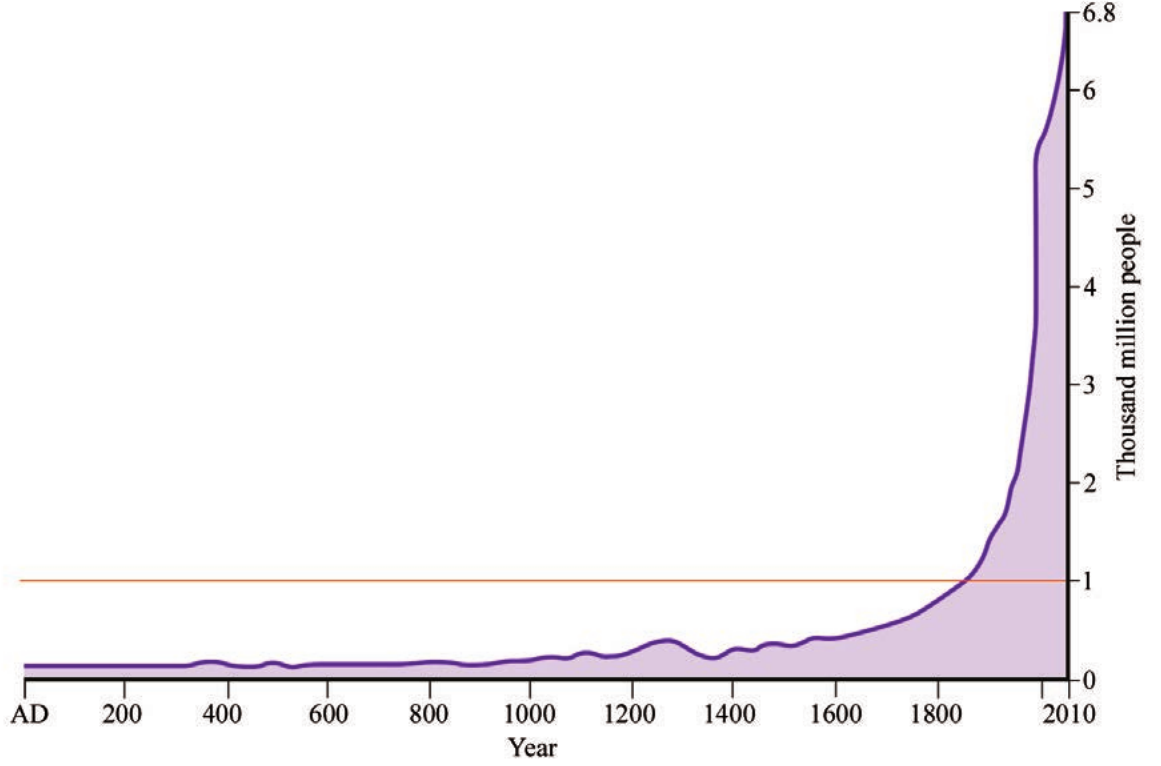
The pattern of population growth throughout history can be understood through several distinct phases:
| Time Period | Population Growth Pattern |
|---|---|
| Until 1800 | Population remained small and about the same size for a long time |
| From 1800 to about 1900 | Population began to increase more rapidly |
| From 1900 to 1960 | Population began to grow even more rapidly |
| From 1960 onwards | Population began to increase slowly (relative to previous growth) |
Important
The most dramatic change occurred around 1800, when population growth began to accelerate. This acceleration became even more pronounced after 1900, creating an almost vertical rise on population graphs - representing a complete shift from thousands of years of stable population to exponential growth.
The population explosion
One of the most significant demographic events in human history has been the population explosion - the rapid increase in world population that began in the mid-twentieth century. This term describes the extraordinary growth that has occurred since around 1960.
Between 1960 and 2010, the world population grew from 3 billion people to 6.8 billion people. This means that in just 50 years, there was more population growth than had occurred in the previous 2 million years of human existence. This dramatic increase represents a new person being added to the global population approximately every 13 years during this period.
Example
Population Growth Comparison:
Previous 2 million years of human history: Population grew from near zero to 3 billion
Just 50 years (1960-2010): Population grew from 3 billion to 6.8 billion
This shows that recent population growth has been 80,000 times faster than historical averages!
The population explosion demonstrates how recent demographic changes have been unprecedented in human history, with the most significant growth occurring within living memory.
Regional differences in population growth
While the overall global pattern shows exponential growth, not all regions of the world have contributed equally to this increase. The growth patterns differ significantly between more developed countries and less developed countries.
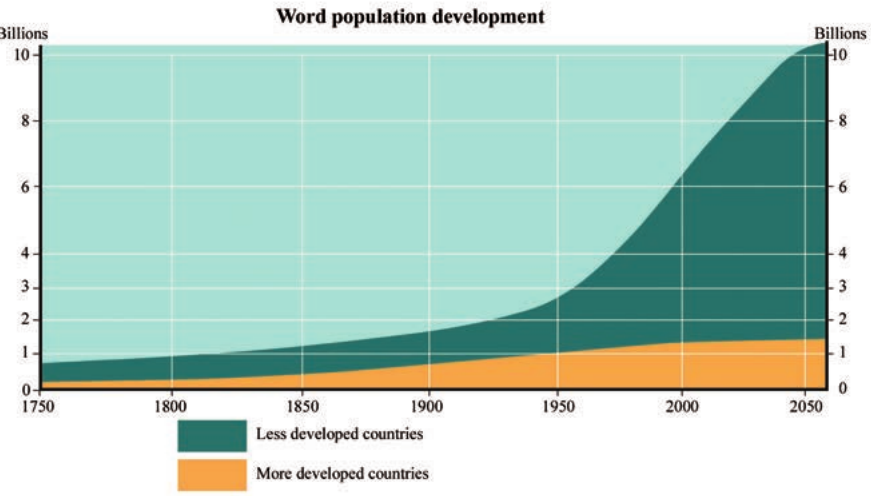
More developed countries have relatively stable population sizes and contribute only a small portion to global population growth. In contrast, less developed countries are experiencing much more rapid population growth and account for the vast majority of new people being added to the global population.
Note
This difference in growth rates means that less developed countries are becoming an increasingly dominant portion of the world's total population, while more developed countries represent a shrinking percentage of the global total. This has significant implications for resource distribution and global development challenges.
Changing global population distribution
The regional distribution of world population has shifted dramatically over recent decades and is projected to continue changing in the coming years.
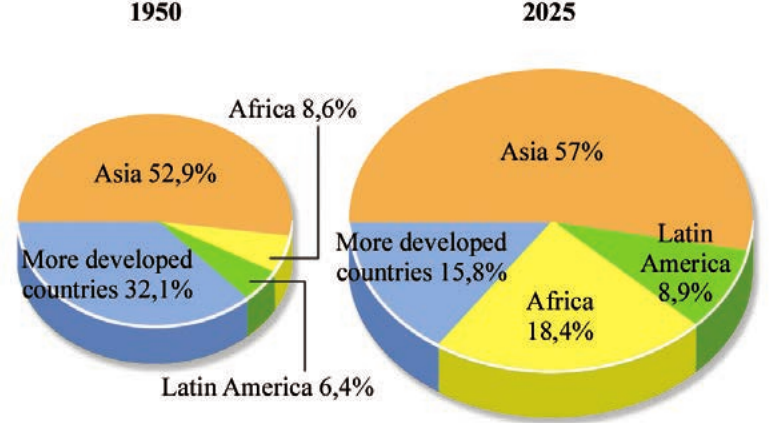
Population distribution in 1950 vs 2025 projections:
Asia: Has maintained its position as the region with the largest population share, growing from 52.9% in 1950 to a projected 57% in 2025.
Africa: Shows the most dramatic change, with its share of world population more than doubling from 8.6% in 1950 to a projected 18.4% in 2025.
More developed countries: Experience the most significant decline, dropping from 32.1% of world population in 1950 to a projected 15.8% in 2025.
Latin America: Shows steady growth from 6.4% in 1950 to a projected 8.9% in 2025.
Example
Africa's Population Share Growth:
- 1950: 8.6% of world population
- 2025 (projected): 18.4% of world population
- Increase: More than doubled (113% increase)
- This represents the fastest regional population growth in the world
These changes reflect different rates of population growth across regions, with developing areas experiencing much faster growth than developed regions.
Future population trends
Current projections suggest that if growth continues at recent rates, the world population will reach 8 billion people by 2025 and could double within 58 years. However, demographic trends are complex, and the rate of growth has actually begun to slow in some regions.
The average rate of natural increase globally was 1.2% in 2010, which means approximately 83 million people were added to the world's population that year. Understanding these trends helps planners prepare for future resource needs and environmental challenges.
Note
While population growth rates are slowing in some developed regions, the absolute number of people being added to the global population each year remains enormous. This continued growth presents both opportunities and challenges for sustainable development worldwide.
Summary
Key Points to Remember:
-
Population growth was minimal for most of human history - dramatic growth only began around 1800 and accelerated after 1900
-
The population explosion (1960-2010) saw unprecedented growth - from 3 billion to 6.8 billion people in just 50 years
-
Less developed countries drive most current population growth - while more developed countries have stable populations
-
Regional distribution is shifting dramatically - Africa's share is doubling, while developed countries' share is halving between 1950-2025
-
Asia remains the most populous region - maintaining over half the world's population throughout this period