Attitudes to Migrants (Grade 10 NSC Matric Geography): Revision Notes
📚Revision Notes
Attitudes to Migrants
Understanding different attitudes towards migrants
In countries that receive migrants, people hold vastly different views about immigration. These attitudes exist on a spectrum, ranging from very positive and welcoming to extremely negative and hostile. Most host countries contain a mixture of both positive and negative attitudes within their populations.
Note
Understanding the full range of attitudes helps explain why immigration policy remains such a complex and contested issue in many countries worldwide.
The attitudes that people develop towards migrants depend on several key factors:
- Similarity to the host population - People may be more accepting of migrants who share similar cultural backgrounds, languages, or appearances
- Perceived threats - Whether the local population feels threatened by migrants in terms of job competition, crime rates, or cultural changes
- Economic usefulness - How valuable migrants appear to be for filling labour shortages or contributing economically
- Numbers of migrants - The scale of migration can influence public opinion
- Personal contact - Whether individuals actually know immigrants personally in their daily lives
- Media representation - How migrants are portrayed in newspapers, television, and social media
Survey evidence from around the world
Research from different countries reveals fascinating patterns about how people form their attitudes towards immigration. The following examples show how economic status, education, and personal experience shape public opinion.
Example
Survey Findings: Britain's Mixed Attitudes
Research in Britain revealed interesting patterns about who supports different immigration policies:
- Professional workers: 59% favoured relaxed immigration controls
- Unskilled/unemployed voters: Only 42% supported relaxing restrictions
- Skills-based preference: 70% believed the government should prioritise skilled migrants like teachers, nurses, and doctors
The survey also found that attitudes varied significantly based on migrants' countries of origin, with people expressing different levels of comfort about neighbours from different regions.
Example
Survey Findings: New Zealand's Perspective
New Zealand survey results showed mixed feelings about immigration's impact:
Negative concerns:
- One-quarter believed immigrants were taking jobs away from local New Zealanders
- 26% thought immigration increased crime rates
Positive recognition:
- 81% agreed that immigrants had made important contributions to the country
Geographic preferences: New Zealanders favoured migrants from Australia, Great Britain, and South Africa over migrants from China, India, and Samoa. Particularly negative views were expressed towards Somali migrants.
Key finding: Education and income levels strongly influenced attitudes, with more educated and wealthier New Zealanders holding more favourable views.
Example
Survey Findings: Botswana's Concerns
Botswana surveys revealed several common concerns:
- Most people felt there were too many immigrants in the country
- Worries that local people were losing employment opportunities to foreigners (though few could provide specific examples)
- Concerns about money leaving the country through foreign workers sending wages home
However: People recognised the value of skilled migrants who brought needed expertise and were willing to invest in creating jobs.
Context: The country has experienced significant unauthorised migration from Zimbabwe, leading to arrests and deportations with substantial media attention.
Example
Survey Findings: United States Attitudes
American survey data revealed important patterns:
- 64% of non-immigrants believed migrants should adopt American culture rather than maintaining their own traditions
- People without college education and those earning less than $30,000 annually were more likely to think the government wasn't tough enough on immigration
Critical finding: Americans who knew immigrants personally held more positive attitudes. They were more likely to:
- View recent immigration positively
- See immigrants as less threatening to job security
- Believe recent immigrants were treated unfairly
Xenophobia - when attitudes become extreme
Important
Xenophobia is an unreasonable fear, distrust, or hatred of strangers, foreigners, or anything perceived as foreign or different. This represents the most extreme negative attitude towards migrants and can lead to serious consequences including mass expulsion, violent attacks, murder, and destruction of property and businesses.
Unfortunately, there have been incidents of xenophobic attacks on immigrants in South Africa, demonstrating how negative attitudes can escalate into violence.
Example
Case Study: Xenophobic Attacks in South Africa (2008)
In May 2008, South Africa experienced severe xenophobic violence that shocked the nation and the international community.
The attacks:
- Gangs of South Africans armed with clubs, machetes, and torches attacked immigrants from Mozambique, Malawi, and Zimbabwe
- Violence began in Alexandra township near Johannesburg and spread to other areas
- Local people accused immigrants of taking jobs away from South Africans
Devastating consequences:
- Over 60 deaths (including some South Africans)
- Hundreds of injuries
- Thousands of migrants displaced or choosing to return home
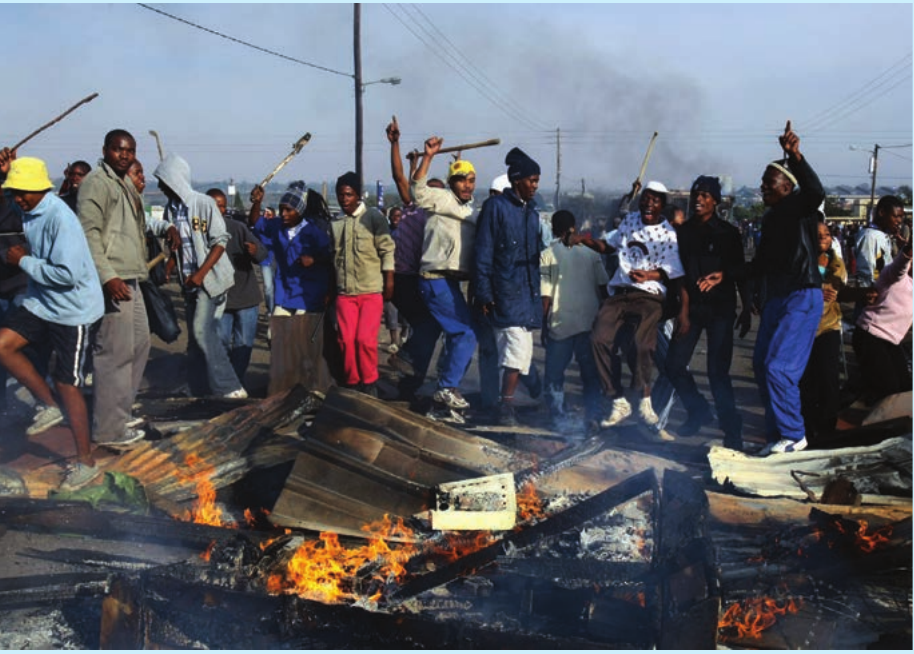
Different perspectives on the attacks:
Shame and condemnation: Some expressed embarrassment, with one 71-year-old resident saying he had lived in Alexandra his entire life and had never witnessed anything like the violence.
Defensive justification: Others defended the attacks, arguing that high crime levels made people suspicious of immigrants and that locals didn't feel safe in their communities.
Calls for unity: Some people called for reconciliation, remembering South Africa's own history of oppression and the importance of overcoming divisions.
Government criticism: Others maintained that authorities weren't doing enough to control illegal immigration or address unemployment among South Africans.

Online discussions revealed complexity: People expressed understanding for immigrants fleeing violence and poverty, whilst others argued that South Africa couldn't accommodate unlimited numbers given its own unemployment rates exceeding 40%.
Important
The events highlighted tensions between ideals of human rights and democracy versus practical concerns about resources, employment, and social stability. Many people recognised that regardless of immigration status, violence against any group was unacceptable and damaging to South Africa's reputation and values.
Remember!
Summary
Key Points to Remember:
- Mixed attitudes are normal - Most countries contain both positive and negative views towards migrants within their populations
- Multiple factors matter - Attitudes are influenced by education levels, personal contact with migrants, media representation, and economic circumstances
- Skilled migrants are generally more welcome - People tend to be more accepting of migrants who fill needed job roles
- Personal contact reduces prejudice - People who know immigrants personally tend to hold more positive attitudes
- Xenophobia can lead to violence - Extreme negative attitudes can result in serious attacks and human rights violations, as seen in South Africa in 2008