Co-operation and Conflict on the Highveld (Grade 10 NSC Matric History): Revision Notes
📚Revision Notes
Co-operation and Conflict on the Highveld
The Boer Republics and Moshoeshoe
British recognition and early tensions
It's important to remember that Britain officially recognised the independence of the two Boer Republics during the 1850s. This recognition came before the major mineral discoveries of diamonds and gold that would later change the political landscape completely.
Note
The timing of British recognition is crucial to understanding later developments. Britain's initial willingness to accept Boer independence would dramatically shift once valuable minerals were discovered in these territories.
From the beginning, relationships on the Highveld were complex and often violent. The Boers found themselves in frequent conflicts and occasional alliances with various local African leaders and their communities.
Moshoeshoe and the formation of the Basotho nation
Moshoeshoe emerged as one of the most significant African leaders during this period. As chief of the Basotho people, he played a crucial role in bringing together various groups who had been displaced during Shaka's campaigns.
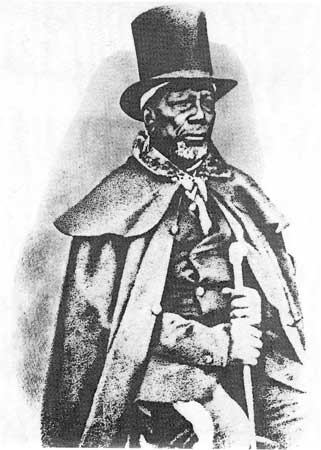
These displaced peoples included:
- Kora communities
- San groups
- Nguni peoples
- Griqua communities
Through his leadership, Moshoeshoe successfully merged these different groups into what became known as his kingdom, creating the foundation of the modern Basotho nation.
Note
Moshoeshoe's ability to unite diverse displaced groups was remarkable for its time. This unification created a stronger, more resilient nation that could better resist external pressures from both Boer and British forces.
Military conflicts and Boer defeats
The relationship between the Boers and the Basotho was marked by numerous raids and battles. Significantly, the Basotho achieved important military victories against Boer forces. One notable example was their victory at Viervoet, where Basotho forces successfully defeated Boer attackers.
Important
The Basotho military successes were significant because they demonstrated that African forces could effectively resist Boer expansion. These victories helped maintain Basotho independence and territorial integrity during a critical period.
These ongoing conflicts created a pattern of destructive raids that threatened the stability and prosperity of both communities in the region.
British intervention and protectorate status
As the conflicts intensified, Moshoeshoe made a strategic decision that would shape his people's future. Recognising the destructive nature of the ongoing Boer raids, he formally requested British protection for his kingdom.
Britain responded to this request by annexing Basutoland as a Protectorate in 1868. This meant that whilst Basutoland maintained some internal autonomy, Britain took responsibility for its external affairs and defence. The territory would remain under British protection until it gained independence in 1966.
Note
Understanding Protectorate Status:
A protectorate arrangement allowed Basutoland to maintain internal self-governance while Britain handled external relations and defence. This was different from direct colonial rule, where Britain would have controlled all aspects of government.
Economic and social consequences
The constant warfare and loss of territory had severe economic impacts on the Basotho people. Many community members lost access to their traditional agricultural and grazing lands, which had been their primary source of livelihood for generations.
As a result of these losses, many Basotho were forced to seek work in the emerging labour markets. This marked a significant shift from their traditional agricultural economy to a system where people had to work for wages to survive.
Important
This economic transformation had lasting consequences. The move from subsistence agriculture to wage labour fundamentally changed Basotho society and created patterns of migrant labour that would persist for generations.
Moshoeshoe's legacy and death
Moshoeshoe died in 1870 at his mountain home, marking the end of an era. His death came after he had successfully led his people for 40 years and established himself as the founder of the Basotho nation.
Throughout his leadership, Moshoeshoe demonstrated remarkable skills in multiple areas:
- Military strategy: He successfully defended his territory against various threats
- Diplomatic relations: He managed complex relationships with African leaders, Boer trekkers, British colonisers, and missionaries
- Political leadership: He maintained his nation's independence for four decades while adapting to changing circumstances
His approach combined military strength with generous treatment of defeated enemies, showing both tactical brilliance and political wisdom that helped ensure his people's survival during a tumultuous period.
Summary
Key Points to Remember:
- Britain recognised Boer Republic independence in the 1850s, before major mineral discoveries
- Moshoeshoe united displaced peoples (Kora, San, Nguni, Griqua) into the Basotho nation after Shaka's campaigns
- The Basotho won important military victories against Boer forces, including at Viervoet
- Moshoeshoe requested British protection, leading to Basutoland becoming a protectorate in 1868
- Economic disruption forced many Basotho to enter wage labour markets after losing agricultural lands
- Moshoeshoe died in 1870 after 40 years of successful leadership, diplomacy, and military strategy