What Was South Africa Like in 1750? (Grade 10 NSC Matric History): Revision Notes
📚Revision Notes
What Was South Africa Like in 1750?
In 1750, South Africa was home to many different groups of people living across the land. These various communities were quite small and scattered throughout the region. While there were occasional disagreements about grazing areas for livestock, there were no large-scale wars happening at this time.
The San
The San people were skilled hunter-gatherers who had been living in South Africa's interior regions for hundreds of years. They are often referred to as Stone Age people because of their traditional tools and lifestyle.

Note
Key Facts About the San:
The San had established themselves as the original inhabitants of the interior regions, but by 1750 they were facing unprecedented challenges to their traditional way of life.
- They had lived peacefully in the interior for many generations
- By 1750, their population numbers were starting to decrease
- This decline happened because they faced pressure from two main groups:
- White farmers who were moving into their territory
- The more powerful Nguni tribes who were also expanding
Important
The San's way of life was under serious threat as other groups competed for the same land and resources, marking the beginning of their cultural decline.
The Khoekhoe
The Khoekhoe were pastoralists, which means they were people who raised and herded livestock like cattle and sheep. They made their homes in the southern Cape region of South Africa.

Note
Understanding Khoekhoe Society:
The Khoekhoe had developed a sophisticated pastoral lifestyle centered around livestock management, which brought them into direct competition with European settlers who wanted the same grazing lands.
- They specialised in raising cattle and other livestock
- Their main area was the southern Cape
- They frequently came into conflict with white farmers
- These disputes were mainly about:
- Rights to use grazing land for their animals
- Control over cattle and livestock
These conflicts would become increasingly serious as more settlers arrived in their territory.
The 'Bantu' speakers
The term 'Bantu' speakers refers to various African tribes including the Nguni and Sotho-Tswana peoples, among many others. These groups had originally migrated from northern Africa many centuries earlier.

Note
Bantu-Speaking Peoples' Settlement:
The Bantu-speaking peoples represent the largest and most diverse group of African societies that had established themselves across South Africa long before European contact.
- They first settled throughout South Africa between 300 and 700 AD
- This means they had been living in the region for over 1,000 years by 1750
- Before 1750, there was abundant grazing land available
- Because of this plenty of space, the tribes organised themselves into small, independent chiefdoms
- Each chiefdom was ruled by its own chief and operated independently from others
This decentralised system worked well when there was enough land for everyone.
Portuguese explorers and traders
After 1486, the three groups mentioned above began to encounter Portuguese explorers and traders along the eastern coast of South Africa. These Europeans had sailed around the Cape of Good Hope and established some contact with local communities.
Note
Portuguese Contact and Trade:
The arrival of Portuguese traders marked the first sustained European contact with South African peoples, introducing new trade goods but also new conflicts.
- Portuguese traders came mainly from Mozambique (a Portuguese colony further north)
- They engaged in bartering (trading goods) with various African tribes
- These trading relationships were not always peaceful
- Sometimes aggressive attacks occurred, resulting in deaths on both sides
This marked the beginning of European involvement in South African affairs.

The Dutch settlers
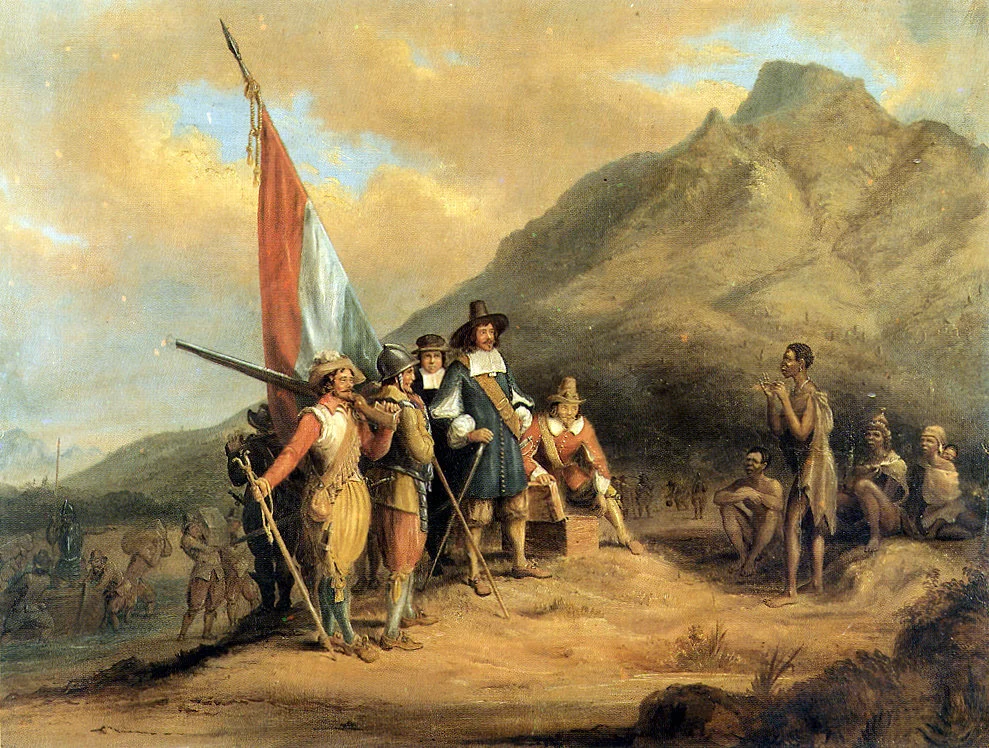
In 1652, the Dutch East India Company established what would become a permanent European settlement. They started by creating a vegetable garden at the Cape, with Jan van Riebeeck in charge of this project. This was meant to be a halfway station to provide fresh food for ships travelling to and from Asia.
Note
The Development of Dutch Settlement:
What began as a simple supply station for ships gradually transformed into a permanent colony that would fundamentally change the social and political landscape of South Africa.
- After working for 5 years, the company workers were given a choice
- They could become 'free burghers', meaning they received their own land to farm
- These free burghers gradually developed their own unique language and culture
- They became known as Boers (meaning farmers) or trekboers (travelling farmers)
Important
Impact on Existing Communities:
The expansion of Dutch settlement had devastating consequences for indigenous peoples, as traditional lands were systematically taken over by European farmers.
- The Dutch settlers gradually took over more and more of the Khoekhoe's traditional land
- By 1750, Cape Town had grown into a busy, expanding settlement
- The town had taverns, inns, and shops to serve passing ships
- Serious conflicts over land occurred between:
- The trekboers (Dutch farmers)
- The San people
- The Khoekhoe pastoralists
Important
Exam Tip: Remember the chronological order - Bantu speakers arrived first (300-700 AD), then Portuguese contact (1486), followed by Dutch settlement (1652), leading up to the situation in 1750.
Remember!
Summary
Key Points to Remember:
- Five main groups lived in South Africa by 1750: San hunter-gatherers, Khoekhoe pastoralists, Bantu-speaking tribes, Portuguese traders, and Dutch settlers
- Land conflicts were the main source of tension, especially over grazing rights for livestock
- The San were declining in numbers due to pressure from both European settlers and African tribes
- Cape Town had become established as a growing settlement with European-style buildings and businesses
- Cultural mixing was beginning as different groups came into contact, though this often led to conflict rather than peaceful cooperation