Interest (Grade 10 NSC Matric Mathematical Literacy): Revision Notes
📚Revision Notes
Interest
Interest is a fundamental concept in finance that affects many aspects of our daily lives. Whether you're saving money in a bank account, taking out a loan, or buying something on hire purchase, understanding interest is essential for making smart financial decisions.
What is interest?
Interest works in two main ways depending on whether you're borrowing or saving money:
Note
When you borrow money: You must pay interest to the lender (like a bank or shop). This means you'll pay back more than you originally borrowed.
When you save money: The bank pays you interest on your savings. This means your money grows over time while it's in your account.
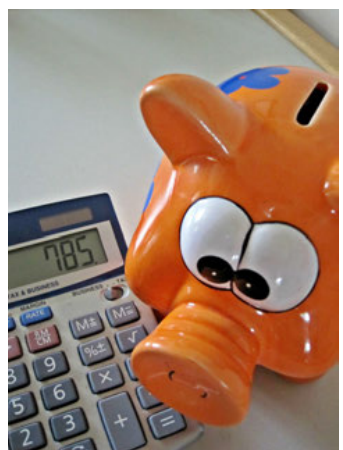
The interest amount is always calculated as a percentage of the money involved, whether you're borrowing or saving.
Key definitions
Important
Interest rate: A percentage charged for the borrowing, or loan, of a sum of money over a given period of time.
Interest: The amount of money that you are charged by the lender (such as a bank) for borrowing money over a period of time. It can also be the amount you earn when saving money.
These definitions are crucial for exam success, so make sure you can write them out clearly.
Factors affecting interest rates
Interest rates are not the same for everyone. Banks consider several factors when deciding what interest rate to charge or offer:
- The South African Reserve Bank's repo rate - This is the rate banks use as a starting point. When the repo rate changes, bank interest rates usually follow.
- Different bank deals - Banks compete with each other and may offer better rates to attract customers, especially if you open other accounts with them.
- Credit ratings and banking history - If you're new to banking or have a poor credit history, you'll likely face higher interest rates on loans because you're seen as a higher risk.
- Employment stability - Banks prefer customers with steady jobs or valuable assets like homes, as these reduce their risk.
- Length of savings commitment - The longer you commit to saving money without withdrawing it, the higher the interest rate the bank will usually offer.
Calculating interest amounts and interest rates
When you know the interest rate
If you know what the interest rate is, calculating the interest amount is straightforward:
Note
Interest amount = Principal amount × Interest rate
Example
Basic Interest Calculation
10% interest on R3,500 = R3,500 × 10% = R350
The total amount you'd pay back would be R3,500 + R350 = R3,850.
When you need to find the interest rate
If you're given the final amount and need to find the interest rate, follow these steps:
- Find the interest amount: Final amount - Original amount = Interest amount
- Calculate the rate: (Interest amount ÷ Original amount) × 100 = Interest rate%
Worked example: Wall unit hire purchase
Example
Worked Example: Hire Purchase Calculation
Question: You can buy a 3-piece wall unit for R6,499.99 cash. Alternatively, you can pay a deposit of R650 and then 36 monthly instalments of R449 each.
- Calculate the total cost if you choose instalments
- Calculate the total interest you'll pay
- Calculate the interest rate
- Decide whether cash or instalments is better
Solution:
Step 1: Calculate total instalment cost Total cost = Deposit + (Monthly payment × Number of months) Total cost = R650 + (R449 × 36) Total cost = R650 + R16,164 = R16,814
Step 2: Calculate interest amount Interest = Instalment total - Cash price Interest = R16,814 - R6,499.99 = R10,314.01
Step 3: Calculate interest rate Interest rate = (Interest amount ÷ Cash price) × 100 Interest rate = (R10,314.01 ÷ R6,499.99) × 100 Interest rate = 1.586 × 100 = 158.6%
Step 4: Make recommendation It's much better to save up and buy the wall unit for cash. The instalment option costs more than twice as much as the cash price!
Worked example: Simple interest loan
Example
Worked Example: Simple Interest Loan
Question: Grant borrows R15,000 from his friend Molefe at 12% simple interest per annum.
- Calculate the interest amount
- Calculate Grant's total repayment
Solution:
Step 1: Calculate interest amount Interest = R15,000 × 12/100 = R15,000 × 0.12 = R1,800
Step 2: Calculate total repayment Total repayment = Principal + Interest Total repayment = R15,000 + R1,800 = R16,800
Exam tips
Summary
Key Exam Strategies:
-
Always read the question carefully - Check whether you need to find the interest amount, interest rate, or total repayment.
-
Show your working clearly - Even if your final answer is wrong, you can still earn marks for correct method.
-
Use the correct formula - For simple interest:
-
Check your answer makes sense - Interest should always make the total cost higher than the original amount when borrowing.
-
Be careful with percentages - Remember to divide by 100 when converting percentages to decimals for calculations.
Remember!
Summary
Key Points to Remember:
- Interest makes borrowing expensive - You always pay back more than you borrowed
- Interest makes saving profitable - Your money grows when left in the bank
- Compare options carefully - Cash purchases are usually much cheaper than hire purchase
- Interest rates vary - Shop around for the best deals, especially for loans
- Simple interest formula - (where P = Principal, R = Rate, T = Time)