Key Concepts of Probability (Grade 10 NSC Matric Mathematical Literacy): Revision Notes
📚Revision Notes
Key Concepts of Probability
Introduction to probability
Probability measures the likelihood of events happening in the future. We regularly make statements about future events using phrases like "I am sure it will never happen", "I have no chance of winning the prize", or "I am sure it is going to snow this year". Each statement attempts to predict what might occur.
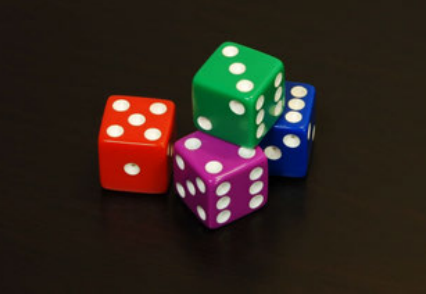
Understanding probability helps us make informed decisions and predictions about uncertain situations in everyday life.
Note
Probability is not just a mathematical concept - we use probabilistic thinking constantly in our daily lives when making decisions, from checking weather forecasts to planning our routes to avoid traffic.
The probability scale
The probability scale is a continuous line used to describe how likely something is to happen. This scale provides a standardised way to express the likelihood of any event occurring.
The scale starts with impossible events at the left-hand end and ends with certain events at the right-hand end. Every probability must fall somewhere on this line between these two extremes.
Understanding the scale positions
An event described as "impossible" has a probability of , meaning we know it will never happen (such as having 8 days in one week). An event described as "certain" has a probability of , meaning we know it will definitely happen (such as having a Monday in every week).
Between these two extremes, we use word descriptions to indicate different levels of likelihood:
- Very unlikely - events with very low chances
- Unlikely - events with low chances
- Even chances - events equally likely to happen or not happen
- Likely - events with good chances of occurring
- Very likely - events with very high chances
Important
Critical Rule: All probability values must fall between 0 and 1, inclusive. Any probability less than 0 or greater than 1 is mathematically impossible and indicates an error in your calculation.
Expressing probability in different formats
The same probability can be expressed using four different formats: words, decimals, fractions, and percentages. This flexibility allows us to choose the most appropriate format for different situations.
| Word Description | Decimal | Fraction | Percentage |
|---|---|---|---|
| Impossible | 0 | 0 | 0% |
| Very unlikely | 0.2 | 1/5 | 20% |
| Unlikely | 0.4 | 2/5 | 40% |
| Even chances | 0.5 | 1/2 | 50% |
| Likely | 0.6 | 3/5 | 60% |
| Very likely | 0.8 | 4/5 | 80% |
| Certain | 1 | 1 | 100% |
Remember that these word descriptions cover ranges of probability values, so they don't match exact numbers perfectly. The mathematical representations provide more precise measurements.
Note
When working with probability, you can freely convert between these different formats depending on what's most convenient for the situation. For example, percentages are often easier to understand in everyday contexts, while decimals are typically easier for calculations.
Worked example: Using the probability scale
Example
Worked Example: Applying Word Descriptions to Real Situations
Let's practice applying word descriptions from the probability scale to real-life situations:
Question 1: What are the chances of winning the Lottery if you buy a ticket every week for two months?
Solution: The chances are highly unlikely. Even buying multiple tickets over time doesn't significantly improve your odds of winning the Lottery, as the probability remains extremely low.
Question 2: What are the chances of a pregnant woman having a male child?
Solution: This represents even chances (50%). Biologically, there's approximately an equal probability of having either a male or female child.
Question 3: How likely is it that you will pass Mathematical Literacy this year?
Solution: This answer depends on your personal situation, study habits, and preparation. It could range from unlikely to very likely based on your individual circumstances.
Important
Exam Tips for Probability Scales
- Always remember that probability values range from 0 to 1 (never negative or greater than 1)
- When converting between formats, ensure your answers are equivalent
- Even chances always equals , , or
- Use the context of the question to determine appropriate word descriptions
- Practice converting between decimals, fractions, and percentages regularly
Summary
Key Points to Remember:
- Probability measures the likelihood of future events occurring, ranging from impossible () to certain ()
- The probability scale provides a visual way to understand different levels of likelihood using both words and numbers
- Multiple formats exist for expressing the same probability: words, decimals, fractions, and percentages
- Even chances ( or ) means an event is equally likely to happen or not happen
- All probabilities must fall between 0 and 1, inclusive of these endpoints