The Factors of Production (Grade 11 NSC Matric Economics): Revision Notes
📚Revision Notes
The Factors of Production
Understanding the factors of production is essential for grasping how economies work. These are the basic building blocks that countries and businesses use to create all the goods and services we need and want.
What are the factors of production?
The factors of production are the essential resources (called inputs) that we use to create goods and services (called outputs). Think of them as the ingredients needed to bake a cake - you need different components working together to create the final product.
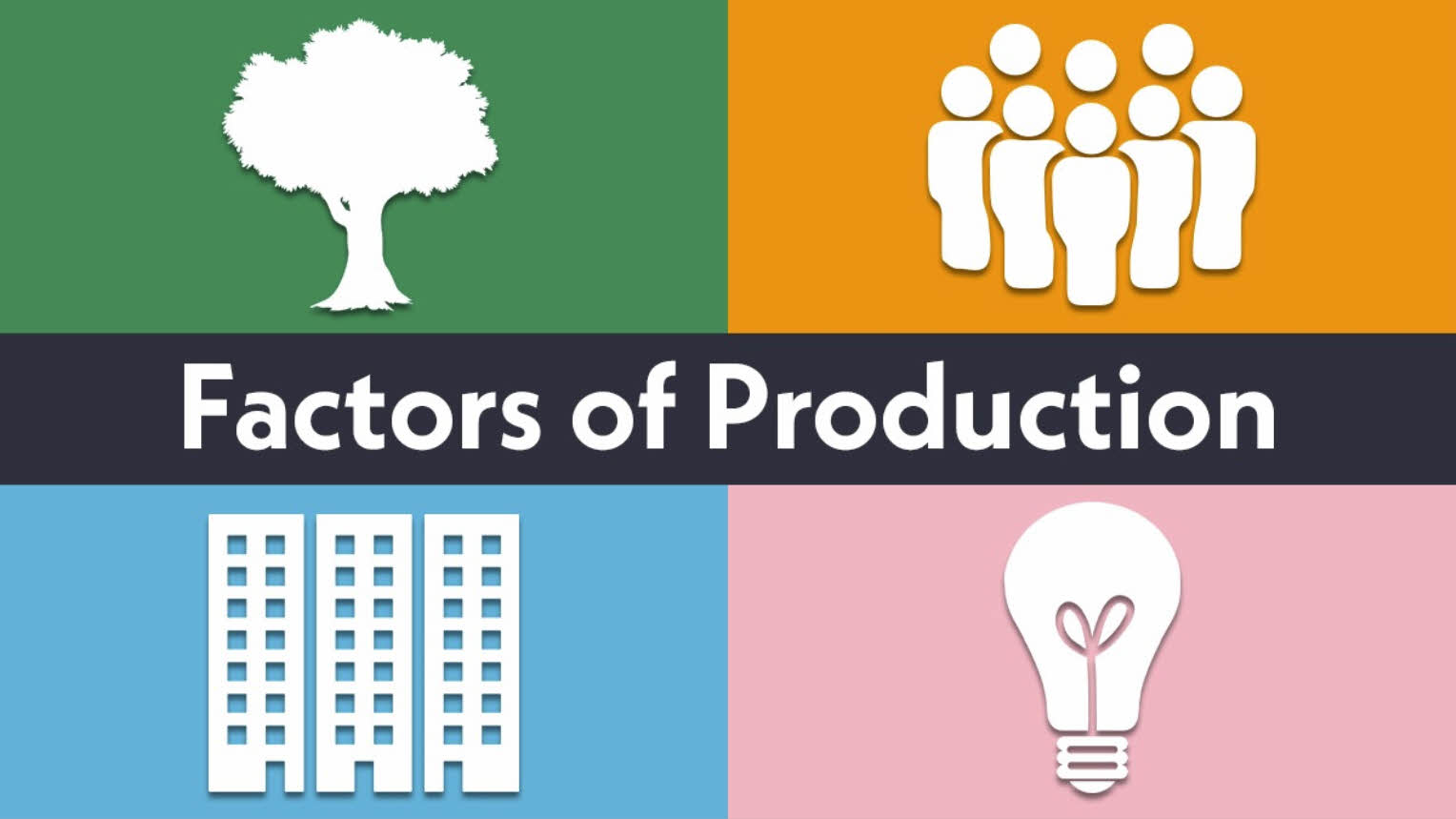
There are four main factors of production:
- Natural resources - gifts from the earth
- Labour - human effort and skills
- Capital - tools, equipment and money
- Entrepreneurship - the people who take risks to start businesses
In South Africa's market economy, most of these factors are owned privately. Each factor earns a specific reward for its contribution:
- Natural resources earn rent
- Labour earns wages
- Capital earns interest
- Entrepreneurs earn profit
Note
This reward system creates incentives for people to provide their resources to the economy. Without these payments, there would be little motivation to supply the factors of production needed for economic activity.
Natural resources
Natural resources are anything valuable that comes directly from the earth without being manufactured. Examples include forests, mineral deposits, fresh water, oil, gold, and fertile soil.
Key features of natural resources
Natural resources have several important characteristics that make them unique:
- Limited supply - there's only so much available on earth
- Two main types - renewable resources (like trees and fish that can regrow) and non-renewable resources (like coal and diamonds that can't be replaced once used)
- Uneven distribution - some countries are blessed with lots of natural resources whilst others have very few
- Need processing - most natural resources must be transformed before they become useful products
- Essential for production - they form the foundation for creating goods and services
Important
The fact that mineral resources are non-renewable is particularly concerning because we're using them up faster than ever before. Meanwhile, renewable resources like forests need careful management to ensure they don't disappear.
Why natural resources matter
Natural resources play a crucial role in any country's economy. They serve as the foundation for economic development by providing the raw materials needed for production. Countries rich in natural resources often build their economies around extracting and selling these materials to other nations.
These resources create employment opportunities in mining, forestry, agriculture, and related industries. The owners of natural resources, whether individuals or governments, earn income from selling or leasing access to these resources. This income can then be reinvested in the economy to promote further growth.
For international trade, natural resources often become a country's main export products. South Africa, for example, exports gold, diamonds, platinum, and other minerals to countries around the world.
How natural resources are rewarded
The payment for using natural resources is called rent. This applies whether you're using farmland, mining rights, or access to water sources.
Note
Factors influencing rent levels:
Several factors influence how much rent natural resource owners can charge:
- Demand for products - if people want more gold jewellery, gold mines can charge higher rent
- Quality of the resource - high-grade diamond mines earn more than low-grade ones
- Climate conditions - good weather increases agricultural land values
- Technology improvements - better extraction methods can make previously unprofitable resources valuable
- Location advantages - resources near ports or cities are worth more than remote ones
Labour
Labour refers to all the human effort - both physical and mental - that goes into producing goods and services. This includes everyone from factory workers to doctors, teachers to computer programmers.
Characteristics of labour
Labour has several unique features that distinguish it from other factors of production:
- Quality varies greatly - workers have different skill levels, from unskilled to highly skilled professionals
- Cannot be stored - unlike machines or raw materials, you can't save up human work for later use
- Takes time to develop skills - training skilled workers is a long process, so labour supply can't increase quickly
- Low mobility - workers often find it difficult to move between different jobs or locations
- Three skill categories - economists classify labour as skilled (university-educated professionals), semi-skilled (workers with some training), and unskilled (workers with minimal training)
Important
Developing countries like South Africa typically have large numbers of unskilled workers but fewer skilled professionals, which can limit economic growth. This skills shortage represents a major challenge for economic development.
The importance of skilled labour
Having a skilled workforce is vital for any country's economic success. Skilled workers drive productivity and innovation, making the entire economy more competitive.
When a country lacks skilled workers, economic growth slows down because businesses struggle to find qualified employees. Skilled workers also tend to be much more productive than unskilled ones, meaning they can produce more value per hour worked.
The supply of labour depends on three main factors:
- Population growth rate - more births than deaths means more future workers
- Labour force participation rate - the percentage of working-age people who actually want jobs
- Migration patterns - workers moving between countries seeking better opportunities
Labour quality improves through education, training, and healthcare. South Africa has made skills development a key economic strategy to address historical inequalities and boost competitiveness.
How labour is rewarded
Workers receive wages as payment for their labour. These wages can include additional benefits like company housing, medical aid, or transport allowances (called payment in kind).
Note
Wage determination in market economies:
In market economies, wage levels are influenced by:
- Demand for specific goods and services - if people want more smartphones, electronics workers can demand higher wages
- Demand for particular types of labour - scarce skills like engineering or medicine command premium wages
Capital
Capital consists of two main components: all the manufactured goods and equipment used to produce other goods, plus the money used to purchase these productive assets. Think of factory machinery, office computers, delivery trucks, and the funds needed to buy them.
Capital comes from savings by four main groups:
- Households - families saving money for future purchases
- Businesses - companies setting aside profits for expansion
- Government - public sector savings and investments
- Foreign countries - international investors providing capital
Features of capital
Capital has several distinctive characteristics:
- Essential for growth - without adequate capital, economies cannot expand or improve living standards
- Depreciates over time - machinery wears out and becomes obsolete, requiring replacement
- Owned by businesses and government - private companies and the state control most capital assets
- Two main types - social capital (schools, hospitals, roads) and human capital (workers' skills and experience)
Capital formation happens when societies invest in productive assets rather than consuming everything immediately.
Why capital matters
Capital plays a crucial role in economic growth and productivity. Without adequate machinery, equipment, and infrastructure, workers cannot produce goods efficiently.
Economists distinguish between two types of capital growth:
- Capital widening - when capital stock grows at the same rate as the workforce, maintaining constant productivity per worker
- Capital deepening - when capital per worker increases, boosting individual productivity and living standards
The process of creating new capital goods is called investment. When businesses invest in new machinery or governments build new infrastructure, they're adding to the country's capital stock.
Example
Worked Example: Capital Investment Impact
Consider a textile factory that currently has 100 workers and 50 sewing machines:
Step 1: Calculate current ratio
Capital per worker = 50 machines ÷ 100 workers = 0.5 machines per worker
Step 2: Capital widening scenario
If the factory hires 20 more workers and buys 10 more machines:
New ratio = 60 machines ÷ 120 workers = 0.5 machines per worker (same productivity)
Step 3: Capital deepening scenario
If the factory keeps 100 workers but buys 20 more machines:
New ratio = 70 machines ÷ 100 workers = 0.7 machines per worker (higher productivity)
How capital is rewarded
Capital owners earn interest - the payment for lending money or the cost of borrowing it. Interest serves as the reward for saving money instead of spending it immediately.
Note
Factors affecting interest rates and investment returns:
Several factors influence interest rates and investment returns:
- Risk level - riskier investments must offer higher returns to attract investors
- Liquidity - investments that can be quickly converted to cash typically offer lower returns
- Time period - longer-term investments usually provide higher returns
- Demand for capital - when many businesses want to borrow money, interest rates rise
- Supply of funds - when lots of people are saving, interest rates fall
- Government monetary policy - central bank decisions affect interest rates throughout the economy
Entrepreneurship
Entrepreneurs are the risk-takers and innovators who start new businesses and create fresh products or services. They're the people who spot opportunities and take action to turn ideas into reality.
Characteristics of entrepreneurs
Successful entrepreneurs share several key traits:
- Innovation and opportunity recognition - they see possibilities others miss
- Resource coordination - they bring together natural resources, labour, and capital to create businesses
- Risk tolerance - they're willing to face uncertainty and potential failure
- Enterprise mindset - they actively pursue opportunities rather than waiting for them
- Diverse forms - entrepreneurs can be individuals, groups, businesses, or even governments
Important
Entrepreneurs serve as the driving force that activates the other three factors of production. Without them, land, labour, and capital would remain separate and unproductive.
Why entrepreneurs are essential
Entrepreneurs play several vital roles in the economy:
- Economic growth creators - by combining land, labour, and capital, they generate new economic activity
- Wealth builders - they transform savings and borrowed funds into productive capital, creating value for society
- Job creators - new businesses provide employment opportunities for workers
- Competition promoters - they challenge existing businesses to improve and innovate
Without entrepreneurs, the other factors of production would remain separate and unproductive. Entrepreneurs provide the vision and energy needed to transform resources into valuable goods and services.
How entrepreneurs are rewarded
Entrepreneurs earn profit - the reward for taking risks and successfully combining the other factors of production. Profit represents what's left after paying all the costs of natural resources (rent), labour (wages), and capital (interest).
Important
Unlike the other factor payments, profit can be negative if the business loses money. This uncertainty is what makes entrepreneurship risky but potentially very rewarding.
Summary
Key Points to Remember:
-
The four factors of production are natural resources, labour, capital, and entrepreneurship - they work together to create all goods and services in the economy.
-
Each factor earns a specific reward - natural resources earn rent, labour earns wages, capital earns interest, and entrepreneurship earns profit.
-
Natural resources are limited and unevenly distributed - some are renewable whilst others are finite, making careful management essential.
-
Skilled labour is crucial for economic development - countries need to invest in education and training to build competitive workforces.
-
Capital investment drives economic growth - businesses and governments must continually invest in new equipment and infrastructure to improve productivity and living standards.