Development Aid and Development Cooperation (Grade 11 NSC Matric Geography): Revision Notes
📚Revision Notes
Development Aid and Development Cooperation
Understanding development aid
Development aid refers to the voluntary transfer of resources from one country to another, specifically designed to help developing nations improve their economic, social, political, and environmental conditions. This concept emerged as developed countries recognized the growing inequality between nations and the need to share responsibility for global development.
The idea gained formal recognition in 1970 when the United Nations recommended that each developed country should allocate 0.7% of its Gross Domestic Product (GDP) towards development aid. While this might seem like a small percentage, it represents a significant commitment that can make a substantial difference to receiving countries.
Note
The UN target of 0.7% GDP for development aid was established over 50 years ago, yet many developed countries still struggle to meet this commitment, highlighting the ongoing challenges in global development cooperation.

This political cartoon powerfully illustrates the stark inequality that exists globally, showing the vast difference between wealthy nations and those in need of assistance.
The scale and distribution of global aid
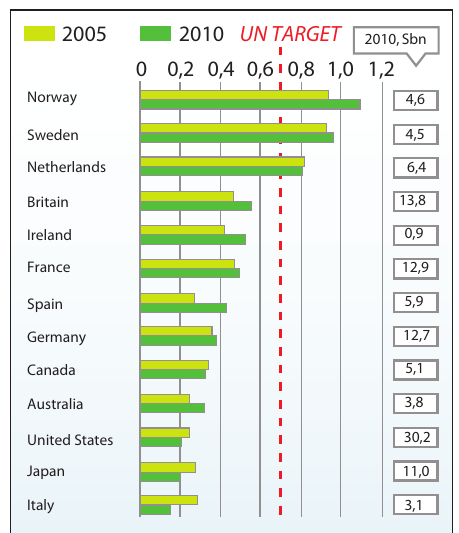
Development aid totaled approximately $140.7 billion in 2010, with government sources providing about 85% of all aid. However, the distribution of this aid varies significantly between donor countries, both in absolute terms and as a percentage of their national wealth.
Note
This chart reveals important patterns in how different nations contribute to global development efforts. While some countries like the United States provide the largest amounts in dollar terms, Nordic countries such as Norway and Sweden demonstrate the highest commitment relative to their economic capacity, often exceeding the UN target.
Development aid vs development cooperation
While development aid traditionally involves a one-way transfer of resources from donor to recipient countries, development cooperation represents a more collaborative approach. In development cooperation, both donors and recipients work together as partners in planning and implementing development strategies.
This partnership approach ensures that aid projects are more appropriate for the target population and have a greater impact, even when operating on a smaller scale. Development cooperation recognizes that recipients have valuable knowledge and insights about their own needs and circumstances, making the relationship more balanced and effective.
Important
The key difference lies in the level of involvement and decision-making. Traditional aid often involves donors deciding what help to provide and how to provide it. In contrast, development cooperation involves joint planning, shared responsibility, and mutual learning between all parties involved.
Types of aid organizations
Development assistance comes from various sources, each playing a unique role in global development efforts:
Government aid represents the largest portion of development assistance, channeled through official government programs and international agencies such as the United Nations and World Bank. These programs often focus on large-scale infrastructure projects, policy development, and capacity building.
Private organizations contribute approximately 15% of global development aid annually. These include non-governmental organizations (NGOs), foundations, and development charities that often focus on specific issues or communities. These organizations frequently work directly with local communities and can respond quickly to emerging needs.
Case study: Stop Hunger Now's meal-packaging programme
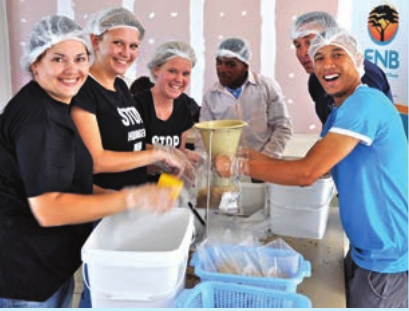
Stop Hunger Now provides an excellent example of how development cooperation works in practice. This organization demonstrates the power of volunteer-based efforts in addressing global hunger and food insecurity.
Example
Practical Example: Stop Hunger Now's Efficiency
The organization's meal-packaging program involves volunteers who package high-protein, dehydrated meals specifically designed for crisis situations. These nutritionally balanced meals contain rice, soya mince, dehydrated vegetables, and essential vitamins and minerals.
Key Statistics:
- Just 25 volunteers can package 5,000 meals in only 2 hours
- Operates packaging events in the United States, South Africa, and Malaysia
- Meals are designed for easy transport and distribution in crisis situations
This case study illustrates several important principles of effective development cooperation. The program combines the resources and organization of a formal aid organization with grassroots volunteer involvement. It addresses a specific, urgent need (hunger relief) with a practical, scalable solution. The packaged meals are designed to be easily transported and distributed in crisis situations, making them particularly valuable for emergency response.
The global reach of such programs demonstrates how development aid can coordinate efforts across multiple countries. Stop Hunger Now operates packaging events in the United States, South Africa, and Malaysia, showing how development cooperation can involve multiple nations working together toward common humanitarian goals.
The impact and importance of development aid
Development aid serves multiple crucial functions in addressing global inequality and promoting sustainable development. It provides essential resources for basic needs such as food, clean water, healthcare, and education in regions where local resources are insufficient.
Beyond immediate assistance, development aid helps build local capacity by transferring skills, knowledge, and technology. This capacity building enables recipient countries to become more self-sufficient over time and develop their own solutions to development challenges.
Note
The effectiveness of development aid is enhanced when it operates through development cooperation models that involve recipients as active partners rather than passive beneficiaries. This approach ensures that aid programs are culturally appropriate, sustainable, and aligned with local priorities and needs.
Summary
Key Points to Remember:
- Development aid is a voluntary transfer of resources aimed at helping developing countries improve their economic, social, political, and environmental conditions
- The UN target recommends that developed countries contribute 0.7% of their GDP to development aid, though achievement varies significantly between nations
- Development cooperation differs from traditional aid by involving recipients as equal partners in planning and implementing development strategies
- About 85% of development aid comes from government sources, while private organizations contribute approximately 15%
- Effective development programs, like Stop Hunger Now's meal-packaging initiative, demonstrate how cooperation between donors and recipients can create practical solutions to global challenges