How Soils are Formed (Grade 11 NSC Matric Geography): Revision Notes
📚Revision Notes
How Soils are Formed
What is soil?
Soil is a complex mixture that consists of weathered rock fragments, organic matter from plants and animals, water, and air. This natural resource is absolutely essential for supporting the vast majority of plants and animals that live on land. Understanding how soil develops helps us appreciate why it's so valuable and why we need to protect it.
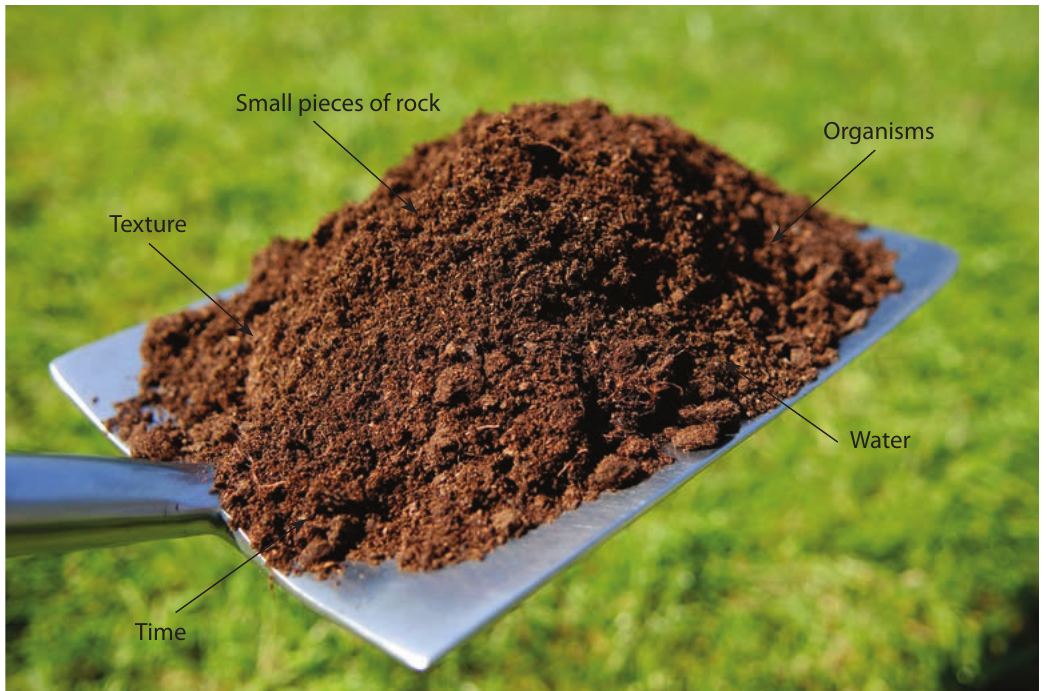
The formation of soil is an incredibly slow process. The soils that farmers use for growing crops in South Africa have taken approximately 10,000 years to develop. Generally, soil forms at a rate of about one centimetre every 100 to 400 years. This extremely slow formation rate means that soil is essentially a non-renewable resource - once an area loses its soil, it's effectively gone forever in human terms.
Important
Critical Fact: Because soil forms so slowly (1 cm per 100-400 years), it is essentially non-renewable from a human perspective. Soil conservation is therefore absolutely essential for sustainable agriculture and ecosystem health.
Components of soil
Healthy soil contains several key components working together:
- Small pieces of rock: These provide the mineral foundation and determine many soil properties
- Organisms: Living creatures like bacteria, fungi, worms, and insects that contribute to soil health
- Texture: The specific arrangement and size of soil particles
- Water: Essential for plant growth and chemical processes
- Time: The extended period needed for all these elements to interact and develop
Note
These components don't work in isolation - they interact constantly with each other. For example, organisms break down organic matter while also moving rock particles around, and water carries dissolved materials between different soil layers.
Factors that influence soil formation
Six main factors work together to determine how soils develop in any particular location. Understanding these factors helps explain why soils vary so much from place to place.
Human activity
Human activities can significantly impact soil development. Farming practices, mining operations, and construction projects all influence how soils form and change. These activities can also affect other soil formation factors such as climate patterns, organism populations, and landscape topography. The way humans manage land determines whether soil formation is enhanced or disrupted.
Note
Human influence on soil formation can be both positive and negative. Sustainable farming practices can enhance soil development, while poor land management can lead to soil degradation and erosion.
Parent material
A substantial portion of soil originates from small fragments of weathered rock. The original rock from which soil develops is called the parent rock. Through weathering processes, this parent rock gradually breaks down into smaller pieces. Both physical weathering (like freeze-thaw cycles) and chemical weathering (like acid dissolution) contribute to this breakdown.
The characteristics of the parent rock directly influence the final soil properties. The weathered material determines the soil's texture, internal structure, and colour. Soil texture refers to how soil particles are distributed by size, with the three main categories being sand, silt, and clay particles.
Soil structure describes how these particles arrange themselves together. When soil loses its structure through overcultivation, it becomes more susceptible to erosion because the particles can no longer stick together effectively.
Important
Soil Structure and Erosion: When soil loses its structure through poor farming practices like overcultivation, particles can no longer stick together effectively. This makes the soil much more vulnerable to erosion by wind and water, leading to permanent soil loss.
Climate
Temperature and rainfall patterns play crucial roles in soil development. Higher temperatures and increased rainfall speed up weathering processes, leading to areas with deep, well-developed soils. These climatic conditions also support abundant plant growth, which contributes organic matter to the developing soil.
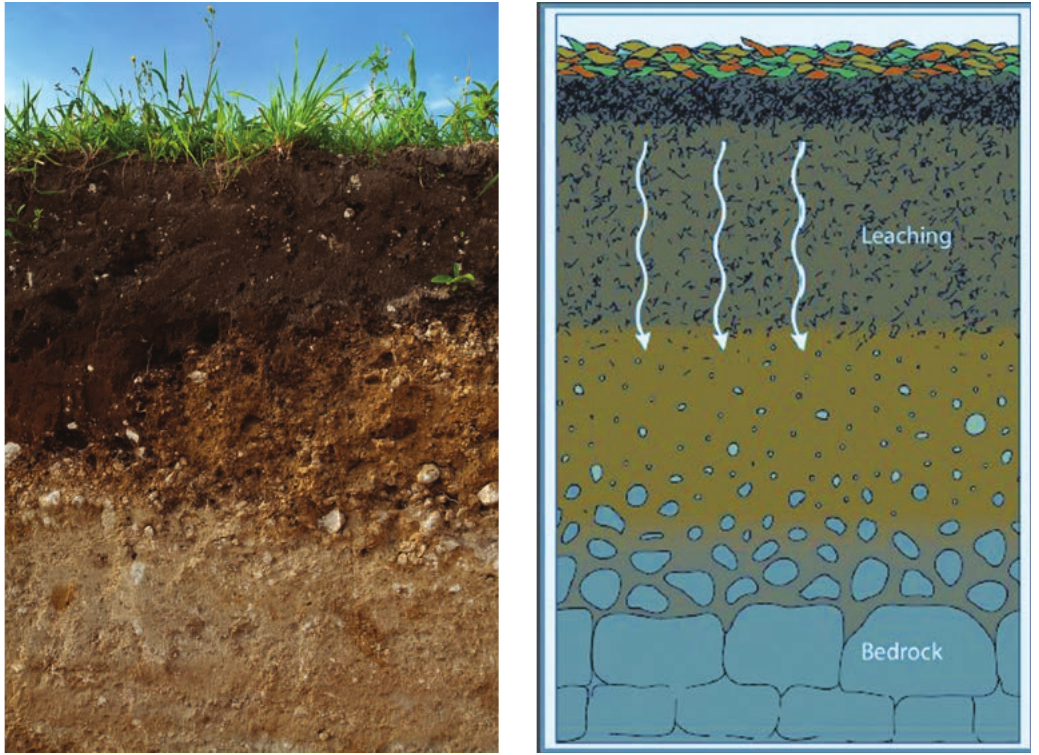
Water movement through soil significantly affects soil formation. When water moves downward through soil layers, it can transport dissolved minerals with it in a process called leaching. Soils that experience excessive leaching may become less fertile because important nutrients (substances essential for plant growth) get washed away from the root zone.
Note
Climate and Soil Depth: Areas with warm, wet climates typically develop much deeper soils than cold, dry regions. However, excessive rainfall can also lead to over-leaching, where too many nutrients are washed away, making soils less fertile.
Organisms
Living creatures contribute to soil formation through their activities and life cycles. Worms, moles, and other soil-dwelling animals create bioturbation - they move soil particles around and increase air spaces by burrowing and creating tunnel systems. This mixing action helps develop soil structure and improves water and air movement.
Animals also contribute organic matter to soil through their waste products. Bacteria and microorganisms play essential roles in decomposing plant and animal remains, releasing valuable nutrients back into the soil system. This decomposition process enriches the soil and makes it more fertile for supporting plant growth.
Example
Example of Bioturbation: Earthworms are excellent soil engineers. As they burrow through soil, they:
- Mix different soil layers together
- Create channels that improve water infiltration and root penetration
- Process organic matter through their digestive systems, creating nutrient-rich castings
- Can move up to 30 tons of soil per hectare per year in some ecosystems
Topography
The shape and steepness of the landscape strongly influence soil development. Steeper slopes typically develop thinner soils compared to areas with gentler gradients. This happens because steep slopes experience more runoff, preventing thick soil layers from accumulating.
Soils on steep slopes also tend to be less fertile because they're more prone to erosion. In contrast, gentler slopes and valley floors allow for much deeper soil development. Plant roots in these areas help hold soil particles together and allow continued soil breakdown and development, creating more fertile growing conditions.
Time
Young soils that haven't had much time to develop tend to have compositions very similar to their parent rock material. As time progresses, more organic material becomes incorporated into the developing soil, making it deeper and increasingly fertile.
The soil composition continues to evolve over long time periods. If climatic conditions change in an area, the soil composition will gradually adjust to reflect these new environmental conditions. This demonstrates that soil formation is an ongoing, dynamic process rather than a one-time event.
Note
Soil Evolution: Soil formation never truly stops. Even mature soils continue to change slowly as climate conditions shift, new organisms colonize the area, or human activities alter the landscape. This means soil is always adapting to its current environment.
Summary
Key Points to Remember:
- Soil forms extremely slowly - about 1 cm every 100-400 years - making it essentially non-renewable
- Six key factors control soil formation: human activity, parent material, climate, organisms, topography, and time
- Climate affects soil development through weathering and leaching processes
- Living organisms enhance soil formation through bioturbation and organic matter contribution
- Landscape slope influences soil depth and fertility - gentle slopes develop deeper, more fertile soils
- Soil composition continues changing over time as environmental conditions evolve