Soil as a Resource (Grade 11 NSC Matric Geography): Revision Notes
📚Revision Notes
Soil as a Resource
Introduction to soil as a vital resource
Soil plays a fundamental role in agriculture and food production around the world. Throughout human history, people have chosen to settle in areas where they could find fertile soils that would support their crops and provide food security. The availability of good quality soil, combined with adequate water supplies, has been essential for the development of successful civilizations in different regions across the globe.
The relationship between soil quality and human settlement is so strong that we can often predict where people live simply by looking at soil fertility maps. This connection shows just how dependent we are on soil as one of our most important natural resources.
Note
The correlation between soil fertility and human settlement patterns is one of the clearest examples of how natural resources shape human geography and development.
Historical significance of fertile soils
History provides us with excellent examples of how fertile soils have shaped human civilization. One of the most famous examples comes from Ancient Egypt, where the annual flooding of the River Nile created ideal conditions for agriculture.
Example
Historical Example: Ancient Egypt and the River Nile
Each year, the flood waters of the River Nile would deposit fresh, nutrient-rich soil across the farmland beside the river. This natural process created some of the most fertile agricultural land in the world, which in turn supported the growth of a wealthy and sophisticated farming community that became the foundation of Ancient Egyptian civilization.
This pattern of civilizations developing around fertile soils can be seen throughout history and across different continents. The success of these early communities depended heavily on their ability to grow enough food to support their populations, which was only possible with good quality soil.
Global patterns of soil fertility and population
When we examine world maps showing population distribution and soil fertility, we can see clear connections between these two factors. Areas with high soil fertility often coincide with regions that have dense human populations, while regions with poor soil quality tend to have fewer people living there.
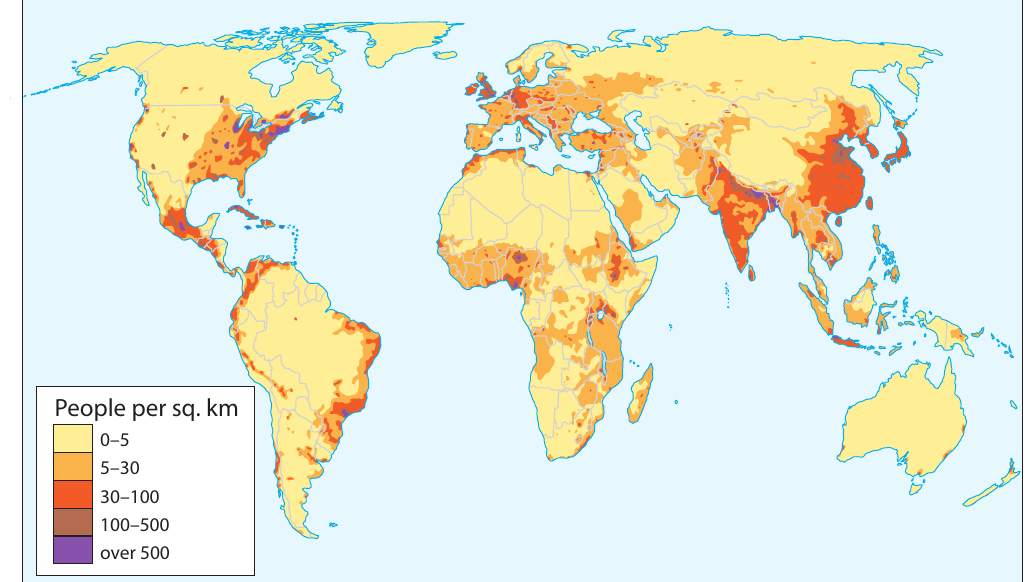
The population distribution map shows that certain areas of the world support much higher population densities than others. When we compare this to soil fertility patterns, we begin to understand why some regions can support large populations while others cannot.
Note
The global soil fertility map reveals that soil quality varies dramatically around the world. Some regions have very high fertility levels that can support intensive agriculture, while others have low fertility that limits their agricultural potential.
This variation in soil quality is one of the key factors that influences where people choose to live and how they use the land.
South Africa's soil challenges
South Africa faces significant challenges when it comes to soil quality and agricultural potential. The country has predominantly very shallow soils, which limits their ability to support large-scale crop production. Several factors contribute to these soil limitations, including the presence of hard parent rock close to the surface and relatively low rainfall in many regions.
Important
These conditions have resulted in a situation where only about 12% of South Africa's soils are actually suitable for crop farming. This is a surprisingly small percentage and has major implications for the country's ability to feed its population through domestic food production.
Understanding arable land
Arable land refers specifically to land that can be used for growing crops. This is different from other types of agricultural land, such as grazing land for livestock or areas suitable for forestry. The amount of arable land a country has directly affects its capacity to produce food for its people.
To put South Africa's situation into perspective, scientists estimate that the country's available arable land can provide food for only about 35 million people. When we compare this to other countries, the limitations become even more apparent. For example, the arable land in the United States has the potential to feed approximately 800 million people - more than 20 times South Africa's capacity.
Important
This comparison highlights why South Africa cannot rely solely on its own soil resources to feed its entire population and must supplement domestic food production through imports and other strategies.
Agricultural land use patterns
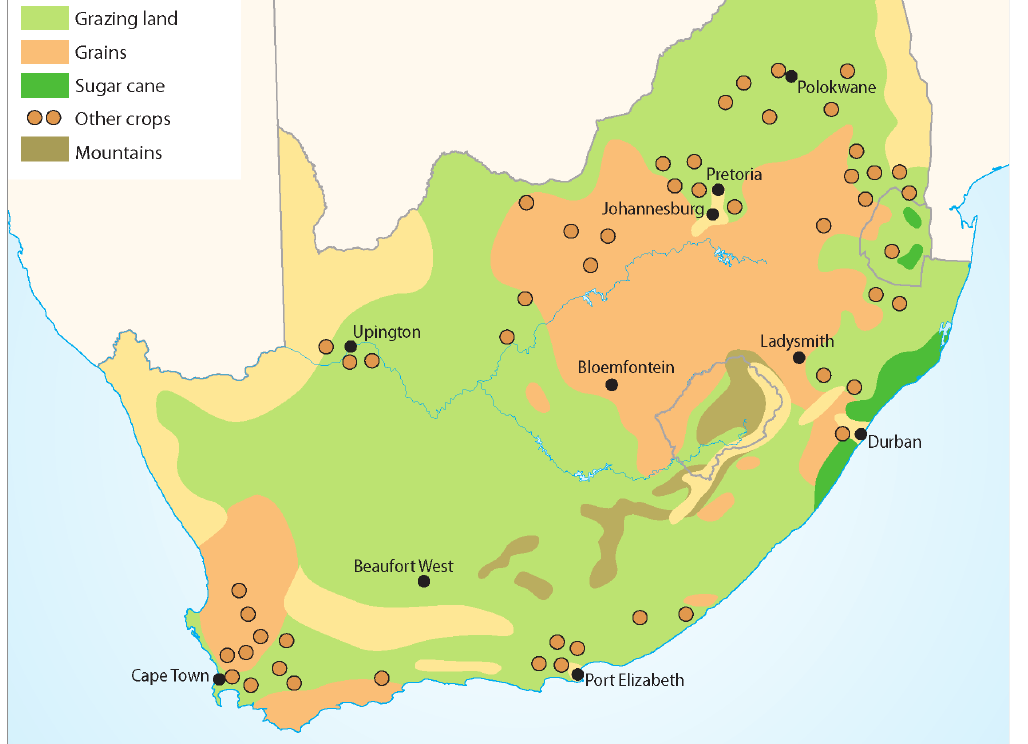
Different types of land serve different agricultural purposes, and understanding these patterns helps us see how countries make the best use of their available soil resources. Agricultural land can be categorized into several types based on what it can support:
- Grazing land - areas suitable for livestock farming where animals can feed on natural or cultivated grasses
- Grain production areas - fertile regions where crops like maize, wheat, and other grains can be grown successfully
- Sugar cane cultivation - specific areas with the right climate and soil conditions for this crop
- Other crop production - land suitable for various fruits, vegetables, and specialty crops
- Unproductive land - areas that cannot support significant agricultural activity due to poor soil, climate, or topography
Countries must carefully manage these different types of agricultural land to maximize their food production while protecting the long-term health of their soil resources. This is particularly important because soil is essentially a non-renewable resource - once it is degraded or lost, it takes many years to regenerate naturally.
Summary
Key Points to Remember:
-
Soil is central to agriculture and food production, and fertile soils have been crucial for the development of human civilizations throughout history
-
There is a strong correlation between global population distribution and soil fertility - people tend to live where the soil can support agriculture
-
South Africa faces significant soil challenges, with only 12% of its soils suitable for crop farming due to shallow soils, hard parent rock, and low rainfall
-
Arable land specifically refers to land suitable for growing crops, and South Africa's arable land can only feed about 35 million people compared to the USA's capacity of 800 million people
-
Different types of agricultural land serve different purposes, and countries must manage these resources carefully since soil is essentially a non-renewable resource