Case Study 1a: The Rise of African Nationalism (Grade 11 NSC Matric History): Revision Notes
📚Revision Notes
The Rise of African Nationalism
How World War II influenced the rise of African nationalism
World War II played a crucial role in awakening African nationalism in South Africa. The war created new expectations and experiences that would fuel the independence movement for decades to come.
Note
World War II became a catalyst for African nationalism because it exposed the contradictions between fighting for "freedom" abroad while experiencing oppression at home. This contradiction became a powerful motivating force for the independence movement.
The Atlantic Charter and AB Xuma's African claims
In 1941, British Prime Minister Winston Churchill and US President Franklin Roosevelt issued the Atlantic Charter, outlining their vision for the post-war world. This document contained powerful statements that African leaders interpreted as promises of freedom:
- Territorial changes: The Charter stated a "desire to see no territorial changes that do not accord with the freely expressed wishes of the peoples concerned"
- Self-determination: It promised to "respect the right of all peoples to choose the form of government under which they will live"
For the African National Congress (ANC) and African nationalists generally, the Atlantic Charter represented a promise that freedom would come to Africa once the war ended.
This promise inspired Dr AB Xuma, president of the ANC, to issue African claims in 1943, demanding:
- An end to all fascism
- Self-government as an expected right
- The right to choose their own form of government
The influence of returning soldiers
Britain recruited nearly two million Africans as soldiers, porters, and scouts during WWII. To persuade Africans to join up, Britain called it "a war for freedom". However, when these soldiers returned home, they expected recognition and honour for their sacrifice.
Important
Instead, the recognition they expected never arrived. African soldiers became bitter and discontented - they had fought to protect the interests of colonial powers only to return to continued exploitation and the indignities of colonial rule. This betrayal of expectations became a driving force behind post-war nationalism.
1945: Pan-African Manchester Congress, England
The disappointment over unfulfilled expectations after WWII led to the Pan-African Manchester Congress in 1945. This conference marked a turning point as it attempted to address the needs of all black people worldwide.
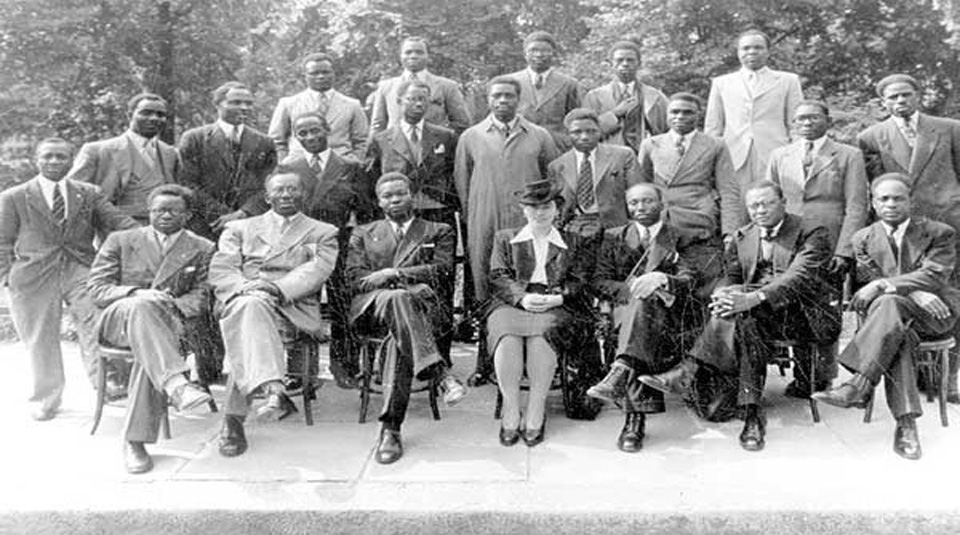
Pan-Africanism began to stress common experiences of blackness and sought liberation of all black people around the world. This ideology proved very popular among nationalist African leaders because it:
- Offered a way to overcome both regionalism and ethnic divides
- Stressed commonalities and common oppression
- By the 1950s, Pan-Africanism influenced almost every African nationalist leader
In South Africa specifically, Pan-Africanism resulted in:
- Increased militancy of the ANC Youth League (which helped remove Xuma as president in 1949)
- The eventual split of the Pan Africanist Congress (PAC) from the ANC in 1959
Different types of African nationalism
The different types of African nationalism that emerged before and after WWII resulted from the deteriorating situation in the country.
Social and economic conditions driving nationalism
Several factors created conditions that fuelled different forms of nationalism:
Rural poverty: A 1948 government commission found that:
- Almost one-third of people in African reserves had no land and/or no cattle
- 60% of families had fewer than five cattle
Urban migration: Due to poverty, the black population in cities almost doubled between 1930-1946
Housing crisis: Towns did not have enough housing in designated locations, leading to rapidly rising food prices
Informal settlements: The number of homeless people's movements grew, with people invading land around Johannesburg and building informal settlements. The biggest was 'Sofasonke' (meaning "we will all die together"), led by James Mpanza.
Note
These harsh social and economic conditions created fertile ground for different forms of nationalism to emerge. The worse conditions became, the more radical the nationalist responses tended to be.
Rise of militant trade unions
The difficult conditions led to increased militancy among black trade unions:
- 1945: 119 industrial trade unions represented 158,000 workers
- 1940-1945: More than 52,000 workers participated in strike action lasting longer than five days
- Many strikes succeeded in winning benefits for workers, giving them confidence
Example
Historical Example: The Great Mineworkers' Strike (1946)

- Over 60,000 black miners went on strike for better wages and replacement of the compound system with family housing
- Government retaliation: Police and army surrounded miners in compounds and forced them back to work at gunpoint
- Casualties: 12 miners were killed and over 1,000 injured
This strike demonstrated both the growing militancy of African workers and the violent lengths to which the government would go to suppress resistance.
The influence of ANC Youth League on types of nationalism
The ANC leadership realised that unless they changed to reflect the political and economic demands of new social forces, someone else would soon take over.
Formation and leadership
1944: Younger ANC leaders formed the ANC Youth League, including:
- Anton Lembede (key theorist)
- Walter Sisulu
- Oliver Tambo
- Nelson Mandela
They adopted a 'Programme of Action' that represented an increasingly militant and Africanist form of African nationalism.
Leadership changes and ideological shifts
1949: Dr Xuma was replaced as ANC President by Dr James Moroka, who had the support of the Youth League. Key appointments included:
- Walter Sisulu elected Secretary General
- Nelson Mandela and Oliver Tambo elected to the National Executive Committee
Self-reliance and racial pride
The Youth League's Programme of Action was adopted by the ANC as a whole. However, there were different views within the movement:
More Africanist Youth League (like Anton Lembede):
- Rejected political cooperation with white and Indian activists
- Emphasised the need for black self-reliance and racial pride
Moderate leaders (Sisulu, Mandela, Tambo):
- Influenced by Africanist ideals of self-reliance
- Realised that a united front was needed against the apartheid government
Important
This division and tension eventually resulted in disgruntled members breaking away to form the PAC. The ideological differences within the ANC about racial cooperation would shape South African liberation politics for decades.
Influence of the Congress of the People on nationalism
The Congress of the People directly impacted African nationalism and was a key catalyst in the formation of the Pan Africanist Congress (PAC).
Kliptown, 1955
The Congress of the People consisted of representatives from:
- ANC
- Coloured People's Congress
- South African Indian Congress
- White Congress of Democrats
The Freedom Charter affirmed the non-racial African nationalist tradition. It aimed at widening the definition of nation and nationalism, proclaiming that "South Africa belongs to all who live in it".
Africanist rejection
Africanists rejected this approach and called for even more militant political actions. In 1959, they tried unsuccessfully to get the ANC to repudiate the Freedom Charter and Congress Alliance. Their aim was to become an exclusively African nationalist movement.
Formation of PAC
1959: Led by Robert Sobukwe, the Africanists left the ANC and formed the PAC with slogans:
- "Africa for the Africans"
- "Amafrika Poqo" (meaning "Africans standing alone")
Increased militancy: The PAC appeared more militant than the ANC and called for a national anti-pass campaign, which led to massacres at Sharpeville and Langa.
Decline: The PAC was never able to attract a large following and virtually fell apart when it was banned by the government.
Note
The split between the ANC and PAC represented a fundamental division in African nationalism - between those who favoured an inclusive, non-racial approach and those who believed in exclusive African nationalism. This division would influence South African politics for decades.
Revival of Africanist tradition inside South Africa
Black Consciousness Movement (1970s)
Leaders of the Black Consciousness Movement (such as Steve Biko) revived the Africanist tradition. Black consciousness became very influential in shaping people's ideas, but it did not gain mass support as a political movement.
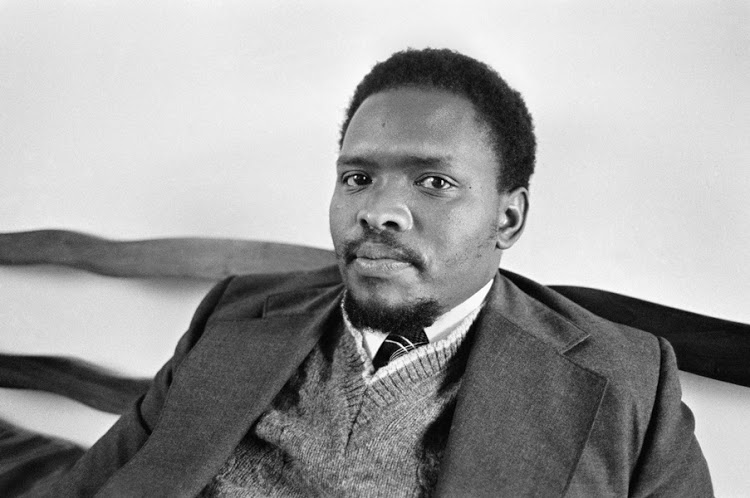
This stood in contrast to the radical, exclusive nationalism of the Africanists and the non-racialism of the ANC.
Non-racialism and the United Democratic Front
Morogoro Conference, Tanzania - 1969
At this conference, the ANC in exile re-affirmed its inclusive, non-racial African nationalism. The ANC went beyond merely cooperating with South Africans of other races and welcomed whites, Indians, and coloureds as full members.
This foreshadowed the broad-based cooperation that would be typified by the United Democratic Front (UDF) in the 1980s, following the Soweto uprising.
1976: Watershed year inside South Africa - ANC
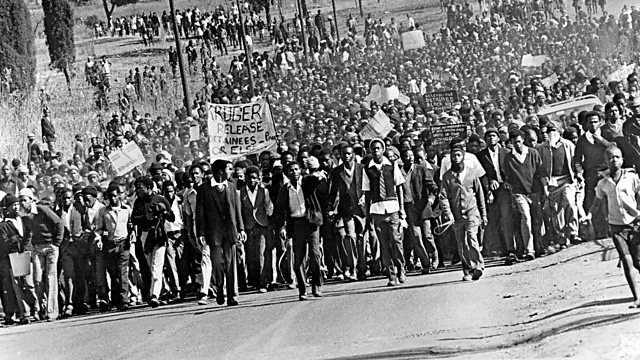
The Soweto uprising
Soweto: Protests erupted against the apartheid government's discriminatory education policies.
Important
Aftermath: The uprising established the leading role of the ANC in the liberation struggle. The ANC was the organisation best able to channel and organise students seeking the overthrow of apartheid.
The ANC's non-racialism came to dominate the form of liberation among blacks that was unfolding.
Turning point: The Soweto uprising became a turning point in the struggle against apartheid and shifted the focus of struggle to within South Africa.
Post-Soweto developments
Government suppression led to growing curiosity among urban black people and growing political awareness:
- Study groups developed in townships across South Africa
- Groups would study and discuss Charterist ideals and read ANC literature
Late 1970s: Initially, study groups had little contact with one another, but attempts were made to create a united movement within South Africa through:
- Black consciousness organisations
- Student organisations
- Trade unions
The aim was to coordinate the liberation struggle, and the ANC realised the need for a broad organisation based inside South Africa.
Formation and impact of the United Democratic Front
Launch of the UDF
20 August 1983: The United Democratic Front (UDF) was launched at a community hall in Rocklands, Mitchell's Plain.
Slogan: "UDF Unites, Apartheid Divides"
Purpose: Mobilisation of South Africans to form united resistance against apartheid.
Move towards broad-based national movement
Throughout the 1980s, the UDF showed commitment to a non-racial, democratic South Africa:
- People organised themselves into hundreds of democratic community-based bodies
- The state could not destroy the movement by arresting a few leaders
- By the time Mandela was released, a very broad-based national movement was in place
The UDF defined nationalism in non-racial, non-ethnic terms:
- 'Nationalism' meant all South Africans
- Inclusive nationalism became the foundation for national reconciliation and nation-building
National reconciliation and nation-building
Nation-building efforts
1989: FW de Klerk was elected leader of the National Party and became State President in September 1989, replacing PW Botha (who had led South Africa since 1984 and imposed a State of Emergency in 1985).
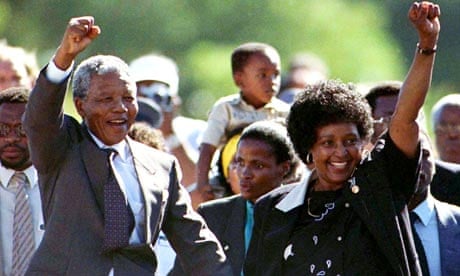
11 February 1990: After 27 years of incarceration, Nelson Mandela was released from Victor Verster Prison outside Paarl. He was greeted at the gates with his wife (Winnie Madikizela-Mandela) by thousands of supporters.
Challenges ahead
After bitter division between black and white, there was much animosity to overcome. Many people did not want a new, non-racial South Africa:
- Right-wing Afrikaners (like the Afrikaner Weerstandsbeweging - AWB) wanted South Africa for whites only
- More militant PAC wanted South Africa for blacks only
Vital for success: Finding ways to reconcile different 'racial' groups for nation-building.
CODESA negotiations
Note
December 1991: The Convention for a Democratic South Africa (CODESA) began negotiations on the formation of a multiracial transitional government and a new constitution extending political rights to all groups.
CODESA adopted a Declaration of Intent, committing itself to an 'undivided South Africa'.
27 April 1994: South Africa held its first non-racial democratic elections under an Interim Constitution, followed by further multiparty negotiations.
Characteristics of negotiations
The negotiations were:
- Inclusive: Led to former sworn enemies sitting down and discussing issues that affected the country as a whole
- Reconciliatory: Reconciliation between former enemies started
- Collaborative: Former enemies worked together to lay foundations for a new South African nation built on principles of human rights and non-racial national inclusivity
Example
Historical Example: Mandela's Reconciliation Efforts
Mandela made specific efforts to bring about reconciliation:
- Appointed FW de Klerk as one of his deputy presidents when he formed the Government of National Unity (GNU) in 1994
- Met with Besty Verwoerd, wife of the main architect of apartheid, HF Verwoerd
- Became a staunch supporter of the Springboks - South Africa hosted and won the Rugby World Cup in 1995
These symbolic gestures demonstrated Mandela's commitment to reconciliation and helped build trust between former enemies.
Truth and Reconciliation Commission
The Truth and Reconciliation Commission (TRC) was set up under the Promotion of National Unity and Reconciliation Act No. 34 of 1995, under the leadership of Archbishop Desmond Tutu.
TRC process
Witness testimonies: Witnesses identified as victims of gross human rights violations during apartheid were invited to give statements about their experiences.
Public hearings: Some witnesses were selected for public hearings, and perpetrators of violence could also give testimony and request amnesty from both civil and criminal prosecution.
Important
Purpose of the TRC
The purpose was for people on two sides of the divide created by apartheid to reconcile with one another through confession and forgiveness, and to commit to living in unity as South Africans.
The TRC represented a unique approach to dealing with past injustices - choosing truth and reconciliation over punishment and revenge.
New Constitution and nation-building
Constitution of South Africa
The South African Constitution (Constitution of the Republic of South Africa Act No. 108 of 1996) represented another step in the process of national reconciliation and nation-building because:
- The writing of the Constitution was an inclusive process
- The content entrenched in law the rights of all South Africans (in the Bill of Rights)
- It protected the rights of cultural minorities
- It celebrated cultural diversity within a single South African nation
Requirements for successful nation-building
Nation-building requires:
- Government to rule consistently with policies
- Citizens to imagine themselves as part of the nation and contribute towards it
Summary
Key Points to Remember:
- World War II created expectations of freedom through the Atlantic Charter and the experiences of returning African soldiers who felt betrayed after fighting for colonial powers
- Pan-Africanism emerged as a unifying ideology that connected African liberation movements worldwide and influenced the development of more militant nationalism in South Africa
- Different types of nationalism developed: ranging from inclusive non-racial approaches (ANC, UDF) to exclusive Africanist approaches (PAC, Black Consciousness)
- The ANC Youth League brought new militancy and Africanist ideas but ultimately chose a non-racial path, leading to the PAC split over racial inclusion
- The transition to democracy in the 1990s focused on reconciliation through negotiations, the Truth and Reconciliation Commission, and building an inclusive nation based on human rights and non-racial principles