Case Study 3: From “Gold Coast” to Ghana (Grade 11 NSC Matric History): Revision Notes
📚Revision Notes
Case Study 3: From "Gold Coast" to Ghana
Introduction
The transformation of the Gold Coast into independent Ghana represents one of Africa's most significant decolonisation stories. This case study explores how nationalism developed among different groups in Ghanaian society and ultimately led to independence in 1957 under the leadership of Kwame Nkrumah.
Note
Key Question: How did the rise in nationalism in Ghana lead to independence?
Early nationalism in the 'Gold Coast' (1901-1930s)
Impact of colonialism on the Gold Coast
By 1901, the Gold Coast had become a British colony, bringing together various kingdoms and tribes under a single colonial authority. This colonial system created three major impacts that would later fuel nationalist movements:
Important
Three Critical Impacts of Colonialism:
The wealthy educated elite: A small group of African lawyers, doctors, teachers, and merchants emerged along the coastal towns. These individuals spoke English and initially welcomed British rule, believing it would help them build a modern economy and society. However, they soon became frustrated when the colonial government ignored their aspirations and favoured policies that strengthened traditional chiefs instead.
Non-settler economy: Unlike other African colonies, the Gold Coast was not a settler colony. Its economy relied on gold mines and large numbers of traditional cocoa farmers who continued living on land controlled by traditional chiefs. The British depended on cooperation from these powerful traditional leaders to obtain labour for mines and encourage cocoa production.
Powerful traditional chiefs: The colonial system strengthened the position of traditional chiefs, who became intermediaries between British authorities and local communities. This created tensions with the educated elite who felt their modern qualifications were being overlooked.
Consequences that laid foundations for nationalism
These colonial impacts had three important consequences that would shape Ghana's path to independence:
The educated elite began to see themselves as a new Gold Coast identity, separate from their traditional backgrounds. When denied equal rights and privileges with the British, they turned towards nationalist ideas.
Most people outside the towns still identified with their traditional societies rather than any broader "nation." However, economic changes were forcing many poor farmers off their land and into mining villages and towns, creating a landless urban working class that became open to new African nationalist ideas.
Traditional chiefs and large cocoa farmers were displacing smaller farmers, creating social tensions that would later support independence movements.
Early political organisation
National Congress of British West Africa (NCBWA)
In 1912, JE Casley-Hayford and Dr Akiwande Savage wanted to show solidarity between British West African territories (Gambia, Gold Coast, Sierra Leone, and Nigeria). They founded the NCBWA in 1919 and held their first conference in Accra in March 1920 with delegates from all four colonies.

Delegation to London (1920)
The NCBWA sent a delegation to London requesting elected representation on colonial councils. They claimed to represent all African nationalists and intellectuals in British West Africa. The delegation was influenced by Marcus Garvey's Back-to-Africa movement, which called for emancipation of black people worldwide and promoted unity, pride in black culture, and autonomy.
However, the Colonial Office refused to meet with the delegation, claiming they only represented urban Africans, not the broader population. Despite this rejection, their actions gained significant support among the African elite back home.
Note
NCBWA's Limited Reach
The early nationalist movement had a clear elitist bias. The NCBWA leaders insisted they remained loyal to the British Crown while demanding representation on the Legislative Council. They wanted appointed council members replaced with elected representatives but did not connect with ordinary people's struggles.
Importantly, the NCBWA did not associate with the problems facing landless and urban poor Ghanaians. This limitation would persist until the late 1940s.
Resistance tactics
Economic resistance through boycotts
Between 1937-1938, wealthier farmers and traders organised a boycott of British-owned cocoa exporters who paid very low prices. This action aimed to break Britain's monopoly on cocoa exports. Simultaneously, they boycotted British manufactured goods, which was quite militant and lasted eight months, demonstrating unity between peasants and city workers.
Note
Colonial Economic Control
The British maintained their trading monopolies by controlling markets at exploitative low prices and ensuring that British capitalists controlled the production of goods sold back to Africans at high prices. Price controls further disadvantaged African farmers.
Trade unionism and worker solidarity
Skilled workers in mines, railways, and towns began forming trade unions and organising strikes between 1910-1930s. Notable strikes included:
- 1919: Dock workers in Lagos and railway workers in Sierra Leone
- 1924: Miners' strike on Asante goldfields in Gold Coast
While workers began using socialist rhetoric in their protests, the intellectual elite and working class remained divided in their resistance efforts.
World War II: influence on nationalism (1939-1945)
Exposure to democratic ideals
World War II significantly accelerated nationalist movements across Africa. African soldiers who served in Europe as part of the Allied war effort were exposed to ideas about liberating oppressed societies from totalitarian regimes. Allied propaganda justified campaigns against fascist and totalitarian governments.
The Atlantic Charter's impact
The Atlantic Charter emphasised the right to national self-determination, which inspired African nationalism. In 1941, African nationalists drew inspiration from these principles, seeing parallels between their colonial situation and the oppression fought against in Europe.
Universal Declaration of Human Rights
When the Nazis were defeated in Europe and Japanese forces surrendered in the Far East in 1945, the Universal Declaration of Human Rights became reality in 1948. Britain and France showed willingness to support decolonisation, making African nationalism more confident in demanding change.

Immediate developments in Gold Coast
Britain planned to slowly introduce reforms through an advisory Legislative Assembly with only 5 Africans elected from 18 members. In 1946, Dr Danquah and other elite leaders formed the United Gold Coast Convention (UGCC) to apply gentle pressure on Britain for constitutional independence.
Mass-based movements after World War II (1945-1950)
Worker militancy and popular protest
The independence struggle gained momentum when ordinary people began taking direct action:
In 1945, workers in larger industries including dockworkers, postal workers, and railway workers across many British colonies began militant strike action.
In 1948, a group of 2,000 ex-soldiers marched peacefully on the British Governor's residence in Accra to protest low war pensions and lack of jobs for returning servicemen. The British police commander panicked and shot two marchers. The crowd, seeking no violence, turned around and left.
The 1948 riots and their significance
Important
The 1948 Riots: A Turning Point
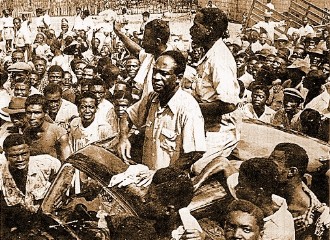
This shooting unleashed pent-up anger and frustration among urban poor and government employees. Violent spontaneous riots erupted in many Gold Coast towns, lasting for days. Property belonging to foreign companies was looted, 29 people were killed and 237 wounded by gunfire.
The UGCC was wrongly blamed for instigating the riots. Nkrumah (a young nationalist recently returned from overseas), Danquah, and four other leaders were arrested.
Without proper organisation, the riots were eventually brought under control, but they demonstrated the potential power of mass popular support for independence.
Kwame Nkrumah, pan-Africanism and African socialism
Nkrumah's background and influences
Kwame Nkrumah's education and experiences shaped his approach to Ghana's independence struggle:
After graduation in Ghana, he became a teacher. He then studied in the USA where he was exposed to Marxist ideology and pan-Africanism. He was inspired by the ideas of du Bois and Garvey, combining concepts of Christianity, socialism, and pan-Africanism.
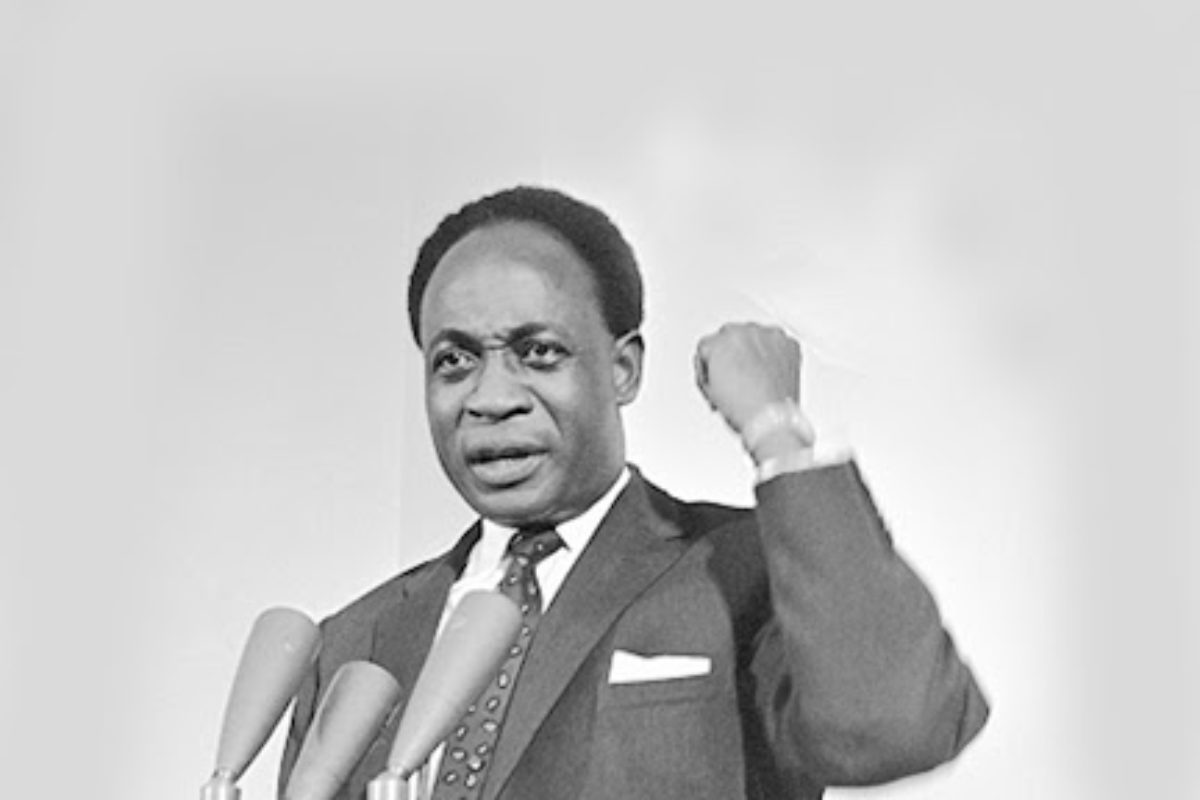
Nkrumah's role in the independence struggle
In 1945, Nkrumah left the USA to help organise the fifth Pan-Africanist Congress in Manchester, Britain. He wanted to achieve freedom for his nation as quickly as possible.
Danquah invited him to become general secretary of the UGCC in 1947. Nkrumah began organising meetings, helping create a mass movement of resistance to colonial rule.
However, a split developed between UGCC leaders and more radical supporters. In June 1949, Nkrumah broke away and formed the Convention People's Party (CPP) with radicals who aimed at immediate self-government.
The Positive Action Campaign
Example
Worked Example: The Positive Action Campaign
In January 1950, Nkrumah launched the POSITIVE ACTION CAMPAIGN - a programme of mass, non-violent non-cooperation with colonial authorities.
Step 1: Campaign mobilised workers, students, and ordinary citizens
Step 2: Mass strikes and boycotts disrupted colonial services
Step 3: Colonial authorities responded by imprisoning Nkrumah as a troublemaker
Step 4: The first elections showed growing support for the CPP
Result: Nkrumah was released and became Prime Minister in 1952
Kwame Nkrumah's presidency: successes and criticism
In March 1957, the Gold Coast and British Trust territory Togoland became the independent state called Ghana. Nkrumah's leadership brought both significant achievements and serious problems.
Successes of Nkrumah's leadership
Example
Worked Example: Nkrumah's Development Achievements
Infrastructure development: He built roads, schools, and health facilities, improving the standard of living for ordinary people.
Africanisation policy: This improved career opportunities for many Ghanaians by replacing European officials with qualified Africans.
Constitutional development: In 1960, after a referendum, Ghana became a republic with Nkrumah as president. He gained wide executive and legislative powers and campaigned for African independence throughout the continent and political solidarity among African states.
Criticism and authoritarian tendencies
However, Nkrumah's presidency also faced serious problems that ultimately led to his downfall:
Important
Warning Signs of Authoritarian Rule
Authoritarian governance: In 1958, his government legalised detention without trial for individuals considered security risks. This showed his authoritarian leadership style and limited criticism of his rule.
Economic mismanagement: Within two years, he lost touch with economic reality, undertaking expensive and unsuccessful schemes. The country's foreign debt increased, crippling economic development. He had to abandon the 1959 Second Development Plan in 1961 due to financial problems. Labour unrest increased, leading to a general strike in September 1961.
Political repression: Nkrumah adopted increasingly rigid control policies, censoring press, television, and radio. He turned to communist countries for support. After an attempted assassination in 1962, he became more isolated from public life.
Note
The Cult of Personality
Despite his shortcomings, many viewed him as a saint or messiah. His government increased security forces to maintain control. By 1964, Ghana became a one-party state with Nkrumah declared life president of both the nation and party.
Corruption became widespread in Nkrumah's government while he focused on educating new African political activists. By 1966, Ghana faced economic crisis marked by chronic food shortages.
End of Nkrumah's political career
In 1966, the army and police overthrew Nkrumah and his government in a coup d'état while he was visiting China. Nkrumah sought asylum in Guinea and died of cancer in Bucharest in 1972.
Summary
Key Points to Remember:
-
Colonial impact: Three key impacts (educated elite, non-settler economy, traditional chiefs) created conditions that led to nationalism in Ghana
-
Progressive organisation: Nationalism evolved from elite organisations (NCBWA 1919, UGCC 1946) to mass movements (CPP 1949)
-
World War II catalyst: The war exposed Africans to democratic ideals and self-determination principles that accelerated independence movements
-
Nkrumah's leadership: Combined pan-African ideology with mass mobilisation to achieve independence in 1957, but his authoritarian rule led to his overthrow in 1966
-
Economic factors: Resistance tactics like cocoa boycotts and worker strikes demonstrated popular opposition to colonial economic exploitation