Water Availability (Grade 11 NSC Matric Life Sciences): Revision Notes
📚Revision Notes
Water Availability
Introduction to water availability
Clean fresh water is absolutely essential for the survival of all living species on Earth. While water is considered a renewable resource, its availability depends heavily on climate conditions and human activities. This makes water availability a critical environmental issue that affects billions of people worldwide.
Important
Scientists estimate that by 2050, almost 2 billion people will not have access to clean, safe water supplies. This represents an urgent challenge that governments across the world must address through careful water management and conservation strategies.
Global water consumption trends
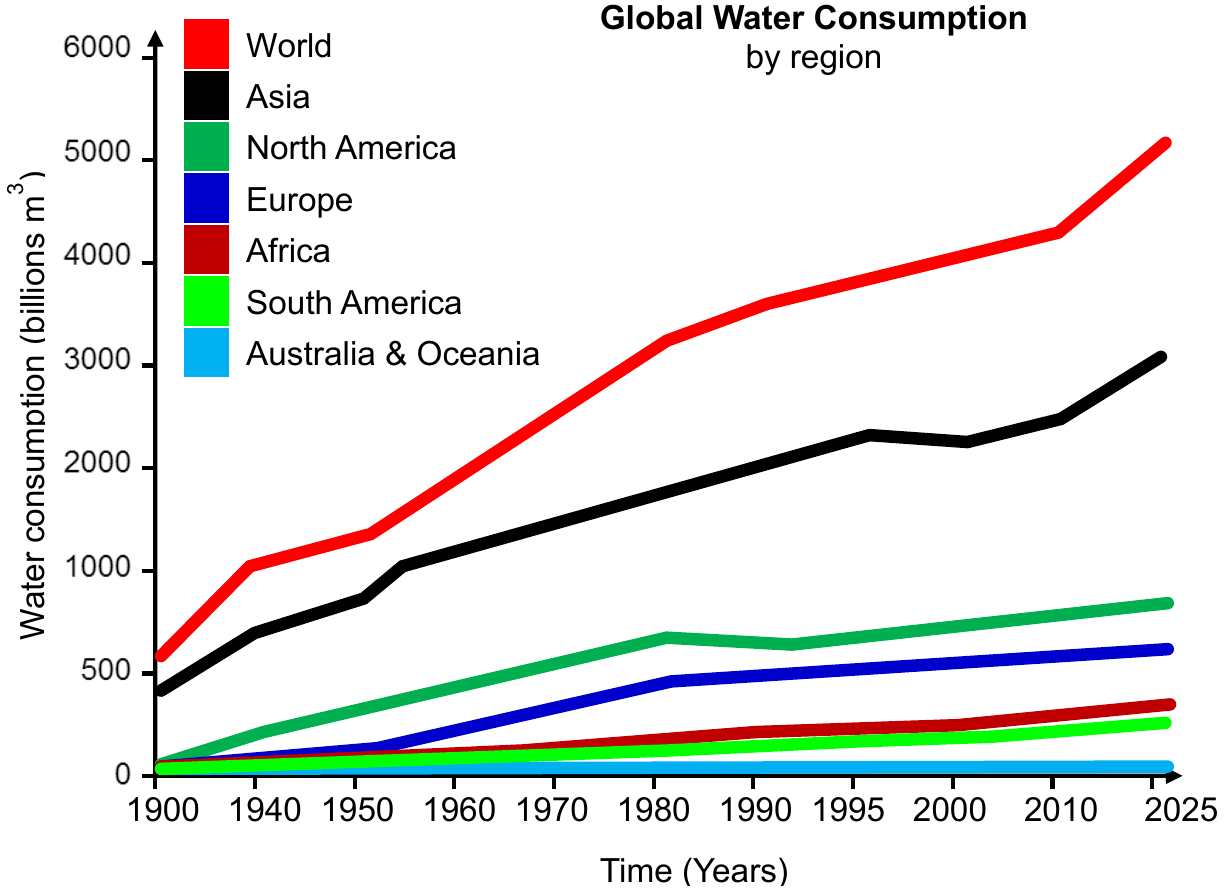
Water consumption has increased dramatically over the past century, with the most significant growth occurring after 1950. The data shows an exponential increase in global water usage, rising from approximately 500 billion cubic metres in 1900 to over 5,000 billion cubic metres by 2025.
Note
Regional differences in water consumption are striking. Asia demonstrates the second-highest consumption after the world total, with usage rising from around 300 billion cubic metres to 3,000 billion cubic metres. North America and Europe show more moderate growth patterns, whilst Africa, South America, and Australia & Oceania display the lowest consumption levels. This data highlights significant global inequalities in water access and usage patterns.
Key terminology
Understanding water-related terms is essential for studying this topic:
| Term | Definition |
|---|---|
| Hydroelectricity | Electricity generated by the power of water |
| Wetland | Ecosystem saturated permanently or seasonally with water |
| Aquifer | Underground layer of water-bearing, sponge-like rock |
| Irrigation | Supply of water to land or crops to help growth |
| Eutrophication | Excessive nutrients in a waterbody causing excessive growth of algae or aquatic plants |
| Sewage | Liquid waste: water and excrement in sewers |
| Sewerage system | Sewers carrying sewage to a treatment plant |
| Contamination | Pollution or poisoning |
| Thermal pollution | Heat pollution from hot water |
| AMD | Acid mine drainage |
| Purification | Cleaning by removing contaminants |
| Reclamation | Returning something to a previous, better condition |
Factors affecting water availability in South Africa
Access to sufficient water is recognised as a basic human right in the Constitution of South Africa. Whilst this has improved access for some citizens, service delivery remains a significant challenge for most people in our country. Several major factors influence water availability in South Africa.
Construction of dams
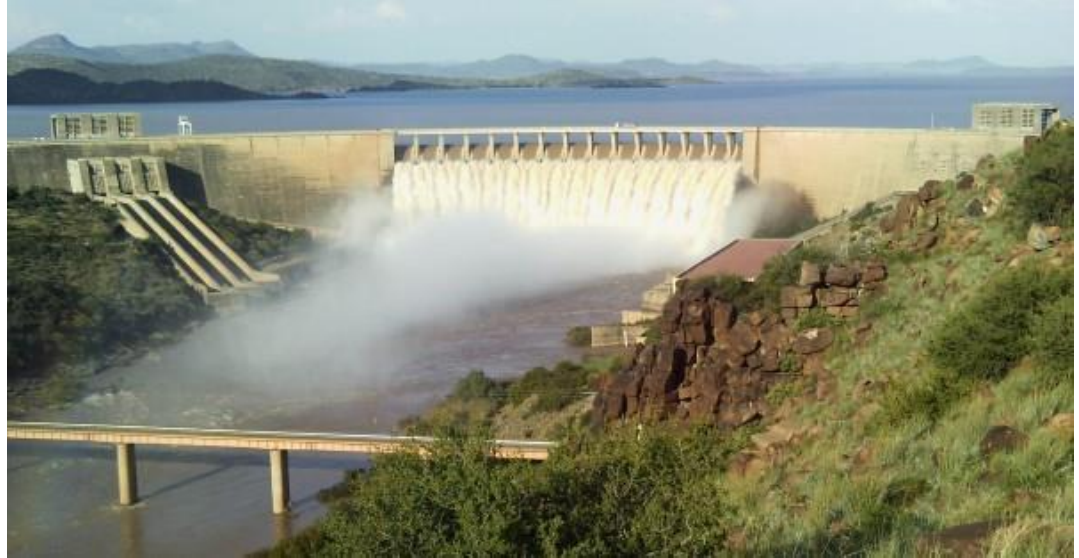
A dam is a human-made barrier usually built across a river or catchment area to serve multiple purposes. Dams are constructed for several important reasons:
- Providing water supply for domestic and industrial use
- Supporting agricultural and food production through irrigation
- Controlling floods in catchment areas
- Generating hydroelectricity for power supply
Important
However, dam construction also creates significant negative environmental impacts that affect water availability:
- Loss of habitats below the dam, reducing water availability for ecosystems
- Changes in natural water flow patterns, disrupting river systems
- Reduced water quality due to stagnant conditions
- Increased sedimentation that reduces dam capacity over time
- Prevention of natural fish migration patterns, affecting biodiversity
Destruction of natural wetlands
Wetlands are incredibly important ecosystems that play a crucial role in water management. These areas function as nature's own water treatment and storage systems.

Note
Wetlands provide two essential functions for water availability:
- Natural sponges: Wetlands store rainwater and release it slowly during dry seasons. This prevents flooding and reduces soil erosion that would result from rapid water runoff.
- Natural filters: These ecosystems support diverse communities of animals, plants, and aquatic organisms that act as biological philtres, cleaning water that flows through them.
Unfortunately, wetlands face serious threats from human activities:
- Development pressure: Wetlands are drained to build roads, factories, and housing in urban areas, and converted for agricultural irrigation
- Damming effects: Constructing dams destroys wetlands' natural ability to philtre and release water
- Pollution: Mining, industrial waste, domestic waste, and litter contaminate these sensitive ecosystems
Exotic and alien plantations deplete the water table
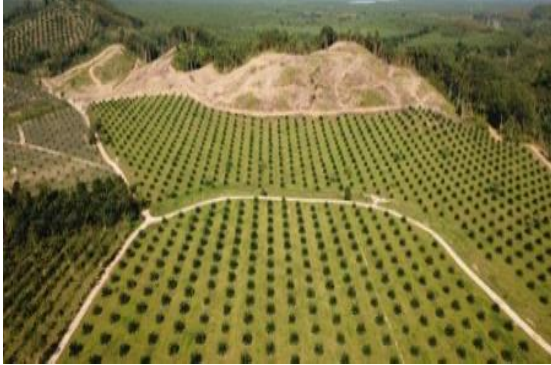
Many alien plant species that are not native to South Africa have been introduced for commercial purposes. These include wattles, gums, pines, and other fast-growing trees used for timber and wood pulp production in the paper industry.
Important
These invasive plants create serious water availability problems because they are extremely water-hungry species. They consume much more groundwater than native vegetation, which depletes aquifers and reduces water availability for other uses. Additionally, these monoculture plantations reduce biodiversity by displacing native plant communities that are better adapted to local water conditions.
Water wastage
Water wastage occurs through various pathways that significantly reduce available supplies:
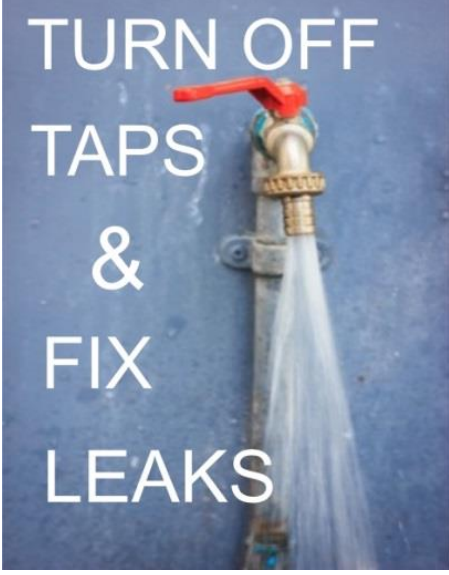
Infrastructure problems: Water is lost through carelessness, poor management, and inefficient systems. Approximately 40% of urban water supplies are lost through leaking pipes and faulty infrastructure.
Crisis events: Droughts, veld fires, and other emergencies increase water demand and create greater risk of wastage when communities struggle to access normal supplies.
Cost of water
Water pricing policies significantly influence availability and access patterns in South Africa:
Note
Free basic allocation: The 'Water for all' policy introduced in 2006 provides 6 kilolitres per month free for families of five people. However, building and maintaining dams, water treatment facilities, and supply infrastructure is expensive.
Progressive pricing: Municipalities charge increasingly higher rates for water usage beyond the free allocation - the more water used, the higher the cost per litre. This pricing structure aims to encourage conservation.
Distance costs: Urban areas often depend on water from dams located in distant rural areas, which increases transportation and infrastructure costs that are passed on to consumers.
Poor farming practices
Several agricultural practices contribute to water wastage and reduced availability:
Monoculture farming: Planting single crops across large areas requires intensive water use. Open ditch irrigation and overhead sprinkling systems lose significant amounts of water through evaporation.
Important
Overgrazing and land degradation: When livestock overgraze areas, vegetation destruction and burning practices cause soil erosion. This leads to increased water loss through faster runoff rather than soil absorption.
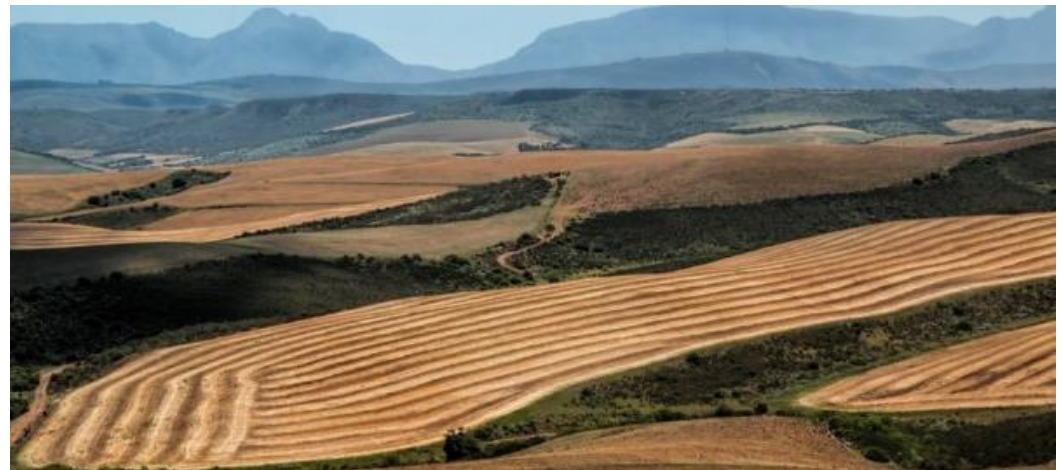
Incorrect ploughing methods: Ploughing straight up and down slopes instead of following contour lines causes excessive runoff and water wastage, whilst also promoting soil erosion.
Droughts and floods
South Africa's climate is characterised by highly variable rainfall patterns, and most regions of the country are classified as arid or semi-arid. This natural variability creates ongoing water availability challenges:
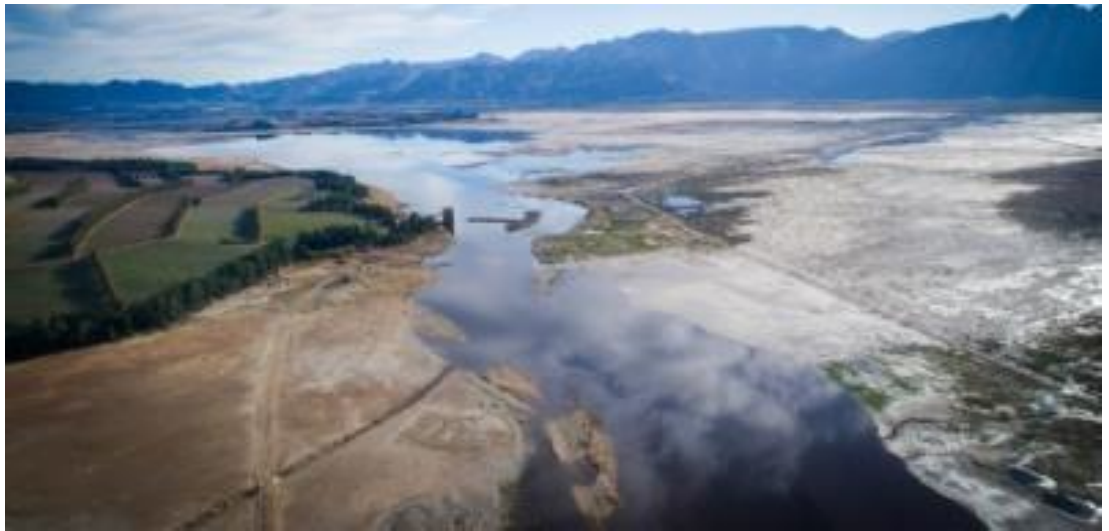
Drought impacts: During drought periods, water availability decreases significantly. Rising temperatures increase evaporation rates from open water sources like dams and lakes. The water stored in dams during these dry periods cannot be easily replaced when natural inflows are reduced.
Note
Flood impacts and vegetation loss: Natural vegetation normally helps water soak into soil rather than running off the surface. When vegetation is removed or damaged, land becomes too arid to absorb water effectively. During flood events, excess water is lost through runoff rather than being stored in soil, and erosion removes valuable topsoil.
Boreholes deplete aquifers
Underground water sources face increasing pressure from over-extraction:
Monitoring needs: Boreholes require careful monitoring to prevent excessive water extraction from aquifers. When too much water is removed too quickly, aquifers cannot naturally recharge, leading to permanent water source depletion.
Important
Industrial impacts: Mining operations in Gauteng and North West Province, as well as fracking activities in the Karoo region, can drain and pollute aquifers, significantly reducing their long-term water availability.
Remember!
Summary
Key Points to Remember:
- Water availability depends on climate conditions, and by 2050 nearly 2 billion people may lack access to clean water supplies
- Global water consumption has grown exponentially since 1950, with significant regional inequalities in usage patterns
- Dams provide essential services but also cause environmental damage that reduces natural water availability
- Wetlands act as natural sponges and philtres, but are being destroyed by human development and pollution
- Alien plant species deplete groundwater much faster than native vegetation, reducing water availability for other uses
- Water wastage through poor infrastructure and management practices loses up to 40% of urban water supplies