Area and Volume (Grade 11 NSC Matric Mathematical Literacy): Revision Notes
📚Revision Notes
Area and Volume
Introduction to area and volume
Understanding area and volume is essential for solving real-world problems involving space, materials, and measurements. These concepts help you calculate how much paint you need for walls, how much water fits in a container, or how much concrete is required for construction projects.
Note
The key difference between area and volume lies in dimensions:
- Area measures 2-dimensional space (flat surfaces)
- Volume measures 3-dimensional space (space inside objects)
Surface area
Definition and key concepts
Surface area is defined as the total area of all surfaces of a three-dimensional object. Think of it as the amount of wrapping paper you would need to completely cover an object.
Important points about surface area:
- You can calculate the area of 2-dimensional shapes directly
- For 3-dimensional objects, you must find the surface area by calculating the area of each individual surface
- Surface area calculations are useful for determining paint coverage, material costs, and packaging requirements
Key formulas for surface area
Important
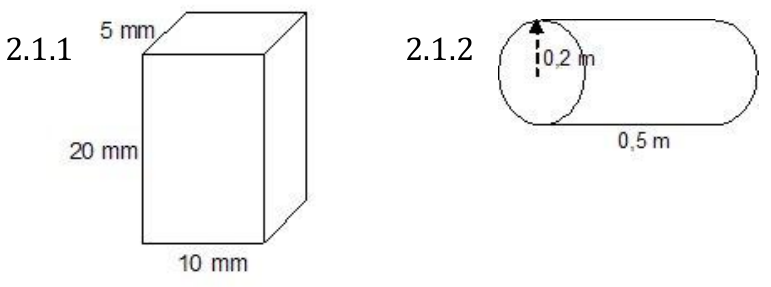
Rectangular box (cuboid):
- Surface area = sum of the areas of each side
- For a box with length , width , and height :
- Surface area =
Cylinder (with top and bottom):
- Surface area =
- Where radius and height
- This includes the two circular ends plus the curved side
Units for surface area
Surface area is always expressed in square units:
- mm² (square millimetres)
- cm² (square centimetres)
- m² (square metres)
Volume
Definition and key concepts
Volume represents the amount of space inside a hollow three-dimensional object or the amount of space that a solid three-dimensional object occupies.
Note
Volume helps you determine:
- How much liquid a container can hold
- How much material is needed to fill a space
- Storage capacity of boxes and tanks
Key formulas for volume
Important
Rectangular box (cuboid):
- Volume = length × width × height
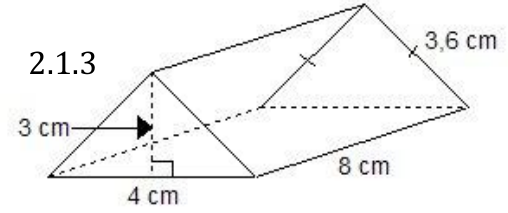
Cylinder:
- Volume =
- Where radius of the base and height
General formula for rectangular-based containers:
- Volume = area of base × height
Units for volume
Volume is always expressed in cubic units:
- mm³ (cubic millimetres)
- cm³ (cubic centimetres)
- m³ (cubic metres)
Unit conversions and relationships
Volume to liquid conversions
These conversions are crucial for practical applications:
Important
- 1 m³ = 1 000 litres
- 1 cm³ = 1 millilitre (ml)
Understanding unit relationships
When converting between different units, remember:
Surface area conversions
Unlike volume, there is no universal conversion from square units to liquid quantities for surface area coverage. Paint coverage depends on:
- The consistency of the paint
- The thickness of application
- The surface texture
Note
Example: If paint covers 10 m² per litre, this is specific to that particular paint type.
Worked examples
Example 1: Surface area of a rectangular box
Example
Worked Example: Surface Area of a Rectangular Box
Calculate the surface area of a rectangular box with length = 10 mm, width = 20 mm, height = 5 mm.
Solution: Surface area =
Step 1: Substitute the values
Step 2: Calculate each term
Step 3: Add all terms
Example 2: Volume of a cylinder
Example
Worked Example: Volume of a Cylinder
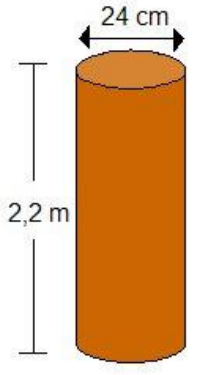
Calculate the volume of a cylinder with radius = 12 cm and height = 2.2 m.
Solution: Step 1: Convert units to be consistent Height = 2.2 m = 220 cm
Step 2: Apply the volume formula Volume =
Example 3: Converting volume to litres
Example
Worked Example: Volume to Liquid Conversion
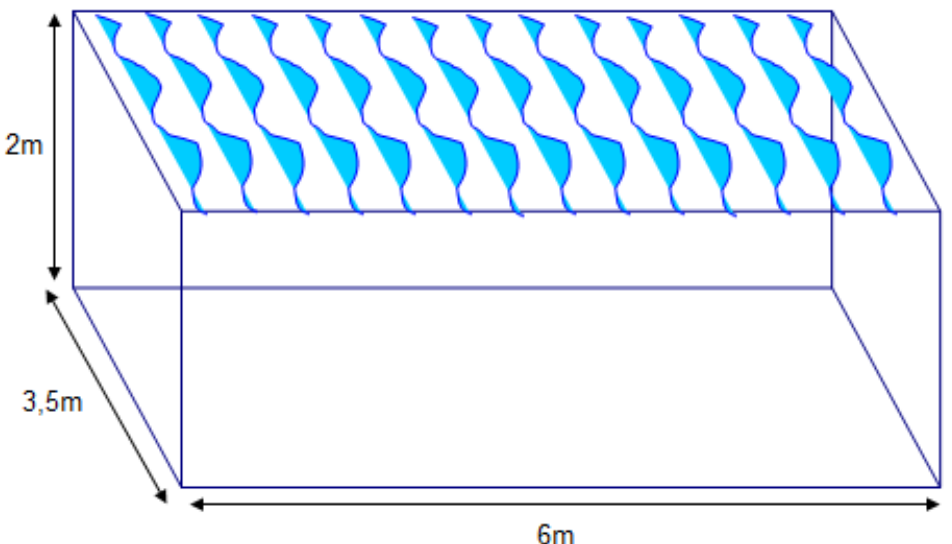
Calculate how many litres of water a rectangular swimming pool can hold if it measures 6 m × 3.5 m × 2 m.
Solution: Step 1: Calculate volume Volume = length × width × height
Step 2: Convert to litres
Exam tips and common mistakes
Key exam strategies
Note
- Always check your units - use square units for area and cubic units for volume
- Convert all measurements to the same unit before calculating
- For cylinders, remember to include both circular ends when calculating surface area
- When converting m³ to litres, multiply by 1 000
Common mistakes to avoid
Important
Watch out for these common errors:
- Confusing area and volume formulas
- Forgetting to convert units consistently
- Missing surfaces when calculating surface area (especially cylinder tops and bottoms)
- Using the wrong conversion factor for volume to liquid conversions
Problem-solving approach
Follow this systematic approach for successful problem solving:
- Identify what you're asked to find (area or volume)
- Check that all measurements are in the same units
- Choose the correct formula
- Calculate step by step
- Check your answer makes sense and has correct units
Remember!
Summary
Key Points to Remember:
- Surface area measures the total area of all surfaces of a 3D object (square units: mm², cm², m²)
- Volume measures the space inside or occupied by a 3D object (cubic units: mm³, cm³, m³)
- Key conversions: and
- Always check units - convert everything to the same unit before calculating
- For real-world problems, volume tells you capacity while surface area tells you coverage needs