Problem-Solving Cycle (Grade 12 NSC Matric Computer Application Technology): Revision Notes
📚Revision Notes
Problem-Solving Cycle
Understanding data and information in problem-solving
Before diving into the problem-solving process, it's essential to understand the difference between data and information. Data consists of raw, unorganised numbers or facts that are difficult to use in their current state. When this data becomes organised and structured in a way that makes it useful to people, it transforms into information.
Note
The process of converting data into information is fundamental to effective problem-solving. When you encounter a problem, you begin by looking at the available data and work to organise it into useful information that can guide you towards a solution.
The problem-solving cycle overview
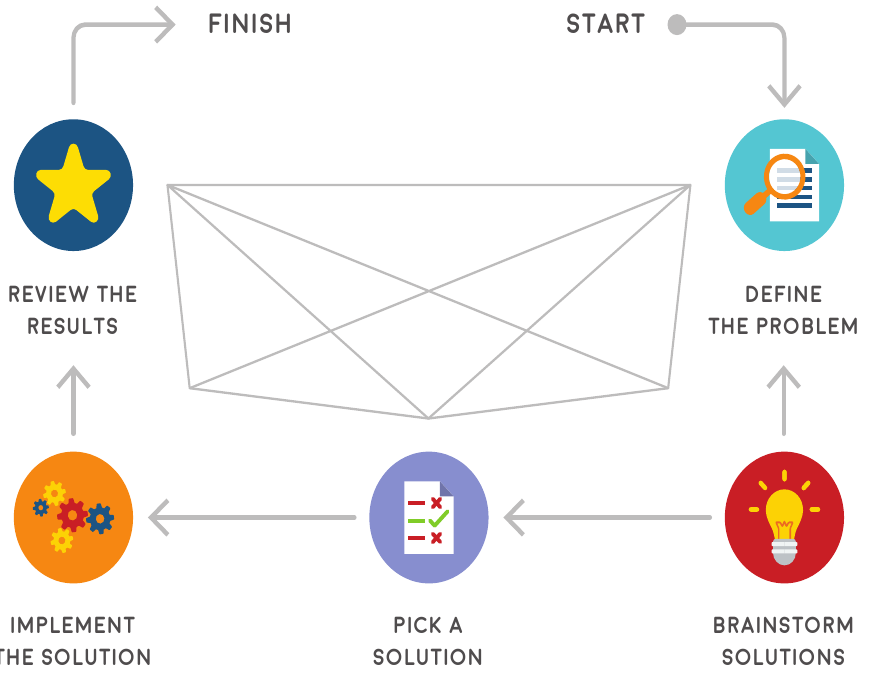
Problem-solving follows a systematic approach consisting of five key steps that work together in a continuous cycle. This methodical process helps ensure that you thoroughly understand the problem, explore all possible solutions, and implement the most effective approach.
Important
The problem-solving cycle is designed to be iterative, meaning that if your chosen solution doesn't work effectively, you can return to earlier steps and try a different approach.
The five steps explained
Step 1: Define the problem
The first and most crucial step involves clearly determining what problem you're trying to solve. This requires a thorough understanding of the situation, which you can achieve by writing down everything you know about the problem.
When defining your problem, make sure to include:
- What is currently known about the problem
- What information is missing or needed to fully understand the problem
After documenting your existing knowledge, you need to identify how to obtain any missing information. One effective method is using questions or questionnaires to collect additional data about the problem. This data can then be organised into useful information that helps you identify the problem more clearly and understand potential solutions.
Step 2: Identify possible solutions
Once you've properly identified the problem, you need to research various ways to solve it. This step involves gathering information from multiple sources to explore all possible solutions.
You can use two main types of resources:
- Information sources: These include electronic sources such as websites and internet articles, as well as printed materials like books and standard operating procedures
- Data-gathering tools: These involve conducting questionnaires and interviews with relevant people or your targeted market
Both types of resources provide valuable data that can be organised into information to help you identify multiple possible solutions to your problem.
Step 3: Choose a solution
Your research will likely reveal several possible solutions, but you need to determine which one is most suitable for your situation. This decision requires applying your knowledge of the subject matter.
Note
Knowledge comes from experience and education, and this background should help you evaluate all the information you've gathered. Use your expertise to sift through the available information and identify the best possible solution for your specific problem.
Step 4: Implement the solution
After selecting the most appropriate solution, you need to put it into action. Make sure you implement the solution according to both your knowledge and the research you've conducted.
Important
It's crucial to follow through completely with your chosen solution. A solution that isn't fully implemented may create new problems rather than solving the original issue.
Step 5: Review the solution
Problem-solving doesn't end with implementation. You must evaluate whether your solution effectively resolves the original problem.
If your chosen solution isn't working effectively, you need to return to Step 1 and identify why the solution failed. Then work through the process again, choosing a different solution and testing whether it resolves the issue.
This review step is essential because it ensures that your problem-solving efforts actually achieve the desired outcome.
Real-world example: Using data to solve educational challenges
Example
Worked Example: Teacher Using Data for Student Improvement
Consider Miss Peterson, a high school Natural Sciences teacher who wants to help her students improve their performance. She's concerned about her students and wants them to not only pass but excel in their studies.
Step 1: Define the problem Miss Peterson identified that she needed to understand her students' performance patterns to provide better support.
Step 2: Gather information She decided to use the school's database to examine how her current class performs compared to previous years. When she accessed the database, she found hundreds of pages of raw data for each student enrolled over the past five years.
Step 3: Organise data into information Miss Peterson requested that the database convert all this raw data into percentages and display only the information for students in her Natural Sciences class. Once the database organised the data, she was presented with five columns showing the averages for her students over the past five years.
Step 4: Use information to implement solutions Using this organised information, Miss Peterson could now compare current averages with historical data and identify which students needed extra attention and support.
This example demonstrates how the problem-solving cycle works in practice: defining the problem (student performance), gathering data (database information), organising it into useful information (percentage averages), and using that information to implement solutions (targeted support for struggling students).
Summary
Key Points to Remember:
- Data becomes information when it's organised and structured to be useful for decision-making
- The five steps work as a cycle: Define the problem → Identify solutions → Choose a solution → Implement the solution → Review the results
- Step 1 is crucial: Properly defining the problem ensures you're solving the right issue
- Research thoroughly in Step 2 using both information sources and data-gathering tools
- Review and repeat if your solution doesn't work - the cycle is designed to be iterative until you find an effective solution