Polygons (Grade 12 NSC Matric Mathematics): Revision Notes
📚Revision Notes
Polygons
What is a polygon?
A polygon is a flat, closed figure made up of three or more straight line segments connected end-to-end. These shapes are fundamental in geometry and appear frequently in NSC Mathematics Paper 2 questions.
Note
Polygons are one of the most frequently tested topics in NSC Mathematics Paper 2. Understanding their properties and area formulas is essential for success in geometry questions.
Types of polygons and their area formulas
Understanding how to calculate the area of different polygons is essential for solving geometry problems. Each type of polygon has its own specific formula based on its unique properties.
Triangle
A triangle is the simplest polygon with three sides. To find its area, you need to know the length of one side (the base) and the perpendicular distance from that side to the opposite vertex (the height).
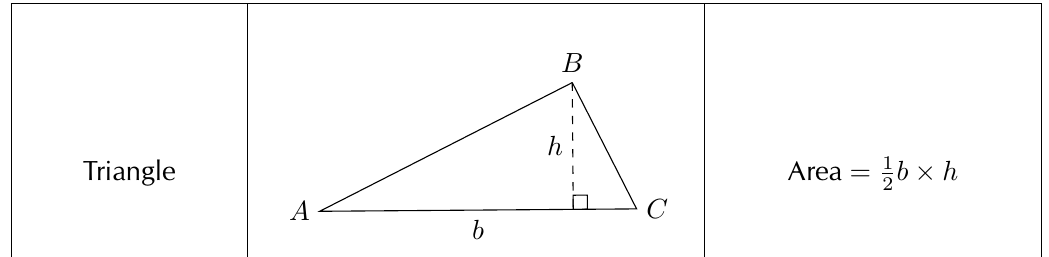
Formula: Area =
Important
The height must always be perpendicular to the base. This means it forms a 90° angle with the base line.
Quadrilaterals
Quadrilaterals are four-sided polygons. Different types of quadrilaterals have different area formulas depending on their properties.
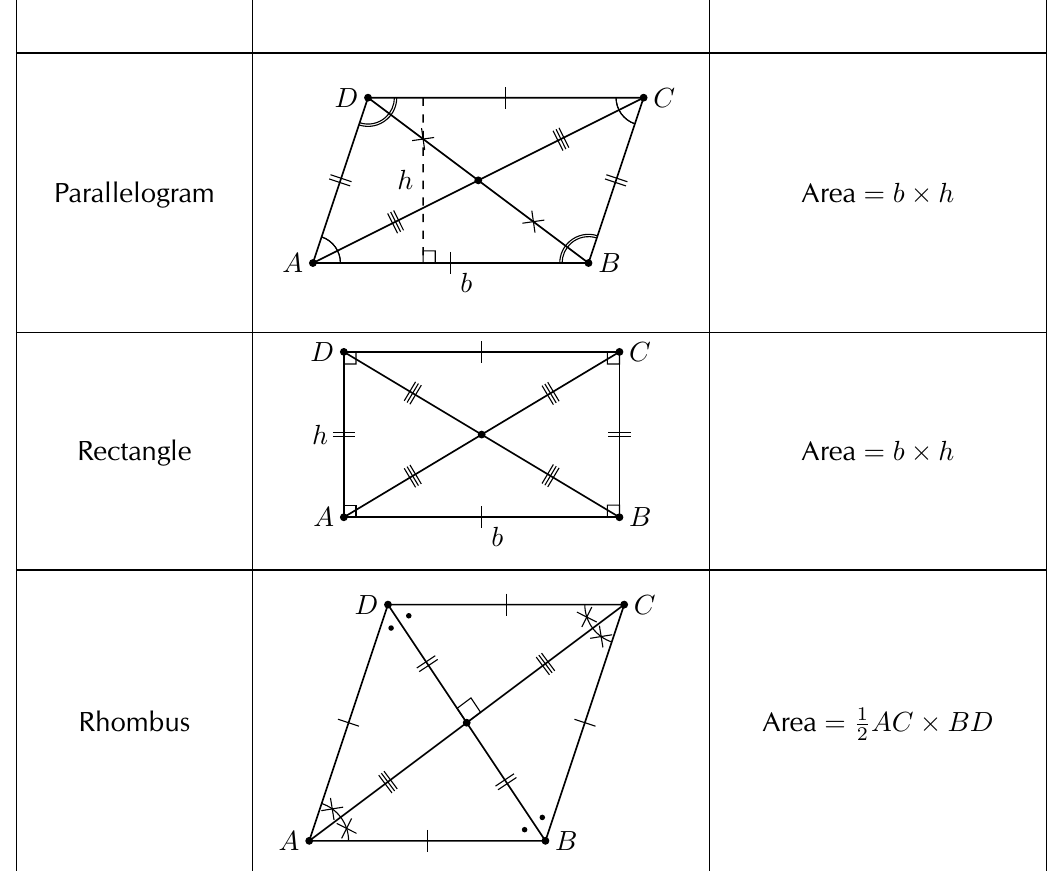
Parallelogram
A parallelogram has opposite sides that are parallel and equal in length.
Formula: Area =
Note
The height is the perpendicular distance between the parallel sides, not the length of the slanted side.
Rectangle
A rectangle is a special parallelogram where all angles are 90°.
Formula: Area = (or length × width)
Since the sides are already perpendicular, any side can serve as the base and its adjacent side as the height.
Rhombus
A rhombus has all four sides equal in length, and its diagonals bisect each other at right angles.
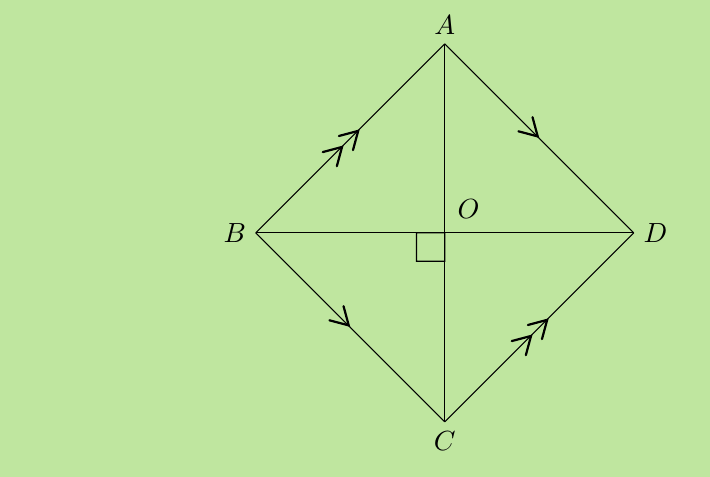
Formula: Area =
The diagonals of a rhombus always intersect perpendicularly, which makes this formula particularly useful.
Square
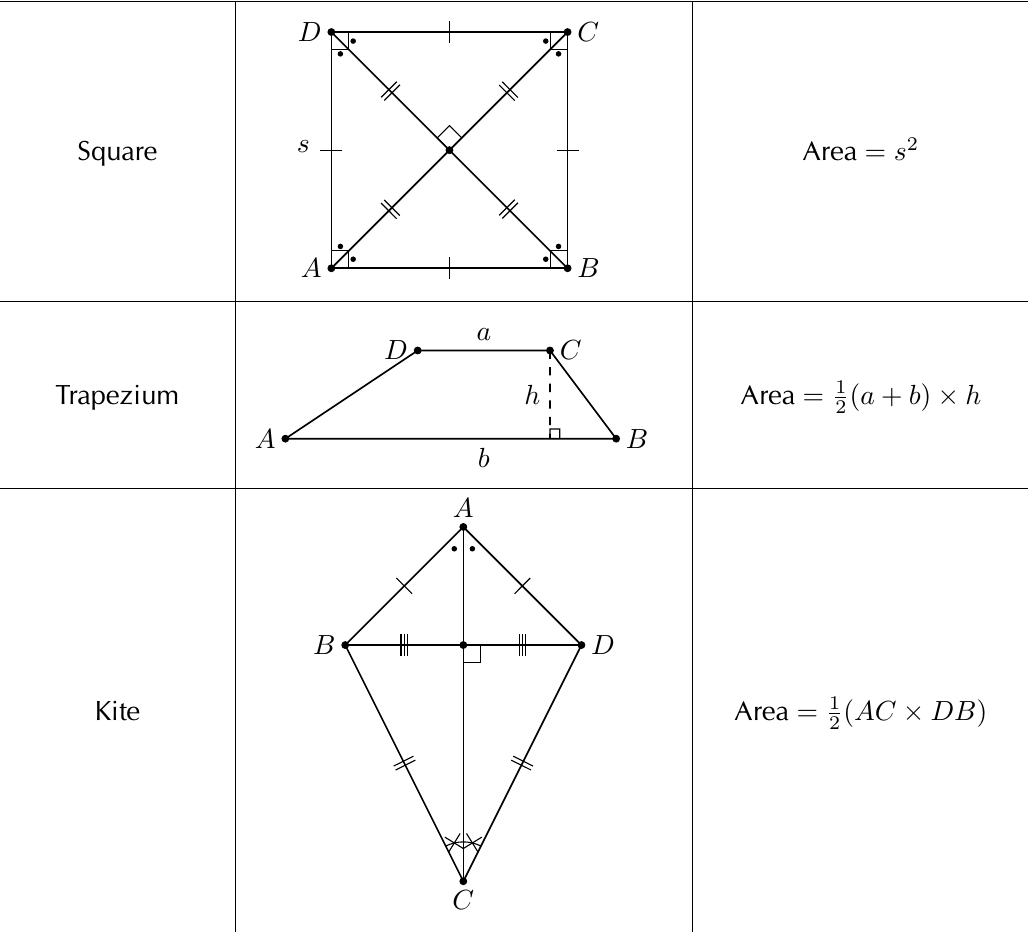
A square is a special rectangle (and rhombus) where all sides are equal and all angles are 90°.
Formula: Area =
This is the simplest area formula since you only need to know the length of one side.
Trapezium
A trapezium has exactly one pair of parallel sides of different lengths.
Formula: Area =
The height is the perpendicular distance between the two parallel sides.
Kite
A kite has two pairs of adjacent sides that are equal in length, and its diagonals intersect at right angles.
Formula: Area =
Like the rhombus, the perpendicular diagonals make this formula applicable.
Example
Worked Example: Properties of a Rhombus
Question: ABCD is a rhombus with BD = 12 cm and AB : BD = 3 : 4.
Calculate:
- Length of AB
- Length of AO
- Area of ABCD
Solution:
Step 1: Find the length of AB using the given ratio
- AB : BD = 3 : 4
- This means AB/BD = 3/4
- Since BD = 12 cm: AB/12 = 3/4
- Therefore: AB = 12 × 3/4 = 9 cm
Step 2: Calculate the length of AO using rhombus properties
- In a rhombus, diagonals bisect each other at right angles
- Since BD = 12 cm, then BO = 6 cm (diagonals bisect each other)
- In triangle ABO, angle AOB = 90° (diagonals intersect perpendicularly)
- Using Pythagoras' theorem:
- AO = = 6.71 cm
Step 3: Calculate the area of rhombus ABCD
- Area =
- Since diagonals bisect each other: AC =
- Area = = 80.50 cm²
Important
Critical Points to Avoid Common Mistakes:
- Remember: Always identify which formula applies to the given shape
- Height vs side length: Don't confuse the slanted side of a parallelogram with its height
- Diagonal properties: In rhombuses and kites, diagonals are always perpendicular
- Units: Always include the correct units (usually cm² for area)
- Rounding: Follow the question's instructions for decimal places
Summary
Key Points to Remember:
- Polygon definition: A closed shape with three or more straight sides
- Triangle area: (height must be perpendicular to base)
- Rectangle/parallelogram area: (use perpendicular height, not slanted side)
- Rhombus/kite area: (diagonals are always perpendicular)
- Square area: (simplest formula since all sides are equal)