Communicating Your Understanding (HSC SSCE Biology): Revision Notes
📚Revision Notes
Communicating Your Understanding
Why communicating research matters
Scientific research only becomes valuable when it is shared with others. An investigation remains incomplete until the results have been properly communicated. Without communication, no one can learn from your work or build upon your findings.
Scientists use many different methods to share their research:
- With other scientists: Written reports, posters, conference talks
- With the public: Science demonstrations, public lectures, websites, videos, blogs
The key is choosing the communication method that best suits both your content and your intended audience.
Note
Research becomes valuable only through effective communication. The method you choose should always match your audience and purpose.
Writing scientific reports
What is a scientific report?
A scientific report is a formal, carefully structured account of your investigation or depth study. It presents a summary of your work based on the data and analysis from your logbook, but includes only the most important information you collected.
Structure of a report
For secondary school biology, a report should include these sections in order:
- Background information
- Aim
- Hypothesis
- Risk assessment
- Materials
- Method
- Results and analysis
- Discussion of results
- Conclusion
- Acknowledgements
- References
- Appendix
Note
Note on tense: Scientific journals require reports in past tense (describing what you did). At school level, you may use either present or past tense, but be consistent throughout your report.
Important
About abstracts: Professional scientists begin reports with an abstract - a very short summary of the entire report (50-200 words). This is typically not required at school level, but if needed, write it last by summarising each section in one sentence.
Background information
This section tells the reader why you conducted this investigation and how you developed your research question or hypothesis.
What to include:
- Explanation of why this research is interesting or important
- Literature review providing background information needed to understand your work
- Previous research on the topic
- Scientific principles underlying your investigation
Important
For both primary-source and secondary-source investigations, you must reference all your sources correctly in this section.
Aim
The aim is a brief statement describing what you intend to do. Common aims include:
- To investigate...
- To measure...
- To model...
- To compare...
- To verify...
- To calculate...
Your aim should clearly link to your hypothesis and identify the variables you will measure.
Hypothesis
A hypothesis must be:
- Written as a predictive 'If... then...' statement
- Falsifiable (able to be disproved by evidence)
- Focused on your expected result
Important
What NOT to include: Do not explain why you expect that result in your hypothesis statement. The hypothesis is a prediction only.
Example
Example of a good hypothesis:
"If the temperature increases, then the rate of enzyme activity will increase"
This hypothesis is:
- Written in 'If... then...' format
- Falsifiable (can be disproved by experimental evidence)
- Focused on the expected result only
Risk assessment
This section identifies potential hazards in your investigation and explains how you will minimise risks. (Risk assessment procedures are covered in detail elsewhere in your course.)
Materials
Provide a complete list of all materials and equipment used in your experiment, including:
- Quantities (e.g., "500 mL beaker")
- Concentrations (e.g., "2% solution")
- Specific types or brands where relevant
Method
The method summarises what you did, what you measured, and how you measured it. It is not a detailed recipe for others to follow, but rather a clear summary of your procedures.
Format: Write in point form. If using present tense, start each sentence with a verb.
Primary-source investigations
For experimental or observational work, your method should:
- Describe procedures in enough detail that someone with similar knowledge could repeat your work
- Explain briefly why you chose particular methods or techniques
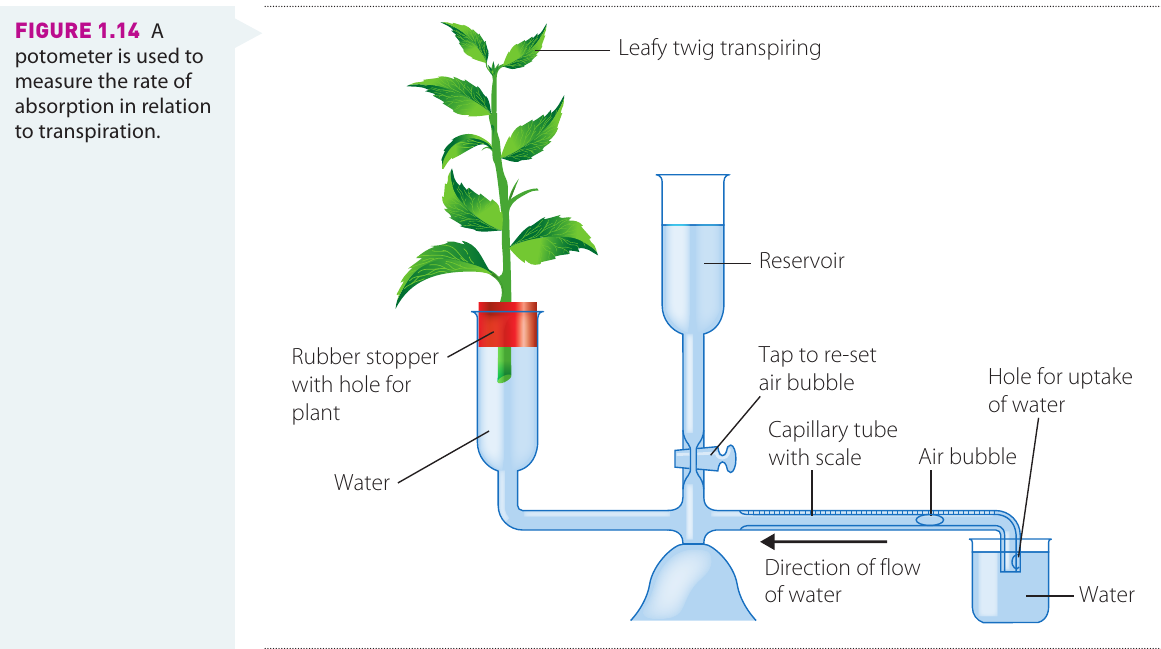
- Include large, clear diagrams of equipment set-up
Note
Diagrams: Equipment diagrams should be neat, labeled drawings (not rough sketches). Redraw logbook sketches carefully for your report. They should be large enough to clearly show all relevant details and labels.
Secondary-source investigations
For literature-based research, your method should:
- Describe what literature searches you conducted
- Explain how you decided which sources to use
- Detail your search criteria and databases used
Note
The method section for secondary-source investigations is typically shorter than for primary-source work, as you're describing your research process rather than experimental procedures.
Results and analysis
This section summarises your results. The results and analysis sections are usually combined, though they may be kept separate.
Presenting data effectively
Tables:
- Use tables to compare results from different experiments or sources
- Avoid including long tables of raw data in the main report
- Place extensive raw data in an appendix instead
- Use graphs instead of tables wherever possible
Graphs:
Choose the appropriate graph type for your data:
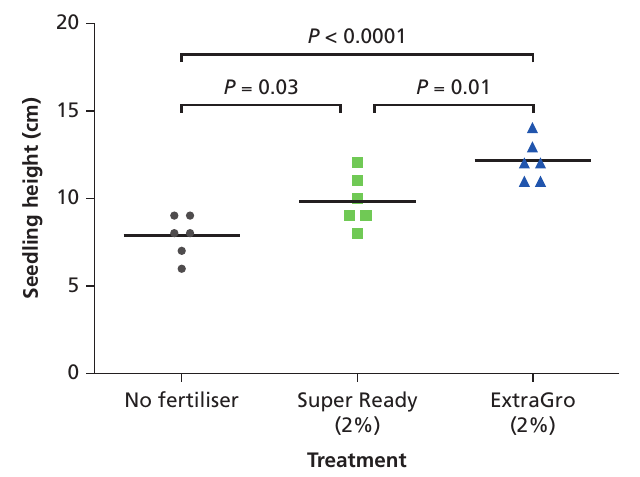
- Scatter plots: Show relationships between two variables. Display data as points with uncertainty bars and clearly label any fitted lines.
- Column or bar graphs: Compare different data sets. Do NOT use these to show mathematical relationships between variables.
Important
Critical distinction: Use scatter plots for showing relationships between variables (e.g., how temperature affects reaction rate). Use bar graphs for comparing separate categories or groups (e.g., comparing species diversity in different habitats).
Never use bar graphs to show mathematical relationships - this is a common mistake!
Units and uncertainties:
- All data must be given in correct SI units
- Include uncertainties for all measurements
- Show equations used for calculations
- Include one example calculation if procedures are repeated
Discussion
The discussion explains what your results mean. This is where you interpret your findings.
What to include:
- Answer to your research question (if you began with one)
- Whether results supported your hypothesis (if you began with one)
- Explanation if results did not support your hypothesis
- Further questions raised by your investigation
- Suggestions for future research
Note
The discussion is your opportunity to demonstrate your understanding. Don't just describe what happened - explain why it happened and what it means in the context of your research question.
Conclusion
The conclusion is a very brief summary (just a few sentences) that:
- States what you found
- Relates directly back to your aim and hypothesis
- States whether your hypothesis was supported
- Contains no inferences or interpretation (that belongs in the discussion)
Important
Keep it brief and factual: The conclusion simply states what you found and whether it supported your hypothesis. All interpretation and explanation should already be in your discussion section.
Acknowledgements and references
Acknowledgements
Thank people and organisations who helped with your investigation:
- People who supplied equipment or funding
- People who provided ideas or helped with analysis
- Supervisors and mentors
Being polite and acknowledging help is important in science and in life.
References
The reference list details all sources of information actually used in your report.
In-text citations: Every piece of information or quotation must be referenced at the point where it appears in your text. Use either:
- Number system: [2]
- Author-date system: (Smith, 2016)
Reference list location: Provide references either as:
- Footnotes at the end of each page, or
- A complete list at the end of the report
Format: Different referencing formats exist (APA, Harvard, etc.). Check with your teacher which format to use.
References versus bibliographies
These are not the same thing:
Reference list:
- Sources actually used in writing the report
- Every item appears as a citation in your text
- Required for all investigations
Bibliography:
- Sources useful for understanding the research
- May or may not have been used in the report
- Should be in your logbook from the planning stage
- Primary-source investigations do NOT include a bibliography
- Secondary-source investigations MAY include a bibliography to show the scope of your literature search
- For annotated bibliographies, the bibliography itself may be a major section
Important
Key difference: Your references will be a subset of your bibliography sources. Everything in your reference list must appear in your text as a citation. Your bibliography can include additional sources you read but didn't directly cite.
Appendix
The appendix contains supporting information that is not essential for understanding your main findings:
- Lengthy raw data tables
- Repetitive information
- Supplementary calculations
- Additional graphs or images
Note
Think of the appendix as a place for "nice to have" information rather than "need to have" information. If readers need it to understand your work, it belongs in the main report.
Other ways of communicating your work
While written reports are common, scientists use many other methods to communicate their findings. You should select the method most appropriate for your content and audience.
Posters
Scientific posters are visual presentations commonly used at conferences and in educational settings.
Characteristics:
- Not usually as formal as a written report
- Use lots of images to engage viewers
- Balance text with visual elements
- Images must be relevant and communicate information effectively
- Should be self-explanatory when viewed alone
Note
Effective poster design: A good scientific poster tells a complete story visually. Viewers should be able to understand your research by looking at the poster alone, without needing additional explanation. Balance is key - too much text overwhelms, too little leaves gaps in understanding.
Websites
Websites can effectively communicate research to a wide audience.
Accessibility considerations:
- Use large, clear fonts
- Ensure good colour contrast
- Add descriptive tags to digital images (for screen readers)
- Follow web accessibility guidelines
Important
Accessibility matters: When creating websites, remember that not all viewers experience content the same way. Screen readers, colour blindness, and other factors mean you must design with accessibility as a priority, not an afterthought.
Content: Like other formats, websites need proper acknowledgement of sources and must respect copyright.
Videos
Videos combine visual and audio elements to engage audiences.
Considerations:
- Think about your target audience
- Consider what will appeal to them
- Balance educational content with entertainment value
- Use appropriate language and style for your audience
General principles for all communication methods
Regardless of format, always:
- Know your message: Be clear about what you want to communicate
- Know your audience: Tailor language and style appropriately
- Acknowledge sources: Give credit where credit is due
- Respect copyright: Do not copy images or content without permission
- Be purposeful: Decide if you want to inform, persuade, or both
Important
Copyright reminder: You cannot copy images from websites without permission unless the owner explicitly allows it. Always talk to your teacher about properly acknowledging sources. Violating copyright is both unethical and potentially illegal.
Ideas for depth studies
Throughout your biology course, you will encounter investigation examples designed as training exercises to help you learn primary investigation skills (equipment setup, measurements, data analysis). These skills are valuable even if your depth study uses secondary sources, because biology is fundamentally based on experimental evidence.
At the end of each module in your textbook, you will find "Depth study suggestions" offering ideas for both primary and secondary investigations. These suggestions come from experienced teachers, university academics, and biology education literature.
Additional sources of ideas:
- Your teacher's suggestions
- Reading about topics that interest you
- Your own creative pursuits (art, music) combined with biology
- Many biologists successfully combine scientific work with creative interests
Note
Goal of depth studies: By conducting depth studies, you will extend your biology knowledge and, more importantly, learn how to work scientifically - you will learn how to do biology.
Remember!
Summary
Key Points to Remember:
- Scientific research is incomplete until communicated to others
- Reports follow a specific structure: Background, Aim, Hypothesis, Risk assessment, Materials, Method, Results, Discussion, Conclusion, Acknowledgements, References, Appendix
- A hypothesis must be falsifiable and written as an 'If... then...' statement
- Choose appropriate graphs: scatter plots for relationships, bar graphs for comparisons
- References list sources actually used; bibliographies list all relevant sources
- Alternative communication methods (posters, videos, websites) require consideration of audience and purpose
- Always acknowledge sources properly and respect copyright
- Depth studies teach you how to work scientifically and "do" biology