Reversible Reactions (HSC SSCE Chemistry): Revision Notes
📚Revision Notes
Reversible Reactions
Introduction to reversible reactions
In chemistry, most people think of reactions as proceeding in only one direction—reactants transform into products until one reactant runs out and the reaction stops. However, some reactions behave differently. A reversible reaction is one that can proceed in both directions: reactants can form products, and products can form reactants again. Understanding these reactions is essential for studying chemical equilibrium.
Note
Unlike typical reactions that proceed in a single direction until completion, reversible reactions continuously operate in both directions simultaneously, creating a dynamic balance between reactants and products.
Chemical systems
What is a chemical system?
When studying reactions, we need to distinguish between the parts directly involved in the reaction and those that aren't:
- Chemical system: The collection of all chemicals actively participating in the reaction
- Surroundings: Everything around the system that does not take part in the reaction
Example
Understanding Systems and Surroundings:
When hydrogen gas reacts with oxygen gas to form water vapour, the hydrogen, oxygen, and water molecules make up the system. Other molecules in the air, such as nitrogen and carbon dioxide, form the surroundings.
In aqueous reactions, water can be part of either the system (if it participates in the reaction) or the surroundings (if it doesn't participate).
Types of systems
Chemical systems can be classified based on whether matter can enter or leave:
Closed systems are those where all chemicals remain contained within a defined space. Nothing can enter or leave the system. For example, if you add hydrochloric acid to calcium carbonate in a sealed container, no substances can escape or be added—this is a closed system.
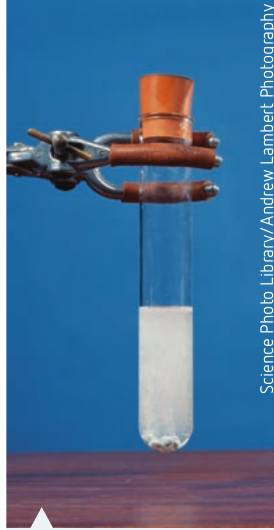
Open systems allow substances to be added or removed. For instance, if you perform the same reaction in an open beaker, the carbon dioxide gas produced would escape into the air, making this an open system.
Important
Energy Transfer in Systems:
Whether a system is open or closed refers only to the movement of matter. In both types of systems, energy can still enter or leave through the boundaries. The classification depends solely on whether chemical substances can cross the system boundary.
Physical and chemical changes
Chemical systems can undergo two types of changes, each with distinct characteristics.
Physical changes
A physical change alters the form or state of a substance without creating new chemical substances. The molecules themselves remain the same; only their arrangement or energy changes.
Example
Physical Change: Water Boiling
When water boils, it changes from liquid to gas:
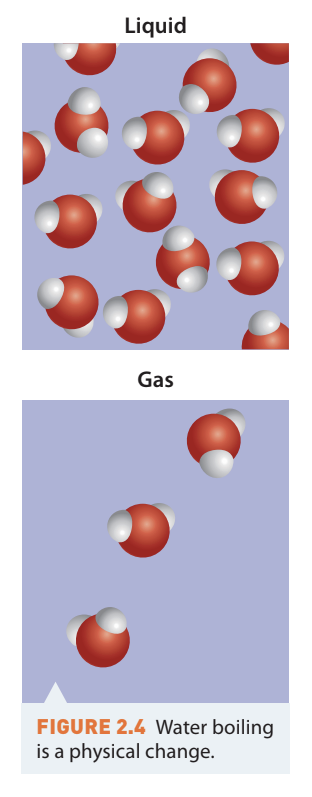
The water molecules remain chemically identical—they simply move further apart as they transition from the liquid to the gas phase. This is a physical change because no new substances are formed.
Chemical changes
A chemical change occurs when reactants produce new substances with different physical and chemical properties. The atoms rearrange to form products that are chemically different from the reactants.
Example
Chemical Change: Electrolysis of Water
When an electric current passes through water, the atoms rearrange to form new substances—hydrogen gas and oxygen gas:
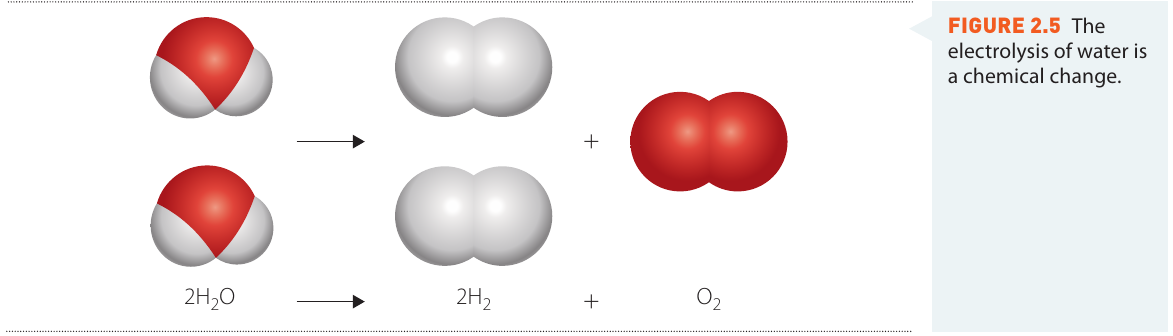
This is a chemical change because the product molecules (hydrogen and oxygen) have completely different properties from the reactant (water).
Understanding reversible reactions
What are reversible reactions?
In many reactions, once products form, the reaction is considered complete when a reactant is exhausted. This is called static equilibrium—the reaction stops completely.
However, in some reactions, as products form, they can react with each other to regenerate the reactants. This creates a situation where, even when the reaction appears complete, both reactants and products are present. This is called dynamic equilibrium.
Note
Static vs Dynamic Equilibrium:
- Static equilibrium: The reaction proceeds in one direction until a reactant is completely used up, then stops
- Dynamic equilibrium: Both forward and reverse reactions occur continuously; both reactants and products are always present
Reversible reactions are those in which the reaction can proceed in both directions:
- The forward reaction occurs when reactants form products
- The reverse reaction occurs when products form reactants
Notation for reversible reactions
Reversible reactions are represented using a double arrow () instead of a single arrow. This symbol indicates that the reaction can proceed in both directions.
Example
Reversible Reaction: Carbon Monoxide and Nitrogen Dioxide
Forward reaction: Carbon monoxide reacts with nitrogen dioxide to form carbon dioxide and nitrogen monoxide.
Reverse reaction: Carbon dioxide reacts with nitrogen monoxide to form carbon monoxide and nitrogen dioxide.
More examples of reversible reactions
Example
Synthesis of Ammonia (Haber Process):
Forward reaction: Hydrogen gas and nitrogen gas combine to form ammonia.
Reverse reaction: Ammonia decomposes to form hydrogen gas and nitrogen gas.
Important
Key Distinction About Reversibility:
- All physical changes are reversible reactions (for example, water can boil and then condense)
- Only some chemical changes are reversible reactions
Factors affecting reversibility
Collision theory and reactions
To understand why some reactions are reversible and others aren't, we need to consider collision theory. This theory states that for a reaction to occur:
- Particles must collide with each other
- They must have sufficient energy to break existing bonds
- They must have the correct orientation to form new bonds
If these conditions aren't met, the particles simply bounce off each other without reacting.
Activation energy
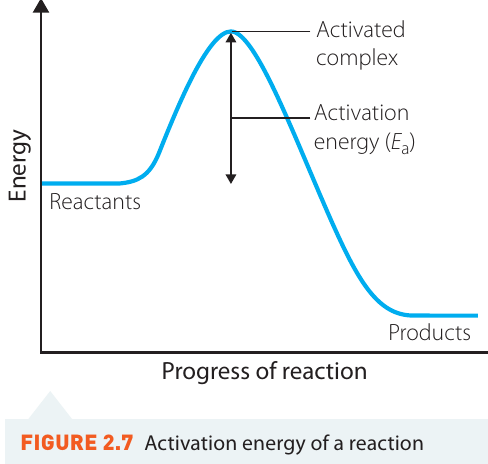
The minimum amount of energy required to break the bonds in the reactants is called the activation energy (). This is the energy difference between the reactants and the activated complex (the transition state between reactants and products).
Note
When reactant particles collide without enough energy to overcome the activation energy, they cannot form products. If the activation energy is lower, more particles will possess sufficient energy to react successfully.
How activation energy affects reversibility
For a reaction to be reversible, we must consider the activation energies of both the forward and reverse reactions.
Important
Requirements for Reversibility:
For a reaction to be reversible, BOTH the forward and reverse activation energies must be low enough that a sufficient number of particles can undergo successful collisions in both directions.
- If the forward reaction has very high activation energy, very few particles will have enough energy to form products
- If the reverse reaction has very high activation energy, very few product molecules will have enough energy to reform reactants
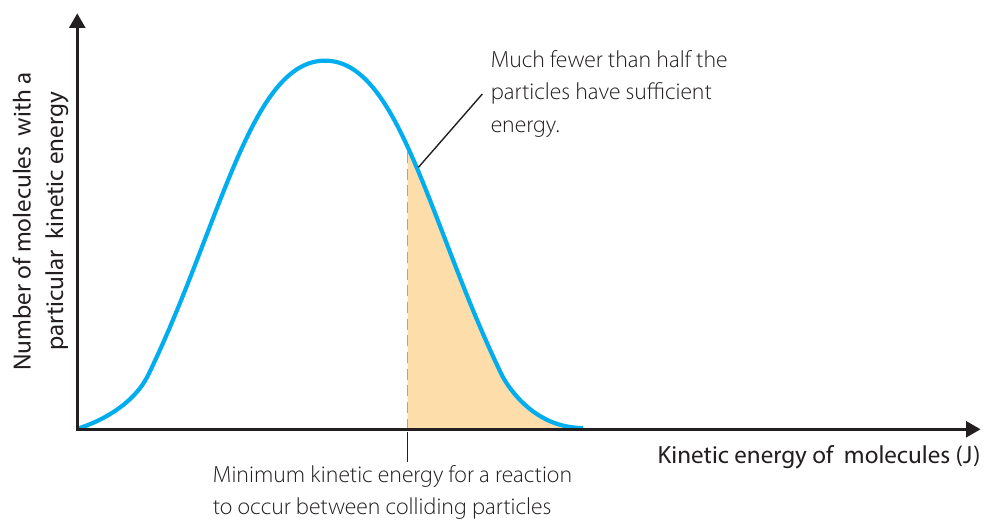
As shown in the energy distribution curve, only particles in the shaded region (those with kinetic energy exceeding the activation energy) can successfully react. Much fewer than half the particles typically have sufficient energy. Therefore, if the activation energy for either direction is too high, that direction of the reaction becomes very unlikely, and the reaction won't be reversible in practice.
Summary
Key Points to Remember:
-
Chemical systems consist of the chemicals involved in a reaction, while the surroundings include everything else nearby
-
Closed systems prevent matter from entering or leaving, while open systems allow matter to move in or out. Energy can transfer in both types
-
Physical changes alter the state or form without creating new substances (e.g., water boiling), while chemical changes produce new substances (e.g., water electrolysis)
-
Reversible reactions can proceed in both directions: forward (reactants → products) and reverse (products → reactants), shown using double arrows ()
-
For a reaction to be reversible, both the forward and reverse reactions must have sufficiently low activation energies to allow enough particles to react in both directions