History (HSC SSCE Legal Studies): Revision Notes
📚Revision Notes
History
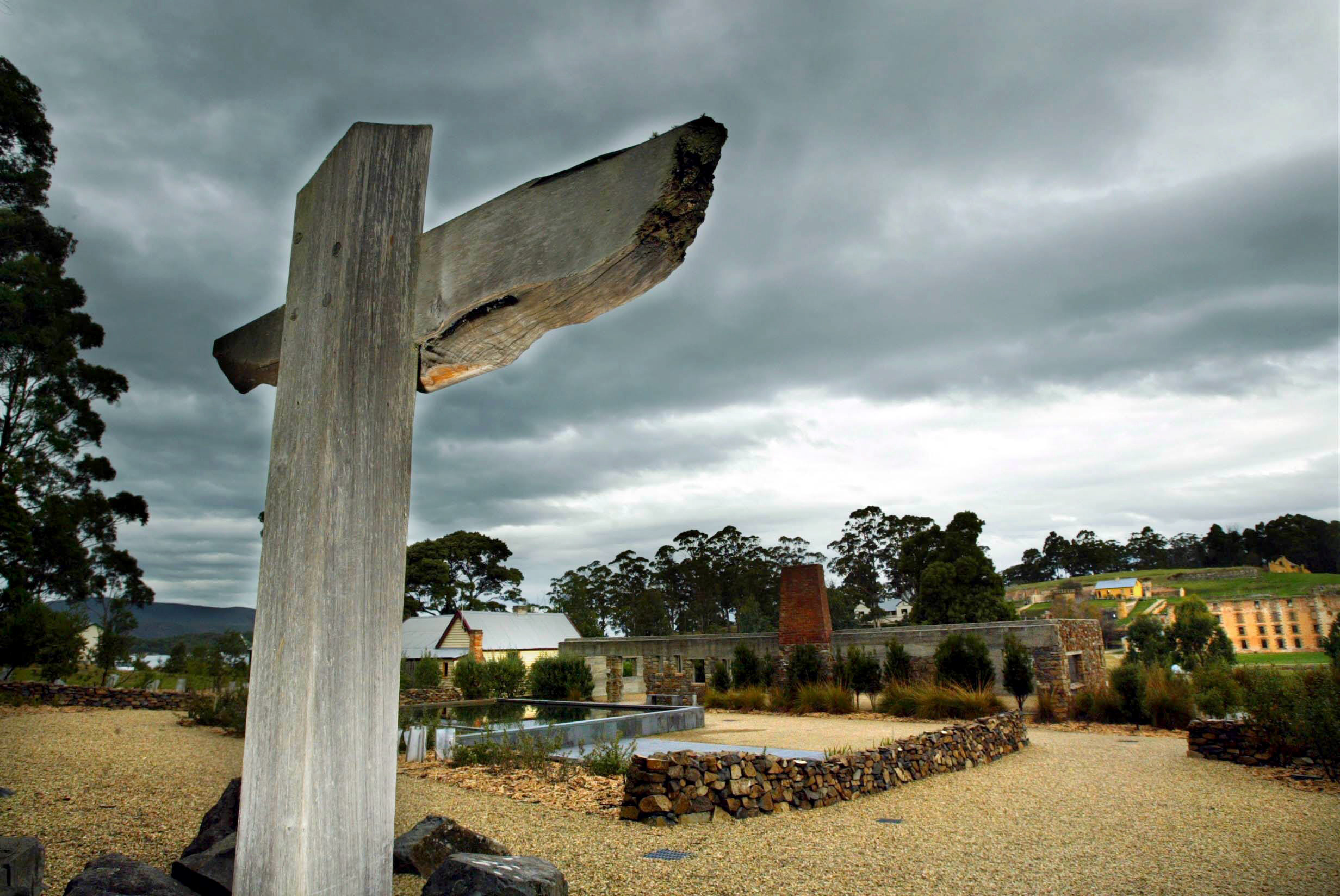
Introduction to the Port Arthur massacre
On Sunday 28 April 1996, Australia experienced its deadliest mass shooting. A Tasmanian man named Martin Bryant carried out a massacre at the Port Arthur historic site, killing 35 people and injuring many others. This event represents the most significant single-perpetrator mass murder in Australian history.
Massacre refers to the intentional killing of a large number of people in society. The Port Arthur massacre sent shockwaves across the nation, as mass violence on this scale was unprecedented in Australia's experience. The event became a catalyst for major gun law reform and revealed deep divisions within Australian society about weapons control.
Note
Port Arthur is one of Australia's most important heritage sites, located approximately one hour's drive east of Hobart. It served as a notorious convict settlement during the early 1800s and attracts large numbers of domestic and international tourists. The site's cultural significance made the massacre even more shocking to the Australian public.
The massacre occurred at Port Arthur, located approximately one hour's drive east of Hobart. Port Arthur served as a notorious convict settlement during the early 1800s and attracts large numbers of domestic and international tourists. On the day in question, the site was crowded with visitors.
The events of 28 April 1996
Morning preparations and first victims
Bryant began his day by leaving his home in Hobart and driving toward Port Arthur. During this journey, he stopped at Seascape Cottage, a guesthouse where he entered the premises and killed the owners, David and Noelene Martin. This double homicide marked the beginning of Bryant's killing spree, though it would not be discovered until later.
After these initial murders, Bryant continued his journey to Port Arthur, arriving at approximately 1:10 p.m. The timing placed him at the historic site during peak tourist hours, when maximum numbers of visitors were present.
The massacre at the Broad Arrow Café
Upon arrival at Port Arthur, Bryant parked his vehicle and walked to the Broad Arrow Café. He purchased a meal and ate it on the café's deck, appearing to behave normally. After finishing his meal, Bryant returned his tray and went back to his table. He then retrieved an AR-15 semi-automatic rifle from his bag.
Bryant entered the café and began systematically shooting people at close range. His actions were deliberate and methodical. He moved through the café shooting patrons, then proceeded to the adjacent gift shop where he continued firing. When he needed more ammunition, Bryant returned to his bag, reloaded his weapon, and went back to shoot people who had taken cover behind tables and furniture in the gift shop.
Important
In the first 90 seconds of the attack, Bryant killed 20 people and injured 12 others. The speed and efficiency of the killing demonstrated the extreme lethality of semi-automatic weapons in enclosed spaces.
Continuation of violence
Bryant moved from the café into the car park area behind the building. Visitors who heard the commotion had taken shelter behind buses, but Bryant continued shooting. He killed four more people in this area and wounded several others.
Bryant then walked through the grounds of the historic site, shooting additional victims. Among those killed were Nanette Mikac and her two young daughters, Madeline (aged three) and Alannah (aged six). Bryant pursued six-year-old Alannah behind a tree to kill her, demonstrating the cold and deliberate nature of his actions. Before leaving the main site, Bryant had killed seven more people, bringing the death toll within the Port Arthur grounds to a total that would eventually reach 35.
Note
The murder of the Mikac family, particularly the deliberate pursuit of young Alannah, became one of the most emotionally devastating aspects of the tragedy. This incident was frequently cited in subsequent debates about gun control, highlighting the vulnerability of innocent civilians to such weapons.
The service station incident
Bryant drove past the tollbooth and onto the main road, heading toward a service station at a general store. By this point, he was driving a stolen BMW, having killed its driver and passenger. He used the BMW to block a Toyota Corolla at the petrol pumps, preventing the vehicle from leaving.
Bryant forced the male occupant of the Corolla into the boot of the BMW and shot the female occupant. He dragged her body from the car, took the driver's seat of the BMW, and drove away with the male victim locked in the boot as a hostage. A police officer arrived shortly after and began pursuing Bryant within minutes.
The standoff at Seascape Cottage
Bryant returned to Seascape Cottage, where he had killed David and Noelene Martin that morning. He took his hostage inside the building and set fire to the stolen BMW. Police officers arrived at approximately 2:00 p.m., but Bryant opened fire on them with an automatic weapon, forcing them to take shelter in a ditch for several hours.
At 9:00 p.m., a Special Operations police team arrived from Hobart. An 18-hour standoff ensued, during which Bryant claimed to have hostages inside the building. The following day, Bryant set fire to the guesthouse and taunted police to enter. Eventually, he ran from the burning building with his clothes alight and was captured by police. He was immediately arrested and transported to hospital under police guard for treatment of his burns.
Immediate aftermath and investigation
Police questioning and charges
During initial police questioning while in hospital, Bryant admitted to hijacking the BMW but denied shooting anyone. He claimed he had not visited Port Arthur that day and stated that police-recovered firearms were not his property. These denials contrasted sharply with the overwhelming evidence against him.
Bryant appeared at a bedside hearing in hospital, where he was initially charged with one count of murder. Police indicated that additional charges would follow as their investigation progressed. On 22 May, Bryant appeared via video link from Risdon Prison to the Magistrates' Court for a remand hearing.
Note
Police conducted an extensive investigation, obtaining 551 witness statements. This comprehensive evidence-gathering process built an overwhelming case against Bryant, ultimately leading to his decision to enter a guilty plea.
In September 1996, Bryant's lawyer persuaded him to enter a guilty plea. On 13 November 1996, Bryant was convicted of an unprecedented list of crimes:
- 35 counts of murder
- 20 counts of attempted murder
- 4 counts of aggravated assault
- 8 counts of wounding
- 3 counts of causing grievous bodily harm
- 1 count of arson
- 1 count of unlawfully setting fire to property
The judge imposed multiple sentences of life imprisonment without parole. In his sentencing remarks, the judge noted the difficulty of imagining a more chilling catalogue of crimes, describing them as coldly premeditated yet with randomly selected victims. He emphasized the continuing trauma for survivors, victims' families and friends, eyewitnesses, and the wider community.
Media coverage and public reaction
The Port Arthur massacre attracted enormous media attention because of the scale of killing at a popular tourist destination. Public interest focused not only on the event itself but also on understanding who Martin Bryant was and what could have motivated such extreme violence.
Journalists questioned Bryant's acquaintances, relatives, and former girlfriends to construct a profile of the perpetrator. On 30 April, the first photographs of Bryant appeared on newspaper front pages across Australia. The Australian newspaper controversially enhanced a photograph to exaggerate the whiteness of Bryant's eyes, creating an eerie, unsettling appearance.
The media coverage sparked national debate about violence, mental health, and gun control. Many Australians struggled to comprehend how such an atrocity could occur in their country.
Understanding Bryant's motivations
Speculation about motive
Since the massacre, considerable speculation has surrounded Bryant's motivations. Much of this speculation has centered on his childhood, psychological state, and capacity for rational thought. The question of whether Bryant was of sound mind became a subject of ongoing debate.
In 2006, Bryant's former lawyer, John Avery, reportedly began writing a book about his client. Extracts were published in Bulletin magazine, including transcripts of conversations between Bryant and Avery, along with school reports and psychiatric assessments. The legal community and many media commentators condemned Avery's actions as professionally questionable and insensitive to victims and their families.
In 2009, journalists Robert Wainwright and Paola Totaro published Born or Bred? Martin Bryant – The Making of a Mass Murderer, which investigated Bryant's background and development.
Possible contributing factors
Defence psychiatrist Paul Mullen suggested that Bryant may have been inspired by a mass shooting that occurred on 13 March 1996 in the Scottish town of Dunblane. In that incident, a lone gunman killed 16 children and one adult. The similarity in methods and the close timing (approximately six weeks before Port Arthur) led to speculation about copycat motivations.
Other factors that have been considered include:
- Bryant's below-normal intellect and resulting social difficulties
- Social isolation and accumulated anger
- Desire for attention and notoriety
- A specific grudge against his first victims, the Martins, who had purchased Seascape Cottage (a property Bryant had wanted to buy)
However, no single explanation has been definitively established. Debate about Bryant's early life, history of firearm use, state of mind, and underlying motivations continues today, as does public curiosity about his life in prison.
Conspiracy theories
From the beginning, conspiracy theories surrounded the Port Arthur massacre. A conspiracy theory involves speculation that there is a cover-up of information surrounding a significant event by government or other authorities.
Some conspiracy theorists claimed the massacre was actually carried out by special operatives who framed Bryant. According to these theories, the massacre was orchestrated to provide justification for the federal government to implement gun control law reform. Proponents of these theories tended to be strong opponents of gun control legislation.
More recent conspiracy theories have suggested the massacre was a plot to disarm Australia's population, making the country more vulnerable to terrorist takeover.
Important
These theories lack any credibility in legal or scholarly circles. Their merit can be partly assessed by considering which organizations promote them. For example, the Adelaide Institute, an organization known for Holocaust denial, continues to promote conspiracy claims about Port Arthur.
National and international significance
Australia's response
The Port Arthur massacre triggered a swift and comprehensive response from Australia's legal system. The federal government, led by Prime Minister John Howard, moved quickly to reform gun laws across all states and territories. This represented a complete overhaul of Australia's approach to firearms regulation.
However, the reforms revealed significant divisions within Australian society. Not everyone agreed with the new gun control measures or accepted that restricting firearms access would reduce violence. Despite this opposition, Australia implemented some of the strictest gun laws in the developed world, including:
- A national firearms buyback program
- Restrictions on semi-automatic and automatic weapons
- Stricter licensing requirements
- Uniform gun laws across states and territories
Note
The effectiveness of these reforms in reducing gun deaths and preventing further mass shootings has been documented in subsequent research. Australia has not experienced another mass shooting of comparable scale since Port Arthur, though debate continues about the precise relationship between law reform and declining firearm violence.
International context and comparisons
Australia's response to the Port Arthur massacre stands in stark contrast to the ongoing failure of gun law reform in the United States, despite numerous mass shootings in that country. The Australian legal system's swift action generated enormous international interest, attracting both praise and criticism.
In the United States, anti-gun coalitions drew inspiration from Australia's example and intensified their reform efforts. Meanwhile, gun rights advocates warned that the US government might attempt similar measures, viewing Australia's response as a cautionary example of government overreach.
Note
Pope Francis, during a speech to the Joint Session of US Congress on 24 September 2015, criticized guns as 'deadly weapons' and stated that everyone had a duty to stop the arms trade. He questioned why deadly weapons were being sold to those who would use them to inflict suffering, answering that the motivation was greed. The Pope said this money was 'drenched in blood, often innocent blood', echoing the hopes of many Americans advocating for gun reform.
Australia's global role on small arms
Australia's domestic success in controlling guns contrasts with limited international progress on controlling the global trade in small arms. Most small arms used by armed groups, militias, and criminals worldwide are employed to harm innocent civilians.
Some international progress occurred with the Arms Trade Treaty, which entered into force in 2014. Australia played an active role in adopting this treaty. While serving as a temporary member of the UN Security Council (2013-14), Australia led negotiations on the first-ever Security Council resolution specifically addressing small arms (UNSC Resolution 2117).
Despite these efforts, small arms and light weapons continue to proliferate globally, threatening peace and security in many societies. Addressing the threat that guns pose to human security remains an ongoing challenge, with law playing a central role in this campaign. Through its responses to the Port Arthur massacre and its work in international forums, Australia has demonstrated both that it is possible to minimize gun threats to civilian populations and its willingness to play a leadership role on this global issue.
Remember!
Summary
Key Historical Facts:
- The Port Arthur massacre occurred on 28 April 1996 at the historic Port Arthur site in Tasmania
- Martin Bryant killed 35 people and injured many others in Australia's deadliest mass shooting
- The massacre involved systematic shootings at the Broad Arrow Café, gift shop, car park, and surrounding areas over several hours
- Bryant was captured after an 18-hour standoff at Seascape Cottage and convicted of 35 murders and numerous other charges
- He received multiple life sentences without parole on 13 November 1996
Historical Significance:
- The event was unprecedented in Australian history and shocked the nation
- It catalyzed comprehensive gun law reform across Australia, including restrictions on semi-automatic weapons and a national buyback program
- Australia's swift legal response generated international interest and demonstrated that effective gun control is achievable
- The massacre exposed social divisions over gun rights and government regulation
- Conspiracy theories emerged but lack credibility in legal and scholarly circles
International Impact:
- Australia's response contrasts sharply with ongoing gun violence in the United States
- Australia played a leadership role in international small arms control through the Arms Trade Treaty (2014) and UN Security Council Resolution 2117
- The case study demonstrates how law can respond effectively to threats to public safety and human security