The Role of Prominent Individuals in the Nazi State (HSC SSCE Modern History): Revision Notes
📚Revision Notes
The Role of Prominent Individuals in the Nazi State
Introduction
As the Nazi Party expanded its influence throughout the 1920s and early 1930s, several key personalities became essential to the movement's success. When the Nazis seized power in 1933, Hitler rewarded these loyal supporters with significant government positions. These individuals became instrumental in operating the Nazi totalitarian state, each controlling crucial aspects of the regime's power structure.
Note
The Nazi regime operated as a totalitarian state, meaning the government sought total control over all aspects of public and private life. This required a complex network of loyal officials who could implement Nazi policies across different sectors of society.
Joseph Goebbels (1897-1945)
Joseph Goebbels was a highly skilled propagandist who became one of the most influential figures in Nazi Germany. His ability to manipulate public opinion and control information made him indispensable to Hitler's regime.
In 1930, Goebbels was appointed head of the NSDAP's (Nazi Party's) Propaganda Department. In this role, he was responsible for planning and executing the Nazi election campaigns between 1930 and 1932. These campaigns were crucial in bringing the Nazis to power, using innovative propaganda techniques including posters, rallies, and radio broadcasts to spread the Nazi message.

Following Hitler's appointment as Chancellor in January 1933, Goebbels established the Ministry of Propaganda and Enlightenment. This new government department gave him control over all aspects of German cultural and intellectual life. Through this ministry, Goebbels designed and implemented Nazi propaganda for the remainder of the Third Reich, controlling newspapers, radio, film, theatre, music, and the arts.
Note
Goebbels' Propaganda Techniques
Goebbels used sophisticated methods to control public opinion:
- Centralised control of all media outlets
- Censorship of opposing viewpoints
- Use of modern technology (radio, film) to reach mass audiences
- Emotional appeals and repetition of simple messages
- Creation of a cult of personality around Hitler
Goebbels was also the prime organiser of Kristallnacht (the Night of Broken Glass), which occurred on 9-10 November 1938. This was the first coordinated nationwide act of public violence against the German Jewish community. During this state-endorsed pogrom, Jewish businesses and synagogues throughout Germany were destroyed, marking a significant escalation in Nazi anti-Semitic persecution.
Note
Key Term: Pogrom
A pogrom is organised violence against an ethnic or religious group, particularly Jewish communities. Kristallnacht represented a turning point from legal discrimination to direct physical violence against Jews.
Hermann Goering (1893-1946)
Hermann Goering became one of Hitler's earliest and most loyal supporters. He participated in the failed Beer Hall Putsch in November 1923, an attempted Nazi coup in Munich. Like Hitler, Goering was a World War I veteran who had served as a combat flyer, which gave him credibility and prestige within German society.

When Hitler came to power in 1933, Goering was given responsibility for building several key Nazi institutions. Between 1933 and 1934, he established the Gestapo, the Nazi secret state police that would become infamous for its brutal suppression of opposition. The Gestapo operated outside normal legal constraints and used intimidation, torture, and imprisonment to eliminate threats to Nazi power.
Beginning in 1935, Goering oversaw the creation of the Luftwaffe, the aerial warfare branch of the German Wehrmacht (armed forces). This was particularly significant because the Treaty of Versailles had forbidden Germany from having an air force. Building the Luftwaffe in secret, then openly, demonstrated Nazi Germany's rejection of Versailles restrictions.
Note
Context: The Treaty of Versailles
The 1919 Treaty of Versailles imposed severe military restrictions on Germany, including:
- Prohibiting Germany from having an air force
- Limiting the army to 100,000 men
- Banning submarines and limiting naval forces
By openly building the Luftwaffe, Nazi Germany was deliberately violating these terms, testing whether Britain and France would respond.
In 1936, Goering was appointed head of the Office of the Four-Year Plan, which aimed to prepare Germany's economy for war by achieving self-sufficiency in key resources and increasing military production.
Hitler designated Goering as Reichmarschall ('Marshal of the Reich') in 1939, the highest rank in the Wehrmacht. He was officially second in succession to Hitler, meaning he would take over if Hitler died or became incapacitated. However, in practice, Heinrich Himmler actually wielded more power within the regime.
Important
Goering's Declining Influence
Despite his prestigious titles and positions, Goering's influence declined significantly during the war years. The Luftwaffe failed to achieve air superiority during the Battle of Britain (1940) and struggled on the Eastern Front. These military failures undermined Goering's standing with Hitler and within the Nazi leadership.
Heinrich Himmler (1900-45)
Heinrich Himmler was an early political associate of Hitler who also participated in the Beer Hall Putsch of 1923. Despite this setback, Himmler steadily climbed through the Nazi ranks to become the second most powerful man in the entire Nazi hierarchy.
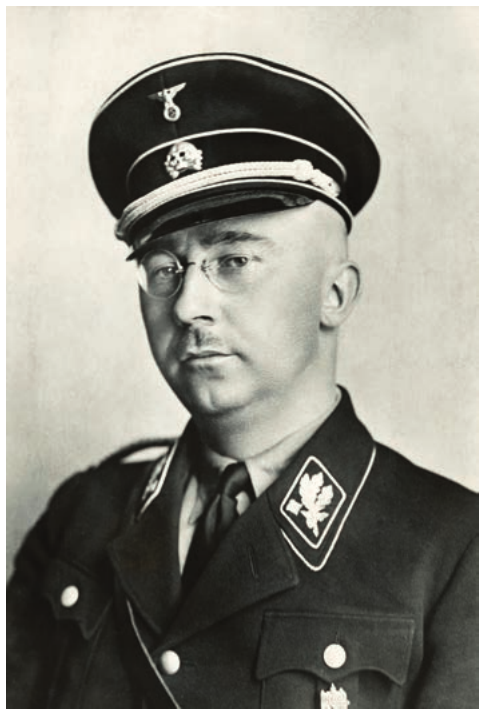
In 1929, Himmler became Head of the SS (Schutzstaffel, or 'Protection Squadron'). Under his leadership, the SS evolved from Hitler's personal bodyguard into a massive paramilitary organisation with enormous power. The SS operated concentration camps, conducted intelligence operations, and eventually formed its own military divisions.
Himmler played a crucial role in the Night of Long Knives (also called the Blood Purge) on 30 June 1934. This ruthless operation saw the liquidation of Ernst Rohm and other leaders of the SA (Sturmabteilung, or 'Storm Division'), which had been the Nazi Party's original paramilitary wing. The SA, led by Rohm, had become too powerful and independent for Hitler's liking. By using the SS to eliminate the SA leadership, Himmler demonstrated his loyalty to Hitler whilst simultaneously eliminating a rival organisation. This massacre consolidated SS power and made Himmler indispensable to Hitler.
Note
The Night of Long Knives: Context
The SA had been crucial to the Nazis' rise to power, using violence and intimidation against political opponents. However, by 1934:
- The SA had grown to over 3 million members
- SA leader Ernst Rohm wanted to merge the SA with the regular army
- The German military (Wehrmacht) viewed the SA as a threat
- Hitler needed the support of the traditional military establishment
By eliminating the SA leadership, Hitler gained the support of the Wehrmacht and consolidated his own power.
As Head of the SS, Himmler was responsible for implementing Hitler's anti-Semitic policies in occupied Poland and Russia following the German invasions of these countries. The SS controlled the concentration camp system and organised the Holocaust. Himmler oversaw the systematic murder of millions of Jews, as well as Roma, political prisoners, and others deemed enemies of the Nazi state.
Important
Understanding Nazi Power Structures
When discussing Nazi leadership, remember that formal titles didn't always reflect actual power. Goering was officially second to Hitler in the succession line, but Himmler, through his control of the SS and the terror apparatus, exercised more real power within the regime.
This discrepancy between official position and actual influence is crucial for understanding how the Nazi state functioned.
Remember!
Summary
Key Points About Nazi Leadership:
-
Joseph Goebbels controlled Nazi propaganda from 1930 onwards, established the Ministry of Propaganda and Enlightenment in 1933, and orchestrated Kristallnacht in 1938. His mastery of media manipulation was essential to maintaining Nazi control over German society.
-
Hermann Goering built the Gestapo (1933-34) and Luftwaffe (1935), directed the Four-Year Plan (1936), and was designated Reichmarschall in 1939. Though officially Hitler's successor, his influence declined as the war progressed.
-
Heinrich Himmler headed the SS from 1929, eliminated the SA leadership during the Night of Long Knives (1934), and implemented the Holocaust in occupied territories. He was actually the second most powerful Nazi despite Goering's official position.
-
These three individuals demonstrate how the Nazi regime operated: Goebbels controlled information and public opinion, Goering built military and economic power, and Himmler controlled the terror apparatus. Together, they formed the core of Nazi totalitarian control.
-
Understanding the roles and relationships between these prominent Nazis is crucial for explaining how the Nazi state functioned between 1933 and 1939.