Reaction to the Peace Treaties (HSC SSCE Modern History): Revision Notes
📚Revision Notes
Reaction to the Peace Treaties
The peace treaties that followed World War I generated vastly different reactions across the globe. Understanding these responses is crucial for grasping the political tensions that shaped the interwar period. Two fundamental questions help frame this analysis:
- Did the victorious powers gain enough from the treaties to justify the immense sacrifices of the war?
- How severely did the peace settlements affect the defeated nations?
Note
These questions reveal the central tension of the post-war settlement: whether the achieved outcomes justified the unprecedented human and material costs of the Great War, and whether the terms imposed on defeated nations would promote lasting peace or future conflict.
Reactions of the victorious powers
United States
When President Woodrow Wilson returned to America after the Paris Peace Conference, he embarked on what became known as the "League Fight" – a vigorous public campaign to convince Americans to support the League of Nations. This campaign ended tragically when Wilson suffered a severe stroke on 25 September 1919, leaving him incapacitated for the remainder of his presidency, which lasted until March 1921.
Despite Wilson's efforts, the United States Senate rejected the Treaty of Versailles on 19 November 1919. The Senate refused to allow America to become a party to the treaty, meaning the United States never formally signed the Treaty of Versailles. This was a crushing defeat for Wilson's vision of American leadership in maintaining world peace.
Important
Critical Consequence: The United States, by this time the world's most powerful nation, played no role whatsoever in the League of Nations – the very organisation its own president had championed so passionately. This fundamental absence undermined the League's effectiveness from its inception and represented one of the most significant failures of Wilson's peace vision.
America did not officially end hostilities with Germany until 1921, when Congress passed separate resolutions formally concluding the war with Germany and Austria. Wilson was unable to fulfill Article 5 of the Treaty of Versailles, which stated that the first meeting of the League of Nations should be summoned by the President of the United States. This ironic turn of events left the League without its intended leader from its very inception.
Britain
British Prime Minister David Lloyd George played a major role in shaping the Treaty of Versailles. However, he later developed significant doubts about whether the treaty's terms were excessively harsh on Germany.
Lloyd George had won the December 1918 election (known as a "khaki election" because it appealed to wartime patriotism) by promising severe treatment of Germany. Despite this electoral mandate, he showed little enthusiasm for enforcing the treaty's provisions once it was signed. Notably, he failed to support France when it attempted to enforce the treaty terms.
Note
Public Opinion Shift: Over time, British public sentiment began questioning the wisdom of what they increasingly viewed as an overly punitive peace settlement. This changing attitude would have significant implications for Britain's foreign policy in the 1920s and 1930s, contributing to a reluctance to enforce treaty provisions and eventually to policies of appeasement.
France
Prime Minister Georges Clemenceau achieved much of what France wanted in the peace settlement with Germany. France regained Alsace-Lorraine, received reparations, and saw German military power severely restricted.
However, the French remained troubled by a persistent concern: would the security guarantees in the treaty be sufficient to protect them from a resurgent Germany in the future? Throughout the 1920s, France watched its financial and physical security gradually weaken, despite the treaty's provisions.
Important
French Security Dilemma: Despite achieving its immediate treaty objectives, France's fundamental security concern remained unresolved. The absence of American participation in the League of Nations and Britain's reluctance to enforce treaty terms left France vulnerable to a potentially resurgent Germany – a fear that would profoundly shape French foreign policy throughout the interwar period.
Italy
Prime Minister Vittorio Orlando was one of the "Big Four" leaders who made key decisions at Paris. However, on 20 April 1919, he suddenly departed the conference in an emotional state. During a meeting at Wilson's rented house in Paris, Orlando became overcome with emotion and broke down sobbing. He had failed to persuade his fellow peacemakers to award Italy the Adriatic port of Fiume.
Orlando left Paris with his delegation and returned to Rome. When the Italian delegation returned to Paris in May, they had failed to negotiate any additional concessions for Italy.
Important
Political Consequences: Italy's inability to secure many of its territorial demands created significant political instability in the country over the following years. This dissatisfaction with the peace settlement was a contributing factor to Benito Mussolini and his National Fascist Party seizing power in Italy in October 1922. The perceived humiliation at Paris became a powerful tool for Italian fascist propaganda.
Reactions of the defeated powers
Germany
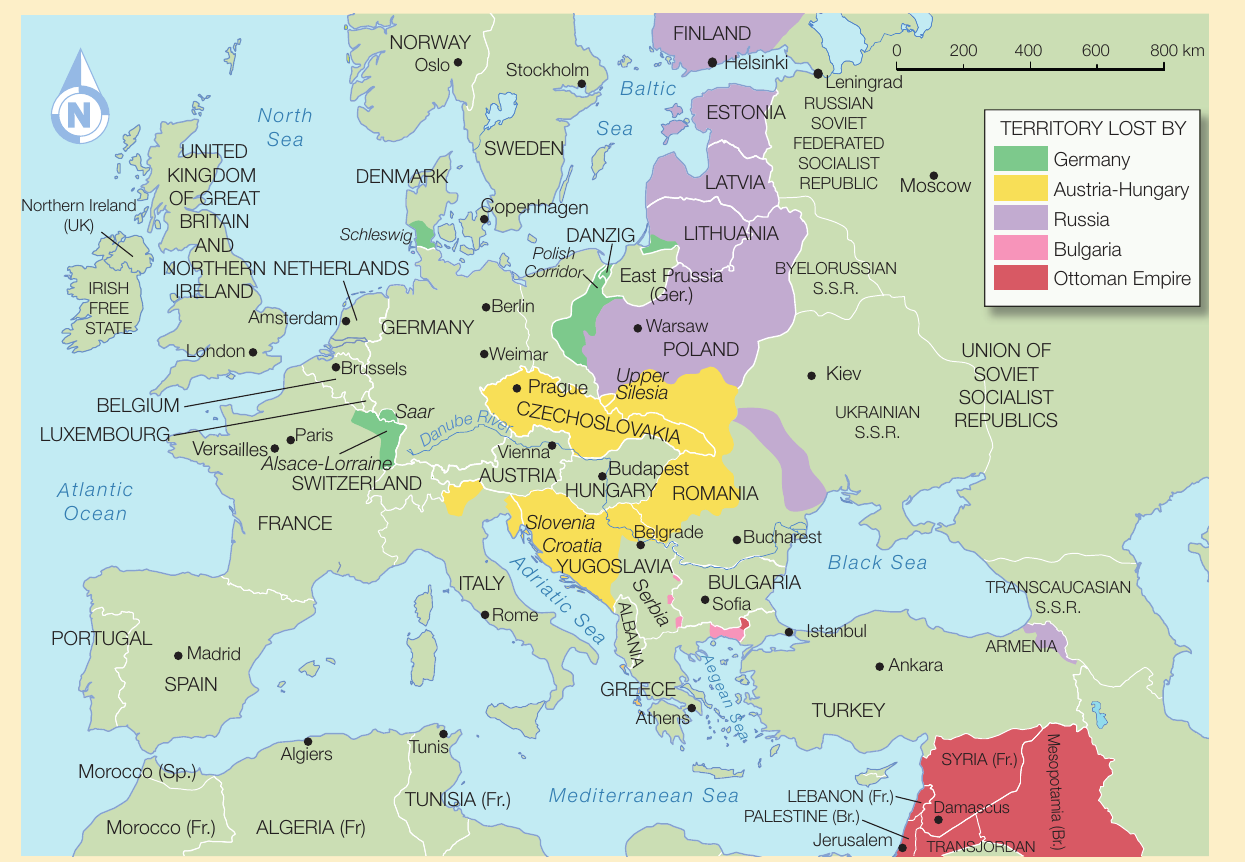
The Germans viewed the Treaty of Versailles as a "diktat" – a dictated peace that was profoundly unjust. Their main grievances included:
Important
Germany's Six Major Complaints:
- Secret negotiations: The treaty was worked out in secret and presented to Germany as a fait accompli (an accomplished fact they had no choice but to accept)
- War guilt: They believed they were being forced to accept complete responsibility for causing the war
- Territorial losses: The losses were seen as unfair – Germany estimated it had lost 13.5 percent of its territory, representing approximately 7 million people
- Colonial confiscation: Their colonies were taken away and distributed among the Allied powers
- Excessive reparations: They believed the Allies were attempting to bankrupt them with inflated financial demands
- Military vulnerability: The disarmament provisions would leave Germany defenseless against potential threats
Note
Historical Perspective: However, some historians argue that Germany's treatment was actually more lenient than that of its alliance partners. Turkey lost its entire Middle Eastern territory, and the Austro-Hungarian multinational state was completely dismembered. While Germany lost some territory, it was not broken apart and remained fundamentally intact as a nation.
Turkey
Turkey had even more reason to feel aggrieved about the peace settlement. The Turkish response was to refuse to accept the Treaty of Sèvres. The presence of foreign troops on Turkish soil, particularly Greek forces, sparked intense nationalist sentiment.
In 1921, Mustafa Kemal Atatürk, the general who had led the successful Turkish defense of Gallipoli, overthrew the Sultan of Turkey and seized power. He commanded an army that expelled Greek troops from Smyrna (present-day Izmir).
Note
Treaty of Lausanne – A Turkish Victory: In 1922, the Allies agreed to renegotiate the peace treaty. The Treaty of Lausanne, signed in 1923, represented a major Turkish victory:
- Territory that had been given to Greece was returned to Turkey
- The Straits returned to full Turkish control
- All foreign troops were ordered to leave Turkish territory
The Turkish Republic was founded on 29 October 1923, with Mustafa Kemal Atatürk as its first President. Under Atatürk's guidance, Turkish nationalism led to the development of a confident, modern, secular Turkish state.
Note
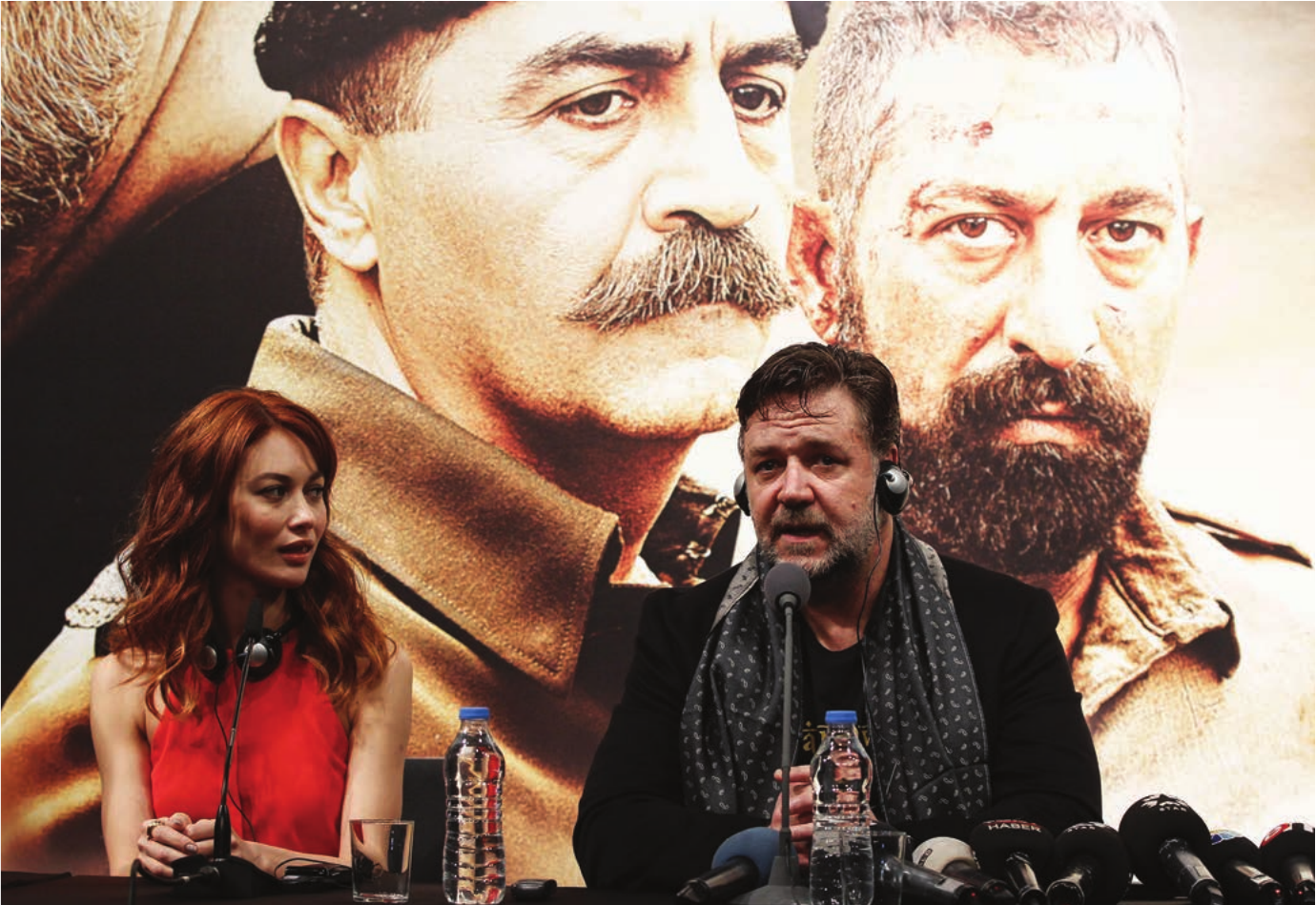
Cultural Reference: The 2014 film The Water Diviner, starring Russell Crowe as an Australian farmer returning to Gallipoli in 1919 to find his sons' bodies, portrays the Turkish population during this period of intense nationalist fervor as they worked to expel foreign troops from their homeland. The film offers a Turkish perspective on both Gallipoli and post-war Turkey's struggle against the impositions of the Treaty of Sèvres.
Other reactions to the peace treaties
Arab peoples
The Arab peoples of the Middle East experienced profound disappointment when they learned they would not be allowed to rule themselves as one united nation. Instead, territories of the former Ottoman Empire were placed under British and French control as League of Nations mandates.
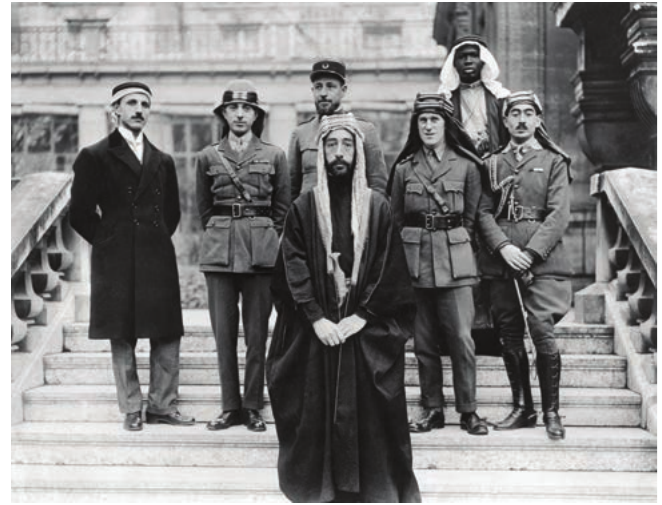
This arrangement accorded with secret treaties the Allies had made during the war. Additionally, the British had committed to Jewish settlement in Palestine through the Balfour Declaration of 1917. The political borders of the modern Middle East were largely determined by World War I treaties, and many of these borders were decided in highly arbitrary ways that ignored ethnic, religious, and cultural realities.
Important
Legacy of Arbitrary Borders: The political borders of the modern Middle East were drawn by colonial powers with little regard for ethnic, religious, and cultural realities on the ground. These artificial boundaries continue to be a source of conflict and instability in the region today, demonstrating the lasting impact of the post-World War I settlement.
Colonial subjects and the mandate system
League of Nations mandates: The mandate system was created to administer former German colonies and Ottoman territories. In theory, mandates were temporary arrangements where more "advanced" nations would guide territories toward self-government. In practice, they functioned much like traditional colonies, with the mandatory power exercising effective control.
The system created three classes of mandates:
- Class A mandates: Former Ottoman territories in the Middle East, deemed closest to independence
- Class B mandates: Former German colonies in Africa, considered to need longer guidance
- Class C mandates: Territories (mainly Pacific islands) that could be administered as integral parts of the mandatory power
Note
The Chinese Response: Nationalism had been a powerful force in China since the Chinese Revolution ended in 1911. China was outraged when Japan was awarded Shandong province at the Paris Peace Conference.
After news of this decision reached Beijing, over 2,000 students organized a demonstration in Tiananmen Square on 4 May 1919, demanding that Shandong be returned to China. This sparked the May Fourth Movement – demonstrations spread to other Chinese cities, and 7,000 telegrams were sent to Paris protesting the decision. The Chinese delegation in Paris refused to sign the Treaty of Versailles.
Broader colonial awakening: The situation was similar for Asians, Africans, and Pacific Islanders ruled by colonial powers. There would be no discussion of self-determination for non-white peoples. The idealistic principles articulated by President Wilson would not apply to them.
Important
Awakening Nationalism: However, World War I had awakened nationalism throughout the colonial empires. It was now only a matter of time before every colonial power faced increasingly strong demands from home-grown nationalist movements for the right to determine their own destinies. The contradiction between Wilson's rhetoric of self-determination and its selective application to only European peoples became a powerful catalyst for anti-colonial movements worldwide.
Examining key issues
Note
Popular Opinion and Government Policy: In the victorious nations, there was often a gap between public sentiment and government actions regarding the peace treaties. In Britain, public opinion shifted from demanding harsh punishment of Germany to questioning the wisdom of such a punitive peace. In the United States, Wilson's vision of League membership was rejected by the Senate despite his passionate advocacy. This disconnect between public opinion and policy would have significant implications for enforcing treaty provisions.
Note
Comparative Impact on Defeated Nations: The peace treaties affected the defeated nations differently. While Germany suffered significant territorial losses and economic burdens, it remained intact as a nation. Austria-Hungary was completely dismembered, creating several new successor states. Turkey lost its Middle Eastern empire but successfully renegotiated its treaty through nationalist resistance. The varying impacts created different patterns of resentment and response in the interwar period.
Note
Justifying the Sacrifice: A fundamental question emerged: did the nature of the post-war settlement achieved by the victorious nations justify the years of slaughter and enormous sacrifices of World War I? For many in both victorious and defeated nations, the answer was increasingly negative. This disappointment contributed to the political instability and revisionist movements that would characterize the interwar period.
Summary
Key Points to Remember:
- The United States never joined the League of Nations despite President Wilson's passionate advocacy, fundamentally weakening the organization from its inception
- Italy's disappointment with its territorial gains contributed to political instability that facilitated Mussolini's rise to power in 1922
- Germany viewed the Treaty of Versailles as a "diktat" (dictated peace) and harboured deep resentment over war guilt, territorial losses, reparations, and disarmament
- Turkey successfully overturned the Treaty of Sèvres through nationalist resistance under Atatürk, achieving the more favorable Treaty of Lausanne in 1923
- Arab peoples were denied self-determination and placed under British and French mandate control, creating lasting resentment and arbitrary borders that persist today
- Colonial subjects worldwide were excluded from self-determination principles, but World War I awakened nationalist movements that would eventually challenge all colonial powers
- Public opinion in victorious nations often diverged from government policies, with many British citizens eventually questioning the wisdom of the harsh peace imposed on Germany