Causes of the Cuban Revolution (HSC SSCE Modern History): Revision Notes
📚Revision Notes
Causes of the Cuban Revolution
Introduction
The Cuban Revolution was a major political upheaval that transformed Cuba in the late 1950s. Understanding what caused this revolution requires examining the social, economic and political problems that existed under Fulgencio Batista's regime, as well as the growing resistance led by Fidel Castro.
Note
Key term: Revolution
A revolution is a fundamental change in the way a country is governed, usually involving a shift to a different political system. Revolutions often use violence and occur in relatively short periods when populations rise up against existing authorities.
Political background and context
Cuba gained independence in 1902, but the young nation struggled to establish stable democratic governance. Between 1902 and 1925, the United States intervened militarily three times to suppress revolts and protect American interests. This foreign interference had lasting consequences:
Note
Impact of US Interference on Cuban Politics
- Political parties lost credibility with the Cuban people
- Elections became meaningless exercises marred by fraud
- Corruption became deeply embedded in political life
- Cuban politicians prioritised American interests over national concerns
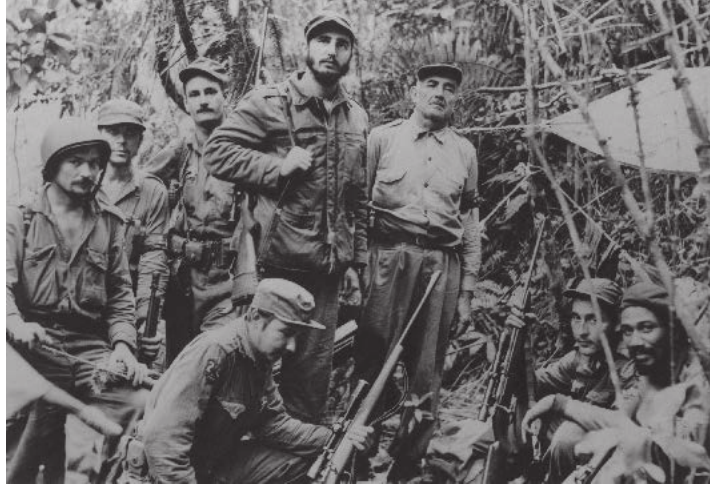
This political instability created conditions where leaders like Batista could seize power through military coups rather than democratic processes.
Problems with Batista's regime
Note
Key term: Regime
A regime refers to a particular government or system of government.
Fulgencio Batista's government became increasingly authoritarian and oppressive. After seizing power through a coup in 1952, Batista established a dictatorship characterised by brutal repression and systematic violations of human rights.
Repression and violence
The Batista government used terror tactics to eliminate opposition. Key oppressive measures included:
- Arbitrary arrest and imprisonment without trial
- Widespread use of torture against suspected dissidents
- Abolition of Cuba's constitution
- Dissolution of Cuba's congress (parliament)
- Outlawing of the Cuban Communist Party
Important
Brutality on Display
One witness account from 1958 described how police savagely beat unarmed student protesters during a baseball championship whilst thousands watched on television. Such brutal displays of state violence became commonplace and generated widespread horror among ordinary Cubans.
Failed democratic processes
When opposition groups demanded free and open elections in 1955, Batista flatly rejected these calls. His regime made peaceful political change impossible, leaving many Cubans feeling that armed resistance was their only option.
Concentration of wealth and power
Although Cuba possessed considerable national wealth, distribution was extremely unequal:
- Extreme gaps existed between rich and poor
- Only old politicians, wealthy Cubans and Americans supported the government
- The majority of Cubans saw no benefit from the nation's prosperity
American influence and anti-imperialist sentiment
American economic and political control over Cuba generated intense resentment among many Cubans. This anti-imperialist feeling became a major cause of revolutionary sentiment.
Economic dominance
By the 1950s, American interests controlled large portions of Cuba's economy. This economic dependence severely restricted Cuban political independence:
- Cuban politicians primarily acted to defend American interests
- Economic decisions were made in Washington rather than Havana
- American control tightened as economic involvement increased
- Protecting American interests became the primary concern for Cuban political parties
Social degradation
Important
Cuba as an American Playground
Arthur Schlesinger Jr, visiting Cuba in 1958, observed that Havana had been transformed into a giant casino and brothel serving American tourists. He witnessed American businessmen:
- Picking up fourteen-year-old Cuban girls
- Tossing coins to make Cuban men scramble in the gutter
- Treating Cuba as their personal playground
Schlesinger reflected that any Cuban witnessing such degrading scenes could hardly regard the United States with anything except hatred.
Economic dependence on sugar production
Cuba's economy relied overwhelmingly on sugar exports, creating severe economic and social problems that destabilized the nation and affected hundreds of thousands of families.
The sugar monoculture
Example
Worked Example: Cuba's Economic Vulnerability
In the 1950s, sugar accounted for 85% of Cuba's main exports. This extreme dependence created a precarious situation:
- Price fluctuations: When international sugar prices dropped, Cuba's entire economy suffered
- Production variations: Output ranged dramatically from 3.6 million tonnes in 1932 to 7 million tonnes in 1952
- External control: American officials in Washington determined quotas and duties, controlling Cuba's economic fate
Social consequences
The seasonal nature of sugar farming created devastating social effects:
- Sugar plantation workers faced unemployment from December to August
- Economic upheaval put many farmers out of work
- Seasonal unemployment caused widespread poverty
- Economic planning became nearly impossible due to unpredictable conditions
Note
This economic instability affected hundreds of thousands of Cuban families and contributed to growing discontent with the existing system. The inability to find work for eight months of the year left families without income and created widespread desperation.
Social fragmentation and inequality
Cuban society was deeply divided along class and economic lines. These divisions intensified during the Batista years, making it difficult to build consensus about Cuba's future direction.
Nationalist awakening
Intellectuals and middle-class Cubans increasingly argued that American involvement prevented Cuba from achieving genuine independence. A growing nationalist movement emerged demanding:
- True Cuban sovereignty
- Economic independence from American control
- Political decision-making centred on Cuban interests
Class divisions
However, Cuban society remained fractured:
- Wealthy Cubans enjoyed prosperity derived from American dominance
- The middle class and intellectuals resented foreign control
- Poor Cubans suffered from economic instability and lack of opportunity
- No unified national vision existed that could bridge these divisions
Government corruption
Important
Systematic Failure of Cuban Politics
Endemic corruption plagued Cuban politics and government, further undermining public confidence. The Cuban government and political parties consistently failed to:
- Represent the needs of ordinary Cuban people
- Address pressing social problems
- Provide competent leadership
- Conduct fair elections
Corruption as standard practice
Electoral fraud became routine. Corruption permeated all levels of government. Poor leadership characterised successive administrations. These failures convinced many Cubans that the entire political system required fundamental change rather than mere reform.
The Moncada Barracks attack
On 26 July 1953, Fidel Castro led an attack on the Moncada Barracks in Santiago. Although the attack failed militarily, it became a crucial turning point in the revolutionary movement.
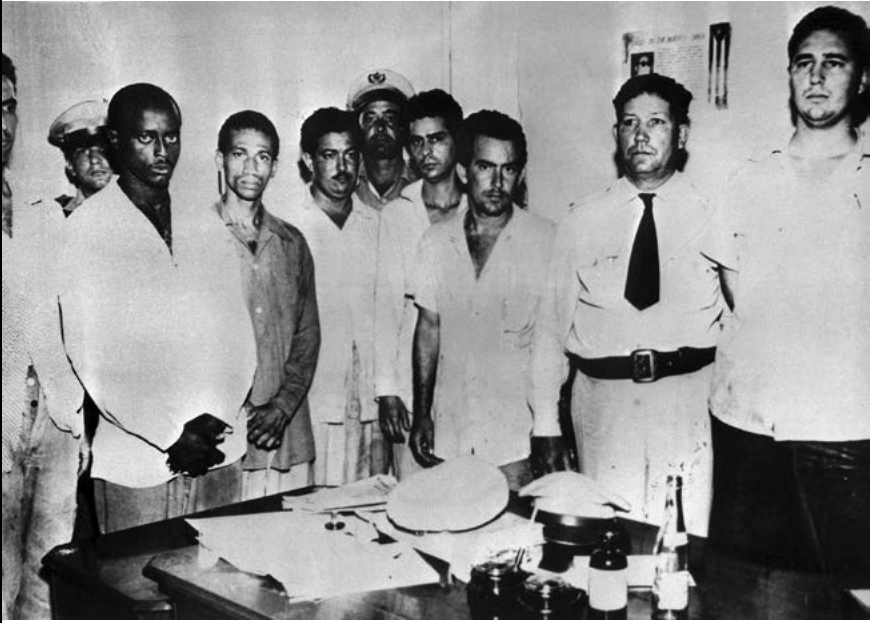
The attack plan
Castro organised approximately 79 men to storm the barracks at 5:30 am during Santiago's annual carnival. The strategy relied on:
- Catching soldiers off-guard after late-night celebrations
- Capturing the weapons armoury
- Establishing a base for guerrilla warfare if the immediate objective failed
Military failure
The attack went wrong when soldiers discovered the rebels and opened fire. The assault failed, resulting in:
- Only three rebel deaths during the actual fighting
- Capture of 80 revolutionaries
- Torture and execution of most prisoners, including deputy commander Abel Santamaria
- Castro's eventual capture on 1 August 1953
Revolutionary significance
Important
Why the Moncada Attack Mattered
Despite military failure, the Moncada attack achieved important revolutionary objectives:
- It demonstrated that armed resistance against Batista was possible
- Public outrage over government torture and executions increased opposition to Batista
- The attack inspired other Cubans to join the revolutionary cause
- It established Castro as a national figure willing to fight for change
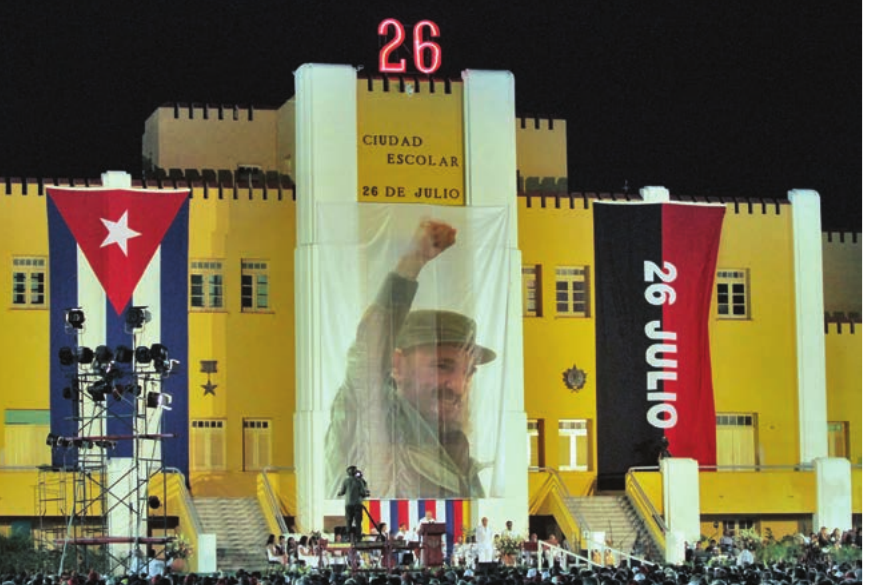
Castro's trial and 'History will absolve me'
Castro received a secret trial in October 1953. His two-hour defence speech became one of the most famous political statements in Cuban history. In his closing words, Castro declared:
As for me, I know that imprisonment will be filled with threats, ruin and cowardly deeds of rage, but I do not fear it, as I do not fear the fury of the wretched tyrant who snuffed out the lives of 70 brothers of mine. Condemn me. It does not matter. History will absolve me.
Note
The Power of 'History Will Absolve Me'
This manifesto, later titled 'History Will Absolve Me', became as famous to Cuban youth as Lincoln's Gettysburg Address to Americans. It articulated the moral case for revolution and inspired future resistance.
Castro received a 15-year sentence but was released in 1955 when Batista granted amnesty to political prisoners.
Castro's appeal and leadership
Fidel Castro's personal qualities and revolutionary vision attracted growing support and became a crucial factor in the revolution's success.
Leadership qualities
Castro demonstrated exceptional abilities from his youth:
- Outstanding speaking and debating skills
- Extraordinary memory for facts and details
- Natural leadership that attracted loyal followers
- Physical courage and willingness to risk personal safety
Revolutionary promises
Note
Castro's Vision for Cuba
Castro offered Cubans an appealing alternative vision that addressed their grievances:
- Social justice and economic fairness
- Democratic reform and constitutional government
- An end to endemic corruption
- Focus on national interests rather than foreign priorities
- Land reform and economic opportunities for poor Cubans
Strategic approach
Example
Worked Example: Castro's Dual Revolutionary Strategy
Castro developed an effective revolutionary strategy combining three key elements:
1. Urban resistance: Building networks of supporters in cities to organize protests, strikes and sabotage
2. Guerrilla warfare: Fighting from mountain bases to gradually wear down government forces
3. Popular mobilization: Inspiring ordinary Cubans to join the revolutionary cause
This dual approach proved more effective than purely military or purely political strategies, allowing the revolutionaries to fight on multiple fronts simultaneously.
Summary of key factors
| Factor | How it contributed to revolution |
|---|---|
| Anti-imperialist sentiment | American economic and political control generated resentment; Cuba was treated as a playground for American tourists; Cuban politicians served American rather than national interests |
| Economic dependence on sugar | 85% reliance on sugar exports created economic instability; seasonal unemployment affected hundreds of thousands; economic decisions made in Washington rather than Havana |
| Social fragmentation | Deep class divisions prevented unified national vision; wealth inequality created extremes of prosperity and poverty; nationalist intellectuals clashed with wealthy elites |
| Government corruption | Endemic corruption and electoral fraud discredited political system; government failed to address social problems; poor leadership became standard |
| Batista's oppression | Brutal repression including torture and arbitrary imprisonment; abolition of constitution and dissolution of congress; rejection of democratic elections; use of state terror against opponents |
| Castro's leadership | Exceptional speaking and organizational skills; clear revolutionary vision promising social justice; successful combination of urban resistance and guerrilla warfare; personal courage that inspired followers |
Exam tips
Note
How to Answer Questions About the Cuban Revolution
When answering questions about the causes of the Cuban Revolution:
- Identify multiple factors: The revolution resulted from interconnected economic, social and political causes, not a single issue
- Explain connections: Show how factors reinforced each other (e.g., American economic control led to political dependence, which prevented addressing social problems)
- Use specific evidence: Reference statistics (85% sugar exports), events (Moncada attack), and concrete examples (American tourists, seasonal unemployment)
- Assess significance: Consider which factors were most important and why
- Consider different perspectives: Wealthy Cubans, poor workers, intellectuals and Americans viewed the situation differently
Remember!
Summary
Key Points to Remember:
-
Revolution vs regime: A revolution is a fundamental change in how a country is governed, whilst a regime is a particular government or system. The Cuban Revolution sought to overthrow Batista's regime.
-
Multiple interconnected causes: The revolution resulted from American economic dominance, overdependence on sugar exports, extreme social inequality, government corruption, and Batista's brutal oppression working together.
-
Moncada's dual significance: The 26 July 1953 attack failed militarily but succeeded as propaganda, generating public sympathy and establishing Castro as a revolutionary leader.
-
Economic vulnerability: Cuba's 85% dependence on sugar exports created seasonal unemployment and economic instability that affected hundreds of thousands of families.
-
Castro's appeal: Castro attracted supporters through his exceptional speaking skills, promises of social justice and democratic reform, and willingness to personally risk danger for the revolutionary cause.