Political, Economic, and Social Conditions in Cuba Under President Batista (HSC SSCE Modern History): Revision Notes
📚Revision Notes
Political, Economic, and Social Conditions in Cuba Under President Batista
Introduction
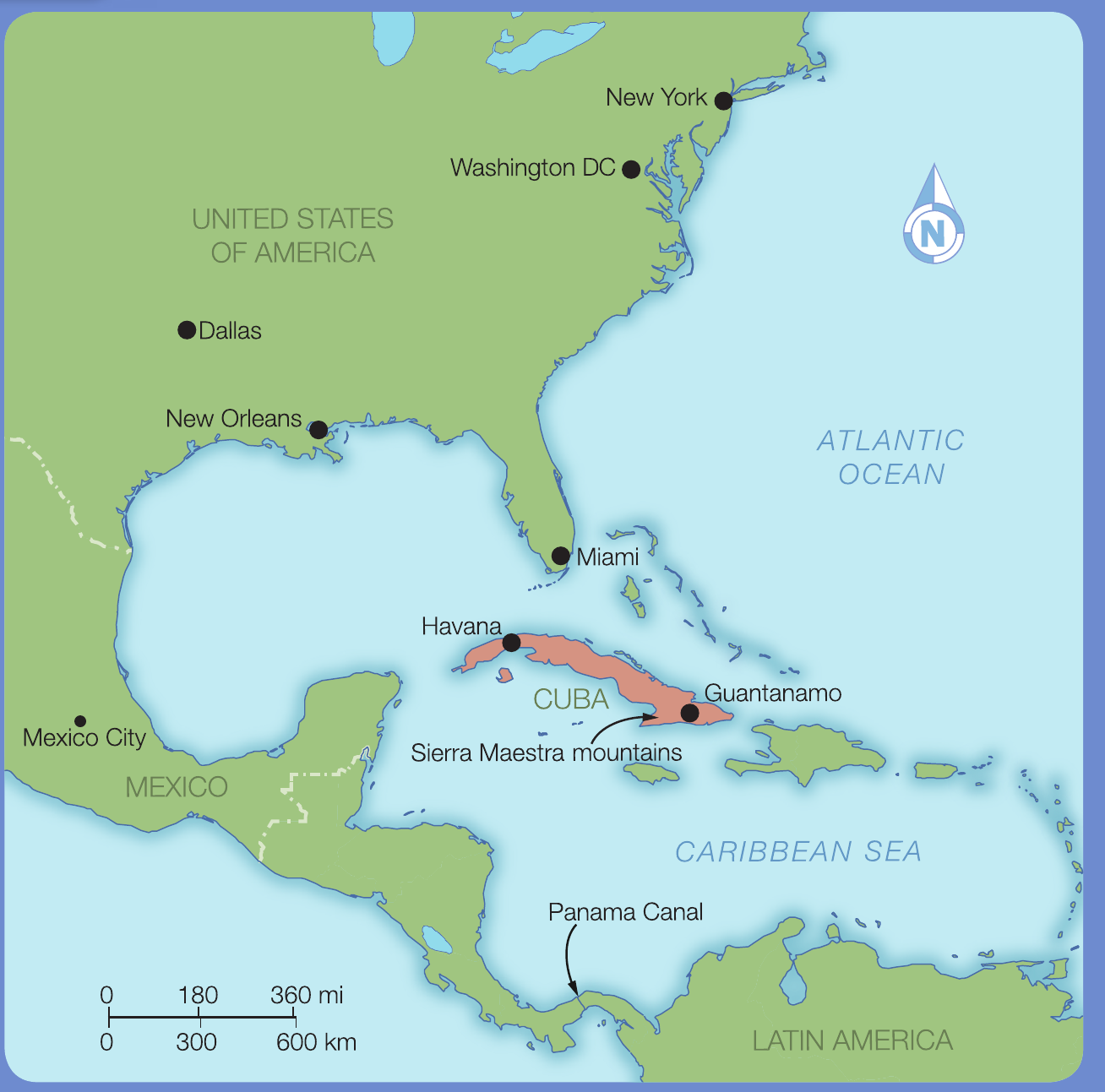
Cuba is a Caribbean island nation located just 145 kilometres south of Florida. Its strategic position near the entrance to the Gulf of Mexico made it extremely important to American interests, particularly for defending shipping routes and the Panama Canal. This geographical proximity would shape Cuba's relationship with the United States throughout its history and played a crucial role in the political developments that led to the Cuban Revolution.
Note
Cuba's location gave it tremendous strategic value during the 20th century. Control of Cuba meant control over shipping lanes connecting the Atlantic Ocean to the Gulf of Mexico and access to the Panama Canal. This explains why the United States maintained such intense interest in Cuban affairs throughout this period.
Understanding conditions in Cuba under President Fulgencio Batista is essential for comprehending why revolution became inevitable. The political repression, economic corruption, and social inequality that characterized his regime created an environment where many Cubans concluded that violent revolution was their only option for change.
Background: US influence and Cuba's path to independence
Spanish colonization and the struggle for freedom
Cuba remained under Spanish colonial control long after most of Latin America had achieved independence. The impact of Spanish rule was severe, with the colonial government exploiting Cuba's resources and people. As early as 1823, the United States began criticizing European colonization in the Americas.
The Monroe Doctrine was a policy statement made by US President James Monroe in 1823. It declared that the United States would not interfere in European affairs, but equally that European powers should no longer colonize or interfere with independent nations in the Americas. Any European attempt to influence American nations would be considered a threat to US peace and safety. This doctrine established the United States as the dominant power in the Western Hemisphere and gave it a justification for intervening in the affairs of Latin American countries, including Cuba.
The independence movement
Cuba's long fight for independence began in October 1868. A plantation owner named Carlos Cespedes formed a small liberation army of just 38 men. The response was remarkable. Within two days, the rebel force had grown to 4000 fighters. Within a month, nearly 12,000 Cubans had joined the struggle. A freed black slave called Antonio Maceo became the military commander and proved to be a brilliant tactician. Despite fighting Spanish forces to a standstill over ten years, Maceo could not drive the Spanish from power.
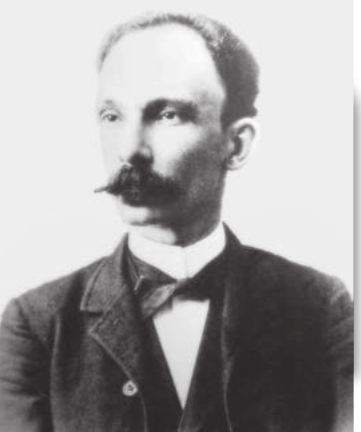
Jose Marti became Cuba's national hero when he continued the independence struggle. A brilliant poet and patriot, Marti landed in Oriente Province in April 1895 with a small group of fighters. Although Spanish forces killed him just one month later, his sacrifice inspired Cubans to press forward with their fight for freedom. Marti became known as the 'Apostle of the Cuban Revolution' and his writings inspired future revolutionaries, including Fidel Castro decades later.
Note
Jose Marti's legacy extended far beyond his brief military campaign. His writings about justice, freedom, and Cuban identity became foundational texts for later revolutionary movements. Castro would frequently quote Marti to justify his own revolutionary actions, claiming to fulfill Marti's vision for Cuba.
The Spanish-American War and US involvement
The United States sympathized with the Cuban rebels but also had its own interests in Cuba. Americans saw Cuba as vital to defending the Panama Canal and wanted to establish their own influence over the island. When the American warship Maine exploded in Havana Harbor in 1898, the US blamed Spain. America declared Cuba independent and demanded Spain's immediate withdrawal.
The Spanish-American War lasted just three months in 1898. This brief conflict ended Spain's colonial empire in the Western Hemisphere and established the United States as a major power in the Pacific. The peace treaty forced Spain to give up all claims to Cuba. After centuries of struggle, Cuba finally achieved independence from Spanish rule. However, true independence would prove elusive.
The Platt Amendment: limited independence
Cuba became an independent nation in 1902, but this independence came with severe restrictions. The United States insisted that Cuba accept legislation known as the Platt Amendment as part of its new constitution. This amendment gave the United States:
- The perpetual right to maintain military bases in Cuba
- The right to intervene in Cuban affairs whenever it deemed necessary
- Control over Cuba's foreign policy
- The right to supervise Cuba's finances
Important
The Platt Amendment fundamentally limited Cuban sovereignty. Although Cuba was technically an independent nation, it could not conduct foreign policy, manage its finances, or govern without the threat of US military intervention. This created deep resentment among Cubans who felt their hard-won independence was hollow and that Cuba had merely traded Spanish masters for American ones.
The Platt Amendment remained in force for 32 years, during which time the United States frequently exercised its right to intervene in Cuban affairs. Although Cuba was technically independent, in practice it functioned almost as an American protectorate. This arrangement bred resentment among many Cubans who felt their independence was hollow. The US military base at Guantanamo Bay, established under the Platt Amendment, remains US-occupied to this day.
The rise of Fulgencio Batista
The 1933 coup and early power
In August 1933, Cuba experienced a wave of strikes and demonstrations. The immediate causes were economic hardship and anger at the corrupt, tyrannical government of General Gerardo Machado, who had been President since 1925. The protests succeeded in driving Machado from office. However, the political situation remained unstable.
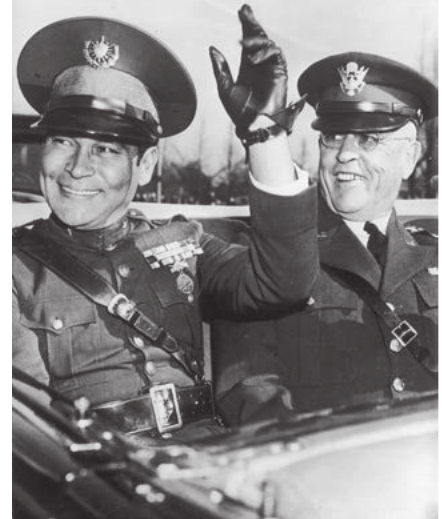
At this critical moment, a group of young military officers, led by a sergeant named Fulgencio Batista, seized control of the army. They overthrew Machado's successor and effectively took control of the government. Although civilian presidents came and went over the following seven years, Batista was the real power behind the scenes. He controlled the military and thus controlled Cuba.
Batista's first presidency (1940-1944)
During the 1930s, social unrest increased throughout Cuba. Workers in cities and on farms became more militant in demanding better conditions. In 1935, the government ruthlessly crushed a nationwide strike. Young Cuban radicals became convinced that the 1933 uprising had been betrayed and that complete government reform was essential.
Batista decided he wanted to be President officially, not just the power behind the throne. He directed the creation of a new constitution for Cuba in 1940. Surprisingly, this constitution contained progressive provisions about labour rights and social welfare. Batista won the 1940 election and served as President for four years. While his administration allowed more democracy than previous governments, it was marked by serious corruption throughout all levels of government.
Note
The 1940 constitution was genuinely progressive for its time, including provisions for social welfare, workers' rights, and democratic protections. This made Batista's later suspension of constitutional guarantees after his 1952 coup particularly devastating, as Cubans lost rights that had been formally recognized and protected.
The corruption was systematic and widespread. Batista and his personally selected police force organized extensive extortion schemes throughout Cuban cities. All shops, bars, and businesses were forced to make regular payments to local police stations. The police were heavily involved in prostitution, gambling, and drug trafficking. This pattern of official corruption would only intensify when Batista returned to power.
Exile and return
In 1944, the new constitution prevented Batista from serving consecutive presidential terms. He agreed to allow free elections. Dr Ramon Grau San Martin of the Autentico Party won the election, and Batista left Cuba to live temporarily in Miami, Florida.
Unfortunately for Cuba, subsequent governments proved equally corrupt. Both the Grau administration (1944-1948) and the government of his successor Carlos Prio Socarras (1948-1952) were deeply corrupt. While both presidents improved education and public health services, they also participated in the systemic corruption that infected every level of Cuban society.
The corruption caused a split in the Autentico Party. Disillusioned members formed a new party called the Ortodoxo, dedicated to honest government. Eduardo Chibas, the Ortodoxo's charismatic founder, was committed to achieving power through legal, democratic means. He appeared likely to win the next election. However, in summer 1951, Chibas tragically committed suicide. His death shattered hopes for peaceful democratic reform and convinced many young Cubans that legal methods could not clean up Cuban politics.
The 1952 coup d'état
On 10 March 1952, just three weeks before scheduled presidential elections, Batista returned to Cuba and overthrew the constitutional government of Carlos Prio Socarras. With help from junior army officers, Batista carried out the coup d'état (sudden overthrow of government by illegal force) swiftly and with minimal bloodshed.
Batista's motivations were straightforward and selfish. He was a legal candidate in the presidential election but knew he had no chance of winning. Public opinion polls showed him running third behind the Autentico and Ortodoxo candidates. Batista and his supporters feared losing their economic privileges and political power. The coup guaranteed Batista's continued control of government, which in turn ensured his continued profits from corruption and organized crime.
Important
The Transition from Democracy to Dictatorship
As historian Ramon Bonachea wrote: "From a corrupt democracy, Cuba now shifted to a corrupt dictatorship." This transition was crucial because it eliminated even the possibility of peaceful political change. While Cuba's democracy had been flawed and corrupt, citizens still had elections, opposition parties, and some constitutional protections. After the coup, these mechanisms for peaceful change disappeared entirely.
Political conditions under Batista's dictatorship
Suspension of constitutional rights
Immediately after the 1952 coup, Batista suspended all constitutional guarantees that protected Cuban citizens' rights. The changes were dramatic and severe:
- Elections were banned - Cubans lost the right to vote or choose their leaders
- Freedom of speech was heavily curtailed - Citizens could not criticize the government
- Freedom of the press disappeared - Newspapers and radio faced strict censorship
- Opposition party activities were restricted - Political parties could not organize or campaign effectively
These measures transformed Cuba from a flawed democracy into an outright dictatorship. Citizens lost the legal means to change their government or protect their rights.
US recognition and support
The United States officially recognized Batista's government just 17 days after the coup. This swift recognition gave Batista's regime international legitimacy and showed that the US government supported him despite his seizure of power through illegal means. Cuba's labour unions and business leaders also quickly demonstrated their support for the new regime, either because they genuinely approved or because they feared the consequences of opposition.
Note
The rapid US recognition of Batista's illegal seizure of power reflected American Cold War priorities. US officials valued Batista's anti-communist stance and protection of American business interests more than concerns about democracy or human rights. This decision would later fuel Cuban resentment toward the United States and influence Castro's anti-American policies after the revolution.
American support for Batista reflected US priorities during the Cold War. American officials viewed Batista as anti-communist and supportive of US business interests in Cuba. These factors were more important to US policy makers than concerns about democracy or human rights in Cuba.
The police state
Batista's regime became increasingly brutal and dictatorial over time. The government established what was effectively a police state - a system where police have extensive power to suppress opposition through intimidation and violence. Key features included:
- Arrest without warrant - Police could detain anyone without legal justification
- Imprisonment without trial - Detainees could be held indefinitely without facing charges
- Torture - Physical abuse of prisoners became commonplace
- Extrajudicial killing - Government forces murdered suspected opponents without legal proceedings
Important
These tactics created an atmosphere of fear throughout Cuba. Many Cubans were too frightened to speak out against the government or participate in opposition activities. The arbitrary nature of police violence meant that even ordinary citizens who avoided politics could become victims. This pervasive fear was essential to maintaining Batista's control but also built intense resentment that would fuel the revolution.
Limited opposition
The opposition political parties were in complete disarray. They suffered from ineffective leadership and could not organize effectively due to police repression. Traditional political methods - elections, campaigns, public meetings - were no longer possible under Batista's dictatorship.
The only significant opposition to the coup came from Cuba's university students. Young people, less intimidated by the police and more idealistic about Cuba's future, organized protests and demonstrations. However, even student opposition was difficult to sustain in the face of violent repression.
Economic conditions under Batista
Systematic corruption
The corruption that characterized Batista's first presidency intensified dramatically after 1952. Throughout Cuban cities, Batista and his hand-picked police force organized systematic extortion. The system worked like a protection racket:
- All stores, bars, and commercial establishments were forced to make regular payments to local police precincts
- Businesses that refused faced harassment, false charges, or closure
- The money collected flowed upward through the police hierarchy, eventually enriching Batista and his closest associates
Note
How Protection Rackets Worked
A typical business owner in Havana might pay weekly "protection money" to the local police station. If they paid regularly, police would ignore minor violations and provide some actual security. If they refused or fell behind on payments, police would suddenly discover health code violations, licensing problems, or even plant evidence of illegal activity. The choice was clear: pay or face ruin.
This system was not occasional or exceptional - it was the normal way government operated under Batista. Every business owner had to factor police payments into their costs of operation.
Organized crime and vice
Police were heavily involved in:
- Prostitution - Police protected brothels and took a share of profits
- Gambling - Casinos operated with government protection; police received regular payments
- Drug trafficking - Police allowed drug dealing in exchange for bribes
Rather than combating crime, Batista's police force actively participated in organized crime. Havana became known internationally as a center for gambling and prostitution. While this attracted tourists and generated revenue for Batista's associates, it did nothing to improve conditions for ordinary Cubans.
American business interests
American companies owned substantial portions of Cuba's economy, particularly the vital sugar industry. American businesses benefited from the Batista regime, which protected their investments and allowed them to operate profitably. In return, these businesses supported Batista politically and financially. This relationship between US business interests and the Cuban dictatorship increased Cuban resentment toward both Batista and the United States.
Economic inequality
While Batista and his associates, along with foreign businesses, enriched themselves, most Cubans lived in poverty. Workers faced:
- Low wages that barely covered basic needs
- Poor working conditions, especially in agriculture
- Limited economic opportunities for advancement
- No effective unions to bargain for better treatment (unions were controlled by the government)
The contrast between the wealth of Cuba's elite and the poverty of ordinary Cubans became increasingly stark and increasingly resented.
Social conditions under Batista
Police brutality and human rights abuses
Police violence affected everyday life for many Cubans. The regime's brutality included:
- Regular beatings of suspected opponents
- Torture of political prisoners
- Disappearances of activists and critics
- Public displays of violence designed to intimidate the population
These abuses were not random or accidental. They were deliberate government policy designed to crush opposition and maintain control through fear.
Inadequate social services
Despite occasional improvements in education and public health, Batista's government showed basic indifference to the needs of ordinary Cubans. As American observer Arthur Schlesinger noted in a report to the US government:
Important
An Open Invitation to Revolution
"The corruption of the Government, the brutality of the police, the regime's indifference to the needs of the people for education, medical care, housing, for social justice and economic justice ... is an open invitation to revolution."
This observation by Arthur Schlesinger proved prophetic. By ignoring the basic needs of its citizens while enriching a small elite, Batista's government created conditions that made revolution not just possible but inevitable.
The government invested little in:
- Education - Many Cubans, especially in rural areas, lacked access to schools
- Healthcare - Medical services were limited and expensive
- Housing - Poor Cubans lived in inadequate, overcrowded conditions
- Social welfare - There was minimal support for the unemployed, elderly, or disabled
Government resources went instead to enriching officials and maintaining the military and police forces that protected the regime.
Growing resentment
The combination of political repression, economic exploitation, and social neglect created widespread resentment throughout Cuban society. Many Cubans felt their country was being treated as a playground for foreign tourists and a source of profit for corrupt officials, while ordinary citizens struggled to survive.
This resentment was particularly strong among:
- Students - Educated young people saw the contrast between Cuba's potential and its reality
- Workers - Those exploited in factories and fields resented their poverty amid national wealth
- Rural poor - Farmers and agricultural workers suffered the most from neglect and exploitation
The emergence of opposition and Fidel Castro
Castro's early life
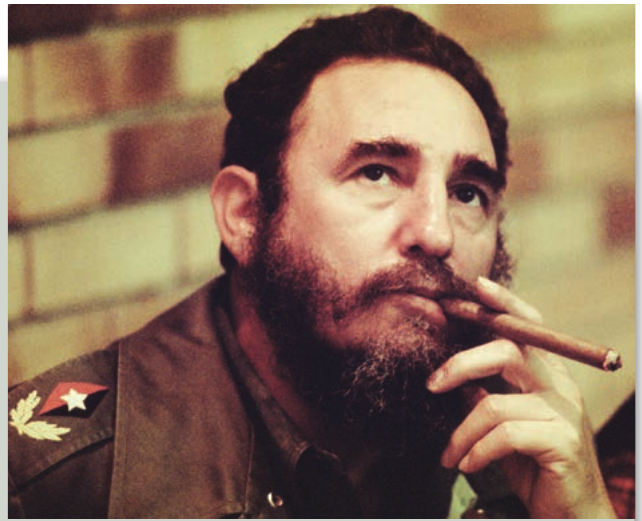
Fidel Castro was born on 13 August 1926 on his father's sugar plantation near Biran, on Cuba's eastern coast. His childhood was comfortable and carefree. Tall and athletic, young Fidel enjoyed swimming and horseback riding through the fields of his father's large farm. Workers on the plantation remembered him as a wild, energetic child with tremendous drive and determination.
Castro became an excellent student, skilled debater, and champion athlete in baseball and track. Most of his schoolmates were children of poor families from the surrounding area. These early experiences exposed Castro to the economic inequalities in Cuban society and helped shape his later political views. He saw firsthand the contrast between his own privileged life and the poverty of most rural Cubans.
University years and political awakening
Castro entered the University of Havana in 1945 to study law. This experience proved crucial in developing his political awareness and leadership skills. University life in Cuba during this period was intensely political and often violent. Student political organizations competed for influence, sometimes through intimidation and violence.
Note
Castro's university years shaped him in crucial ways. The University of Havana was a hotbed of political activism where students debated ideas, formed political organizations, and sometimes engaged in violent confrontations. This environment developed Castro's speaking abilities, political thinking, and understanding of how to organize and lead movements.
Castro was not an ordinary student. His personal qualities quickly became apparent to his peers:
- Exceptional speaking skills that could move and persuade audiences
- An extraordinary memory for facts, arguments, and details
- Natural leadership abilities that attracted followers
- Tremendous energy and determination
Castro and his generation had inherited a troubled political legacy. Although Cuba had achieved nominal independence in 1902, the United States had sent troops into Cuba three times in 23 years to suppress revolts and protect American interests. As a result:
- Political parties were widely viewed as corrupt and self-serving
- Elections were seen as meaningless exercises
- Corruption was accepted as a normal part of political life
These conditions radicalized many young Cubans, including Castro.
The decision for armed struggle
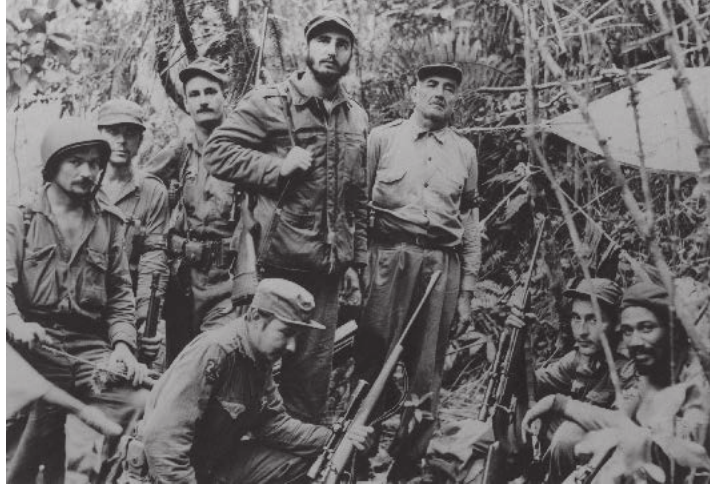
During Batista's rule, Castro and his fellow students were at the center of protests against the government. When Castro requested that Havana's court of appeals punish those involved in the 1952 coup, the court immediately dismissed his case. Legal methods for opposing Batista appeared completely ineffective.
As peaceful and legal protests repeatedly failed to restore constitutional government, Castro reached a crucial conclusion: only armed struggle could overthrow Batista. In May 1952, Castro began finding young people who shared his feelings about Cuba's situation. He argued that Cubans had a duty to liberate their country and that this task could not wait for future generations.
Important
Why Castro Chose Armed Struggle
Castro's decision to abandon legal methods was not impulsive. He had tried working within the system - filing legal challenges, organizing protests, and working with political parties. When every legal avenue was blocked by Batista's dictatorship, Castro concluded that constitutional government could only be restored through force. This reasoning would justify the violence of the coming revolution.
Initially, Castro hoped to organize action groups within the Ortodoxo Party - members willing to fight against Batista. However, he quickly realized that few party members had the ability or determination to overthrow the government through force. The traditional opposition parties were too committed to legal methods, too divided, or too intimidated to support revolution.
Consequently, Castro developed a new revolutionary strategy independently. He would organize a dramatic attack that would inspire a popular uprising throughout Cuba. This uprising would then develop into a national revolution that would overthrow Batista and transform Cuban society. This strategy would lead directly to the Cuban Revolution.
Guerrilla warfare - fighting by small, mobile groups using tactics like ambush and sabotage against larger conventional forces - would become Castro's method. Rather than trying to defeat Batista's army in conventional battles, Castro would use hit-and-run attacks to gradually wear down government forces while building popular support.
Understanding the path to revolution
By 1952, conditions in Cuba under President Batista had created an environment where revolution became increasingly likely. The political repression destroyed legal means of opposition. The economic corruption impoverished most Cubans while enriching a small elite. The social neglect left ordinary Cubans without adequate education, healthcare, or housing. The police brutality created an atmosphere of fear and resentment.
Note
Understanding the conditions under Batista is essential for comprehending the Cuban Revolution. Castro's revolution did not occur in a vacuum - it was a direct response to specific political, economic, and social conditions that made many Cubans desperate for change. The revolution's popularity among ordinary Cubans stemmed from their lived experience of Batista's repression and corruption.
These conditions convinced many young Cubans, including Fidel Castro, that only violent revolution could change Cuba's situation. The stage was set for dramatic events that would transform not only Cuba but also influence revolutionary movements throughout Latin America.
Remember!
Summary
Key Points to Remember:
-
Batista came to power through two military coups - first in 1933 as a sergeant, then again in 1952 as an ex-president who knew he would lose the scheduled election.
-
The Platt Amendment (1902-1934) gave the US the legal right to intervene in Cuban affairs, establishing a pattern of American dominance that bred Cuban resentment and allowed the US to maintain the Guantanamo Bay naval base.
-
Batista's 1952 dictatorship destroyed constitutional rights by banning elections, censoring the press, restricting opposition parties, and using police violence to suppress dissent.
-
Systematic corruption characterized Batista's Cuba, with government officials, especially police, organizing extortion schemes and participating in prostitution, gambling, and drug trafficking while most Cubans lived in poverty.
-
Fidel Castro emerged as a revolutionary leader when legal methods of opposition failed, concluding that only armed struggle could overthrow Batista and restore constitutional government to Cuba.