The Role of Nicholas II as Autocrat (HSC SSCE Modern History): Revision Notes
📚Revision Notes
The Role of Nicholas II as Autocrat
Introduction to Nicholas II
In 1894, Nicholas II ascended to the Russian throne at the young age of 26, following his father Alexander III's unexpected death from kidney failure. This sudden transition to power would prove significant, as Nicholas was largely unprepared for the immense responsibilities of ruling the vast Russian Empire.
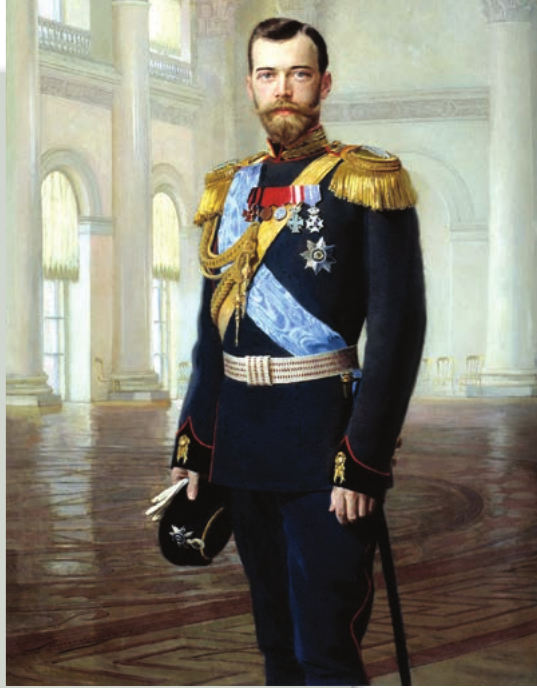
Nicholas married Alexandra, a German princess who, despite her occasional shyness, shared his firm commitment to maintaining autocratic power. Together they had five children: four daughters—Olga (born 1895), Tatiana (born 1897), Maria (born 1899), and Anastasia (born 1901)—and finally a son, Alexei, born in 1904.
The birth of Tsarevitch (crown prince) Alexei brought Nicholas great joy, as he now had a male heir to continue the Romanov Dynasty. However, this joy was tempered by serious concerns: Alexei suffered from haemophilia, a genetic condition that prevented his blood from clotting properly. Royal doctors predicted a short lifespan for the young prince, casting a shadow over the succession.
Note
Key Vocabulary:
- Autocracy: A system of government where one person holds absolute power
- Abdicate: To resign from political rule (referring to a monarch)
- Tsarevitch: The title given to the crown prince, the heir to the Russian throne
- Haemophilia: A genetic condition that prevented blood from forming the clotting cells needed to thicken blood if and when bleeding occurred
Historian's assessment of Nicholas II
Historian Simon Sebag Montefiore, in his extensive study of the Romanov Dynasty, offered a harsh judgement of Nicholas II. He described him as the least capable and most narrow-minded of all 18 Romanov rulers who had governed Russia. This assessment highlights the fundamental weaknesses in Nicholas's character and abilities that would ultimately contribute to the dynasty's collapse.
Nicholas's rule was marked by a series of crises and his attempts to resist the forces of modernisation sweeping through Russia and Europe. Most significantly, he consistently rejected calls for more participatory government and greater civil rights for his subjects. Instead, he clung firmly to an ideology of autocracy—the belief in the absolute power of the Tsar.
Important
Nicholas's reign ended dramatically in March 1917, when he abdicated during a time of war and revolution, bringing the 300-year-old Romanov Dynasty to an end. In July 1918, he was executed alongside his wife, children, and close servants in Ekaterinburg. This tragic fate marked the complete destruction of the imperial family and symbolised the end of centuries of tsarist rule in Russia.
Nicholas's vision as leader
Nicholas II drew upon two distinct yet interconnected political and cultural traditions in shaping his approach to leadership. Understanding these traditions is essential to grasping how he governed Russia and why he resisted political reform so stubbornly.
The tradition of absolute authority
The first tradition Nicholas embraced was that of the Tsar as an absolute ruler who advanced Russia's interests through might and force. In this vision, the Tsar should be a figure of awesome power—fierce, strong, and commanding. Nicholas believed that all people should be guided by the virtues of self-discipline, orderliness, and regularity.
Central to this tradition was Nicholas's conviction that the autocratic order was the key to Russia's strength, stability, and progress as a nation. He saw no room for compromise or sharing of power. This belief led him to govern Russia as a police state—a regime where the government uses police forces to severely restrict people's freedom.
The Okhrana: the secret police
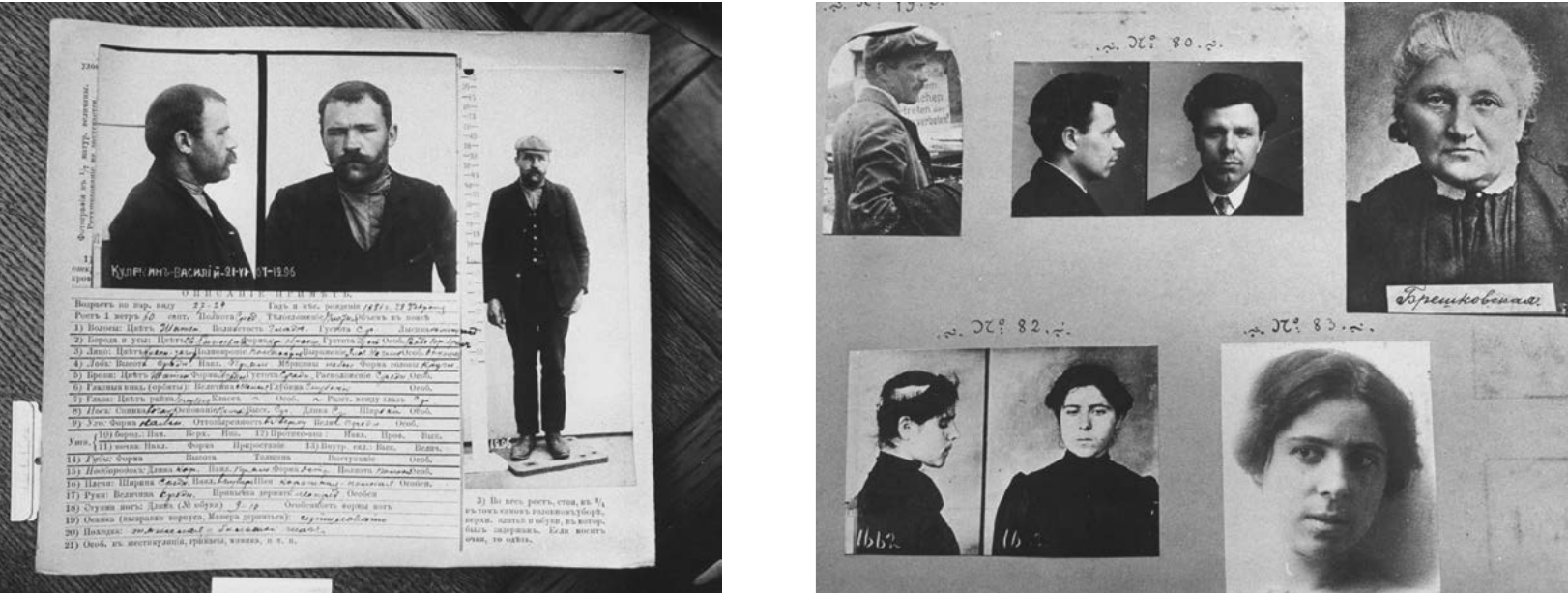
To maintain control and suppress opposition, Nicholas relied heavily on the Okhrana, the Tsar's secret police service. This organisation dealt ruthlessly with anyone who dared challenge the Tsar's authority. The Okhrana kept detailed files on suspected revolutionaries, tracking and arresting those deemed threats to the autocratic system.
Note
The Okhrana's Methods:
These declassified Okhrana files show the systematic way the secret police documented suspected revolutionaries. Each file included:
- Photographs from multiple angles
- Personal details and descriptions
- Information about alleged crimes
- Records of movements and associations
The brutal efficiency of the Okhrana reflected Nicholas's commitment to crushing opposition through force. Nicholas's persistent rejection of appeals for political freedom and democracy clearly demonstrated his strong defence of autocracy. Any challenge to his authority met with harsh repression from the Okhrana.
The Cossacks: elite fighters for the Tsar
Nicholas also relied on the elite Cossacks—a group of people from the Don River region near the Black Sea with a proud history of fighting and courage. These fiercely independent warriors possessed exceptional fighting ability, particularly on horseback. The government secured their loyalty by offering them land in exchange for their service to the Tsar and the army.
The Cossacks became a key instrument of tsarist power, often deployed to suppress protests and demonstrations with savage effectiveness.
Note
Key Vocabulary:
- Police state: A regime in which the government uses the police to severely limit people's freedom
- Okhrana: The name given to the Tsar's secret police service that dealt with opposition to the royal government
- Cossacks: A group of people in Russia with a history of fighting and courage—a fiercely independent people from the region on the Don River near the Black Sea
The tradition of the sacred ruler
The second tradition Nicholas fully embraced was that of the ruler as a sacred, divine figure who sought unity and a special bond with his people. Unlike the harsh warrior image of the first tradition, this presented the Tsar as loving and conciliatory.
Nicholas believed deeply in the divine source of his authority. He was certain that God literally spoke and acted through him. This wasn't merely a political claim—it was a genuine religious conviction that grew stronger throughout his reign. Nicholas found ever-increasing comfort in religious practice and faith.
Important
The Belief in Divine Right:
This belief in divine right had several important consequences:
- It made Nicholas resistant to reform, as he believed God had chosen the autocratic system
- It connected him to the Russian people through shared Orthodox faith
- It made him susceptible to religious figures who claimed special spiritual insight
This conviction was so strong that Nicholas saw any challenge to his authority as a challenge to God's will itself.
The Russian Orthodox Church played a crucial role in supporting this tradition. Church leaders encouraged obedience to the Tsar among the population and actively protected his interests. The Church taught that the Tsar was God's representative on earth, making resistance to the Tsar equivalent to resistance to God.
Nicholas and Alexandra's famous attraction to the mystic Grigorii Rasputin was deeply connected to this faith. They believed Rasputin possessed special spiritual powers and could help their son Alexei.
Note
Exam Tip:
When discussing Nicholas's ideology, always mention both traditions. This shows you understand the complexity of his worldview—he wasn't simply a tyrant, but someone who genuinely believed he was acting in accordance with God's will while also maintaining order through force.
Nicholas's preparedness for leadership
Despite holding one of the most powerful positions in the world, Nicholas II was fundamentally ill-prepared for the role of Tsar. This lack of preparation created serious problems throughout his reign.
Limited knowledge of Russian life
Nicholas knew very little about the reality of life for ordinary Russians. He never toured factories to see working conditions firsthand. He rarely travelled beyond his palaces to observe how his subjects lived. This isolation from everyday Russian life meant his understanding of the challenges facing his empire was severely limited.
This disconnection from reality had serious consequences. Nicholas could not grasp the extent of poverty, suffering, and discontent among workers and peasants. When crises emerged, he often misjudged their severity because he had no personal experience of the conditions that created them.
Over-reliance on advisers
Because of his limited knowledge and experience, Nicholas relied heavily on his advisers for information and guidance. However, this reliance created its own problems:
- Advisers often filtered information, presenting only what they thought the Tsar wanted to hear
- Nicholas lacked the practical knowledge to question their advice critically
- His isolation meant he couldn't verify information independently
- Competing advisers sometimes gave contradictory guidance
This dependence on advisers severely affected Nicholas's ability to make strong political decisions. He often appeared indecisive or changed course suddenly when different advisers influenced him. This inconsistency undermined confidence in his leadership both within the government and among the population.
Important
The Consequences of Inexperience:
Nicholas's lack of preparation wasn't simply a personal failing—it had profound consequences for Russia. His inability to understand the realities of Russian life meant he consistently misjudged the severity of crises. His dependence on advisers made him vulnerable to manipulation and poor counsel. These weaknesses contributed directly to the mounting problems that would eventually lead to revolution.
Personality and character
Contemporary accounts from those who knew Nicholas reveal additional concerns about his suitability for leadership. While specific accounts aren't detailed in this section, the overall picture is of a man whose personal qualities didn't match the demands of his position.
Nicholas appeared more comfortable in his private family life than in the rough world of politics and government. His genuine love for his wife and children contrasted sharply with his ineffective management of Russia's mounting crises.
Note
Exam Tip:
When writing about Nicholas's weaknesses as a leader, connect his lack of preparation to specific policy failures. This shows you can link his personal limitations to broader historical outcomes.
Summary
Key Points to Remember:
-
Nicholas II became Tsar in 1894 at age 26, following his father's unexpected death. He was largely unprepared for this role and lacked practical knowledge of Russian life.
-
Nicholas embraced two leadership traditions: (1) the Tsar as an absolute ruler using force and might, and (2) the Tsar as a sacred, divine figure seeking a special bond with the people. These traditions shaped his resistance to political reform.
-
Nicholas maintained power through a police state, using the Okhrana (secret police) to brutally suppress opposition, the Cossacks as elite fighters, and the Russian Orthodox Church to encourage obedience.
-
He believed deeply in the divine right of autocracy, convinced that God spoke through him. This made him resistant to demands for political freedom and democracy.
-
Historian Simon Sebag Montefiore described Nicholas as the least capable and most narrow-minded of 18 Romanov rulers. His abdication in 1917 ended the Romanov Dynasty, and he was executed with his family in 1918.