Digital Convergence (HSC SSCE Modern History): Revision Notes
📚Revision Notes
Digital Convergence
Digital convergence represents one of the most significant technological shifts in modern history. Understanding how this phenomenon has transformed communication, democracy, and daily life is essential for grasping the impact of the Digital Revolution on contemporary society.
What is digital convergence?
Digital convergence describes the process by which older, separate technologies have been absorbed and integrated into faster, smaller digital devices. At the centre of this process sits the smartphone, a device that has fundamentally changed how we interact with the world.
The convergence process works by converting analogue technologies and processes into binary code that can be transmitted and accessed through digital devices like smartphones. Where once you might have needed a camera, telephone, radio, television, calculator, dictionary, and map as separate items, all these functions now exist within a single device.
Note
This transformation has occurred gradually over recent decades, but its effects have been profound. For people born into the internet age, this convergence feels natural and unremarkable. However, examining the influence of smartphone technologies through a historical lens reveals just how dramatically these devices have altered human experience.
Every day, more technologies and processes are being converted to digital formats. Educational platforms like Khan Academy now offer complete courses that can be accessed entirely through digital devices, transforming how knowledge is shared and consumed.
Example
Worked Example: Understanding Convergence
Consider a typical day before and after digital convergence:
Before convergence (1990s):
- Morning alarm: Separate alarm clock
- News: Physical newspaper or scheduled TV broadcast
- Music: Portable CD player or radio
- Photos: Film camera (wait days for development)
- Navigation: Paper map or atlas
- Communication: Fixed-line telephone at home
- Banking: Visit physical branch
After convergence (Today): All of these functions now exist in a single smartphone that fits in your pocket, accessible instantly from anywhere.
Internet memes and political influence
Internet memes have emerged as a powerful tool for political communication and debate. These simple images with text overlays played a particularly notable role during the 2016 US presidential election, where they were examined closely for their influence over political discourse.
What is an internet meme?
An internet meme is an image, video, website, hashtag, or hyperlink created for comedy that spreads rapidly from person to person across the internet. In political contexts, memes typically consist of a simple text message that either supports or criticises the image it appears over.
The power of memes
The effectiveness of memes lies in their simplicity. They thrive on minimal detail and can be shared at incredible speed. Creating a meme requires little technical skill, and countless smartphone applications make their construction quick and accessible to millions of people who may lack the time or inclination to construct detailed written arguments.
While political leaders like Hillary Clinton used memes sparingly during the 2016 campaign, they became overwhelmingly a tool wielded by ordinary citizens to exert influence within the political process. Like tweets, Facebook posts, Snapchats, and Instagram photos, political memes exemplify how ordinary people can influence political debate from the bottom up, rather than having messages delivered exclusively from the top down by traditional authorities.
Important
Memes played an interesting role in changing or reinforcing political opinions during election campaigns. Their viral nature and emotional appeal made them effective vehicles for spreading political messages, whether accurate or misleading.
Case study: Boaty McBoatface
The Boaty McBoatface incident provides a humorous yet instructive example of how digital convergence has transformed public participation in democratic processes. This case study illustrates both the opportunities and challenges that emerge when traditional institutions encounter the realities of digital-age democracy.

What happened?
In 2016, a British government agency sought public input for naming their new $200 million polar exploration ship. They created an online poll and invited internet users to suggest appropriate names. However, they failed to anticipate how easily people could participate in the vote and share the poll link via their smartphones.
The winning name? 'Boaty McBoatface'.
Note
What the agency had not predicted was the ease with which people could participate whilst multitasking throughout their day. Anyone, anywhere, could vote on the name whilst running between classes, waiting for the bus, or even during lessons. Millions participated, and the popularity of the humorous name spread like wildfire across social media, television, and news outlets. Within a week, 'Boaty McBoatface' became global news.
The government response
Embarrassed by the outcome, the government was forced to override the public decision. They named the vessel the RSS Sir David Attenborough after the popular television personality and naturalist. However, the story didn't end there.
The digital backlash was swift. One Twitter suggestion, which was reprinted and shared across countless news services, proposed that democracy had been challenged and the only fair solution was for Sir David Attenborough to change his name to Boaty McBoatface to restore balance. A change.org petition demanding this name change quickly garnered 3,844 signatures.
What this reveals about digital democracy
Important
The Boaty McBoatface incident can be seen as a tongue-in-cheek exercise in democracy, but it reveals important truths about the relationship between digital media technologies and public participation. The case demonstrates that ordinary people now have unprecedented power to participate in government actions and public debates.
The speed at which people could mobilise support, share the poll link, and influence the outcome shows how digital convergence has fundamentally altered the dynamics between citizens and institutions. Traditional authorities must now adapt to these 'new rules of the game', where engagement with the public can spiral in unexpected directions within hours.
Hashtags and democracy
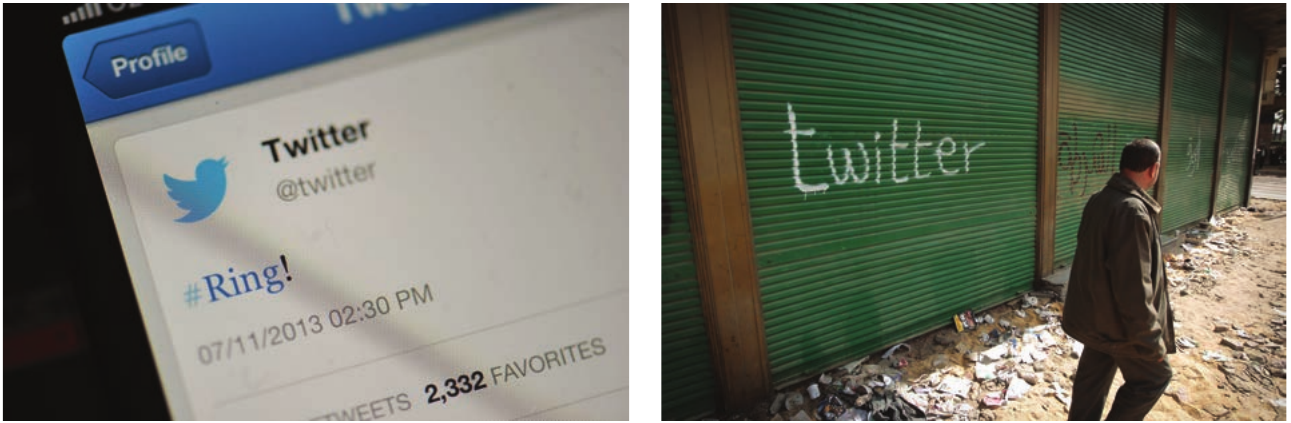
Hashtags represent another powerful tool through which digital convergence has transformed democratic participation. By enabling previously disconnected individuals to communicate in a shared space, hashtags have proven capable of coordinating massive movements and influencing global conversations.
How hashtags work
A hashtag is a word or phrase preceded by the hash symbol (#) that serves as a searchable label on social media platforms. When millions of people use the same hashtag on a platform like Twitter, they create a unified conversation space where individuals from around the world can share perspectives, information, and coordinate actions.
Important public events such as sporting finals, television show finales, or political movements are frequently linked by hashtags. Using a smartphone, a platform like Twitter, and the same hashtag, millions of previously disconnected people can communicate together. This simple technological feature has enabled hashtags to have enormous impact, allowing individuals to interact with and influence the world around them in unprecedented ways.
Important
The fundamental truth is straightforward yet profound: anyone with a smartphone and a hashtag can effect great change.
Case study: #JeSuisCharlie
The terrorist attack on the office of French magazine Charlie Hebdo in 2015 provides a compelling example of how hashtags unite global communities and enable democratic participation through digital platforms.

The event and response
When terrorists attacked the Charlie Hebdo office, the public reaction appeared immediately across various media platforms. Over the weeks following the attacks, news and social media were inundated with images, stories, comments, links, and videos shared by both journalists and ordinary citizens. Well-sourced and balanced news coverage from traditional media outlets was intermixed with memes and commentary from a global audience of connected individuals and groups.
The power of #JeSuisCharlie
The hashtag #JeSuisCharlie ('I am Charlie') became—at least at the time—the most popular tweet in Twitter's history. The statistics reveal the extraordinary reach of this digital solidarity movement:
- The hashtag was tweeted 6,500 times per minute at its height
- It appeared in 3.4 million tweets within a single 24-hour period
- It coordinated global demonstrations and discussions

Note
These numbers illustrate the broad discussion of the event and demonstrate how digital convergence enables rapid, widespread participation in public discourse. The hashtag allowed ordinary citizens to express solidarity, share information, debate responses, and coordinate physical demonstrations, all through a simple digital tool accessible from their smartphones.
The convergence of smartphone technology, social media platforms, and participatory culture meant that millions could engage with this serious political and social issue instantly, without waiting for traditional media gatekeepers to frame the conversation.
The Kardashian phenomenon
The Kardashian family exemplifies how digital convergence has created new forms of influence and power that exist outside traditional structures of authority and expertise. Their success demonstrates both the opportunities and concerns raised by smartphone-enabled celebrity culture.

The scale of influence
The Kardashian family are among the most influential people on the planet. In 2017, the sisters Kim, Khloe, Kourtney, Kendall, and Kylie shared 420 million Instagram followers between them. This massive reach translates directly into economic and social power. A single smartphone photograph can trigger instant market reactions and influence millions of behaviours.
Economic impact
The economic power wielded through smartphone-based social media is staggering:
- When Kylie Jenner announced the launch of her cosmetic product brand on Instagram, it sold out within minutes
- When Khloe Kardashian launched her denim brand, it generated $1 million on its first day
- Kim Kardashian's smartphone game, which allows users to pretend to be her, has been downloaded 42 million times since 2014, generating over $200 million in revenue
Power without traditional credentials
Important
What makes the Kardashian phenomenon particularly significant for understanding digital convergence is that the family possess extraordinary reach and power whilst contributing relatively little in terms of traditional value to society. They are not acclaimed artists, musicians, scientists, or political leaders. They are, in many ways, ordinary people who have mastered the power of social media and smartphone technology.
This mastery has given them influence that extends beyond entertainment into serious social issues. In one 2017 episode of their reality television show, Kim Kardashian took her children to be vaccinated. Given the controversy surrounding vaccination in modern society, Kim's reach and number of loyal followers meant she could potentially affect the health behaviours of hundreds of millions of people—influence well beyond the reach of most governments.
The broader phenomenon
The Kardashians are not alone. The internet is filled with vloggers, YouTubers, and Instagram celebrities who earn millions from carefully crafted online identities that sell ideas, products, and lifestyles to viewers. These digital influencers represent a new form of celebrity and authority that emerges directly from the convergence of smartphone technology, social media platforms, and participatory digital culture.
Digital convergence and time
One of the most significant impacts of digital convergence concerns how it has transformed human experience of time and space. The smartphone compresses activities that once required separate locations and extended time periods into instantaneous actions performed anywhere.
From analogue to digital
Note
Before digital convergence, accessing different services and technologies required:
- Visiting specific physical locations (music shops, libraries, post offices, banks)
- Using separate, dedicated devices (cameras, calculators, radios, maps)
- Following linear schedules (television broadcasts, business hours)
- Waiting for information transmission (postal services, scheduled news broadcasts)
Digital convergence has eliminated most of these constraints.
A person on their way to school can now simultaneously:
- Communicate with friends through multiple platforms
- Stream music or podcasts
- Read news from around the world
- Access educational resources
- Navigate using GPS
- Capture and share photographs
- Manage finances
- And much more
The compression of human experience
This convergence has fundamentally altered human experience by:
- Eliminating waiting time: Information and services that once required planning and travel time are now instantaneous
- Removing location barriers: Activities no longer require presence in specific physical spaces
- Enabling multitasking: Multiple functions can be performed simultaneously through one device
- Democratising access: Services and information once available only to those with resources or specific expertise are now widely accessible
Important
The time saved through these converged technologies is substantial, but this efficiency comes with questions about attention, depth of engagement, and the quality of human interaction.
Implications for democracy and society
Digital convergence has created new opportunities for democratic participation whilst also raising important concerns about the nature of public discourse and informed citizenship.
Increased participation
The convergence of technologies in smartphones has lowered barriers to political participation:
- Citizens can engage with political issues instantly, from anywhere
- Bottom-up movements can organise rapidly without traditional institutional structures
- Diverse voices can enter public debates without requiring access to traditional media
- Information can spread globally within minutes
Challenges and concerns
However, digital convergence also creates challenges:
- The speed of information spread can outpace verification and thoughtful analysis
- Memes and simplified messages may replace nuanced understanding
- Anonymous or unclear sourcing of information complicates assessment of reliability
- The volume of information can overwhelm citizens' ability to process and evaluate it
- Traditional gatekeeping functions of editors and journalists are bypassed, both positive and negative consequences
Note
The balance between these opportunities and challenges continues to evolve as society adapts to the realities of digitally converged technologies.
Remember!
Summary
Key Points to Remember:
-
Digital convergence is the process by which older, separate technologies are absorbed into faster, smaller digital devices, particularly smartphones, which convert everything into binary code
-
Internet memes emerged as powerful political tools during events like the 2016 election, allowing ordinary citizens to influence political debate from the bottom up through simple, rapidly shareable content
-
Case studies like Boaty McBoatface demonstrate how digital convergence enables unprecedented public participation in democratic processes, forcing institutions to adapt to new dynamics of citizen engagement
-
Hashtags unite global communities around shared causes and events, as seen with #JeSuisCharlie, which became Twitter's most popular hashtag and coordinated worldwide solidarity responses
-
Digital influencers like the Kardashians wield enormous economic and social power through smartphone-based social media, demonstrating how digital convergence creates new forms of authority outside traditional structures
-
The compression of time and space through digital convergence has fundamentally altered human experience, enabling instantaneous access to services and information that once required separate devices, locations, and extended time periods