Old Media Technology (HSC SSCE Modern History): Revision Notes
📚Revision Notes
Old Media Technology
Introduction to old media technology
The twentieth century witnessed an extraordinary acceleration in technological advancement. During this period, necessity became the driving force behind innovation, with two world wars spurring rapid developments in transportation and military technology that would reshape the world permanently.
A watershed moment in technological history occurred on 6 August 1945, when the United States dropped an atomic bomb on Hiroshima, Japan, instantly killing 80,000 people. The atomic bomb represented not only a technological breakthrough but also a powerful symbol of dominance. Possessing such advanced weaponry gave immediate superiority in any conflict to the nation that controlled it. This development triggered an arms race between the United States and the Soviet Union, creating the terrifying possibility of worldwide catastrophic destruction.
Technology had pushed humanity into a frightening new era of thinking. People now possessed the capability to destroy others instantaneously. However, the decision to deploy these weapons remained fundamentally human.
Important
When examining technological advancement and its historical impact, you must also consider the very human ways in which technology is used and the human consequences it produces. Technology is a tool—its impact depends entirely on how humans choose to wield it.
Revolutionary inventions in communication
For centuries, scientists, inventors and thinkers worked persistently to develop inventions that would solve problems for people and enhance communication between them. These innovations fundamentally transformed how societies functioned and how information spread.
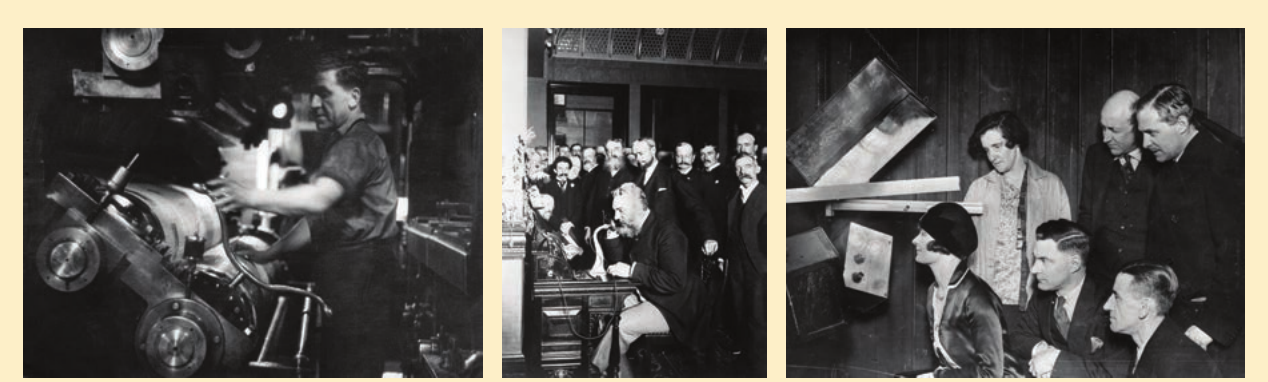
Key inventors and their groundbreaking technologies
Several inventors created technologies that revolutionised human communication and interaction:
| Inventor | Invention | Impact on society |
|---|---|---|
| Johannes Gutenberg | The printing press | Enabled mass production of texts, spreading knowledge and ideas to wider audiences |
| Alexander Graham Bell | The telephone | Allowed instant voice communication across distances |
| Guglielmo Marconi | The radio | Brought news and entertainment directly into homes without physical connections |
| Eadweard Muybridge | The motion picture | Created moving images, opening new possibilities for storytelling and documentation |
| Logie Baird | The television | Combined visual and audio elements, transforming home entertainment and news delivery |
Note
An important question to consider when studying these inventions is: who controlled the messages created by these technologies? The answer reveals much about power structures in society, as media production was typically limited to those with wealth and resources.
Knowledge and technology as power
The printing press and political change
In the early development of communication technologies, thinkers and analysts grew concerned about media's potential to influence audiences. Since creating media messages required money and resources, they worried that a small, powerful group could manipulate the masses.
Example
Historical Example: The French Revolution and Print Media
The French Revolution provides a compelling example of how technology could spread revolutionary ideas. During the 1780s and 1790s, Enlightenment ideas circulated widely through printed newspapers owned by the growing bourgeois class. The invention of the printing press enabled essays and arguments about equality and liberty to be illegally printed and distributed among a population eager to escape the feudal rule of King Louis XVI.
To manage growing discontent, Louis XVI lifted censorship in 1789, allowing the Cahiers de Doléances (Book of Grievances) to be drafted. This document gave French people, along with literate clergy and nobility, the opportunity to contribute their views on the nation's future. However, with the ban on political discussion removed, the 'Pamphlet War' erupted. Countless printing presses began distributing ideas and knowledge to an eager public.
Thousands of pamphlets flooded the streets of Paris, where literacy rates were considerably higher than in rural areas. Throughout the Revolution, this printed material shaped public opinion. It is no coincidence that the Revolution's radical direction was driven by an educated and angry Parisian population. Ultimately, the King was executed and revolutionary ideas triumphed.
The power of printed propaganda
The radical priest Abbé Sieyès exemplified the printing press's influence when he published the influential essay 'What is the Third Estate?' in 1789. This document, which discussed the role of lower classes in pre-revolutionary France, was reprinted over 20,000 times and provided the blueprint for the French Revolution.
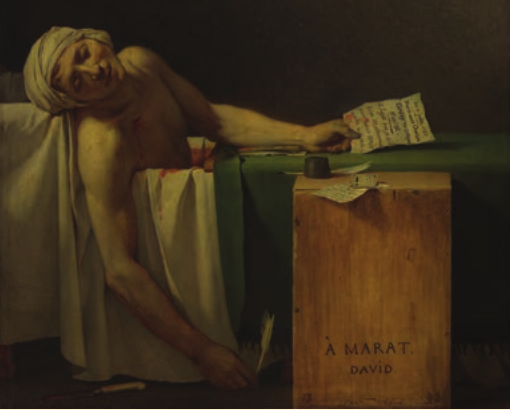
The revolutionary writer Jean-Paul Marat became a martyr figure for the radical revolutionaries after being murdered by a counter-revolutionary. Jacques-Louis David's famous painting depicting Marat's death served as powerful propaganda. The image portrayed Marat in a way that evoked religious imagery, particularly Christian art, encouraging other revolutionaries to see him as a martyred hero. This demonstrates how visual media could influence revolutionary thought and action.
Key term: A martyr is someone who is killed because of their beliefs and whom others admire for making this sacrifice.
The radio and media influence
Radio's rise to prominence
The radio, invented in the 1890s, gained widespread popularity during the 1920s and 1930s as an exciting and engaging way for people to connect with the world around them. More emotive and dynamic than newspapers, radio news and plays were broadcast live into family homes. The common practice involved families crowding around the 'wireless' to listen to daily news broadcasts.
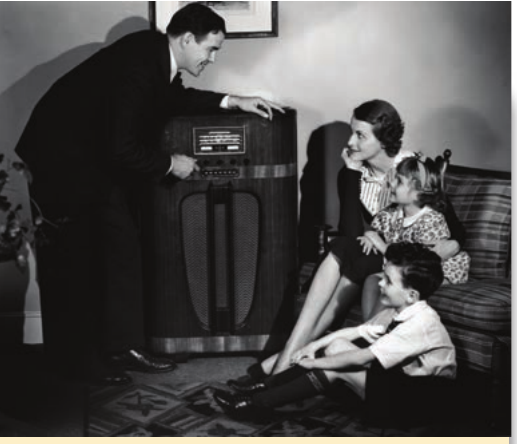
Radio's popularity was so significant that in 1923, a group of thinkers from the Frankfurt School began examining media technologies' impact on audiences. The Frankfurt School was a school of social theory and philosophy established in Germany between the two world wars.
The Frankfurt School and media theory
The Frankfurt School scholars were primarily concerned about media's effects on what they perceived as naive, unsuspecting audiences unfamiliar with these new technologies. They studied how people listened to and acted upon media messages, proposing that messages travelled like a bullet from a gun or like medication through a hypodermic needle to the receiver.
Important
Key theory: The hypodermic needle theory (also called the bullet theory) suggested that audiences would absorb media messages and then think and act exactly as the message suggested, without questioning what they had been told.
This theory reflected early fears about media's power over passive audiences, though later research would show that audiences are more active and critical than the theory suggested.
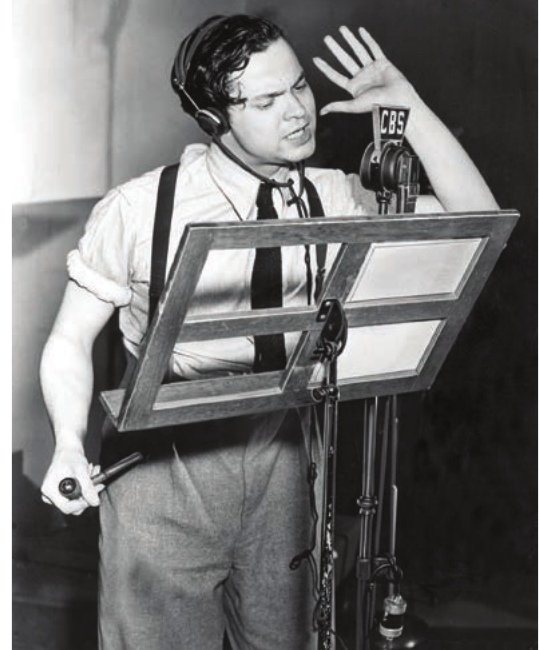
The War of the Worlds panic
Example
Case Study: The War of the Worlds Broadcast (1938)
The Frankfurt School's theories found support when author Orson Welles broadcast his radio play War of the Worlds in 1938. The play told a dramatic and supposedly 'live' story of aliens invading Earth, using voices of real news journalists from the broadcasting station.
Many audience members were fooled by the realistic presentation, and thousands ran into the streets, packed their cars and armed themselves to fight the 'alien invasion' across the New York and New Jersey areas where the play was broadcast.
This incident established the fear of media technology and the power it held over audiences.
Nazi propaganda and media control
Harnessing radio for political purposes
Meanwhile in Germany, frustration caused by humiliation following World War I and impoverishment brought on by the Great Depression created conditions that Adolf Hitler and the Nazi Party exploited. After gaining power in 1933, the Nazis, led by propaganda minister Joseph Goebbels, harnessed media technology to spread their message throughout Germany.
Their first task involved creating and distributing cheap radios to the German population. In an era when the printed word remained highly influential, the radio's invention brought Hitler's voice and enthusiasm directly into countless German homes. For the first time, ordinary people could hear the exact messages the dominant political party wanted them to receive.
Note
The availability of affordable radios transformed how normal German families accessed information about their nation. Sound proved more influential than the written word in many ways, helping to enhance the Nazis' popularity significantly.
Film as propaganda
Advances in film technology were seized upon by Goebbels and the Nazi propaganda machine. While radio gave Germans Hitler's voice, film gave them the world as he saw it.
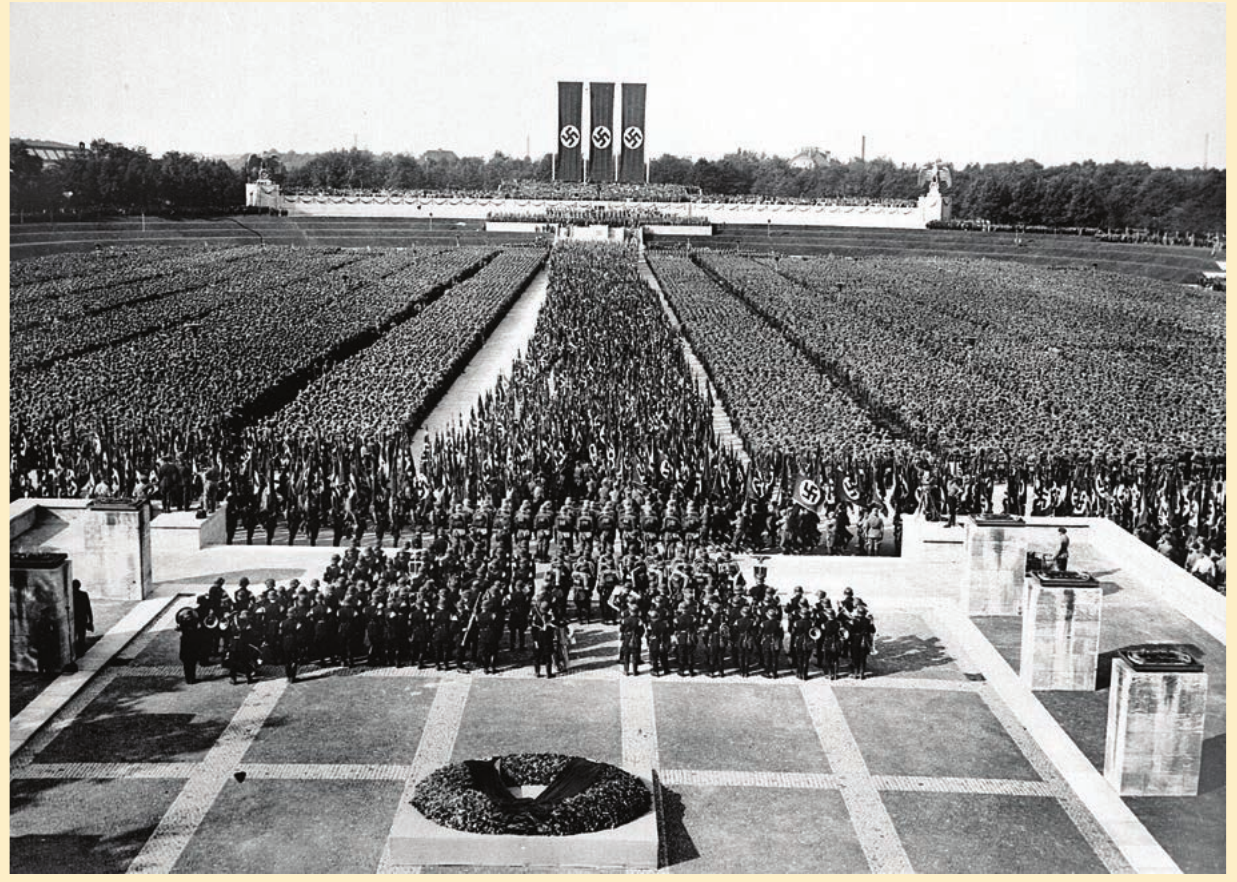
Example
Film Analysis: Triumph of the Will (1935)
Leni Riefenstahl's film Triumph of the Will (1935) employed revolutionary techniques for its time to produce a Nazi propaganda film glorifying Hitler's Germany. The opening scenes used sweeping shots of huge crowds and proud, beaming children to inspire adoration for Adolf Hitler and generate belief in him as a popular and capable leader amongst German audiences.
The combination of visual and audio elements created a powerful image of Hitler and Nazi Germany. Given that film was relatively new technology, German audiences were particularly susceptible to its influence.
Cold War media and ideology
Media as an ideological weapon
The Cold War was fundamentally a media war. Both superpowers used media to convince their own populations that the other nation's ideology was evil. In America, Russian communists commonly appeared as villains in fiction. Through film and television, American audiences learned to ridicule, despise and fear Russian communist ideology. The notion that communists sought to destroy the American way of life was reinforced through how children's cartoon characters and adult film antagonists were portrayed.
With decades of anti-communist messages from politicians and educators, Russian communists were easily cast negatively. They were typically portrayed as fit individuals dressed in black or military clothing, with thick accents that mocked English language complexities. The communist villain was characterised as battle-hardened, with a bulging chest and cold expression, reflecting the Western concept of a cold, emotionless communist enemy.
Note
Interestingly, Soviet representations of Americans always portrayed capitalists as overweight—demonstrating that propaganda worked both ways during the Cold War.
Communist villains in American media
As the Cold War intensified, communist villains proliferated in Hollywood films. When the United States waged war in Vietnam against a Russian-backed force, heroes like John Wayne, Chuck Norris and Sylvester Stallone defended American democracy against ruthless, merciless Vietnamese foes.
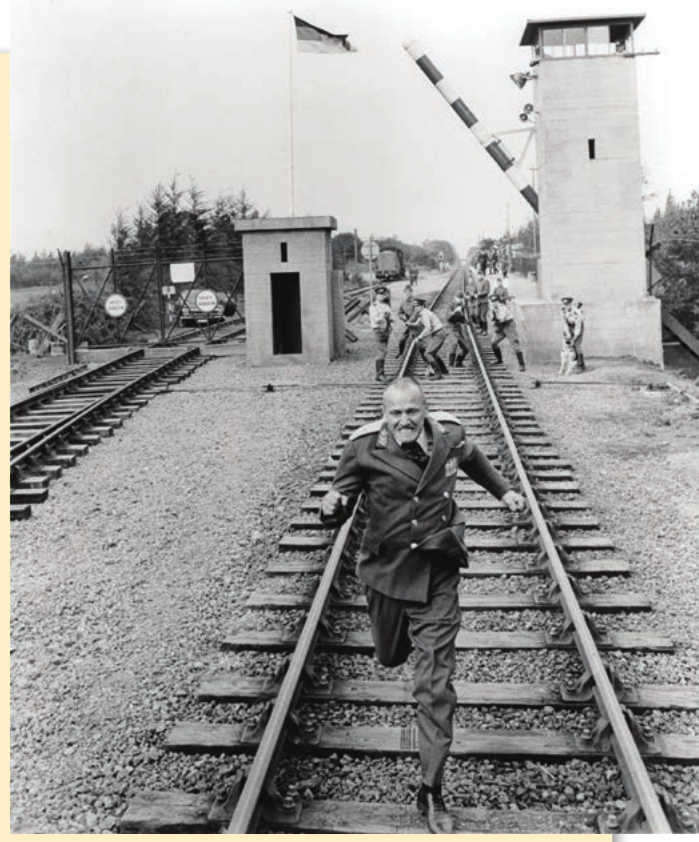
American media technologies were systematically used to reinforce existing ideas about Cold War 'enemies'. Several examples illustrate this pattern:
Example
Examples of Communist Villains in American Media
Boris Badenov in Rocky and Bullwinkle (1959-1964) represented the peak of Cold War tension in the 1960s. This cartoon communist villain, 'the world's greatest no-goodnik', consistently attempted to thwart the noble efforts of Rocky the Squirrel and Bullwinkle the Moose. Short, rotund, dressed in black and deathly pale, Boris constantly rubbed his hands together whilst planning his next attempt at defeating 'moose and squirrel'.
General Orlov in Octopussy (1983) exemplified typical Cold War fears. British spy James Bond was regularly pitted against non-European, Russian or quasi-communist super villains bent on world destruction. General Orlov represented a constructed reality of the Russian military, portrayed as snarling and aggressive.
Ivan Drago in Rocky 4 (1985) perhaps personified the American perception of the 'evil empire' of communist Russia more than any other villain. Drago appeared more machine than human, a boxer with a 100-1 record and decorated military past. The inhuman villain contrasted starkly with hero Rocky Balboa, a perennial underdog representing the American dream of the self-made champion. Drago's construction represented a fictional frontier of Cold War conflict—a 'machine' built by the Russian government with no motivation beyond defeating Balboa.
Important
Exam tip: When analysing old media technology, always consider who controlled the technology and the messages it transmitted. Understanding power dynamics helps explain how media influenced populations during major historical events.
Summary
Key Points to Remember:
- The twentieth century saw rapid technological advancement driven by necessity, particularly during two world wars
- Key communication inventions (printing press, telephone, radio, motion pictures, television) transformed how people interacted and received information
- The printing press enabled the spread of revolutionary ideas during the French Revolution through the 'Pamphlet War'
- The Frankfurt School developed the hypodermic needle theory, suggesting media messages could directly influence audiences without critical thinking
- Nazi Germany systematically used radio and film propaganda to spread their ideology, with cheap radios bringing Hitler's message into homes and films like Triumph of the Will glorifying the regime
- During the Cold War, both superpowers used media as ideological weapons, with American media consistently portraying communists as villains to reinforce fear and hatred of communist ideology