Old Media Technology in Australia (HSC SSCE Modern History): Revision Notes
📚Revision Notes
Old Media Technology in Australia
Introduction to television in Australia
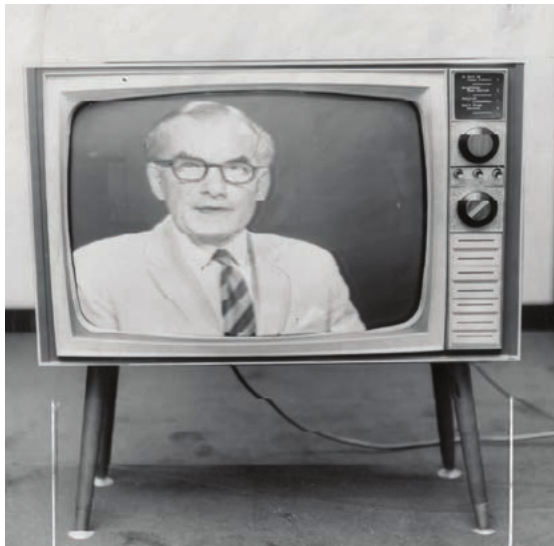
In 1956, television made its debut in Australia, arriving at the same time as the Melbourne Olympic Games. These two landmark events worked together to open up Australia to the world and, importantly, helped Australians see themselves in a new way. The introduction of television technology marked the beginning of a new era characterised by change, increased knowledge and the development of Australian identity.
Note
The arrival of television was particularly significant because, for the first time, Australian audiences could see themselves broadcast on television rather than only through cinema, which was dominated by American films.
Television provided a new platform for Australians to tell their own stories and develop an understanding of national identity that went beyond the traditional Anzac legend. As broadcasters sought to develop new programmes, documentaries and stories for both entertainment and education, they looked across the nation and brought diverse Australian experiences to screens. This process helped shape and reflect Australian identity back to its citizens.
Early media technology and Australian identity: the landing at Anzac Cove
To understand the impact of television, it helps to look back at how earlier technologies influenced Australian identity. Each year on 25 April, Australians commemorate Anzac Day to honour the first time Australian soldiers fought in World War I. Whilst the day now recognises all Australians who have fought in wars, the date was specifically chosen because of its link to an influential article written by journalist Ellis Ashmead-Bartlett.
Ashmead-Bartlett's influential dispatch
Ashmead-Bartlett observed the landing on the Turkish coastline and wrote an account that many historians believe fundamentally changed Australian history. He recorded the day's events using basic tools—presumably just a pencil and notebook. By the end of the day, he had written a complete account of the landing.
His report was an inspiring tale that glorified the actions of Australian soldiers. The article played a powerful role in increasing the number of young Australian men who volunteered to fight in the war. However, it wasn't published until 12 May 1915 in Tasmania's Hobart Mercury newspaper—a full two weeks after the actual event.
Important
This two-week delay highlights the limitations of early media technologies in communicating news. The process of getting a story from a beach in Turkey to the front page of a Tasmanian newspaper involved multiple steps and various communication technologies available in 1915.
Despite these limitations, Ashmead-Bartlett's story proved highly influential in shaping Australian public opinion and behaviour.
Key extract from Ashmead-Bartlett's dispatch:
The Australians rose to the occasion. They did not wait for orders, or for the boats to reach the beach, but sprang into the sea, formed a sort of rough line, and rushed at the enemy's trenches. Their magazines were not charged, so they just went in with the cold steel, and it was over in a minute, for the Turks in the first trench had been either bayoneted or had run away, and the Maxim guns were captured.
This heroic narrative, emphasising Australian courage and practical problem-solving, helped establish key elements of the national character that would be repeated and reinforced through later media technologies.
The Australian Broadcasting Corporation (ABC)
The Australian Broadcasting Corporation began operating in 1932 with a clear and specific purpose: to inform, educate and entertain. From its inception, the ABC has created Australian stories and told the nation about itself through radio, film, television and, more recently, online services. As the nation's first television station, it pioneered the telling of stories from within Australia, showcasing the country's diversity.
ABC's expansion and cultural impact
Over time, the ABC expanded its role in Australian cultural life. It contributed to the development of youth culture in Australia through music television programmes like Countdown and Rage, whilst maintaining radio services such as Triple J. In 2009, recognising the importance of serving younger audiences, it launched ABC Kids, a dedicated children's channel.
Independence and accountability
Important
The ABC was established as an independent broadcaster with no commercial or political bias. This independence has meant that news and current affairs teams have faced criticism from both sides of politics for perceived negative perspectives on whichever government is in power.
Because the ABC's funding comes from taxpayers, the organisation is obliged to tell as many diverse stories about Australia as possible.
Notable ABC programmes
The following programmes represent some of the ABC's most significant contributions to Australian television:
- Aunty Jack
- This Day Tonight
- Four Corners
- Bellbird
- Countdown
- A Big Country
- Lateline
- Australian Story
- Landline
- Media Watch
These programmes covered various formats—including comedy, news, drama and current affairs—and each played a role in helping Australians understand different aspects of their society and identity.
Note
Exam tip: When discussing the ABC in essays, remember its three core purposes (inform, educate, entertain) and its mandate for independence. Consider how specific programmes fulfilled these purposes and contributed to Australian identity formation.
Television's power to influence democracy: the 2004 federal election
Television proved to be a powerful tool in democratic societies. It allowed people to see and hear their leaders directly, enabling them to form their own opinions. The visual nature of television meant that, in many ways, images could speak for themselves without editorial intervention.
The Latham-Howard handshake incident
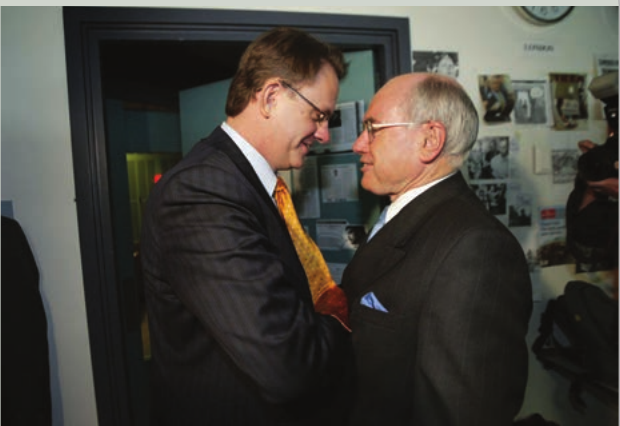
A striking example of television's influence occurred in the final days of the 2004 Australian federal election. Prime Minister John Howard held a slim lead over his Labor rival, Mark Latham. Following the tradition of successive radio interviews, both candidates appeared at the same radio station.
Note
When Latham left the studio first, he encountered Howard arriving for his interview. News cameras captured Latham using his larger physical frame to stand over the smaller Howard and aggressively shake his hand. The moment clearly showed Latham attempting to physically intimidate Howard.
This footage was played and replayed on television networks and news bulletins across Australia. Viewers could see Latham's actions clearly—he appeared to behave like a schoolyard bully. The visual evidence was so powerful that voters formed their own conclusions. In the subsequent election, Latham lost by a far greater margin than experts had anticipated.
This case study demonstrates that despite attempts by those in power to control the messages television sends, it remains a medium that allows the public to make up its own mind based on what they see.
Television's impact on world events
Television has played crucial roles in shaping public opinion and influencing government behaviour in numerous historical events:
- The fall of the Berlin Wall: Television broadcasts allowed the world to witness this historic moment in real time, creating pressure for political change.
- The 2004 Tsunami: Visual coverage of the devastation mobilised unprecedented international humanitarian response.
- The Vietnam War: Television brought the realities of war into living rooms, significantly influencing public opinion and ultimately government policy.
Television as a tool of control
Important
However, television has also been used by authoritarian governments to control their populations:
- The Chinese Communist Party carefully controlled television coverage of the 1989 Tiananmen Square protests to present their preferred narrative to domestic audiences.
- Vladimir Putin has used television to strengthen his grip on power in Russia since 2000, controlling major networks to shape public opinion.
- The Bush administration used television strategically to build public support for invading Iraq in 2003.
Television and accountability: the "Moonlight State" investigation
Television in Australia has played a significant role in holding power to account. In 1987, the ABC programme Four Corners broadcast an investigation titled "The Moonlight State". Led by Australian journalist Chris Masters, this investigation uncovered widespread corruption in Queensland that involved police, politicians abusing their power, and even the Queensland Premier, Sir Joh Bjelke-Petersen.
Note
The investigation's claims linked politicians with the embezzlement of public money and revealed the use of police for illegal activities against political opponents. The day after the story aired, a commission of inquiry into the Queensland government was launched.
This ultimately led to the imprisonment of several politicians and ended the Premier's time in office. Four Corners and television journalism in Australia more broadly have played crucial roles in public life. In the words of a now-defunct Australian political party, television in Australia has been able to "keep the bastards honest"—holding those in power accountable to the public.
Note
Exam tip: The "Moonlight State" investigation is an excellent case study for essays about media's role in democracy. It demonstrates how investigative journalism can expose corruption and lead to real political consequences.
The dominance of old media technology
Television enjoyed decades of dominance as a media technology. Moving images broadcast into the homes of millions around the world could transmit ideas and messages directly into the thoughts and influence the behaviours of viewers. Before studying the impact of the Digital Revolution, it's essential to understand the power and position that old media technologies like radio, film and television held in society.
Television's influence extended across multiple dimensions:
- Information dissemination: News programmes shaped public understanding of current events
- Cultural formation: Entertainment programmes helped define national identity and values
- Political influence: Visual imagery of politicians and events affected democratic processes
- Social cohesion: Shared viewing experiences created common cultural references
Critical perspectives on television
Edward R Murrow's warning
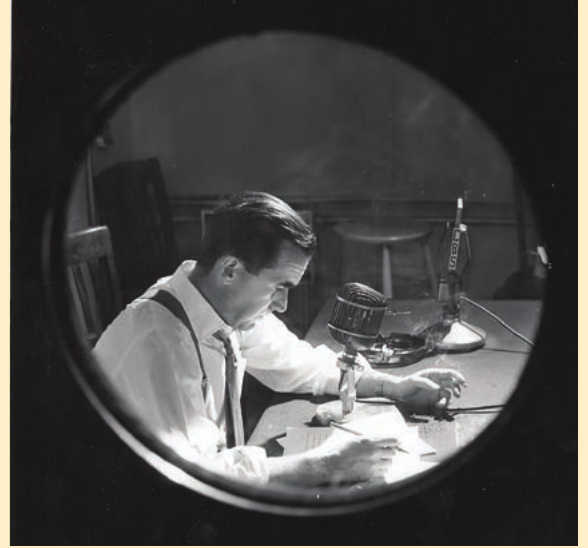
Not everyone viewed television's dominance positively. American journalist Edward R Murrow, speaking in 1957, offered a prescient warning about television's potential misuse:
Important
It might be helpful if those who control television and radio would sit still for a bit and attempt to discover what it is they care about. If television and radio are to be used to entertain all of the people all of the time, then we have come perilously close to discovering the real opiate of the people.
Murrow's use of the word "opiate"—a powerful painkiller that can be addictive—was deliberate. He suggested that television, when used purely for entertainment, could function like a drug that keeps people passive and distracted from reality. His warning highlighted the tension between television's potential for meaningful communication and its tendency towards pure escapism.
On one side, there was the hard news of programmes like Four Corners, which challenged authority and informed citizens. On the other side were hours of fictional entertainment that allowed audiences to "zone out" from reality. Many people worried that these entertainment technologies were controlled by too few people and that fictional content might be created for purposes beyond simple entertainment.
Note
Consider: Murrow's statement raises important questions about media ownership and purpose. When a small number of people or corporations control television networks, whose interests are being served? Are audiences being informed and empowered, or merely entertained and distracted?
Gil Scott-Heron and the critique of television
The revolution will not be televised
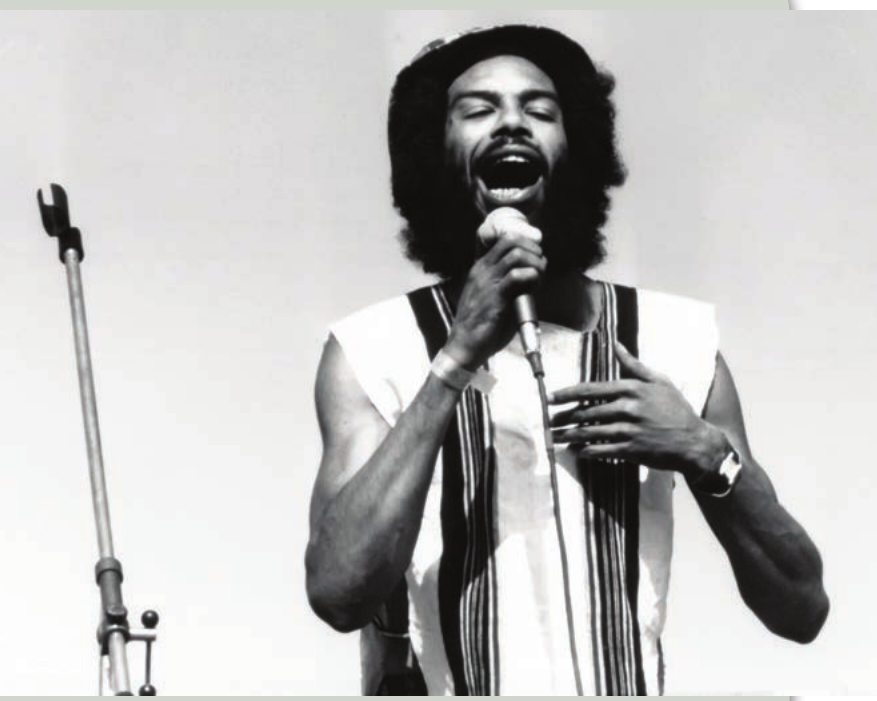
During the television boom of the 1960s and 1970s, the African American poet, writer and singer Gil Scott-Heron wrote the famous line, "The revolution will not be televised". This powerful statement emerged from his experiences as a social activist during a turbulent period in American history.
Background to Scott-Heron's critique
Two events, and the way American television covered them, fundamentally shaped Scott-Heron's understanding of media's role in society:
Note
Kent State University shootings (4 May 1970): Four students were shot during a peace rally. The media coverage of this incident shocked the nation and received extensive television coverage.
Jackson State University shootings (15 May 1970): Two black students were shot and killed by Mississippi Police. This incident received comparatively less media attention than Kent State.
Television news constantly featured scenes of these killings during this period. However, commercial breaks presented a starkly different version of America—one where advertisers sold toilet cleaner and soft drinks using images of happy, idealised "All American" families.
The contradiction in television content
Important
Scott-Heron became convinced that television was actively presenting a world that didn't exist. He observed a fundamental contradiction between:
- The reality of social conflict, police violence and racial injustice shown in news programmes
- The idealised, comfortable, consumption-focused America shown in advertisements
When his own college helped the FBI investigate students involved in protests, Scott-Heron became convinced that there was a deliberate relationship between government actions and television's representation of reality.
Key lines from "The Revolution Will Not Be Televised"
Scott-Heron's song challenged people to take action rather than passively consuming television:
You will not be able to stay home, brother You will not be able to plug in, turn on and drop out You will not be able to lose yourself on skag and skip Skip out for beer during commercials Because the revolution will not be televised...
He specifically highlighted how commercial television mixed serious issues with trivial advertising:
The revolution will not be right back after a message About a white tornado, white lightning, or white people You will not have to worry about a germ on your bedroom a tiger in your tank, or the giant in your toilet bowl The revolution will not go better with Coke
Scott-Heron's message was clear: real social change wouldn't come from watching television. It would require active participation and couldn't be packaged as entertainment between advertisements. His critique remains relevant when considering how media technologies shape our understanding of reality and our capacity for meaningful political action.
Note
Exam tip: Scott-Heron's critique provides an important counterpoint when discussing television's role in society. Whilst television could inform and expose injustice (as in Four Corners investigations), it could also distract, misrepresent reality, and promote passivity through entertainment and commercial interests.
Remember!
Summary
Key Points to Remember:
-
Television arrived in Australia in 1956 during the Melbourne Olympics, fundamentally changing how Australians saw themselves and developed their national identity beyond the Anzac legend.
-
The ABC was established to inform, educate and entertain, creating diverse Australian content across multiple platforms whilst maintaining independence from commercial and political pressures.
-
Television proved to be a powerful force in democracy, allowing citizens to see leaders directly and form their own opinions, as demonstrated by the 2004 Latham-Howard handshake incident.
-
Investigative journalism programmes like Four Corners used television to hold power accountable, exposing corruption and leading to real political consequences, such as in the "Moonlight State" investigation.
-
Critics like Edward R Murrow and Gil Scott-Heron warned that television could function as an "opiate"—distracting people with entertainment and false representations of reality rather than promoting genuine understanding and political engagement.