Background Context (HSC SSCE Modern History): Revision Notes
📚Revision Notes
Background Context
Introduction to China 1927-49
Between 1927 and 1949, China experienced a period of intense political upheaval and transformation. During these two decades, the country witnessed civil war, foreign invasion, and ultimately a communist revolution that would reshape the nation forever. Understanding this period requires knowledge of the events and conditions that preceded it.
The struggle for control of China primarily involved two political forces: the Guomindang (GMD), also known as the Chinese Nationalist Party, and the Chinese Communist Party (CCP). By 1949, their conflict would determine China's future direction and establish it as a major world power under communist rule.
China's political fragmentation after 1911
Following the collapse of China's imperial system in 1911, the country descended into political chaos. Two major obstacles prevented China from achieving national unity and stability.
The warlord problem
After the 1911 Revolution, regional military commanders known as warlords seized control of various provinces across China. These powerful military leaders ruled their territories independently, collecting taxes, maintaining private armies, and resisting any central authority. Some warlords controlled single provinces, while others dominated entire regions. Their constant warfare with one another prevented any unified national government from establishing effective control over the country.
Note
The warlord era created tremendous hardship for ordinary Chinese people. Warlord armies often conscripted peasants by force and looted villages as they moved through the countryside. Farmers faced multiple layers of taxation from different warlords, making survival increasingly difficult.
Foreign domination
The second major obstacle was the presence and influence of foreign powers in China. During the nineteenth and early twentieth centuries, European nations and Japan had established spheres of influence in different parts of China. These were regions where foreign powers exercised economic and political control, treating Chinese territory as if it were their own colonial possession.
Important
Following Germany's defeat in World War I, European powers transferred Germany's sphere of influence in Shandong Province to Japan rather than returning it to Chinese control. This decision sparked outrage among Chinese citizens and became a catalyst for nationalist awakening.
The May Fourth Movement and nationalist resurgence
On 4 May 1919, students in Beijing organised protests against the decision to transfer German concessions to Japan. The demonstrations quickly spread to other cities, evolving into a broader movement that challenged traditional Chinese culture whilst promoting nationalism and modernisation.
The May Fourth Movement had several important consequences:
- It sparked a resurgence of Chinese nationalist feeling
- It encouraged intellectuals to question traditional values and embrace new ideas
- It created momentum for political movements seeking to unite and modernise China
- It particularly benefited two emerging political parties: the GMD and the newly formed CCP
This nationalist awakening created fertile ground for political organisations that promised to restore Chinese sovereignty and dignity. Both the GMD and CCP positioned themselves as champions of Chinese nationalism, though they offered different visions for the country's future.
The formation of the First United Front
Origins of cooperation
In 1921, the Comintern (the international organisation coordinating communist activities worldwide) sent a Dutch agent named H Maring to China to assess the political situation. Maring met with Dr Sun Yixian, the founder and leader of the GMD, who was attempting to establish a power base in southern China from which to launch a campaign to unite the country.
Note
Comintern: An international agency established by the Soviet Union in 1919 to coordinate the activities of Communist parties throughout the world, also known as the 'Third International'.
Maring was impressed by Sun Yixian and his nationalist vision. He recommended that the newly formed Chinese Communist Party should cooperate with, and even join, the GMD as individual members. This alliance suited both parties: Sun Yixian would gain additional support and Soviet assistance, whilst the small CCP would gain protection and access to a broader political platform.
Terms of the alliance
Soon afterwards, an agreement was signed creating what became known as the First United Front. The key terms were:
- The GMD would accept communist members as individuals within the party
- The GMD would accept Russian financial and military aid
- The CCP would work within the GMD structure whilst maintaining its separate identity
- Both parties would cooperate to defeat the warlords and unite China
Note
First United Front: The alliance between the GMD and CCP that lasted from 1923 to 1927.
Soviet assistance
As part of the agreement, the Soviet Union provided substantial support to help strengthen the GMD:
- Mikhail Borodin was sent to help reorganise the GMD's political structure
- General Galen (real name Vasily Blyukher) arrived to train the GMD army in modern military tactics
- Financial resources were provided to establish a military training facility
Note
This Soviet assistance proved crucial in transforming the GMD from a loosely organised political movement into a more effective military and political force capable of challenging the warlords.
The Huangpu Military Academy
Establishment and purpose
Dr Sun Yixian sent a young general named Jiang Jieshi to the Soviet Union to study their military system and seek additional assistance. Upon his return, Jiang was appointed commandant of a new military training facility called the Huangpu Military Academy.
Note
Huangpu Military Academy: The military training establishment located on a river island near Guangzhou (Canton) in southern China.
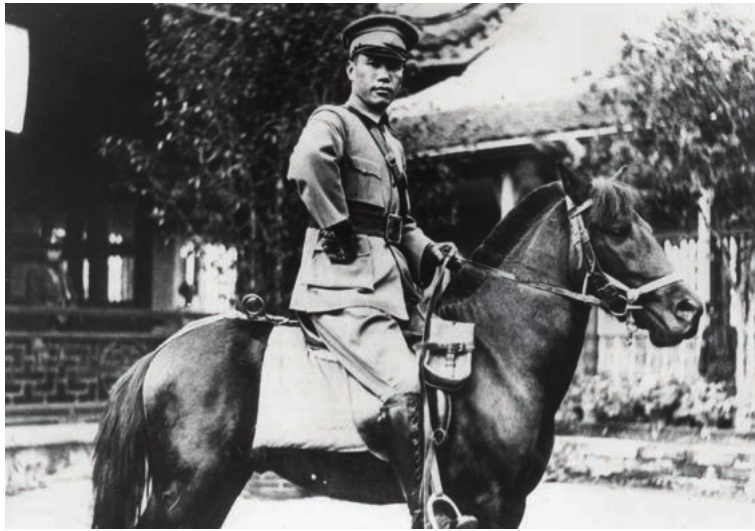
The academy was established on a fort situated on an island in the Pearl River near Guangzhou. It represented a revolutionary approach to military training in China, emphasising:
- Modern Western military tactics and organisation
- Strict discipline and professional standards
- Political education alongside military training
- Ethical behaviour towards civilians
Training methods and ideology
With guidance from Soviet military advisers and drawing on his own training in Japan, Jiang Jieshi modernised the training programme. The academy taught soldiers to fight using contemporary Western military methods rather than traditional Chinese approaches.
Important
One crucial condition of Soviet funding was that members of the CCP had to be included in the academy's operations. The communists proved particularly skilled at propaganda work, using it to inspire troops and undermine enemy morale. Zhou Enlai, who later became one of the CCP's most important leaders, served as a political commissar at the academy.
Building popular support
The Huangpu Army differed dramatically from warlord forces in its treatment of civilians. The academy trained soldiers to:
- Avoid conscripting civilians by force
- Refrain from looting villages they passed through
- Treat peasants with respect
- Promise land reform and better conditions
Communist political workers emphasised these differences in their propaganda, helping to build peasant support for the GMD. This positive reputation proved invaluable when the GMD later launched its campaign to unite China.
Note
The Huangpu soldiers quickly proved their effectiveness by defeating a local warlord who had harassed them. With Guangdong Province now secure, the GMD began planning the next stage: the Northern Expedition to unite all of China under their control.
The death of Sun Yixian and Jiang Jieshi's rise
Sun Yixian's final mission
On 31 December 1924, Dr Sun Yixian travelled to Beijing despite being seriously ill with liver cancer. He had been invited to mediate in a dispute between warlords in north-eastern China. Committed to promoting national unity even in his final days, Sun accepted the invitation.
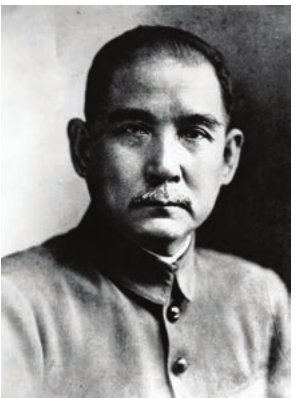
However, his condition deteriorated rapidly in Beijing. On 12 March 1925, Sun Yixian died, mourned throughout China as the 'Father of the Chinese Revolution'. His death created a leadership vacuum in the GMD at a crucial moment when the party was preparing to launch its campaign to unite China.
The succession struggle
Back in Guangzhou, the GMD leadership faced two immediate challenges: completing the conquest of Guangdong Province from remaining warlords, and determining who would succeed Sun Yixian as leader of the party.
Three main candidates emerged:
- Jiang Jieshi: Commandant of the Huangpu Military Academy with military backing
- Wang Jingwei: A senior GMD political leader
- Hu Hanmin: Another prominent GMD politician
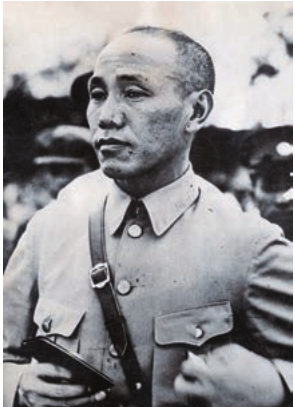
Through decisive action and ruthless political manoeuvring, Jiang Jieshi successfully out-manoeuvred his rivals and established himself as Sun Yixian's successor and the dominant figure in the GMD.
Important
Jiang's military position at Huangpu proved crucial to his success. Control over the best-trained and most disciplined army in southern China gave him a significant advantage over rivals who lacked comparable military support. His connections to both Sun Yixian and the Shanghai criminal gangs further strengthened his political position.
China in 1927: the Republic takes shape
Political landscape
By 1927, the Northern Expedition had successfully united much of China under GMD control, and the Republic of China became a political reality. Jiang Jieshi, now firmly established as the GMD leader, commanded a government based in Nanjing.
However, the republic's unity was more apparent than real. Various warlords had been defeated, persuaded to join the republic, or nominally submitted to central government authority whilst retaining effective independence in their regions. True national unity remained elusive.
Important
The communist allies who had helped the GMD during the Northern Expedition had been violently purged in the Shanghai Massacre of April 1927, when Jiang ordered the killing of hundreds or possibly thousands of CCP members. The surviving communists fled to remote rural areas where they established bases called soviets.
Note
Soviet: A Russian word meaning 'council'. In China, it referred to a rural area under CCP control where communists established their own government.
Social conditions
Chinese society in 1927 showed stark contrasts between urban and rural areas.
In the cities:
- Chinese entrepreneurs increasingly engaged in Western-style businesses such as banking and transport
- Urban residents experienced a mixture of modern Western and traditional Chinese customs
- Some women enjoyed greater freedoms than in previous generations
- New ideas about democracy, science, and social reform circulated among educated classes
In the countryside:
- Peasants continued to bear heavy burdens of rent, taxes, and fees to landlords
- Traditional social hierarchies remained largely unchanged
- Rural women faced particular hardship and limited opportunities
- Most peasants saw little benefit from the new government
The footbinding issue
One significant social change affected women across China: the new government outlawed footbinding, the cruel traditional practice of binding and deforming young girls' feet to make them smaller.
Note
Footbinding: The painful process of binding and thereby deforming a girl's feet to make her more 'attractive' as a woman according to traditional beauty standards.
However, this reform came too late for many rural women who had already endured the practice. Urban women had generally abandoned footbinding earlier, giving them literally greater mobility and more freedom to participate in education and employment.
Economic challenges
Economically, the republic faced serious challenges:
- Continuing Japanese encroachment on Chinese territory threatened national sovereignty
- Multiple currencies and tax systems in different regions hindered economic integration
- War damage from years of warlord conflicts had devastated infrastructure
- Foreign economic interests continued to dominate key sectors
- Peasant poverty remained widespread, creating potential for social unrest
Note
The surviving CCP groups in remote soviets would exploit these economic and social problems to rebuild their strength, eventually posing a renewed challenge to GMD control.
Understanding Chinese names and places
Chinese is written using characters that are only partly phonetic, which created challenges when foreigners needed to write Chinese names using Roman letters. Different systems of romanisation have been used over time.
Romanisation systems
Wade-Giles was the first comprehensive romanisation system, created in the nineteenth century and influenced by southern Chinese dialects where foreigners first had significant contact with China.
Pinyin is the phonetic system developed by the Chinese government in the 1950s and is now used throughout China and in most international contexts.
Some place names and personal names also have dialect versions that remain more commonly used than either the Wade-Giles or Pinyin versions.
Important names and places
The following table shows the different romanisation systems for key people and places you will encounter when studying this period. Note that in Chinese culture, surnames come first, followed by given names.
| Pinyin | Wade-Giles | Dialect |
|---|---|---|
| People | ||
| Dr Sun Yixian | - | Dr Sun Yat-sen |
| Jiang Jieshi | - | Chiang Kai-shek |
| Mao Zedong | Mao Tse-tung | - |
| Zhu De | Chu Te | - |
| Zhou Enlai | Chou En-lai | - |
| Zhang Xueliang | Chang Hsueh-liang | - |
| Places | ||
| Beijing | - | Peking |
| Guangzhou | Kwangchow | - |
| Jiangxi | - | Kiangsi |
| Yanan | Yenan | - |
| Shaanxi | Shensi | - |
| Xian | Sian | - |
| Huangpu | - | Whampoa |
Important
Exam tip: Be familiar with both Pinyin and the commonly used alternatives, as historical sources and examination questions may use either system. For example, 'Mao Zedong' and 'Mao Tse-tung' refer to the same person.
Key figures in the background period
Dr Sun Yixian (Sun Yat-sen) (1866-1925)
Dr Sun Yixian founded the GMD and served as provisional president of the Republic of China following the 1911 Revolution. He became known as the 'Father of the Chinese Revolution' and commanded respect across the political spectrum.
His 'Three People's Principles' – nationalism, democracy, and people's livelihood – influenced both the GMD and CCP. Sun established the Huangpu Military Academy as the foundation for his planned Northern Expedition to unite China. His death in March 1925 created a leadership crisis at a critical moment in Chinese history.
Jiang Jieshi (Chiang Kai-shek) (1887-1975)
Born in Zhejiang Province, Jiang Jieshi received military training in Japan and Russia. He established important connections with Shanghai's criminal gangs, which proved useful in his rise to power. After becoming a follower of Dr Sun Yixian, he was appointed commandant of the Huangpu Military Academy.
Following Sun's death in 1925, Jiang seized control of the GMD through a combination of military force and political manoeuvring. He led the Northern Expedition that united much of China under GMD control by 1927. In April 1927, he ordered the Shanghai Massacre of communists, ending the First United Front. He established Nanjing as the republic's capital and ruled there until 1949, fighting both Japanese invaders and the CCP whilst managing difficult relationships with regional warlords.
Mao Zedong (Mao Tse-tung) (1893-1976)
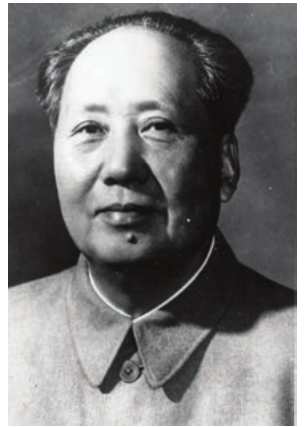
Born in Hunan Province to a peasant family, Mao Zedong worked as an assistant to Li Dazhao, one of the CCP's founders. Unlike other Chinese communists who followed Soviet doctrine emphasising urban workers, Mao recognised the revolutionary potential of China's vast peasant population.
Important
This insight led him to establish communist bases in rural areas, particularly in Jiangxi Province. During the background period, Mao was still a relatively minor figure in the CCP, but his rural focus would later prove crucial to communist success.
Zhou Enlai (Chou En-lai) (1898-1976)
Born in Jiangsu Province, Zhou Enlai received education at a Christian mission school before undertaking further studies in Japan. He participated in the May Fourth Movement of 1919, which awakened his political consciousness.
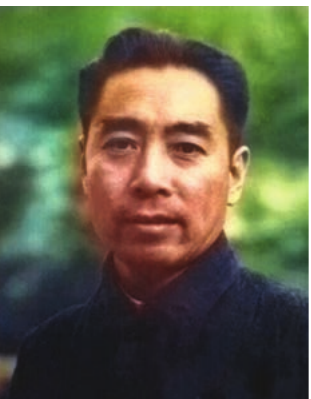
In 1920, Zhou went to France where he helped establish a branch of the CCP in 1922. He served as a political commissar at the Huangpu Military Academy during the First United Front, where his propaganda skills proved invaluable. He barely escaped the Shanghai Massacre of 1927, after which he became increasingly important in the CCP leadership.
Zhu De (Chu Te) (1886-1976)
Born to a poor family in Hunan Province, Zhu De initially participated in the 1911 Revolution and later became a general in a warlord's army. Despite his military success, he struggled with opium addiction before successfully overcoming it.
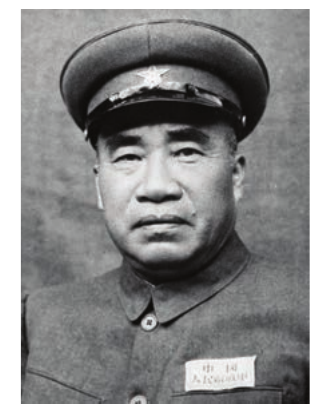
Whilst studying in Germany, he met Zhou Enlai and joined the CCP. After participating in the Nanchang uprising against the GMD in 1927, he eventually joined forces with Mao Zedong at the Jinggangshan Soviet. Zhu De became commander of the Red Army and would serve as the principal military leader throughout the communist struggle for power.
Summary
Key Points to Remember:
-
Two major obstacles prevented Chinese unity: warlord control of provinces and foreign domination of Chinese territory created political fragmentation after 1911.
-
The May Fourth Movement (1919) awakened Chinese nationalism: protests against foreign powers transferring German concessions to Japan sparked a broader movement that benefited both the GMD and CCP.
-
The First United Front (1923-1927) allied the GMD and CCP: Soviet pressure and financial incentives brought the two parties together, with the CCP working within the GMD structure whilst maintaining separate identity.
-
The Huangpu Military Academy created a professional nationalist army: established with Soviet assistance and commanded by Jiang Jieshi, it trained soldiers in modern tactics and emphasised ethical treatment of civilians, building popular support.
-
Sun Yixian's death in 1925 triggered a succession crisis: Jiang Jieshi's control of the Huangpu Army and political ruthlessness enabled him to defeat rivals and emerge as GMD leader, setting the stage for the Northern Expedition and eventual split with the communists in 1927.