The Nationalist Decade 1927–37 (HSC SSCE Modern History): Revision Notes
📚Revision Notes
The Nationalist Decade 1927–37
Introduction
The period from 1927 to 1937 marked a crucial decade in Chinese history when the Guomindang (GMD) attempted to consolidate power and modernise China under Jiang Jieshi's leadership. This era began with the successful Northern Expedition that unified much of China, but was characterised by ongoing challenges including warlord resistance, communist insurgency, internal party divisions, and increasing Japanese aggression. Understanding this period is essential for grasping the complexities that led to the eventual GMD defeat and the establishment of Communist China.
Background: The Huangpu Military Academy
The foundation for GMD military success was laid at the Huangpu (also called Whampoa) Academy, a military training facility established on an island in the Pearl River near Guangzhou. This academy represented a significant departure from traditional Chinese military training methods.
Note
Key features of the academy:
- Soviet military advisers, including Mikhail Borodin and Vasily Blyukher, provided expertise
- Jiang Jieshi, drawing on his Japanese military training, implemented modern Western military tactics
- Training emphasised discipline and professional military standards
The Communist presence: As a condition of Soviet funding, the Chinese Communist Party (CCP) had to be included in the academy. This collaboration proved initially beneficial, as CCP members excelled at:
- Creating propaganda to inspire troops
- Undermining enemy morale through psychological warfare
- Building popular support through promises of land reform
Zhou Enlai served as a political commissar at the academy, helping to build the Huangpu Army's reputation. Unlike traditional Chinese armies, the Huangpu forces did not conscript unwilling soldiers or loot villages they passed through. This ethical approach, combined with promises of land reform, generated genuine peasant support for the GMD.
The academy's graduates quickly proved their worth by defeating a local warlord who had been harassing Guangdong Province. With their base secure, the GMD prepared for the next phase: uniting all of China under their leadership.
Jiang Jieshi's rise to power
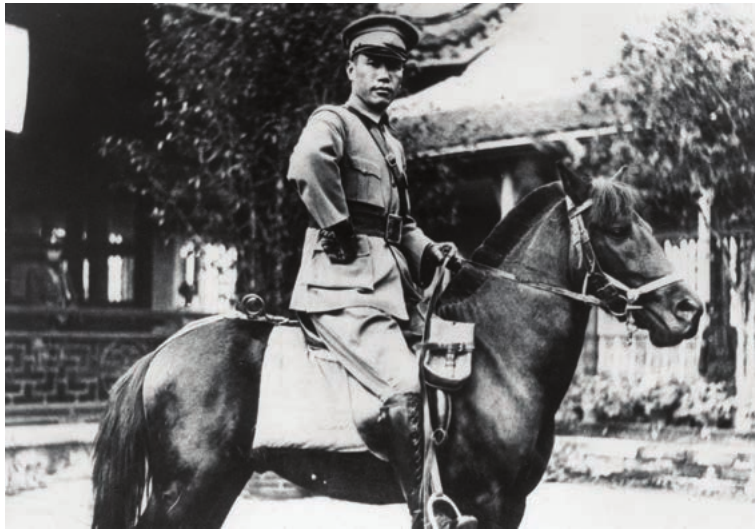
In late 1924, Sun Yixian, the GMD's founding leader, travelled to Beijing to mediate a dispute between northern warlords. Despite suffering from terminal liver cancer, Sun went in the interests of promoting Chinese unity. He died on 12 March 1925, leaving a power vacuum within the GMD.
The succession struggle: Three main contenders emerged to lead the GMD:
- Jiang Jieshi (military commander)
- Wang Jingwei (left-wing politician)
- Hu Hanmin (right-wing politician)
Through a combination of decisive action and ruthless political manoeuvring, Jiang outmanoeuvred his rivals. His advantages included:
- Control of the Huangpu Army
- Close association with Sun Yixian
- Strategic marriage to Song Meiling, Sun Yixian's sister-in-law, which connected him to China's most powerful family
China in 1927: Political, social and economic conditions
When the Northern Expedition successfully unified China under GMD control in 1927, the Republic of China finally became a reality. However, the new nation faced significant challenges across all aspects of society.
Political divisions
China remained deeply divided despite nominal unification:
- Some warlords had been defeated outright, whilst others agreed to serve the republic
- Many warlords paid lip-service to the central government but remained effectively independent in their provinces
- Japan was making territorial demands and encroaching on Chinese borders
- The CCP, though weakened by government massacres, was regrouping in remote mountain villages and border areas
Social conditions
Chinese society existed in two very different worlds:
Urban areas:
- Chinese entrepreneurs increasingly engaged in Western-style businesses, particularly transport and banking
- City dwellers experienced a blend of modern Western customs and traditional Chinese practices
- Greater personal freedoms, especially for women
- Access to modern amenities and education
Rural areas:
- The vast majority of peasants continued to suffer under oppressive conditions
- They bore crushing burdens of land rent to powerful landlords
- Excessive fees and taxes kept rural families in perpetual poverty
- Traditional customs maintained their grip on village life
Note
The stark divide between urban prosperity and rural poverty would prove to be one of the GMD's most critical failures, creating a vast pool of potential support for communist revolution.
The issue of footbinding
Footbinding represented one of the most visible symbols of traditional oppression, particularly of women. This painful practice involved tightly binding young girls' feet to prevent normal growth, creating small, deformed feet that were considered attractive but caused lifelong disability and pain.
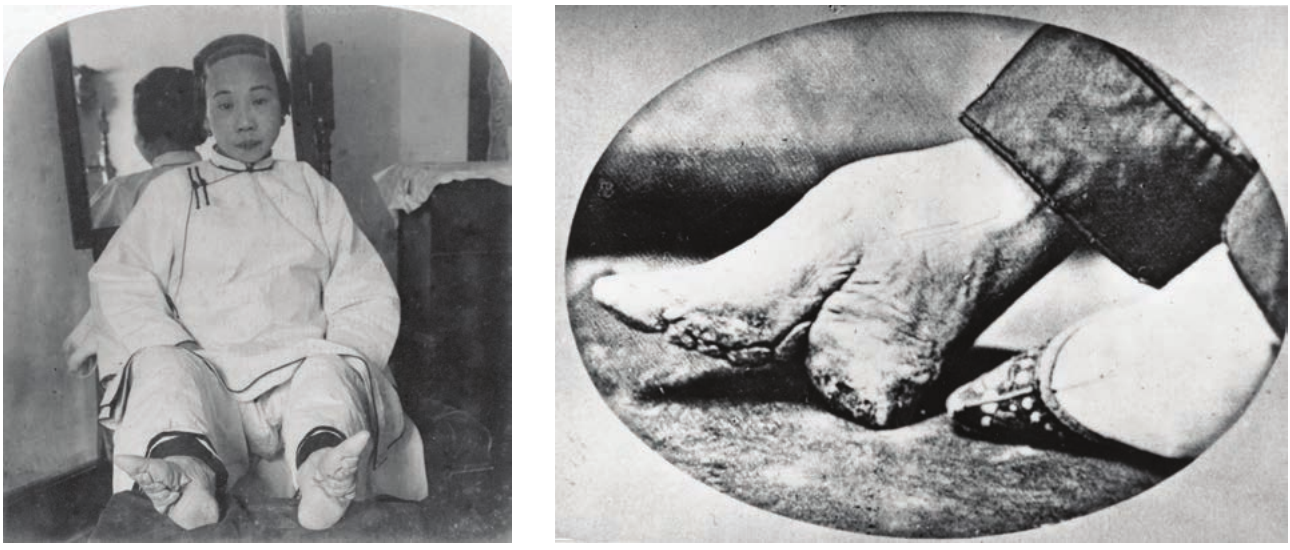
The GMD government officially abolished footbinding, marking a significant social reform. However, implementation was uneven:
- Urban women increasingly benefited from the ban
- Many rural women remained trapped by the tradition
- Older women who had already undergone binding could not reverse the damage
- The abolition represented one of the few GMD policies that directly benefited peasant women
Economic situation
China stood at a crossroads economically in 1927:
- Western technology offered opportunities for modernisation, particularly in public transport
- Shanghai had become China's commercial and manufacturing centre (a position it maintains today)
- However, the benefits of economic development remained concentrated in urban areas
- Rural poverty persisted unchanged, storing up problems for the future
The Northern Expedition
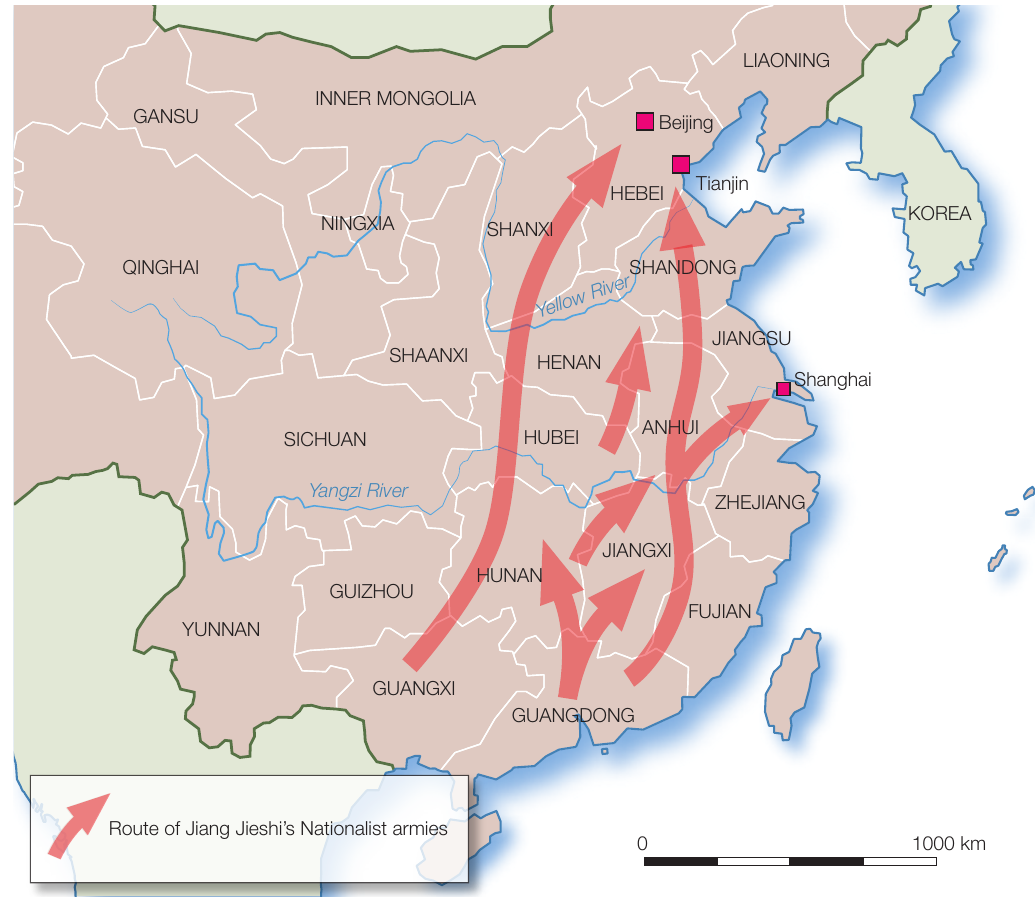
In 1926, Jiang Jieshi launched the Northern Expedition from Guangzhou Railway Station, aiming to defeat the warlords and unify China. This military campaign proved decisive in establishing GMD control over most of China.
Campaign structure
Example
The Three-Pronged Military Campaign
The Northern Expedition deployed approximately 91,000 troops:
- 6,000 Huangpu-trained cadets
- 85,000 regular soldiers
The campaign advanced along three routes:
Route 1 - Western prong: Advanced through Hunan Province to capture the Triple City of Wuhan (significantly, where the 1911 Revolution had begun)
Route 2 - Central prong: Travelled through Jiangxi Province and up the Yangzi River to Nanjing
Route 3 - Eastern prong: Moved through Fujian Province to capture Hangzhou
Result: Within months, the Northern Expedition had conquered all major provinces south of the Yangzi River.
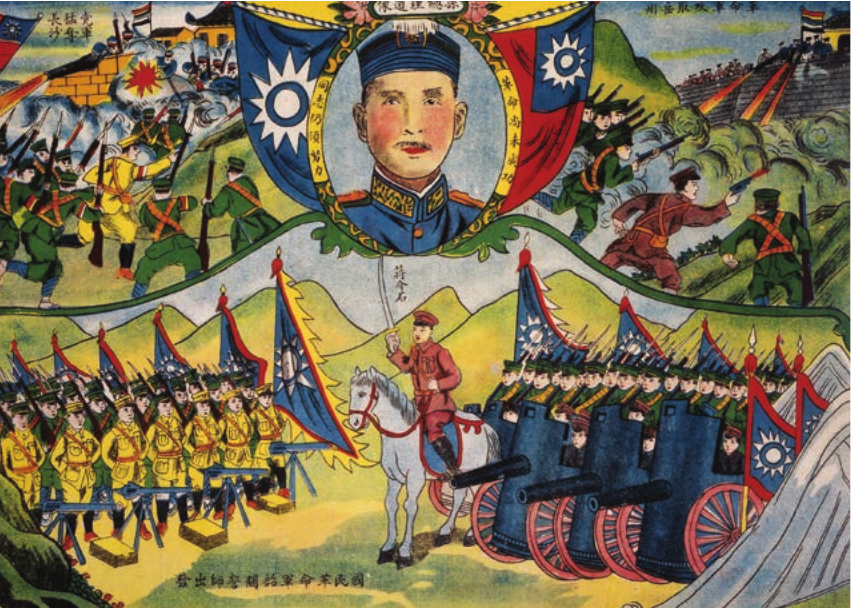
Factors in GMD success
Despite the warlords' superior combined numbers, several factors enabled the Northern Expedition's success:
Warlord weaknesses:
- Rivalry among warlords prevented them from uniting effectively
- They lacked a unifying ideology or purpose
- Their armies often consisted of poorly motivated conscripts
GMD strengths:
- Advanced with Sun Yixian's Three Principles as an inspiring political philosophy
- Had supporters and sympathisers in all provinces
- Possessed well-trained troops led by professional officers
- Benefited from CCP propaganda work and trade union organisation in target cities
Growing GMD divisions
As the expedition progressed, internal GMD tensions emerged:
The left wing:
- Established a rival government in Wuhan
- Included Song Qingling (Sun Yixian's widow)
- Implemented radical reforms including:
- Land redistribution
- Workers' rights improvements
- Occupation of British concessions in Jiujiang and Hankou (which Britain agreed to forfeit)
- Had strong CCP support
The right wing:
- Led by Jiang Jieshi and Hu Hanmin
- Increasingly conservative in outlook
- Concerned about communist influence
- Sought allies among landlords, businessmen and Western powers
- Announced Nanjing (not Wuhan) as the new capital
- Changed Beijing's name to Beiping ('Northern Peace') to emphasise Nanjing's status as the 'Southern Capital'
The Shanghai Massacre
On 26 March 1927, Jiang Jieshi's troops entered Shanghai to find the city already under control. CCP-organised trade unions had staged a successful uprising and handed the city to the GMD Army. Rather than welcoming this assistance, Jiang viewed the communists' effectiveness with alarm.
The purge begins
Important
Critical turning point in GMD-CCP relations:
Events moved swiftly:
- 6 April 1927: Zhang Zuolin's troops (loyal to Jiang) raided the Soviet Embassy in Beijing, arrested CCP members, and executed Li Dazhao, the CCP's founder
- 12 April 1927: The Shanghai Massacre began
The Shanghai Massacre
Jiang collaborated with Du Yuesheng (known as 'Big-Eared Du'), leader of the Green Gang, Shanghai's most powerful criminal organisation. On Jiang's signal, armed Green Gang members launched coordinated attacks across Shanghai:
- Raided CCP headquarters and cells
- Attacked trade union offices
- Searched private homes
- Rounded up suspected communists
- Executed victims in the streets
The White Terror: This anti-communist campaign, also called the 'White Terror' or 'Shanghai Spring', effectively destroyed the CCP's urban base. A few leaders, including Zhou Enlai, managed to escape to Hankou. Similar massacres soon followed in other cities that the Northern Expedition had captured.
Important
Long-term Impact:
- The CCP was driven from urban areas
- Communist survivors fled to remote rural bases
- The GMD-CCP United Front collapsed
- Jiang positioned himself as acceptable to Western powers and Chinese conservatives
- The massacre sowed seeds for decades of civil war
Governing Nationalist China
After eliminating the CCP's urban presence, Jiang completed China's unification and established his government in Nanjing. However, maintaining power proved more challenging than seizing it.
The threat from warlords
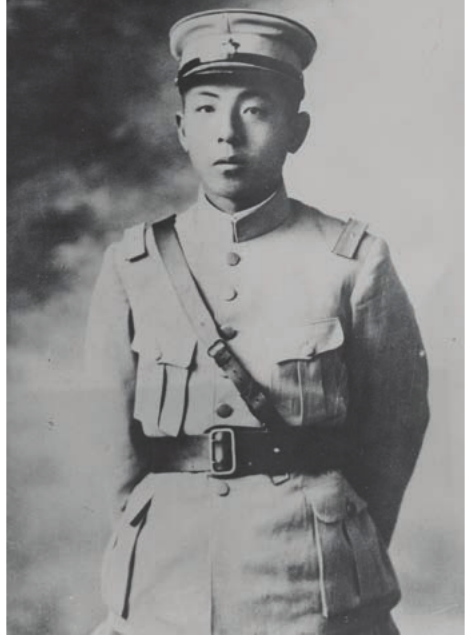
Although the Northern Expedition had nominally defeated the warlords, many retained considerable power within their provinces. Jiang proposed reducing the combined warlord and GMD forces from approximately 2 million to 800,000 soldiers. This demobilisation never materialised, and the goal of a unified central army remained unfulfilled.
Note
Major warlord challenges:
1929 revolts: A series of warlord-encouraged rebellions erupted:
- Hunan Province rebelled
- Followed by Henan Province
- Then Hebei Province
1930 revolt: Warlords Yan Xishan and Feng Yuxiang launched a major rebellion against the GMD Government. Ironically, Zhang Xueliang, the 'patriotic warlord', helped suppress this revolt.
1936 revolt: The 'two Guangs' (Guangdong under Chen Zhitang and Guangxi under Li Zongren) revolted in June 1936. Zhang Xueliang again proved crucial in suppressing the rebellion, but this required moving his Manchurian troops south, leaving Manchuria vulnerable to Japanese expansion.
Building nationalist sentiment
Jiang attempted to strengthen national unity through symbolic actions. He had Sun Yixian's body transported ceremoniously from Beiping to Nanjing, where it was placed in an impressive white marble mausoleum with a cobalt blue roof. This structure remains a significant national monument today.
Internal party divisions
Beyond warlord resistance, Jiang faced serious factional divisions within the GMD itself:
Wang Jingwei's left-wing faction:
- Opposed Jiang's leadership
- Advocated more radical policies
- Had support from Song Qingling (Sun Yixian's widow and Jiang's sister-in-law)
- Sometimes encouraged warlord revolts against Jiang
- Represented a constant political challenge
Hu Hanmin's right-wing faction:
- More conservative than Jiang initially
- Jiang increasingly aligned with this group as he moved rightward
- Represented landlord and business interests
Important
The dictatorship question:
Despite honouring Sun Yixian's Three Principles of the People, Jiang's government operated as a dictatorship rather than a democracy. Using war and unrest as justification, he indefinitely extended the 'period of tutelage' (the transitional phase before democracy) that Sun had envisioned as temporary.
The communist threat
The CCP, though driven from cities, maintained control of significant rural bases, particularly in south-eastern provinces. Jiang became obsessed with eliminating communist strongholds, even prioritising this over resisting Japanese aggression. In 1931, he made a controversial peace agreement with Japan (which had occupied Manchuria) to focus on destroying the CCP base in Jiangxi Province. This decision eventually forced the famous Long March as communists fled GMD encirclement.
The Xi'an Incident
Jiang's focus on fighting communists rather than Japanese invaders caused resentment. In 1936, Zhang Xueliang arrested Jiang in the Xi'an Incident. Zhang released him only after Jiang agreed to cooperate with the CCP to fight Japan, fundamentally changing China's political landscape.
Attempts at social reform
Abolishing footbinding and calendar reform
The GMD Government's first social reforms were:
- Official abolition of footbinding
- Replacing the Chinese lunar calendar with the international solar calendar
These changes signalled the government's commitment to modernisation and alignment with international standards.
The New Life Movement
In 1934, Jiang Jieshi and his wife Song Meiling (educated in the United States and a devout Christian) launched the New Life Movement. This campaign represented a peculiar blend of Western hygiene standards and traditional Confucian values.
Western elements: The movement promoted Western standards of cleanliness and courtesy:
- Daily hand washing
- Regular tooth brushing
- Prohibitions on smoking and spitting in public
- Simplified weddings to reduce excessive spending
- Simplified funeral ceremonies
- Improved sewerage and water supplies
Enforcement:
- Girls could be publicly humiliated for wearing lipstick
- Restaurants served alcohol from teapots to avoid detection by New Life boy scouts
- Big character posters promoted the movement's values
Note
Traditional elements:
The movement emphasised four neo-Confucian virtues:
- Li (decorum) - proper conduct and ritual
- Yi (righteousness) - moral correctness
- Lian (integrity) - honesty and honour
- Chi (self-respect) - dignity and shame
Jiang's political motivations: For Jiang, the New Life Movement served political purposes beyond social improvement:
- Promoted social cohesion and obedience to authority
- Aimed to create honest public officials and zealous military leaders
- Supported his increasingly authoritarian rule
- Resembled European fascist movements
The Blue Shirts
Like Hitler's Brown Shirts and Mussolini's Black Shirts, Jiang encouraged a paramilitary group called the Blue Shirts, though he officially denied their existence. These groups functioned as thugs who:
- Carried out Jiang's secret assignments
- Intimidated political opponents
- Murdered perceived enemies
- Enforced compliance with government policies
Limited impact
The New Life Movement achieved limited success:
- Some Christian missionaries supported its moral elements
- Foreign residents generally ignored it
- Most Chinese people did not take it seriously
- It had minimal impact on improving ordinary people's lives
Economic reforms and development
Regaining economic sovereignty
In 1928, the GMD Government took important steps to regain economic control:
- Assumed total tariff control (previously managed by foreign governments and warlords)
- Began reclaiming inland concessions granted to foreign interests after the Opium Wars
- Established a Ministry of Railways to compete with foreign-controlled lines
Infrastructure development
Railways: National railway lines expanded dramatically:
- 1928: 8,000 kilometres
- 1937: 13,000 kilometres
Roads: Highway construction accelerated to accommodate motor vehicles:
- 1921: 1,000 kilometres
- 1936: 115,703 kilometres
Airlines: Three joint-venture airlines were established in partnership with foreign companies.
Communications:
- Significant expansion of telegraph lines
- Improved postal services throughout the country
Banking and currency reform
Drawing on his connections to China's banking families through marriage, Jiang implemented major financial reforms.
Example
Currency Standardisation Process
On 4 April 1934, the government:
- Eliminated the tael (a varying unit of silver measurement)
- Introduced a standardised national silver dollar
- Issued paper currency
This reform was crucial for creating a unified national economy and facilitating trade across provinces.
Banking restructure: The proliferation of small Chinese banks was consolidated into four major institutions:
| Bank | Primary Function |
|---|---|
| Central Bank | Overall banking regulation |
| Bank of China | Foreign exchange transactions |
| Bank of Communications | Domestic industrial financing |
| Farmer's Bank | Agricultural credit and mortgages |
Note
This four-bank structure, interestingly, continues in modified form in China today.
Industrial development
Heavy industry: Between 1927 and 1937, the government spent 500 million Chinese dollars importing heavy machinery to:
- Build up industrial capacity
- Strengthen national defences
- Modernise production methods
Light industry: Despite political unrest and Japanese aggression, lighter industries grew even more rapidly than heavy industry, particularly in Shanghai and other coastal cities.
Economic weaknesses
Despite growth and modernisation, the economy rested on shaky foundations.
Government income sources (1928-35):
- Customs revenues: 42%
- Salt tax: 17.13%
- Commodity taxes: 19.16%
- Other sources: approximately 21.71%
Important
Fundamental problem:
Government income covered only 80% of expenditure. The deficit was funded through:
- Loans
- Increasing national debt
The peasant problem:
A critical economic weakness was the government's inability to collect land taxes, as these were administered by local governments. The national government tried limiting peasant land rents to 37.5% of main crop yields in a 1930 resolution, but this was never implemented.
This failure to relieve peasant debt and suffering proved disastrous for the GMD. With peasants comprising 80% of China's population, their continued misery created a massive pool of potential support for the CCP's revolutionary message.
Life under the GMD: Personal accounts
Personal stories from this period reveal the harsh realities behind government statistics and official pronouncements.
Political danger
Example
Jung Chang's Account: The Cost of Dissent
Jung Chang, in her memoir Wild Swans, recounts her mother's friend Bai's tragic story.
Bai was a beautiful, passionate seventeen-year-old who joined GMD intelligence services. When ordered to spy on fellow students, she refused.
Shortly after, her training course colleagues found her shot in her bedroom, dying without being able to speak. The newspapers reported it as a crime of passion, but the real reason was clear: she had been killed for attempting to leave the intelligence service.
Significance: This story illustrates the dangerous political climate where loyalty to the GMD could be enforced with deadly violence.
Social customs and resistance
Example
Li Chunying's Account: Defying Footbinding
Li Chunying's memoir Jade Eye provides insight into how footbinding persisted despite official abolition.
His aunt's experience: His aunt had her feet bound and suffered terribly, crying day and night but afraid to remove the bandages due to warnings that 'no man likes to marry a girl with large feet'.
His mother's courage: However, his mother showed remarkable courage:
- When her feet were bound, she tore off the bandages and cut them into pieces
- She defied her grandmother's warnings about not finding a husband
- She declared, 'If nobody wants to marry me, I will not marry anybody'
- She ran freely whilst her older sister could only totter about painfully
What this reveals:
- Official abolition did not immediately change rural customs
- Individual resistance was possible but required exceptional courage
- Women's experiences varied dramatically based on personal circumstances and location
- Traditional social pressure remained powerful despite government reforms
These accounts reveal that ordinary people's lives improved little under GMD rule. Political terror, economic hardship and persistent traditional oppression continued to characterise daily existence for most Chinese people.
Remember!
Summary
Key takeaways for revision:
-
The Northern Expedition (1926-27) successfully unified most of China under GMD control through a three-pronged military campaign, but victory revealed deep divisions within the GMD between left-wing (communist-aligned) and right-wing (conservative) factions.
-
The Shanghai Massacre (April 1927) marked Jiang Jieshi's decisive break with the CCP, using the criminal Green Gang to purge communists from Shanghai and other cities, driving the CCP into rural bases and ending the GMD-CCP United Front.
-
Political challenges undermined GMD control throughout the Nationalist Decade: warlords retained regional power despite nominal defeat, internal GMD factions contested Jiang's leadership, the CCP regrouped in rural areas, and Japanese aggression intensified, particularly after occupying Manchuria in 1931.
-
Social reforms achieved limited success: footbinding was officially abolished but persisted in rural areas; the New Life Movement (1934) promoted hygiene and neo-Confucian values but had minimal real impact; and the Blue Shirts functioned as fascist-style enforcers of Jiang's authority.
-
Economic modernisation occurred in infrastructure (railways, roads, airlines), banking (four-bank system, currency standardisation) and industry, but fundamental weaknesses remained: government income covered only 80% of expenditure, and the failure to implement land reform left 80% of the population (peasants) in crushing poverty and debt, storing up disaster for the GMD's future.