Soviet Foreign Policy (HSC SSCE Modern History): Revision Notes
📚Revision Notes
Soviet Foreign Policy
Introduction to Soviet foreign policy 1917-41
Soviet foreign policy between 1917 and 1941 was shaped by two competing forces: communist ideology promoting world revolution and practical needs for survival and development. The newly formed Soviet state faced international isolation, economic devastation, and hostile capitalist powers. This period saw the USSR shift from revolutionary idealism to pragmatic diplomacy, and finally to desperate measures for self-preservation.
Note
The tension between ideological commitments and practical necessity would remain a defining feature of Soviet foreign policy throughout this entire period, forcing Soviet leaders to make difficult compromises between their revolutionary goals and the survival of their state.
Early Soviet foreign policy (1919-1924)
The establishment of Comintern
Following their successful revolution, the Russian Communists gained significant authority over communist movements worldwide. In 1919, they established the Comintern (also called the Third International), an international organisation designed to coordinate communist parties across the globe.
Comintern was an international agency set up by the Russians in 1919 to coordinate the activities of Communist parties throughout the world. It operated according to three key principles:
- Communist parties in other countries were required to follow instructions from Moscow
- The organisation worked toward worldwide revolution by organising and financing strikes and protest movements in capitalist countries
- When Russia wanted to establish friendly relations with a particular government, it could order local communists to stop their revolutionary activities
Important
This dual approach created a fundamental contradiction in Soviet foreign policy. The USSR attempted to maintain diplomatic relations with capitalist governments while simultaneously supporting revolutionary movements that aimed to overthrow those same governments. This contradiction would complicate Soviet diplomacy throughout the 1920s and 1930s.
Building international relationships
By 1920, the Soviet Union desperately needed money, machinery, and technical expertise to rebuild its war-shattered economy. This practical necessity drove the government to seek diplomatic recognition and trade agreements with other nations.
The USSR signed friendship treaties with neighbouring countries including Latvia, Estonia, Lithuania, and Finland in 1920. These agreements helped establish a buffer zone around Soviet territory. In 1921, further treaties followed with Afghanistan, Persia (Iran), and Turkey, extending Soviet influence into Asia.
A major breakthrough came in 1921 when the Foreign Ministry secured a Trade Agreement with Britain, marking the first significant economic relationship with a major Western power.
The Rapallo Pact (1922)
One of the most significant diplomatic achievements came in 1922 with the Rapallo Pact. This agreement was signed between Russia and Germany, where each country renounced all territorial and financial claims against the other resulting from previous treaties.
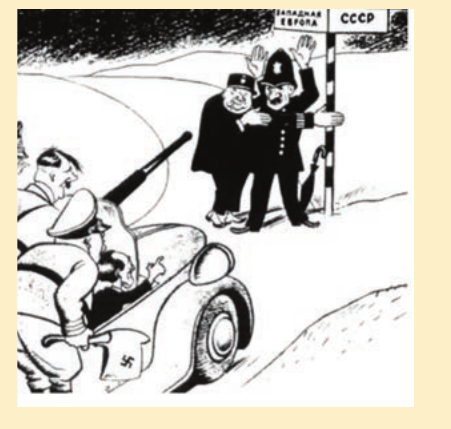
The pact had both public and secret dimensions. Openly, it established normal diplomatic relations and created trading and investment links between the two countries. Secretly, Russia agreed to allow Germany to manufacture weapons on Soviet territory and to train German airmen and tank crews. These military activities were all prohibited under the Treaty of Versailles, which had been imposed on Germany after the First World War.
Note
This partnership benefited both nations: Germany could rebuild its military capacity away from Allied scrutiny, while the USSR gained access to German technical expertise and industrial know-how. The Rapallo Pact demonstrated how both outcast nations could cooperate to circumvent the international order established by the victorious Western powers.
By 1924, the British Government officially recognised the Communist Government of the USSR, though the United States withheld recognition until 1933. This gradual acceptance showed the Soviet Union was becoming a permanent fixture in international relations.
Soviet foreign policy in the mid-1930s (1932-1936)
Shifting alliances and new threats
In 1932, the Soviet Union signed a Treaty of Friendship with Italy, but this agreement proved short-lived, surviving only four years. More concerning for Soviet leaders was the deteriorating relationship with Germany.
The Nazi threat
The year 1933 marked a crucial turning point. The rise of Adolf Hitler and the Nazi Party alarmed Stalin profoundly. Hitler's aggressively anti-communist and anti-Russian views, combined with his brutal treatment of the German Communist Party, signalled danger for the Soviet Union. The valued partnership established through the Rapallo Pact was turning sour.
Important
Hitler's rise fundamentally transformed Soviet foreign policy calculations. The partnership with Germany, which had been a cornerstone of Soviet diplomacy throughout the 1920s, now became a liability. Stalin recognized that Nazi Germany posed an existential threat to the Soviet Union, forcing a complete reassessment of Soviet international strategy.
Collective security strategy
In response to the Nazi threat, Stalin shifted Soviet foreign policy toward collective security. In 1934, the Soviet Union joined the League of Nations, the international organisation it had previously condemned as a tool of capitalist powers. This membership demonstrated the USSR's willingness to work within the existing international system.
In 1935, the Soviet Union signed an important agreement with France and Czechoslovakia. Under this pact, both the Soviet Union and France promised to support Czechoslovakia against German aggression. This arrangement reflected Stalin's growing concern about Nazi expansionism.
Popular Front and the Spanish Civil War
Between 1936 and 1939, Stalin implemented a new strategy through Comintern. He instructed communist parties throughout Europe to cooperate with other socialist parties and form Popular Front governments. The goal was to create united left-wing coalitions capable of resisting the spread of fascism.
The USSR put these principles into practice during the Spanish Civil War (1936-1939). The Russians provided military aid and advice to the Republican forces fighting against General Franco's fascist rebels. However, despite Soviet assistance, Franco and the Spanish fascists ultimately won the war.
Note
The failure in Spain demonstrated the limitations of Soviet power and influence in Western Europe. It also revealed that the Popular Front strategy, while theoretically sound, could not overcome the advantages enjoyed by fascist forces supported by Nazi Germany and Fascist Italy. This defeat was a serious blow to Soviet prestige and the anti-fascist cause.
Soviet foreign policy in the late 1930s (1938-1939)
Western suspicion and Stalin's anxieties
By 1938, Stalin was desperately trying to persuade Britain and France that the Soviet Union was not a dangerous power bent on world revolution. He wanted Western leaders to see the USSR as a valuable potential ally against Nazi Germany. However, Britain and France remained deeply suspicious of communism and reluctant to form close ties with the Soviet state.
The Munich Conference and its impact
The Munich Conference of 1938 proved to be a watershed moment in Soviet foreign policy. At this meeting, Britain and France demonstrated just how far they would go to avoid war with Germany. When Hitler demanded the Sudetenland region of Czechoslovakia, neither Britain nor France was prepared to support the Czechs in resisting German demands.
Important
The Munich Betrayal
Stalin was not invited to the Munich Conference, despite the Soviet Union's agreement to protect Czechoslovakia. This exclusion, combined with the Western betrayal of Czechoslovakia, confirmed Stalin's belief that Britain and France wanted to encourage Hitler to expand eastward and eventually attack the USSR.
Stalin concluded that the Western democracies hoped Germany and the Soviet Union would destroy each other in a war, leaving Western Europe safe. This conviction would prove decisive in shaping Soviet policy over the next year.
The Nazi-Soviet Non-Aggression Pact (1939)
By 1939, it became clear that Poland would be Hitler's next target. Stalin was convinced that Britain and France would not effectively resist German aggression. Faced with this situation, he made a dramatic policy reversal.
In August 1939, Soviet Foreign Minister Vyacheslav Molotov held talks with German Foreign Minister Ribbentrop in Moscow. These negotiations resulted in the Nazi-Soviet Non-Aggression Pact, publicly announced on 23 August 1939.
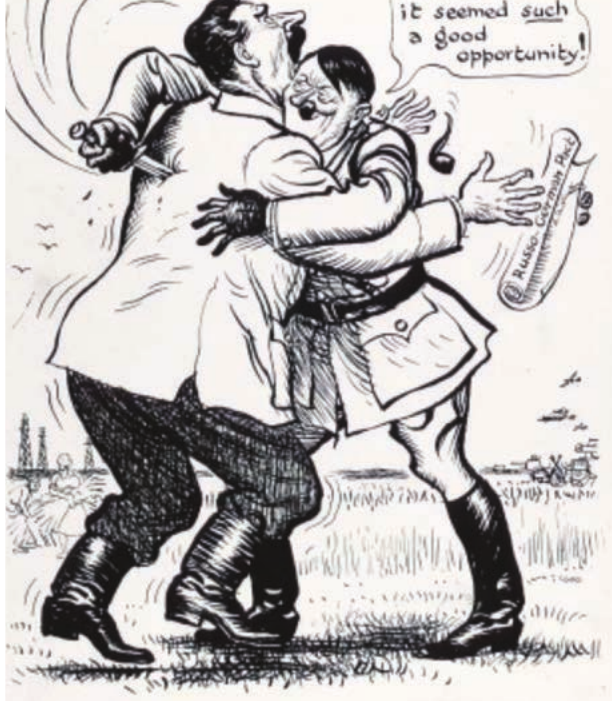
The published portion of the pact stated that Germany and Russia would remain neutral toward each other if either became involved in war. However, the agreement contained secret clauses that revealed its true nature. Germany and Russia agreed to divide Poland between them. The Germans also gave the Russians a free hand to conquer Bessarabia (modern Moldova), Latvia, Lithuania, Estonia, and part of Finland. These were all territories that Russia had lost at the Treaty of Brest-Litovsk in 1918.
Note
Benefits of the Pact
Both powers benefited significantly from this cynical agreement:
- Germany could invade Poland without worrying about Soviet intervention, making war more likely
- The USSR gained valuable time to continue rearming and preparing for an eventual war with Germany
- Germany expected to easily overrun Soviet-occupied Eastern Poland in a future conflict
The pact shocked the world, bringing together two ideological enemies in a marriage of convenience that prioritized national interest over ideology.
Soviet foreign policy 1940-1941
The Soviet-Finnish War
In November 1939, the Soviet Union offered Finland a territorial exchange. The Soviets proposed to give Finland certain territories in return for Finnish land that held strategic importance for defending Leningrad and Murmansk. When Finland rejected this offer, Soviet troops invaded at the end of November.
The Winter War, as it became known, initially went badly for the Soviet Union. Finnish resistance proved highly effective, embarrassing the supposedly powerful Red Army. However, a major Soviet offensive in February 1940 forced Finland to seek peace. The Treaty of Moscow, signed in March 1940, gained the Russians even more territory than they had originally requested.
Note
This aggression had consequences for Soviet international standing. The League of Nations expelled the USSR for attacking Finland, demonstrating that Soviet actions violated international law. The poor performance of the Red Army also revealed serious weaknesses that would prove costly when Germany invaded in 1941.
Further territorial expansion
In June 1940, Soviet forces occupied Bessarabia, continuing the territorial expansion permitted under the secret protocols of the Nazi-Soviet Pact. The USSR was systematically recovering territories lost in 1918 and creating a buffer zone against potential German attack.
Operation Barbarossa (1941)
In the early hours of Sunday, 22 June 1941, German forces launched Operation Barbarossa, a massive invasion of the Soviet Union. The attack came as a surprise to Soviet leadership, despite numerous warning signs.
Important
Soviet Unpreparedness
The USSR was poorly prepared for war. The morale of the Red Army was low, severely weakened by Stalin's purges of the 1930s. Many of the Soviet military's best and most experienced officers had been executed or imprisoned during the Great Terror. By late 1941, German forces had advanced to within a few miles of Moscow, placing the Soviet capital in grave danger.
The Nazi-Soviet Pact, which Stalin had viewed as buying crucial time for preparation, had failed to prevent war. The German invasion vindicated Stalin's long-held fear that the capitalist powers sought to destroy the Soviet Union.
The role of ideology in Soviet foreign policy 1917-41
Soviet foreign policy throughout this period reflected an ongoing tension between communist ideology and practical necessity. Lenin and Stalin both believed in the ultimate triumph of world communism, but they also recognised that the Soviet Union needed to survive in a hostile international environment.
The establishment of Comintern in 1919 represented the ideological commitment to world revolution. The organisation actively worked to undermine capitalist governments and support revolutionary movements worldwide. However, this ideological mission often conflicted with the USSR's diplomatic objectives.
Note
When practical interests required good relations with a particular government, Soviet leaders proved willing to sacrifice ideological purity. The Rapallo Pact with Germany, trade agreements with capitalist Britain, and ultimately the cynical Nazi-Soviet Pact all demonstrated that survival and national interest took precedence over revolutionary ideology.
The Popular Front strategy of the mid-1930s represented another pragmatic shift. Rather than refusing to cooperate with moderate socialists (as earlier communist doctrine required), Stalin ordered communist parties to form broad anti-fascist coalitions. The immediate threat of fascism outweighed ideological objections to working with non-communist left-wing parties.
By 1939, ideology had become almost entirely subordinate to the needs of state survival. Stalin's willingness to sign a pact with Nazi Germany, the supposed arch-enemy of communism, showed how far practical considerations had eclipsed ideological commitments.
Important
Ideology vs. Pragmatism
The fundamental lesson of Soviet foreign policy in this period is that when faced with a choice between ideological purity and state survival, Soviet leaders consistently chose survival. While communist rhetoric and the Comintern's activities suggested commitment to world revolution, actual policy decisions were driven by calculations of national interest, security needs, and practical diplomacy.
Exam tips
Note
Key Points for Exam Success
- Be prepared to explain how Soviet foreign policy changed over time and why these changes occurred
- Understand the difference between public statements and actual policy (as seen in the Rapallo Pact and Nazi-Soviet Pact)
- Consider how the experience of international isolation shaped Soviet behaviour
- Analyse how Western actions (particularly at Munich) influenced Stalin's decisions
- Be able to assess whether ideology or pragmatism was more important in driving Soviet foreign policy
Remember!
Summary
Key Takeaways: Soviet Foreign Policy 1917-41
-
The USSR established Comintern in 1919 to promote world revolution, creating tension with its diplomatic efforts to gain international recognition and trade agreements
-
The Rapallo Pact (1922) with Germany was crucial for Soviet economic recovery and allowed both countries to evade restrictions imposed by Western powers
-
Hitler's rise to power in 1933 fundamentally changed Soviet foreign policy, pushing Stalin toward collective security and cooperation with Western democracies
-
The Munich Conference (1938) convinced Stalin that Britain and France hoped to direct German aggression toward the USSR, leading him to seek accommodation with Hitler
-
The Nazi-Soviet Non-Aggression Pact (1939) was a cynical agreement that bought Stalin time to prepare for war but ultimately failed to prevent the devastating German invasion in June 1941
-
Throughout this period, practical considerations of state survival consistently trumped ideological commitments, demonstrating the primacy of realpolitik over revolutionary ideology in Soviet foreign policy