The Soviet State Under Stalin (HSC SSCE Modern History): Revision Notes
📚Revision Notes
The Soviet State Under Stalin
By 1929, Stalin had emerged as the supreme leader of the Soviet Union, having systematically defeated his political rivals including Trotsky and Bukharin. His consolidation of power marked the beginning of a radical transformation that would reshape Soviet society, economy and politics. Stalin's vision centred on the concept of Socialism in One Country, prioritising the rapid industrialisation and military strengthening of the USSR before pursuing worldwide revolution.
Totalitarianism under Stalin
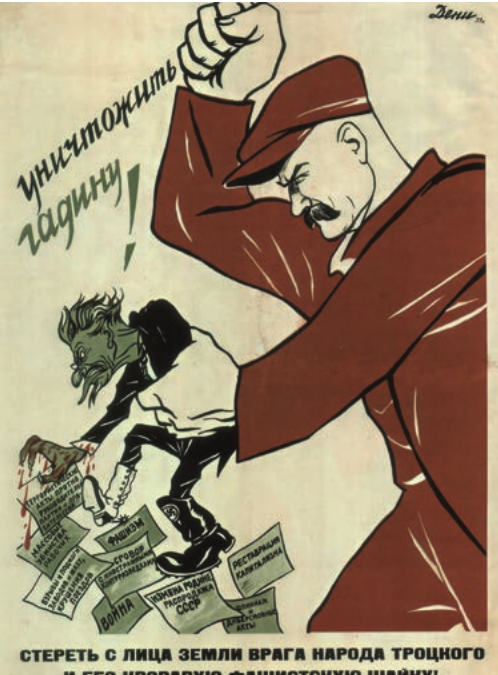
The Soviet state under Stalin exemplified totalitarian rule. The term 'totalitarianism' was originally coined by Italian fascist leader Mussolini in the 1920s, but political scientist Carl Friedrich later identified six key characteristics that could be applied to Stalin's USSR:
Features of Stalin's totalitarian system
Note
Stalin's totalitarian system rested on six interconnected pillars that gave him absolute control over every aspect of Soviet life. Understanding these features is essential to grasping how Stalin maintained his grip on power and transformed Soviet society.
Ideology: Officially, socialism guided all aspects of Soviet life, though in reality it became 'Stalinism', a personalised version of communist ideology that justified Stalin's absolute authority.
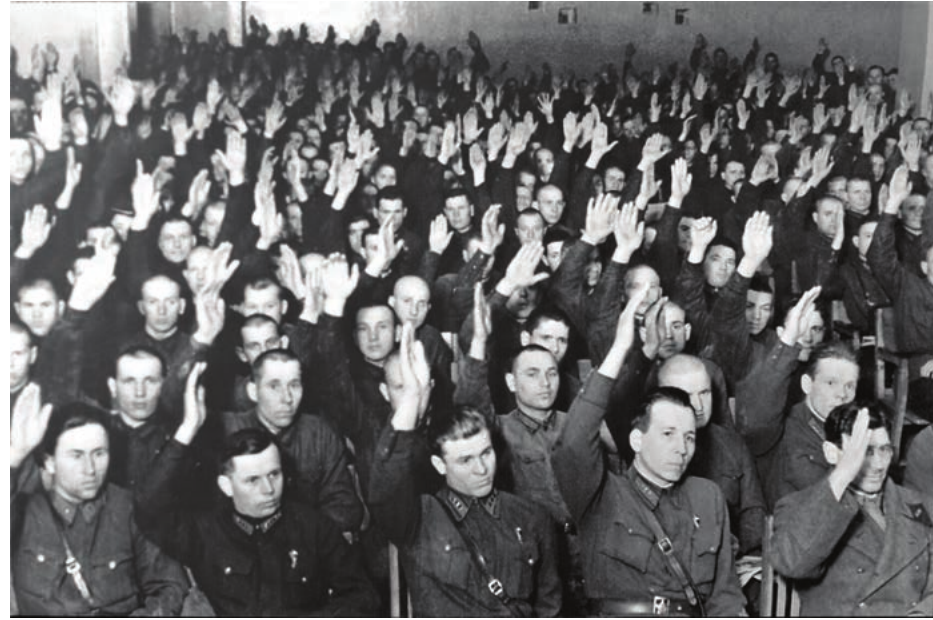
Single-party rule: The Communist Party held complete political power, with Stalin as its undisputed leader. The Party and state became thoroughly interconnected, with no separation between them.
State terror: A comprehensive apparatus of terror maintained control through various means:
- Dekulakisation during collectivisation
- The Great Purges eliminating real and imagined enemies
- The gulag system of forced labour camps
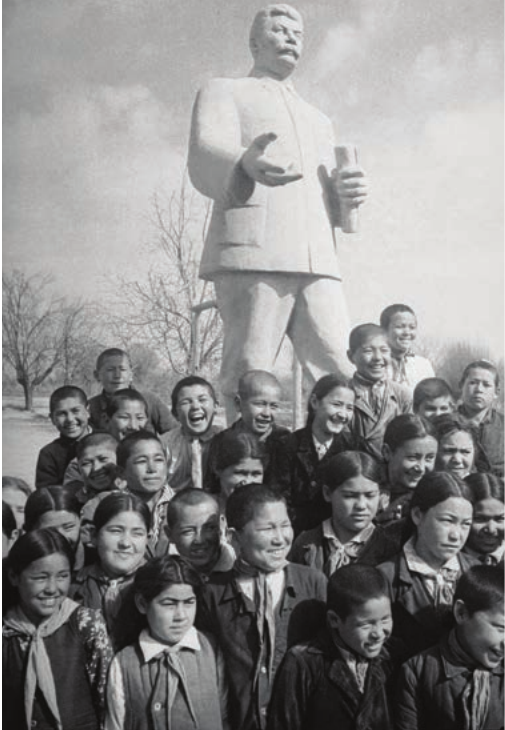
Media control: The regime exercised complete monopoly over all forms of communication. This enabled the development of Stalin's personality cult through propaganda, education and denunciations.
Military monopoly: Stalin maintained absolute control over the armed forces, periodically purging military leadership to prevent any potential challenge to his authority.
Economic centralisation: The state controlled all economic activity through collectivisation of agriculture and centralised industrial planning via the Five-Year Plans.
Important
The 1930s represented the most authoritarian period in Soviet history. Foreign travel became impossible, cultural expression faced strict censorship, and massive ceremonies were staged where citizens demonstrated devotion to Stalin. The entire society existed in a state of mobilisation, preparing for war against internal and external enemies.
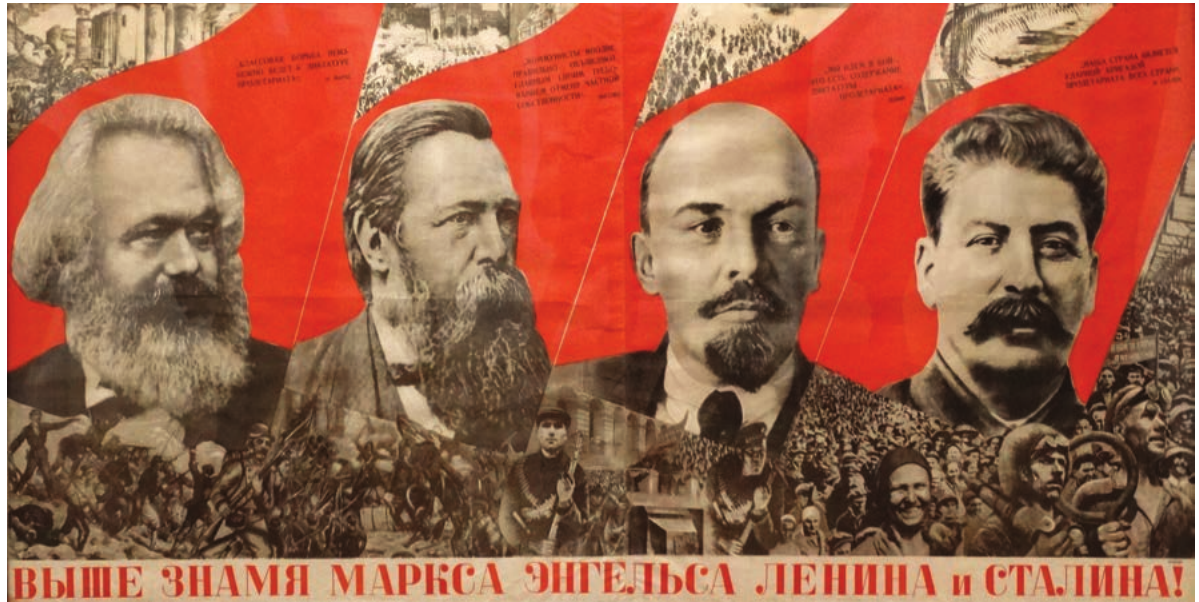
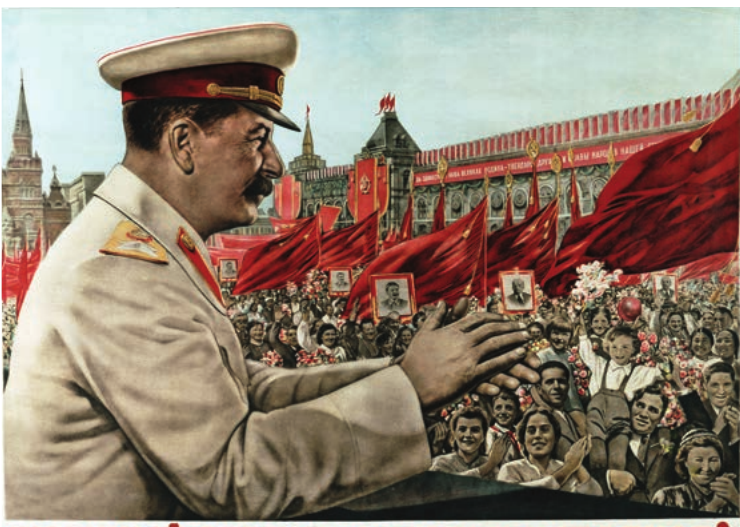
Throughout the USSR, enormous portraits of Stalin and Lenin appeared, with their words constantly quoted in media.
Economic transformation
Stalin's industrialisation drive
In 1928, Stalin abandoned the New Economic Policy (NEP) and launched an ambitious programme to rapidly industrialise the Soviet Union. His urgency was captured in a 1931 speech:
Important
Stalin's Warning (1931)
We are fifty or a hundred years behind the advanced countries. We must make good this distance in ten years. Either we do it, or we shall be crushed.
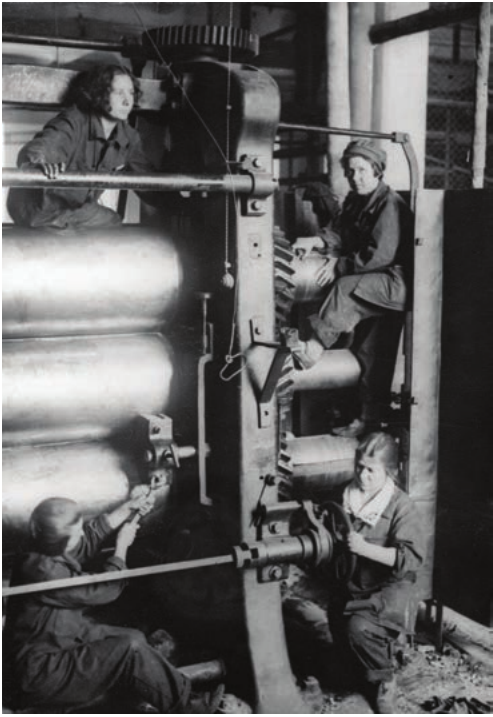
This militant approach transformed economic planning into a battle, with workers mobilised as 'shock troops' and industry characterised as a battlefield.
The press characterised industry as a battlefield, with 'shock troops' of workers mobilised to production sites. Young volunteers worked on grandiose projects like the Magnitogorsk metallurgical factories. Those who failed to meet targets or suggested more rational policies faced accusations of treason.
The first five-year plan (1928-32)
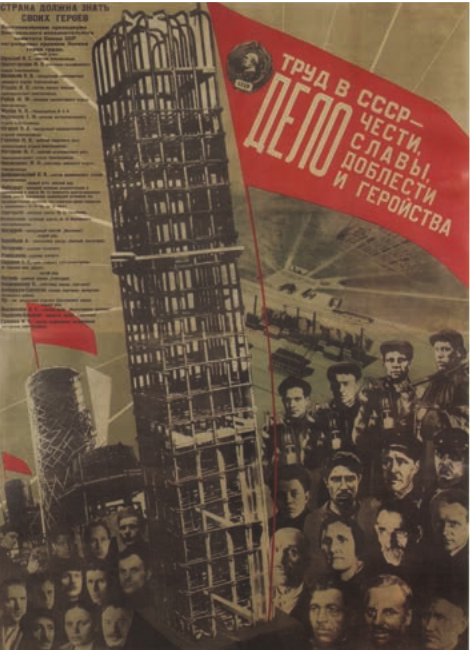
The first plan set extraordinarily ambitious targets for industrial production. Based on Western models, it involved funding large-scale government projects and building up Soviet armaments. The targets were so unrealistic that most economic historians consider them completely impractical. When some industries appeared on track, targets were increased further.
Note
Mixed Results of the First Five-Year Plan
The first plan produced a complex legacy:
- Heavy industry strengthened significantly, but at the expense of consumer goods
- Imbalances in growth weakened heavy industry itself
- Overall production increased considerably
- The experience informed more feasible planning in subsequent five-year plans
The second five-year plan (1933-37)
This period introduced the Stakhanovite movement, named after coal miner Alexei Stakhanov, who allegedly extracted over 14 times his quota in a single shift in 1935. Stalin promoted such workers as national heroes to encourage increased production.
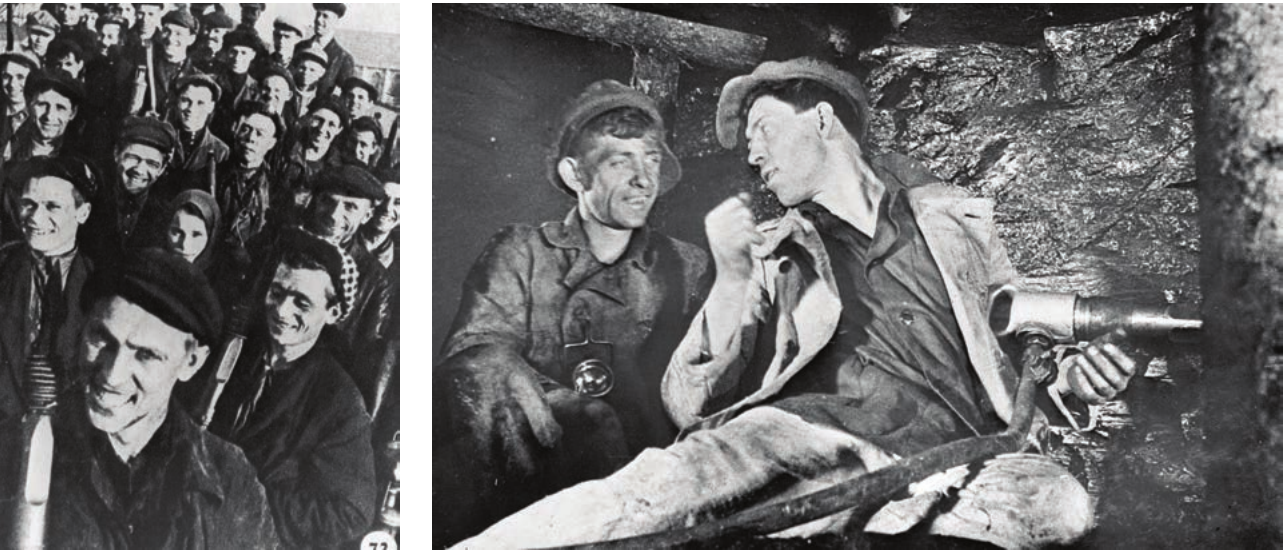
Stakhanovites received substantial rewards from the Party, though fellow workers often resented them, as their achievements led to higher quotas for everyone. In December 1935, output targets nationwide were raised to Stakhanovite levels.
Note
The Second Plan: A More Balanced Approach
The second plan proved more balanced than the first:
- Heavy industry remained prioritised
- Transportation received higher priority
- Chemical industry expanded
- Major increases occurred in metals and machinery production
- Targets were more reasonable than the previous plan
However, living standards declined dramatically. Historian Alec Nove described 1933 as "the culmination of the most precipitous decline in living standards known in recorded history." Trade unions were instructed to act primarily as organisers for plan fulfilment rather than protecting workers' rights.
The third five-year plan (1938-41)
The German invasion of June 1941 cut short the third plan. Fear of European powers made armaments production a priority, alongside continued emphasis on heavy industry. The plan coincided with the terror and purges, which severely affected factory leadership as many managers and specialists were arrested. Consumer industries suffered considerably during this period.
Collectivisation of agriculture
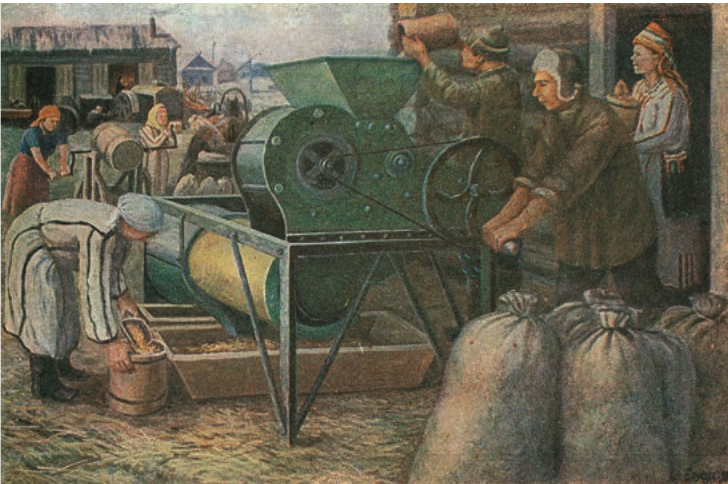
Agricultural transformation proved even more dramatic than industrialisation. Stalin treated agrarian development as a political and military campaign, declaring 'class war against exploiters' - meaning the kulaks (wealthier peasants).
Implementation of collectivisation
The attack against peasants intensified gradually from 1927, reaching its peak in 1930. It began in winter 1927-28 with resumed forced grain requisitioning. The state sent battalions of workers and Communists to the countryside to force peasants to hand over grain at low state-set prices.
Initially, this produced additional grain, but long-term effects proved disastrous. Peasants responded by sowing less land, ensuring they had nothing extra beyond their own needs. This reduced grain collection and threatened cities with starvation.
Important
The Campaign of Liquidation
Stalin intensified the campaign in 1930. Kulaks were to be 'liquidated as a class', and collectivisation was decreed. The campaign's violence shocked many:
- Hundreds of thousands of kulaks were evicted and had property confiscated
- Over half of all peasants were forced into collective farms (kolkhozes) within months
- The rest joined collectives the following year
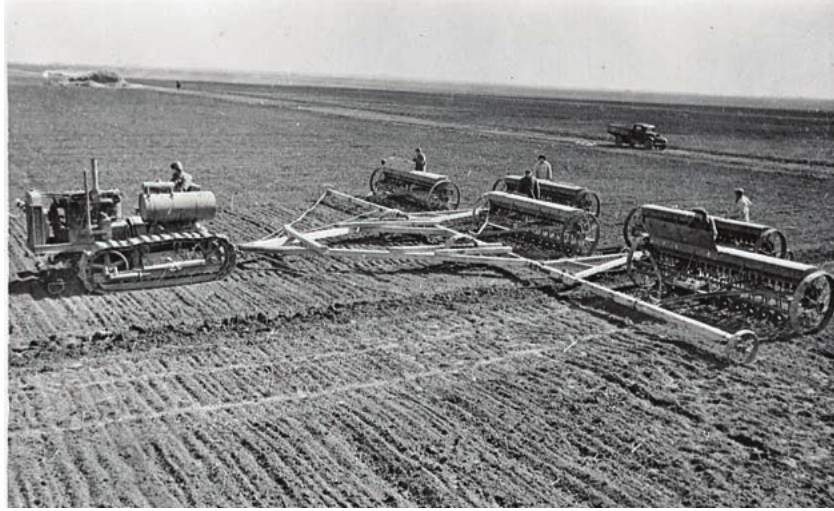
The extent of collectivisation
Virtually everything became collective property - land, houses, tools, animals, even furniture and clothing. Collectivisors from cities beat up and arrested 'class enemies' like priests and teachers. Drunken fighting, theft, desecration of religious icons, rape and murder became common.
Peasant resistance
Peasants resisted in various ways:
Active resistance: Some peasants physically attacked officials, stoning, shooting and occasionally killing them.
Passive resistance: Many abandoned the countryside entirely. The outflow became so severe that in 1931 the state instituted an internal passport system preventing unauthorised movement.
Final defiance: Rather than surrender animals to collective farms, peasants slaughtered vast numbers of horses, cows, pigs and chickens. They consumed what they could, leaving most carcasses to rot in the fields as a visible symbol of their resentment.
Results of collectivisation
Note
From the State's Perspective: A Success
From the state's viewpoint, collectivisation achieved its goals:
- Grain procurements increased substantially
- Peasants were forced to work under state control
- All grain except minimal subsistence amounts was delivered to the state
- The traditional peasant commune was abolished
- Collective farms became state branches staffed by appointed officials
For agriculture, the consequences were devastating:
- Sullen peasants refused to exert themselves, though starvation could force compliance
- Peasants referred to the system as a return to serfdom
- Productivity suffered enormously from livestock slaughter
- Fertiliser availability decreased
- Draught power was reduced, and tractors were scarce
- Grain production declined
- Animal products and dairy became less available for cities
Important
The Catastrophic Human Toll
The human cost of collectivisation remains one of history's greatest tragedies:
- The 1932-33 famine killed millions, particularly in Ukraine
- Many believe the state engineered this famine, deliberately withholding grain from bad harvest areas to force submission through starvation
- Millions died overall from the collectivisation process
- A traditional way of life was suddenly destroyed for all peasants
Political transformation
Growth of the Party
Stalin manipulated the governmental system to consolidate personal power. By the 1920s, through membership in the Orgburo, Politburo and Secretariat, he had established an unassailable power base.
Lenin's 1918 Constitution made no mention of the Bolshevik/Communist Party. In contrast, Stalin's 1936 Constitution stressed the Party's primacy. Between 1934 and 1953, only two Party Congresses were held, reflecting Stalin's self-serving control over Party processes.
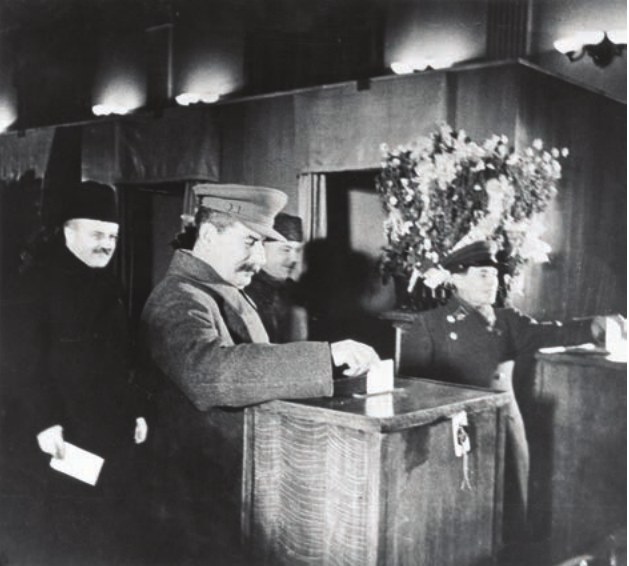
The 1936 Constitution
The Constitution aimed to represent socialism's victory to the outside world. Based on the assumption that defeating the kulaks meant internal struggle was over, it established:
- Greatly expanded central federal government power
- Moscow's control over defence, foreign policy and budget administration
- Replacement of the All-Union Congress of Soviets with the Supreme Soviet as chief legislative body
- A two-chamber assembly: the Soviet of the Union and the Soviet of the Nationalities
- Direct elections using secret ballots every four years
- Voting rights for citizens over 18
- Full civil rights for former 'class enemies' (clergy, ex-Tsarist officials, kulaks), provided they exercised them in accordance with working-class interests
Note
Ultimately, the Constitution legitimised the Communist Party's position, but all power remained with the Politburo. The democratic provisions existed on paper only, while real authority stayed firmly in Stalin's hands.
The Great Terror and show trials
Terror drove political transformation, particularly the Great Purges. Stalin oversaw the elimination of suspected or potential resistance in a massive campaign against Soviet citizens.
The secret police, created by Lenin, expanded dramatically under Stalin. In 1934, they were renamed the NKVD. Historians estimate that from 1929 to 1953, deaths numbered in the millions - often cited as 20 million. Stalin reportedly remarked, "One death is a tragedy, but a million deaths is a statistic." During the Great Purge of 1936-38, over 600,000 people were executed.
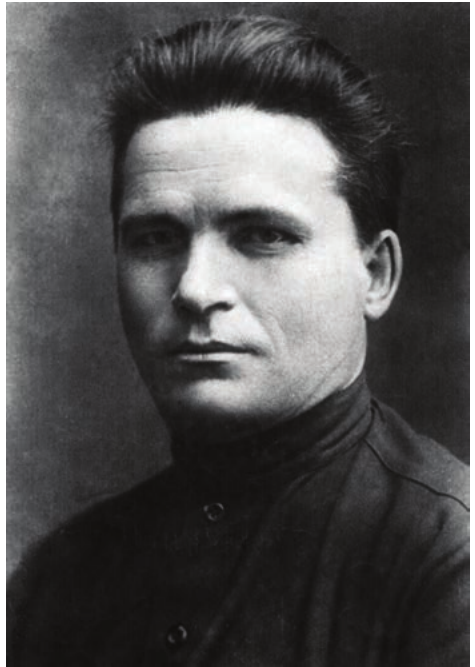
Stages of the purges
The prelude:
- Defeat of the Right and Left Opposition
- Trial of Ryutinites
- Expulsions from the Communist Party
1934: Murder of Kirov: The purges began with the mysterious December 1934 murder of Sergei Kirov, Stalin's potential rival. Many historians believe Stalin ordered the killing himself. It provided a pretext to launch purges and find those 'responsible'. Massive arrests followed, including Party officials, Old Bolsheviks and ordinary citizens.
This period became known as the Yezhovshchina, when a climate of fear, suspicion and denunciation gripped the Soviet Union from 1937 onwards.
Important
The Moscow Show Trials (1936-38)
Three successive public trials became dramatic propaganda events. Prominent Communists were accused of plotting against Stalin. Many gave improbable confessions, admitting to being in places where they supposedly plotted when they demonstrably could not have been there. After confession, they were convicted and executed. Victims included Yagoda, the former secret police chief.
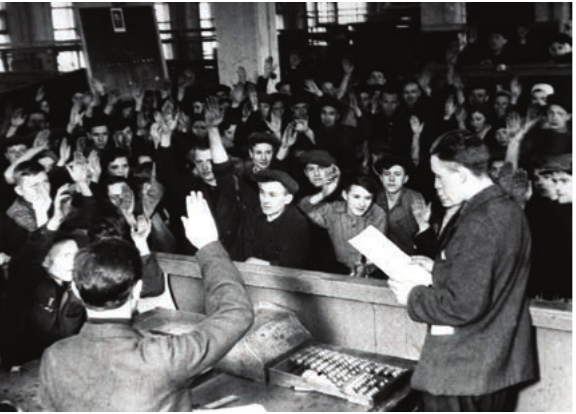
Purge of the Army: In September 1937, tens of thousands of officers were purged, including nine of the ten generals and Civil War hero General Tukhachevsky. The military staff were devastated, leaving the Soviet Union ill-prepared for World War II.
The mechanics of terror
The secret police developed an elaborate terror structure. Quotas of people to arrest were sent to regional police. They attempted to 'overproduce' or 'over-fulfil' these quotas. Family members of the accused were also arrested as 'enemies of the people'. Denunciations led to the infamous 'knock on the door in the middle of the night'. The secret police transformed terror into a systematic, scientific process, even maintaining a social science research unit to study the population's state of mind.
Note
Stalin used terror to effect massive social change within the Party, replacing leaders with his own supporters and transforming the country as a whole. By the 1939 Party Congress, most delegates from the 1934 Congress had been purged and replaced.
The gulag system
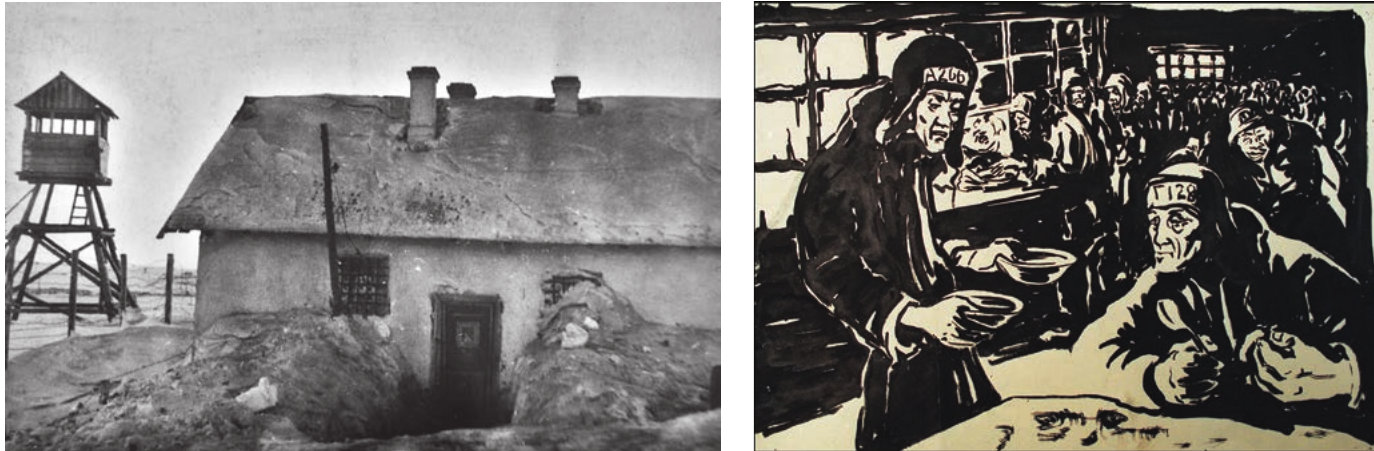
The gulag system epitomised Stalin's terror. 'Gulag' stands for Glavnoe Upravlenie ispravitel'no-trudovykh LAGerei (the Main Administration of Corrective Labour Camps). Thousands of camps existed throughout the Soviet Union and on remote islands, later called 'the Gulag Archipelago'. Notorious gulags included Magadan, Vorkuta, Norilsk, Kolyma, Chelyabinsk and Karaganda.
Important
The Scale of the Gulag System
Scale: By the end of the 1930s, there were 1.5 million prisoners in gulags. By the late 1940s and early 1950s, numbers reached 2-2.5 million. According to some historians, the gulag and forced labour accounted for 12-15 per cent of the entire economy in the 1930s. However, gulags were only part of a much larger spectrum of forced labour within the Soviet Union.
Reality versus propaganda: Officially, camps were intended to rehabilitate prisoners through 're-educational' corrective labour. The reality proved far harsher. Mortality and mistreatment were endemic, with significant numbers of inmates dying every year.
Effects of the purges
When the KGB opened certain NKVD archives in 1988, Soviet historians calculated:
- In 1934: 1 million arrested and executed in the first major purge, mainly in Moscow and Leningrad
- By 1937: 17-18 million transported to labour camps; 10 million died
- By 1939: Another 5-7 million 'repressed'; 1 million shot, 1-2 million died in camps
- In 1940: Occupation of Baltic states, Bukovina and Bessarabia resulted in 2 million deportations, most died
Propaganda and censorship
Cult of personality
Popular culture manipulation was most evident in developing the 'cult of Stalin'. His deification as ultimate leader employed terms like 'Granite Bolshevik', 'Shining Sun of Humanity', 'Universal Genius' and 'Man of Steel'. He gained his position through Party control, leadership of industrialisation and collectivisation. He was praised for achievements and sacrifices for the Russian people's good. All his actions and words were honoured through plays, novels and poems.
Note
The Soviet people were left in no doubt whom to thank for the nation's emerging greatness. Stalin became the keystone of the entire social, economic and political revolution. Without him, the changes supposedly would never have happened. Unfortunately, the reality was that the entire Stalinist revolution was based on repression and terror.
Falsification of photographs
Stalin sought to rewrite history by falsifying and distorting photographs between 1929 and 1953. During the 1930s, this reached frightening heights. Falsifiers removed images, ideas and words that might be negative of the government. Photographs were retouched and cropped, with new backgrounds inserted.
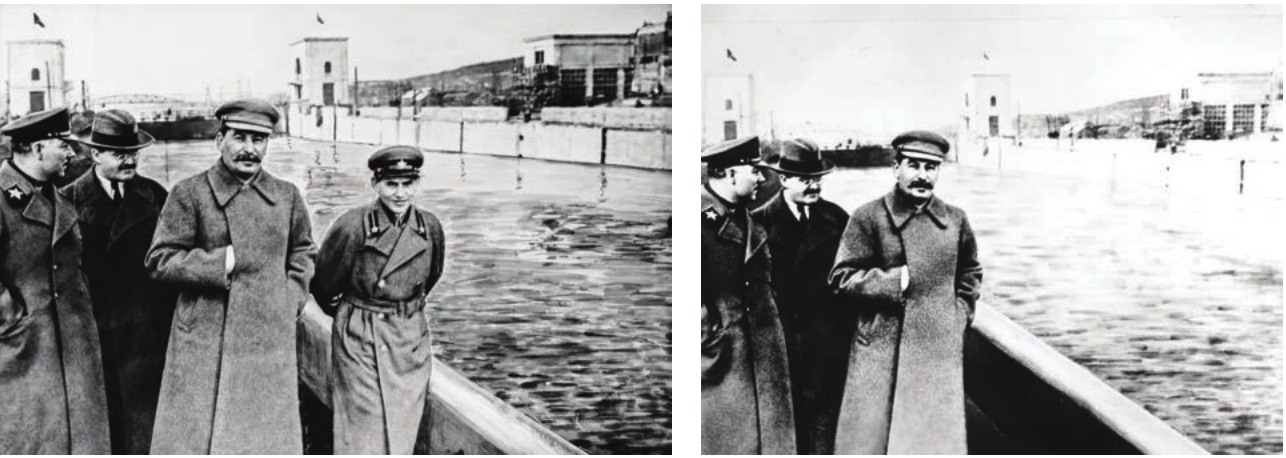
Soviet artists were instructed to insert images of Stalin in pictures of significant national events. Painters and sculptors were asked to emphasise the closeness between Lenin and Stalin by showing them together. This tactic ensured Stalin was presented as a key figure in Bolshevik history, when in fact he had limited influence before 1922.
Note
David King researched Soviet photo falsification and published his renowned book The Commissar Vanishes: The Falsification of Photographs and Art in Stalinist Russia in 1997, documenting the systematic alteration of visual history.
Social and cultural changes
Social and cultural changes formed part of a wider revolution instituted by Stalin in the late 1920s. The entire Soviet state was altered so that no one could escape the touch of 'Stalinism'. Russian culture became more uniform than ever before in Russian history. 'Discipline' and 'conformity' were the catchcries of the period. Changes confirmed Stalin's vision to have the individual completely subsumed by service to the state. Free will and personal expression gave way to collective action for the common good.
Religion
- Churches and organised religions were condemned
- A 1929 decree forbade churches from engaging in any activity other than worship
- Stalin believed education would eradicate religious belief, but compulsory atheism lessons, arrest of clergymen and persecution of churchgoers did not produce rapid results
- By 1929, only a few hundred functioning churches remained in the USSR, allowed to operate so the government could claim 'freedom of conscience' was honoured
Education
- The 1935 Education Law made classrooms and curriculum more disciplined
- Emphasis on chemistry, physics and mathematics
- Conservative approach extended to universities
- Revolutionary history was rewritten by banning Trotsky's historical work and John Reed's book Ten Days That Shook the World because it made no references to Stalin
Family policies
- Abortion was made illegal unless necessary for the mother's health
- Divorce became difficult and expensive to obtain
- Government increased child support benefits to encourage larger families
- Homosexuality and prostitution were made illegal
Socialist realism
The relative freedom and diversity in art and literature during the 1920s ended. Stalin reshaped Soviet culture to promote and reinforce Soviet advance. Culture and entertainment had to be happy, productive and utilitarian.
Note
Socialist Realism in Practice
Visual arts: Dominated by images of workers, planners and Stalin's benevolent visage.
Music: Composers like Shostakovich and Prokofiev were instructed to write music accessible to the masses.
Other changes: Privilege and inequality increased, with wage differentials and material incentives becoming the rule rather than the exception.
'Life has become more joyful'
In 1936, Stalin epitomised the spirit of the 1930s with the slogan "Life has become more joyful." This was expressed repeatedly throughout the 1930s, intending to portray Stalin positively and give people an idea of prosperity and happiness.
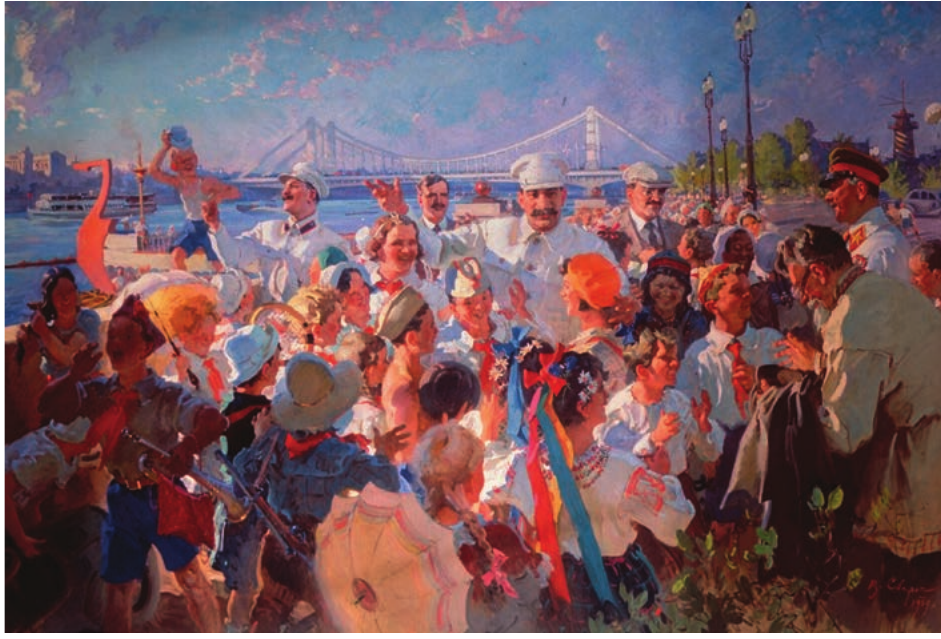
Popular entertainment:
- Gorky Park in Moscow was transformed into a fantasy escape park
- Great jazz revivals and widespread public concerts
- Cities sponsored nighttime dances over summer
- Soviet life was characterised by light, romantic popular music
- Cinema emphasised not only state ideology but also adventure, romance and fun
Architecture:
- Constant construction, especially in Moscow, for the government and elites
- Public spaces designed across the Soviet Union to foster the idea that the state cared for its people (e.g., Moscow Metro)
- City planners presented idealised, transformative ideas combining modernist technology with desires to disrupt traditional city-space
Interpreting joy amidst terror
Important
A Paradox of Stalinist Society
How do we interpret this emphasis on 'joy' even amidst 'terror'? Some historians argue the emphasis on joy was a concession to people's desires and tastes. Others suggest joy and terror worked interchangeably in the authoritarian system.
Ultimately, the state's relationship to its people was contradictory and complex. Centralisation of control, tyrannical state power and murderous violence coexisted with idealism, enthusiasm and almost fanatic optimism of a new world.
Assessment of Stalinism
Note
Evaluating Stalin's Legacy
Historians continue to debate Stalin's impact on the Soviet Union, weighing the achievements against the enormous human cost.
Positive arguments:
- Links to Bolshevik history and the past
- Desire to create a 'classless society'
- Industrial success of the five-year plans
- Improvements in education and women's status
Negative arguments:
- Growth of a one-party state
- Massive dislocation of the population
- Severe effects of collectivisation
- Social effects of industrialisation
- Use of institutionalised terror
- Purges, show trials and annihilation of opposition
- Loss of individuality and legacy of fear and suspicion
Summary
Remember!
Key Points to Remember:
-
Totalitarianism defined Stalin's rule: Complete control over political, economic, social and cultural life, maintained through terror, propaganda and the cult of personality. The six characteristics - ideology, single-party rule, state terror, media control, military monopoly, and economic centralisation - worked together to create an all-encompassing system of control.
-
Economic transformation was brutal but effective: The Five-Year Plans rapidly industrialised the USSR, whilst collectivisation destroyed traditional agriculture and caused millions of deaths, particularly in the 1932-33 famine. The Stakhanovite movement symbolised the relentless drive for increased production.
-
The Great Terror eliminated opposition: From 1934 to 1938, millions were arrested, executed or sent to gulags. Show trials, purges of the Party and Army, and the gulag system created a climate of fear throughout Soviet society. The murder of Kirov in 1934 provided the pretext for this massive campaign of repression.
-
Stalin manipulated culture and information: Through Socialist Realism, photograph falsification and censorship, Stalin controlled how Soviet citizens understood their history and present. The cult of personality portrayed him as the indispensable leader, with titles like 'Shining Sun of Humanity' and 'Universal Genius'.
-
Contradictions characterised Stalinist society: Terror coexisted with propaganda celebrating 'Life has become more joyful'. Rapid modernisation occurred alongside catastrophic human suffering. Understanding Stalin's USSR requires grappling with these paradoxes - the simultaneous existence of brutal repression and genuine enthusiasm, of grandiose achievements and devastating losses.