Decolonisation in Indochina (HSC SSCE Modern History): Revision Notes
📚Revision Notes
Decolonisation in Indochina
Introduction
The decolonisation of Indochina represents a crucial chapter in twentieth-century history. This process saw Vietnamese nationalists, led by Ho Chi Minh and the Viet Minh, challenge and ultimately defeat French colonial rule. Understanding this period requires examining both the nature of French colonialism and the rise of Vietnamese resistance that culminated in independence.
Note
Key Terms:
- Nationalism: A nation's desire and efforts to achieve political independence
- Communism: A political system where production methods are collectively owned and controlled, with resources distributed according to need
- Colonialism: The practice of one country establishing control over another territory and its people
French colonial rule in Indochina
Establishment of French control
French colonial control of the region began with the capture of Saigon in 1859. Initially justifying their presence as protection for Catholic converts, the French gradually expanded their territorial control. By 1887, the independent states of Vietnam, Cambodia and Laos had been absorbed into the Union of French Indochina.
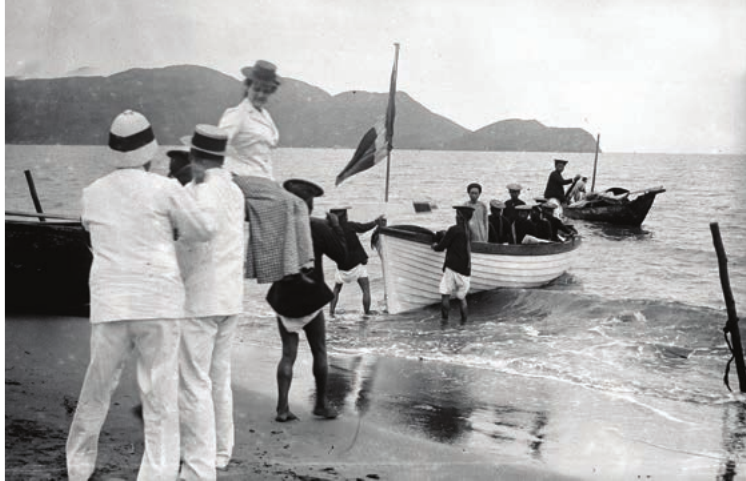
The French justified their colonial project through the concept of mission civilisatrice (civilising mission). This ideology reflected a common nineteenth-century European belief that colonised peoples could only progress through European guidance and influence. However, this paternalistic view masked the economic exploitation that underpinned French rule.
Impact on Vietnamese society
French colonialism fundamentally transformed Vietnamese social and economic structures. Traditional society had been characterised by:
- Small landholdings distributed among peasant farmers
- Low taxation levels
- Limited wealth accumulation
- Social obligations requiring the wealthy to share resources through feasts and celebrations
The French dismantled this traditional system. They imposed heavy taxes, introduced loans and usury, and created conditions that allowed some Vietnamese to accumulate vast landholdings at peasants' expense.
Important
Shocking Inequalities by 1946:
By the time conflict erupted in 1946, devastating inequalities had emerged in Vietnamese society:
- In Tonkin (North Vietnam), 62% of peasants owned less than one-ninth of an acre
- A further 30% owned less than one-fourth of an acre
These statistics demonstrate how French colonial policies destroyed traditional land distribution and created extreme poverty among the Vietnamese peasantry.
The French exploited Indochina's resources to generate wealth for the colonial power. They built infrastructure including railways, roads, canals and dykes, but these developments primarily served French economic interests rather than Vietnamese welfare. The French introduced a landlord-tenant system that destroyed centuries of village ownership traditions, transforming village culture into a Western-style class system with the French at the apex and Vietnamese at the bottom.
French education and unintended consequences
Note
The Irony of Colonial Education
Ironically, French education policies inadvertently fostered Vietnamese resistance. The French encouraged development of an educated Vietnamese class to assist colonial administration. Many Vietnamese were invited to study in France and join the French service class.
However, exposure to French revolutionary ideals and Western political thought inspired some educated Vietnamese to question colonial rule and pursue independence. The very education system designed to create compliant colonial administrators instead produced revolutionary leaders.
Rise of Vietnamese nationalism
Ho Chi Minh: The revolutionary leader
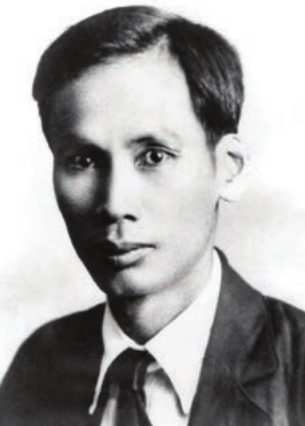
Born Nguyen Tat Thanh in Kimlien on 19 May 1890, the man who would become Ho Chi Minh experienced nationalist struggle from childhood. His father was a scholar, and initially the young Nguyen enrolled at the French Colonial School, preparing for service in the French administration.
Early travels and radicalisation
In 1911, Nguyen took employment as a cook on a French steamship, spending six years travelling the world. After living in New York City for six months, he settled in France during World War I. His political consciousness developed as he witnessed Vietnamese contributions to France's war effort going unrecognised. When his appeals for recognition at the 1919 Paris Peace Conference were ignored, he became increasingly radicalised.
Adopting the name Nguyen Ai Quoc (Nguyen the Patriot), he was drawn to Marxist ideology because of its critique of European colonialism and exploitation of peasant nations. He became a founding member of the French Communist Party and was invited to Moscow to study Marx's theories. In 1924, he travelled to Guangzhou, China, to organise Vietnamese exiles sympathetic to communist revolution.
Note
The Many Names of a Revolutionary
To evade capture from various opponents, Nguyen Ai Quoc eventually assumed the identity papers of a deceased Chinese man, taking the name by which he would become famous: Ho Chi Minh. This name change reflects both the dangerous nature of revolutionary activity and Ho's ability to adapt and survive through decades of struggle.
Formation of the Viet Minh
As fascism threatened Europe and Japanese imperialism expanded across Asia, Ho travelled between Moscow and China. When France surrendered to Germany in 1940, Ho recognised an opportunity to return to Vietnam after 30 years abroad. There he would confront the new occupier, Japan, and form the Revolutionary League for the Independence of Vietnam, commonly known as the Viet Minh.
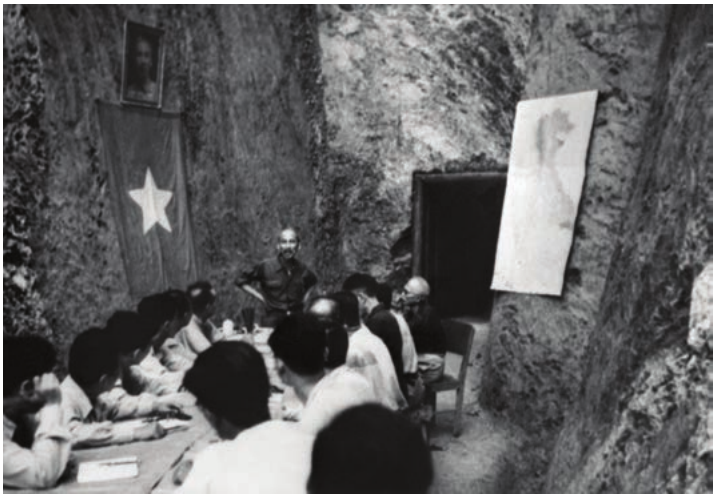
The Viet Minh combined nationalist and communist elements, appealing to widespread desire for independence whilst advocating socialist policies. This dual identity would prove both a strength in mobilising Vietnamese peasants and a complication in international relations.
World War II and the August Revolution
Japanese occupation and alliance with America
As Japanese forces swept through Asia, they expelled the French from Vietnam in 1944. This development created an unlikely alliance. US President Franklin D Roosevelt needed intelligence networks within Indochina. The Office of Strategic Services (OSS), precursor to the CIA, met with Ho Chi Minh to gain support from Viet Minh jungle forces.
Note
An Unlikely Partnership
Both sides needed intelligence to expel the Japanese. Soon OSS officers were supplying the Viet Minh with weapons and ammunition. In the interests of winning the war, OSS personnel downplayed Ho's communist intentions when communicating with Washington, referring to him as a "patriot".
According to historian David Halberstam, "the Americans found Ho very helpful and charming indeed". This temporary alliance would later become bitterly ironic as the United States became involved in opposing Ho's forces.
General Giap: Military strategist
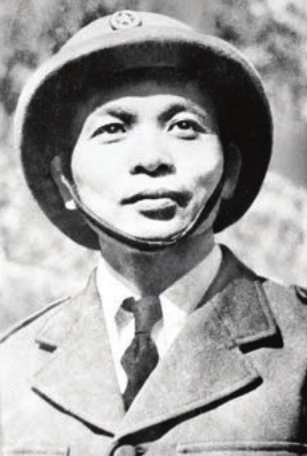
Ho appointed Vo Nguyen Giap, a former schoolteacher and committed communist, to lead Viet Minh forces. Despite limited military experience, Giap would prove himself one of the twentieth century's greatest military strategists. His wife had died in French custody, fuelling his determination to achieve Vietnamese independence.
Employing guerrilla tactics learned from Chinese Communists, the Viet Minh launched sabotage attacks on Japanese supply lines. Giap used jungle warfare experience against the Japanese to develop strategies that would eventually defeat two global superpowers.
Declaration of independence (1945)
When Japan surrendered in August 1945, few European powers had capacity to govern their colonies. Ho recognised a power vacuum left by departing Japanese and a weakened French government. With active encouragement from his OSS allies, Ho and the Viet Minh marched on Hanoi, capturing the city with minimal resistance. The "August Revolution" quickly spread across Vietnam as nationalist groups declared allegiance to the Viet Minh.
On 2 September 1945, Ho declared the Provisional Government of the Democratic Republic of Vietnam before a crowd of 500,000 people. Significantly, a band played the Star Spangled Banner, the US national anthem. Ho's declaration deliberately echoed the American Declaration of Independence:
All men are created equal. They are endowed by their Creator with certain inalienable rights, among them are Life, Liberty and the pursuit of Happiness.
Ho's speech strategically appealed to American ideals whilst condemning French colonialism. He listed French abuses including:
- Depriving Vietnamese of democratic liberties
- Building more prisons than schools
- Killing patriots and drowning uprisings in blood
- Economic exploitation through theft of rice fields, mines, forests and raw materials
- Imposing unjustifiable taxes that impoverished the peasantry
Important
A Turning Point Lost
The bonds Ho had built with Americans dissolved when Roosevelt died on 12 April 1945. The US President did not live to hear Ho's speech. His successor, Harry S Truman, faced a complex post-war world where nuclear capabilities and looming Cold War tensions with the Soviet Union demanded attention.
American focus on Indochina faded, allowing the French to return. This shift in American priorities would have profound consequences for Vietnam's future, transforming a potential ally into an eventual enemy.
The First Indochina War (1946-1954)
Outbreak of conflict
On 22 September 1945, French soldiers rioted in Saigon, shooting Vietnamese civilians in an attempt to seize control. The Viet Minh responded by killing 150 people, both civilians and French military personnel, in a French area of the city.
Protracted conflict led to negotiations between the Viet Minh and French in 1946. However, chaos in the post-war French government caused negotiations to break down. A more aggressive French approach in October divided the nation between north and south, with Chinese nationalist troops controlling the north and the south under French control. The French promised elections in future, but the Viet Minh were reduced to an insurgent force.
Tensions exploded when the French attacked the Viet Minh-held city of Haiphong, killing 6,000 people. Ho, Giap and the Viet Minh escaped to caves in the north to plan their war against the French.
Guerrilla warfare tactics
Note
Understanding Guerrilla Warfare
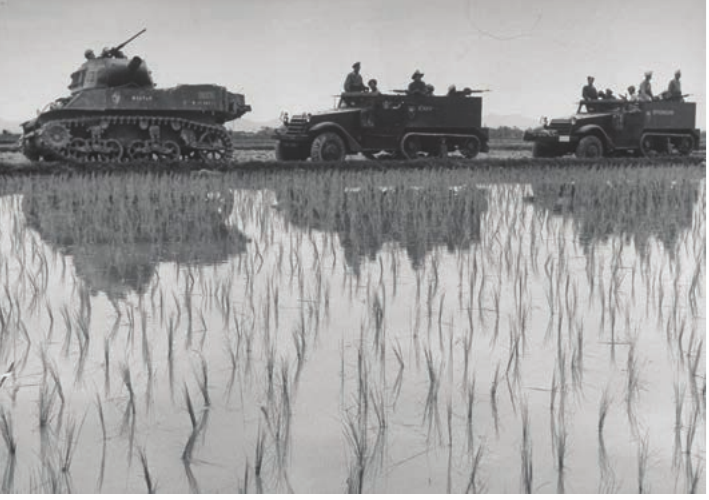
Guerrilla warfare involves unofficial military groups making sudden, unexpected attacks on official army forces to achieve political change. This asymmetric warfare strategy allows smaller, less well-equipped forces to combat conventional armies through mobility, surprise, and knowledge of local terrain.
French General Jacques Philippe Leclerc understood the Viet Minh's fighting style, warning that combating them would be like "ridding a dog of its fleas. We can pick them and poison them, but they will be back in a few days".
The Viet Minh used techniques refined against the Japanese to frustrate the French. Convinced their superior firepower would subdue the Viet Minh, the French stretched forces across a large country. Isolated outposts made easy targets for guerrilla sabotage. Giap realised he lacked resources to defeat the French in open battle, planning instead for a protracted war of movement around French positions.
Turning points
Three key events shifted the war in favour of the Viet Minh:
Important
Critical Developments That Changed the War:
-
Chinese Communist Revolution (1949): Communist victory in China meant supplies and training could be provided directly across the northern border to Viet Minh forces. This transformed the Viet Minh's military capabilities.
-
Failure of the Élysée Agreement: French attempts to settle the conflict through agreement with pro-French, anti-communist nationalists failed. Peasant fear of communism paled compared to their hatred of French colonialism.
-
Korean War (1950): The Chinese Communist Army's entry into the Korean War and success in turning that conflict towards communist favour demonstrated that Western powers could be defeated in Asia, providing both tactical lessons and strategic confidence to the Viet Minh.
The Battle of Dien Bien Phu
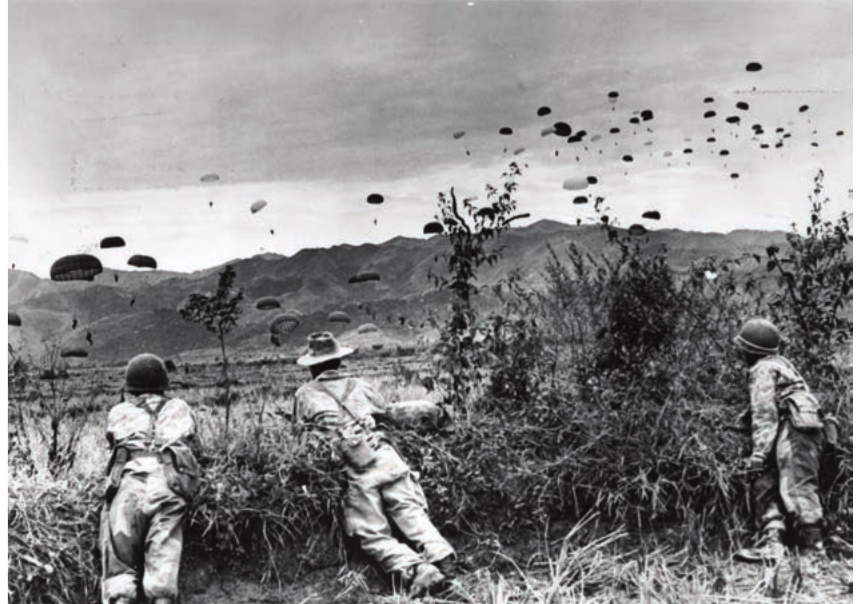
With the new US administration supplying France with arms, the French command made a final attempt to draw the Viet Minh into open battle by establishing a large base in the Dien Bien Phu Valley.
French strategy
French Lieutenant General Henri Navarre was sent to Vietnam in 1953 to regain control of a deteriorating situation. The war against the Viet Minh had become increasingly costly. Most French business interests had withdrawn from Vietnam, and the Viet Minh controlled two-thirds of the nation. The war cost the French government more than it could extract from its colony.
Navarre believed the Viet Minh needed rapid defeat, particularly as the Korean War had concluded in 1953, potentially freeing Chinese supplies for the Viet Minh. A base was constructed in the remote valley with an airstrip for resupply. Mountains surrounding the base were shrouded in dense jungle, seemingly making it impossible for the Viet Minh to deploy artillery against the heavily defended position.
Note
French Overconfidence
Colonel Charles Piroth, commander of artillery at Dien Bien Phu, bragged that "no Viet Minh cannon will be able to fire three rounds before being destroyed by my artillery". Just 13,000 French paratroopers defended the base. This confidence would prove tragically misplaced.
Viet Minh preparation
Vo Nguyen Giap recognised an opportunity to strike a decisive blow. As news spread that international talks would soon address Indochina's future, both sides hoped to negotiate from a position of strength. Giap began assembling forces hidden by jungle canopy.
Important
An Extraordinary Military Achievement
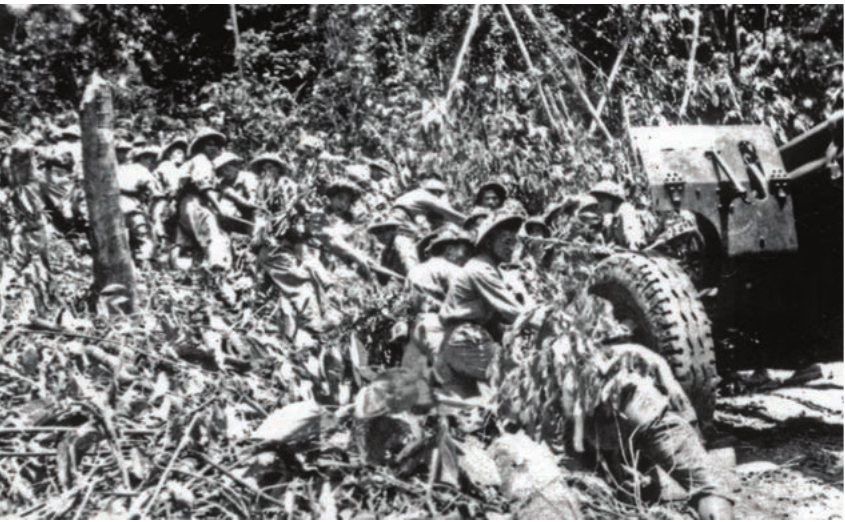
By March 1954, Giap had brought 50,000 soldiers and 200,000 support workers to the mountains surrounding the French position.
Remarkably, they had dismantled 200 cannons into smaller pieces, carried them by foot through the jungle, and reassembled them in positions above the French base. This logistical feat demonstrated the determination and organisational capability of the Viet Minh forces.
The battle
On 12 March 1954, to French artillery commander Piroth's great surprise, Viet Minh artillery rained down on the base. Thousands of Viet Minh soldiers then assaulted Dien Bien Phu. Within days, the French had lost nearly all artillery, and Piroth took his own life.
Despite success, Giap's forces suffered enormous losses and settled in for a longer siege. After 55 days and 8,000 casualties, French forces at Dien Bien Phu surrendered on 7 May 1954. Giap had achieved the greatest military victory in Vietnamese history.
The Geneva Conference (1954)
Negotiations and outcomes
Victory at Dien Bien Phu positioned Ho Chi Minh powerfully for the Geneva Conference of April-July 1954. However, several factors complicated negotiations:
- The Chinese, exhausted from the Korean War, were unwilling to become deeply involved in Vietnam's fate
- While the French empire's time in Vietnam was ending, increasing US interest in halting communist expansion in Asia influenced proceedings
- Cold War tensions meant that Vietnamese independence aspirations became entangled with superpower rivalries
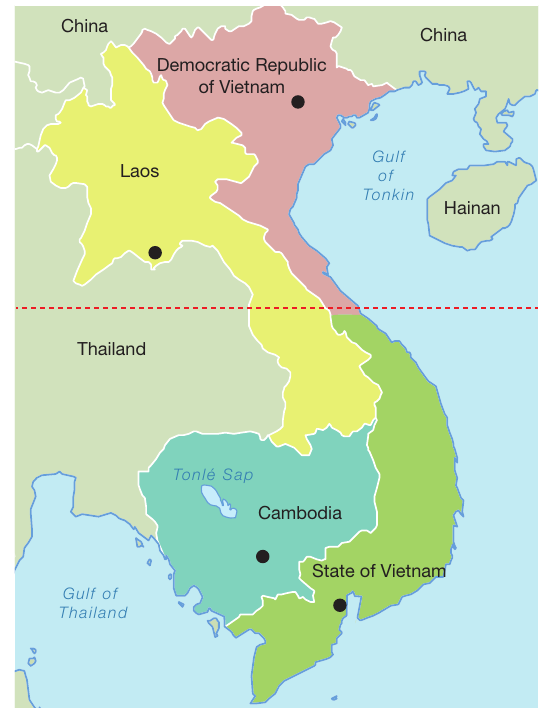
Negotiations resulted in another division of Vietnam along the 17th parallel (the geographic location of the 17th latitudinal line). Key provisions included:
- Communists established government in North Vietnam, backed by China
- French and Americans backed an independent and democratic South Vietnam
- Elections were promised to reunify the country (though these never occurred)
- A demilitarised zone was established along the 17th parallel
- Population transfers were allowed between north and south
Significance
Important
A Bitter Compromise
The Geneva Conference established peace between the Viet Minh and France; however, it divided the nation and drew the United States further into Vietnam. Ho Chi Minh's goal of a unified and free Vietnam remained unfulfilled.
For Vietnamese nationalists who had fought for decades against foreign occupation, the Geneva settlement represented a bitter compromise. The division would set the stage for the Second Indochina War, as Ho Chi Minh and his supporters continued pursuing reunification under a single Vietnamese government.
Key figures summary
Summary
Ho Chi Minh (1890-1969)
- Born Nguyen Tat Thanh
- Travelled extensively, exposed to revolutionary ideas in France and Russia
- Founded Vietnamese Communist Party
- Led Viet Minh against Japanese, French, and later Americans
- Declared Vietnamese independence in 1945
- Symbolised Vietnamese nationalism and resistance to foreign domination
General Vo Nguyen Giap (1911-2013)
- Former schoolteacher turned military commander
- Developed guerrilla warfare tactics that defeated French forces
- Mastermind of Dien Bien Phu victory
- Personal motivation from wife's death in French custody
- Demonstrated that determined guerrilla forces could defeat conventional Western armies
Exam tips
Note
Exam Preparation Guidance:
-
Distinguish between nationalism and communism in Vietnamese context: Whilst Ho Chi Minh was communist, his primary appeal was nationalist. Many Vietnamese supported independence regardless of communist ideology.
-
Understand French colonial impact: Be able to explain specific ways French rule transformed Vietnamese society and economy, creating conditions for resistance.
-
Explain significance of Dien Bien Phu: This battle demonstrated that Western powers were not invincible in Asia and directly led to French withdrawal from Indochina.
-
Know the Geneva Conference terms: Understanding the 17th parallel division is essential for comprehending the Second Indochina War.
-
Consider multiple perspectives: Examine events from Vietnamese nationalist, French colonial, and emerging US Cold War perspectives.
Remember!
Summary
Key Points to Remember:
-
French colonial rule from 1859-1954 fundamentally transformed Vietnamese society, creating economic inequality and destroying traditional village structures that fuelled nationalist resistance.
-
Ho Chi Minh combined nationalism with communism, appealing to Vietnamese desire for independence whilst pursuing socialist policies. His declaration of independence in 1945 strategically echoed American ideals.
-
The Viet Minh's guerrilla warfare tactics, perfected against the Japanese and deployed against the French, demonstrated that determined resistance could defeat technologically superior forces.
-
The Battle of Dien Bien Phu (1954) represented the greatest Vietnamese military victory, with General Giap's forces besieging and capturing a heavily fortified French base, leading directly to French withdrawal from Indochina.
-
The 1954 Geneva Conference ended French colonial rule but divided Vietnam along the 17th parallel into communist North and non-communist South, setting the stage for future conflict and drawing the United States deeper into Vietnamese affairs.