The Second Indochina War (HSC SSCE Modern History): Revision Notes
📚Revision Notes
The Second Indochina War
US escalation under President Johnson
Johnson's dilemma (1963-64)
When Vice-President Lyndon B Johnson (LBJ) became president following JFK's assassination in November 1963, he inherited a challenging situation in Vietnam. South Vietnam was politically unstable, with weak leadership following the coup against Diem. The Viet Cong controlled much of the countryside, and the Army of the Republic of Vietnam (ARVN) struggled to maintain order.
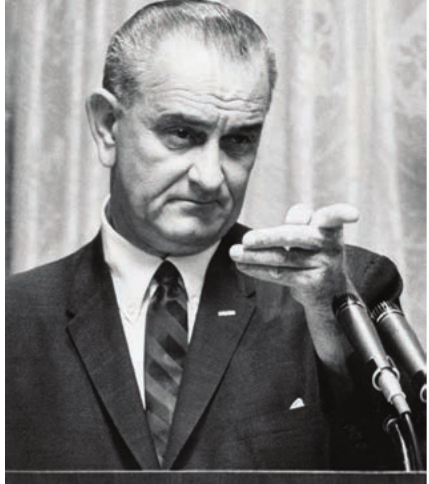
Johnson faced an impossible choice. He could abandon South Vietnam to communist forces, continue with limited involvement, or massively escalate US military commitment. Each option carried enormous political and strategic risks. Johnson was determined not to be seen as weak on communism, declaring: "I am not going to lose Vietnam. I am not going to be the president who saw South-east Asia go the way China went."
Note
Johnson's dilemma reflected the broader tension of Cold War politics. Appearing "soft on communism" could destroy a politician's career, yet the American public was not ready for full-scale war in Southeast Asia. This political calculation would shape the entire trajectory of US involvement in Vietnam.
However, Johnson also faced the 1964 presidential election. He could not afford to send American soldiers into combat and risk public disapproval, yet he would lose popularity if he appeared soft on communism.
By 1964, despite 16,000 US advisers in Vietnam, the situation continued to deteriorate. The Geneva Accords technically banned US soldiers from participating in combat operations, though many were already doing so. The ARVN proved unable to control South Vietnam effectively.
The Gulf of Tonkin incident (August 1964)
In early August 1964, two separate incidents in the Gulf of Tonkin provided Johnson with the justification he needed for military escalation.
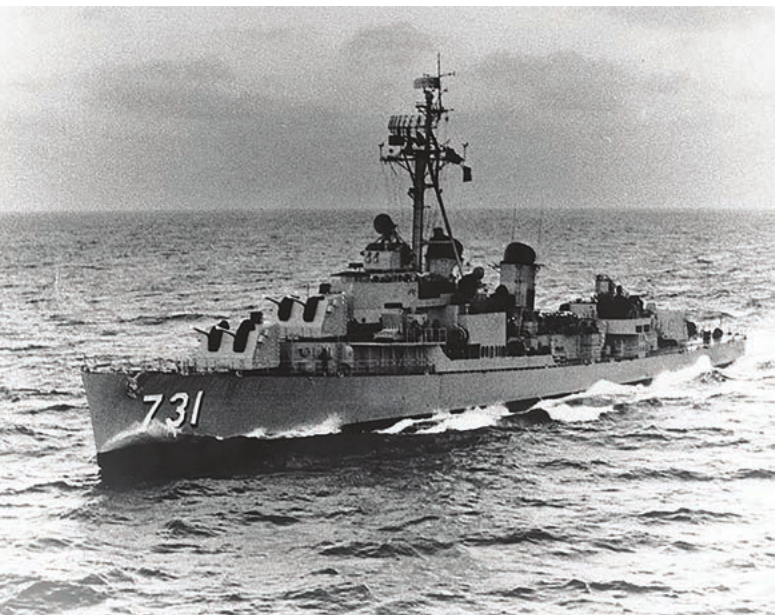
On 2 August, North Vietnamese forces fired torpedoes at the USS Maddox, an American destroyer stationed just outside North Vietnamese territorial waters. This attack came in retaliation for South Vietnamese naval raids on North Vietnamese ports. The Maddox was not damaged, but this marked the first direct confrontation between North Vietnamese and American forces. Both sides have always acknowledged this first attack occurred.
Important
On 4 August, the USS Turner Joy, sent to support the Maddox, reported coming under fire from North Vietnamese vessels. This second attack was later proven to have never occurred. Despite this, Johnson immediately ordered retaliatory air strikes against targets in North Vietnam.
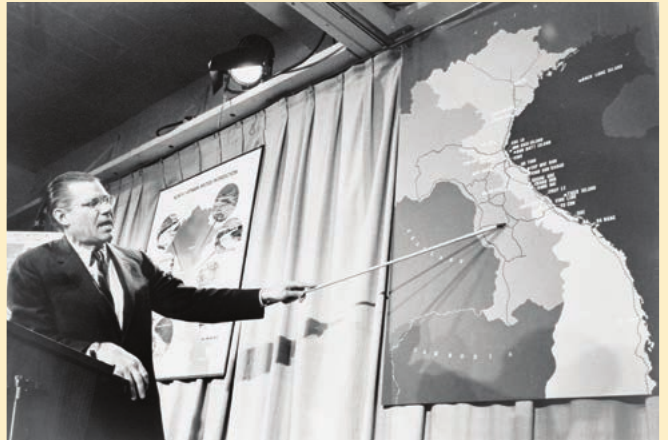
Secretary of Defence Robert McNamara and Secretary of State Dean Rusk provided convincing testimony to Congress that the United States had been attacked. Based on this testimony, Congress passed the Gulf of Tonkin Resolution with only two opposing votes. This resolution authorised the president to use military force in Vietnam without a formal declaration of war.
Note
Historical debate: Historians have extensively debated what Johnson and McNamara actually knew about the attacks. McNamara later admitted: "It was just confusion, and events afterwards showed that our judgment that we'd been attacked that day (the 4th) was wrong. It didn't happen." Some historians argue that US leaders deliberately provoked North Vietnam by sailing destroyers close to the North Vietnamese coast for 96 hours, knowing it would draw a response that could justify military action.
US and ARVN military strategy and tactics
Overall strategic goals
The US mission in Vietnam pursued three main objectives:
- Search and destroy communist forces operating in South Vietnam
- Convince North Vietnamese forces that fighting the United States was not worth the cost
- Win the hearts and minds of the South Vietnamese people
American military leaders believed that the Viet Cong and North Vietnamese Army (NVA) were no match for superior US military technology and firepower. American forces had never lost a war, and confidence remained high throughout the early years of the conflict.
American combat troops began arriving in Vietnam in 1965 to support the ARVN and actively hunt down Viet Cong forces. However, a critical strategic limitation handicapped American efforts from the start: US forces were never authorised to invade North Vietnam, only to defend the South. This defensive posture would constrain American military operations for the next decade.
Operation Rolling Thunder (1965-68)
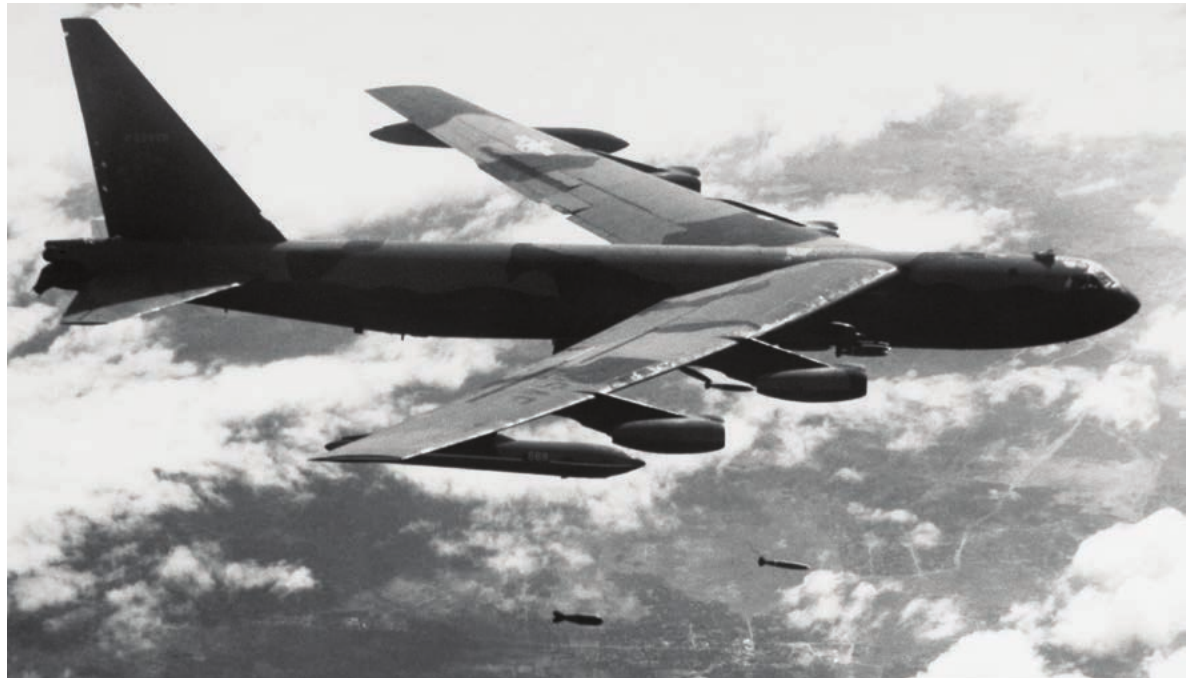
In 1965, Johnson authorised an intensive aerial bombing campaign against North Vietnam, code-named Operation Rolling Thunder. This campaign targeted critical infrastructure throughout North Vietnam on a daily basis for almost three years.
Note
Rolling Thunder was a gradual and sustained aerial bombardment campaign conducted by the US 2nd Air Division, US Navy and Republic of Vietnam Air Force against North Vietnam.
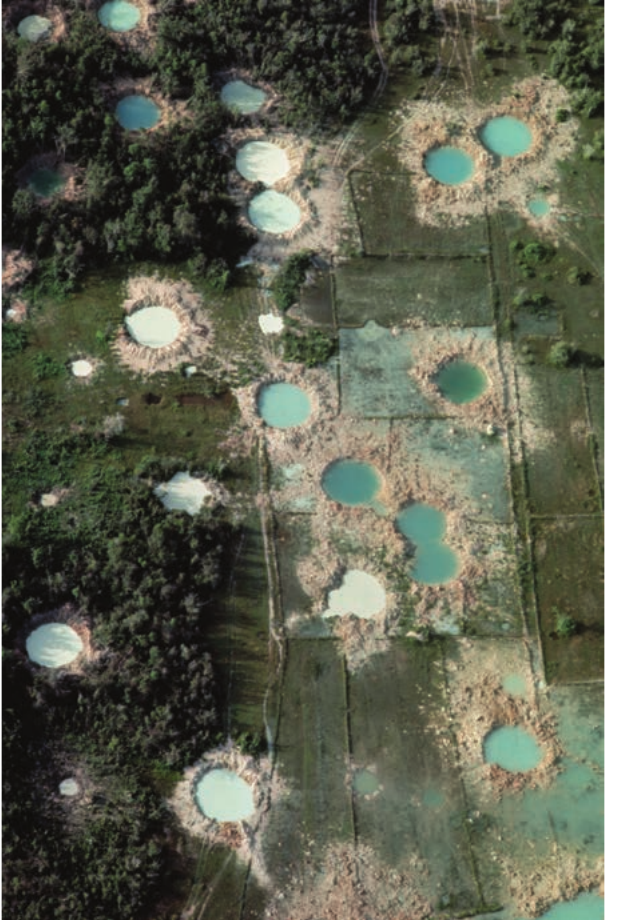
The campaign resulted in enormous destruction:
- An estimated 80,000 to 120,000 North Vietnamese people were killed, many of them civilians
- The US Air Force flew 300,000 individual missions
- Massive tonnages of explosives were dropped on primarily agricultural targets
Important
However, Rolling Thunder proved strategically ineffective. Bombing tactics that had worked against industrial European cities in World War II had little impact on agricultural North Vietnam. The campaign failed to break the resolve of communist forces and was abandoned in early 1968.
Chemical warfare: Agent Orange
North Vietnam began actively sending its regular army (NVA) into South Vietnam in 1965. Both NVA and Viet Cong forces used dense jungle vegetation to conceal their movements and positions.
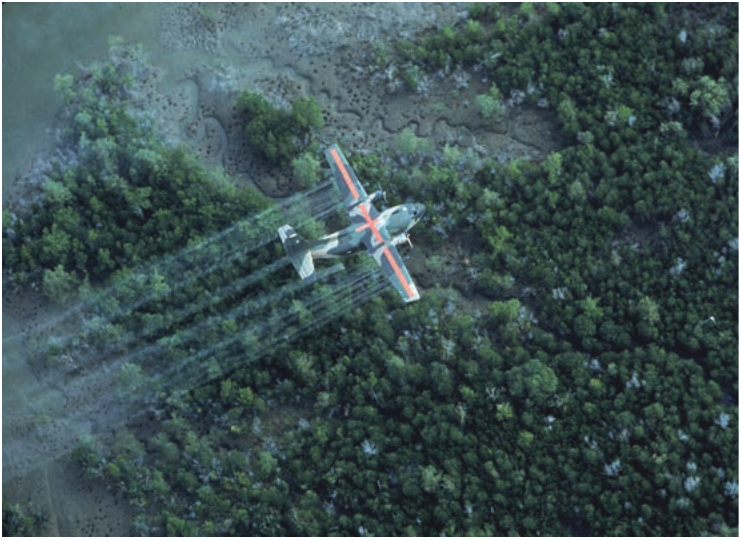
In response, the US Air Force deployed chemical defoliants, particularly Agent Orange. This herbicide was named for the orange stripe on the steel drums used for storage. Aircraft would spray Agent Orange over jungle canopies to:
- Destroy vegetation and strip trees of leaves
- Remove cover that communist forces used for concealment
- Expose enemy positions and movement
Important
Unintended consequences of Agent Orange included:
- Destruction of crops and rice fields used by South Vietnamese farmers
- Long-term environmental damage
- Severe health effects on both Vietnamese civilians and US personnel exposed to the chemical
Napalm warfare
Napalm, a flammable jelly-like substance that adheres to surfaces and burns for at least 10 minutes, had been used in conflicts since World War II. When detonated, napalm generated flames and heat exceeding 1,000°C.
Over the course of the Vietnam War, US forces dropped 8 million tonnes of napalm on Vietnam - three times the amount used in the Korean War. While enormously effective as a weapon, napalm was completely indiscriminate, killing and maiming civilians as well as combatants. Its widespread use contradicted the stated American goal of winning Vietnamese "hearts and minds."
Helicopter warfare and search-and-destroy missions
The Vietnam War became the first major "helicopter war". US forces in Vietnam were the most technologically advanced military force of their time.
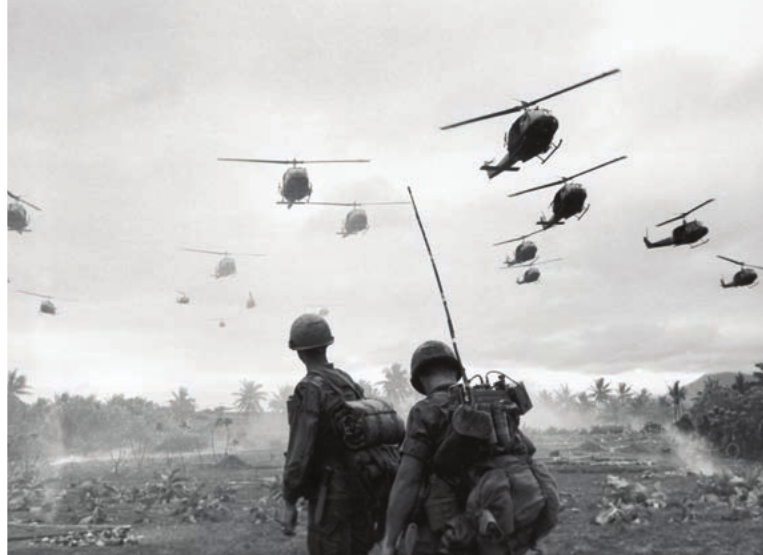
Helicopters provided crucial capabilities:
- Rapid insertion and extraction of troops from combat zones
- Aerial fire support for ground forces
- Medical evacuation - wounded soldiers were never more than 15 minutes from a field hospital
- Supply delivery to remote positions
Note
Search and destroy was a military tactic developed specifically for Vietnam War conditions. The concept involved inserting ground forces by helicopter into hostile territory, searching for enemy forces, destroying them, and withdrawing immediately afterward.
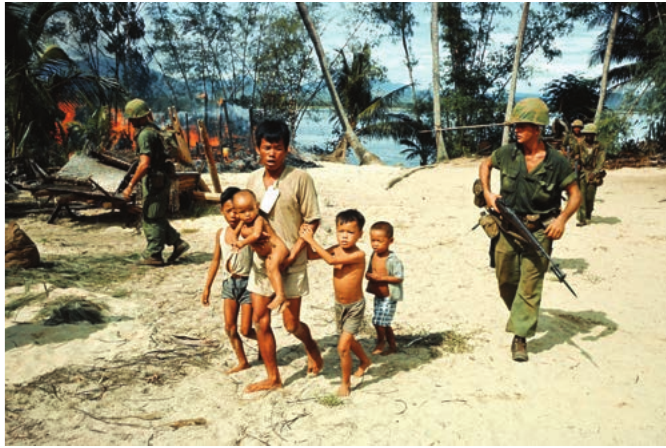
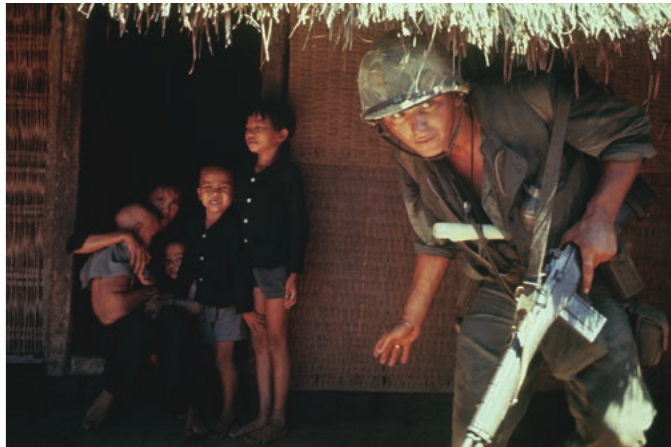
However, search-and-destroy operations faced a fundamental problem: identifying the enemy. Viet Cong fighters had no uniforms and blended into the civilian population. Villagers who appeared peaceful during the day might be Viet Cong fighters at night. American soldiers found it impossible to distinguish between civilians and combatants.
Example
The Identification Problem
One US soldier described the dilemma: "Who is the enemy? How can you distinguish between the civilians and the non-civilians? The same people who come and work in the bases at daytime, they just want to shoot and kill you at nighttime. So how can you distinguish between the two? The good or the bad? All of them look the same."
American soldiers received instructions to search villages and hamlets for:
- Weapons
- Viet Cong sympathisers
- Excess rice that might be supplied to communist forces
If Americans suspected a village was supporting the Viet Cong, their orders were to destroy weapons and rice, interrogate villagers, and burn the village down. This approach created deep resentment among rural Vietnamese and contradicted the goal of winning popular support.
Challenges facing US soldiers
American soldiers faced extraordinary difficulties in Vietnam:
Environmental challenges:
- Intense tropical heat and humidity created crippling conditions
- Dense jungle terrain difficult to navigate
- Dangerous wildlife and disease-carrying insects
- Monsoon rains and flooding
Enemy tactics:
- Difficulty locating an enemy that avoided open battle
- Constant threat from booby traps and ambushes
- Frustration from superior firepower having limited effect
Personnel issues:
- Many soldiers were conscripted against their will
- Those who avoided the draft were typically college students, wealthy enough to leave the country, married with children, or in "essential occupations"
- Conscripted soldiers tended to be poor, uneducated, from big cities or small Southern towns
- Few had travelled internationally before deployment
Important
Tour of duty system:
- Soldiers completed one-year tours of duty
- Those who survived returned home after 12 months
- This meant experienced soldiers constantly left Vietnam, replaced by inexperienced troops
- The army lost accumulated knowledge and survival skills
Despite impressive "kill ratios" that generals used to claim progress, American technological superiority seemed to have little impact on communist forces' fighting spirit.
Viet Cong and NVA strategy and tactics
Overall communist approach
The Viet Cong and NVA fought according to fundamentally different principles than conventional Western armies. As one historian observed: "The VC and the NVA fought outside the usual game, outside the usual rules. Rarely would they fight a full on pitched battle. They accepted that their enemy could pretty much go where they wanted to, bombing and killing as they pleased. So they did not defend territory, but hit, run and sometimes hide in the civilian population. Their strategy was to render South Vietnam ungovernable."
The Viet Cong organisation
The Viet Cong emerged from the remnants of the Viet Minh as an underground organisation taking direction and funding from North Vietnam. Their goal was to overthrow the South Vietnamese government and remove American forces from Vietnam.
Viet Cong fighters were peasant farmers by day who became saboteurs and guerrilla fighters at night. They could be young or old, male or female. This made them virtually impossible for American forces to identify.
Note
A former US Green Beret (special forces soldier) explained what motivated Viet Cong fighters: "The most common reason a man or woman joined the VC was simply disillusionment with the government in Saigon, and acceptance of constant communist propaganda. Often the only contact villagers had with the government was through heavy-handed tax collectors and ARVN soldiers. Saigon was a place they had only heard of. The peasant's real loyalties were to his or her family and village. Beyond that, district, province and national government had no meaning... After 1965, ARVN and US troops were to blame for many turning to the VC."
Booby traps
The Viet Cong could be anywhere and were nearly impossible to identify. Their primary tactic for slowing and frustrating US forces involved extensive use of booby traps throughout jungle areas.
Common types of booby traps included:
- Tripwire grenades: Fishing wire tied between trees at ankle height triggered hand grenades that could blow off a soldier's legs
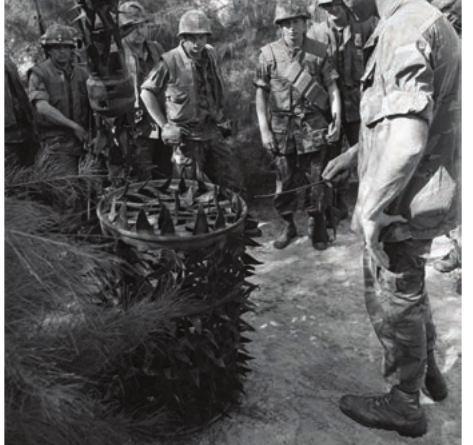
- Punji traps: Sharpened bamboo spikes (often smeared with animal or human faeces to cause infection) hidden in pits covered by jungle foliage could pierce through boots
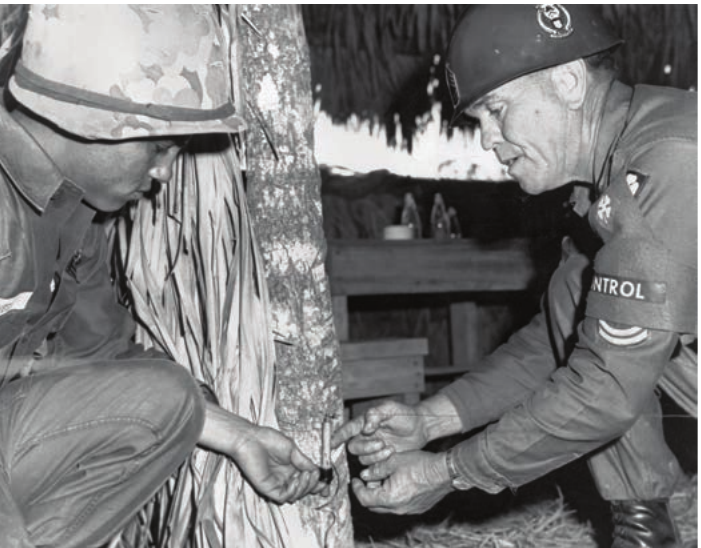
- Buried bullet traps: A single bullet pointed upward with a nail underneath as a firing pin could penetrate a soldier's foot or send shrapnel into the wound if the boot had steel reinforcement
- Souvenir traps: Items like Viet Cong flags left in abandoned villages were often attached to hand grenades that detonated when moved
Important
The strategic purpose of booby traps was to wound rather than kill. A soldier with a foot blown off by a tripwire required four additional soldiers to carry him out of the jungle - removing five soldiers from combat. If wounded soldiers required helicopter evacuation, this revealed the unit's position and made them vulnerable to ambush.
According to the documentary The Vietnam War, booby traps accounted for one-third of all US casualties before 1968. Beyond the statistics, booby traps had an immense psychological impact on American troops' morale.
Tunnel systems
One of the greatest frustrations for American forces was the communist fighters' ability to completely disappear after firefights. On numerous occasions, Viet Cong and NVA forces would retreat into vast underground tunnel networks.
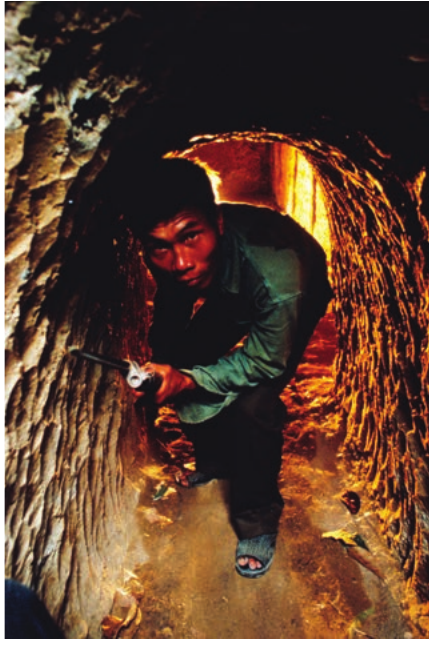
These tunnel systems provided multiple functions:
- Ammunition storage
- Underground hospitals
- Command posts
- Food storage
- Rest areas and protection from US bombing campaigns
- Firing points at ground level for ambushing US soldiers
Example
The Cu Chi Tunnels
The most extensive tunnel network occupied the "Iron Triangle" area, which contained almost 120 kilometres of tunnels in dense jungle only hours from Saigon. In 1966, 8,000 American and ARVN troops searched the Cu Chi area, 30 kilometres from Saigon, looking for tunnels but found nothing. The United States even built a base in the area, completely unaware that the Cu Chi tunnel headquarters were located directly underneath the American base. Some tunnel exits opened inside the perimeter walls of the US facility.
The North Vietnamese Army (NVA)
The NVA represented a much more formidable fighting force than the Viet Cong. They were well-trained, well-equipped, and committed soldiers dedicated to expelling Americans from South Vietnam.
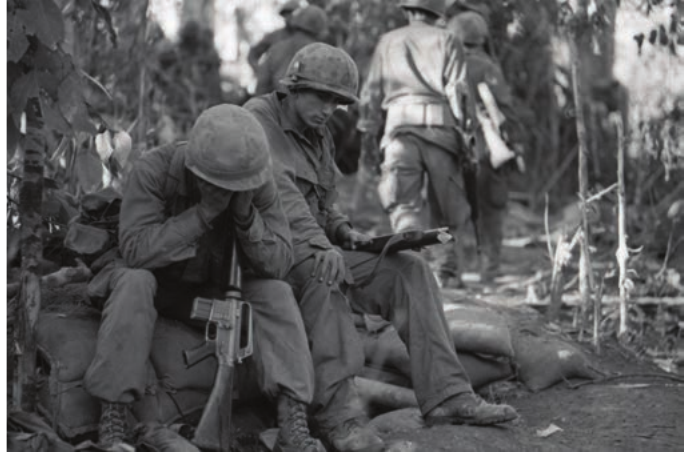
The NVA proved more willing to engage in larger battles than the Viet Cong. They moved down the Ho Chi Minh Trail to infiltrate the Central Highlands in northern South Vietnam and regularly harassed US bases along the Demilitarised Zone (DMZ).
Note
NVA soldiers often had the motto "Born in the North to die in the South" tattooed on their arms, demonstrating their commitment to reunifying Vietnam. NVA units were specifically used to draw US forces into larger engagements where they employed a crucial tactical advantage: staying as close as possible to American positions during combat.
This tactic neutralised American air power superiority. If US forces called in air strikes while NVA troops were in close proximity, the bombs would endanger American soldiers as well. This forced Americans to fight on more equal terms and significantly debilitated American fighting effectiveness.
Case study: the Battle of Hill 875 (1967)
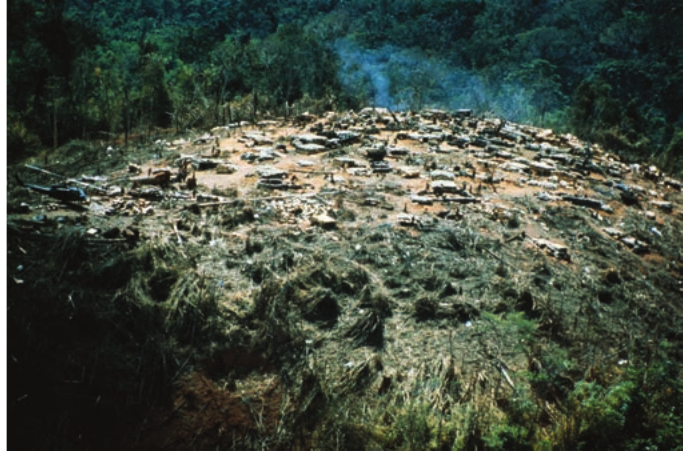
The Battle of Hill 875 demonstrated how NVA tactics frustrated American forces and made victories meaningless. In 1967, US forces were drawn into jungle near Dak To and ordered to attack NVA forces dug in on Hill 875. US commanders believed capturing the hill would provide an important morale victory.
However, Hill 875 held virtually no strategic importance. The NVA had occupied the hill for a month, creating extensive firing positions specifically designed to draw Americans into a costly battle.
After a vicious battle that killed 107 Americans and wounded 284, the NVA quietly withdrew from Hill 875 and crossed into Cambodia. The NVA always removed their dead from battlefields to conceal casualty numbers, making it impossible to calculate accurate "kill ratios." American forces were left standing on a hilltop that nobody actually needed to control.
Example
The Futility of Hill 875
One veteran described the futility: "To take triple canopy mountain tops... accomplished nothing of any importance. The Battle for Hill 875 was a microcosm of what we were doing and what went wrong in Vietnam. There was no reason to take that hill. We literally got to the top of the hill on November 23rd and sat there for half an hour or an hour... Chinooks (helicopters) came in and took us off the hill and I doubt there has been an American on Hill 875 since... We accomplished nothing."
This pattern repeated throughout the war: American forces won tactical victories but gained no strategic advantage. The NVA could regroup and attack elsewhere. Winning and holding territory meant nothing to the NVA - their goal was destroying American fighting spirit.
The Ho Chi Minh Trail
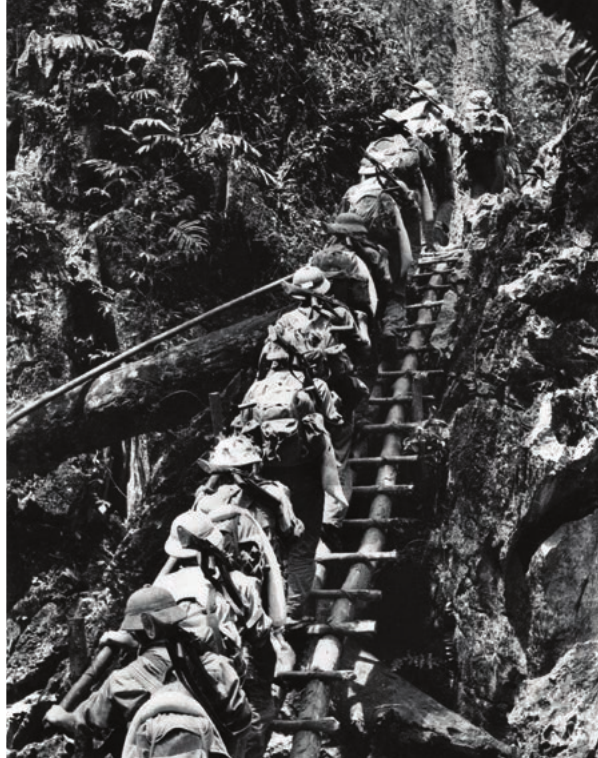
The Ho Chi Minh Trail stretched from North Vietnam through the neutral countries of Laos and Cambodia into the southern regions of the Mekong Delta. Using jungle coverage and territory that US forces could not legally enter, communist forces infiltrated South Vietnam.
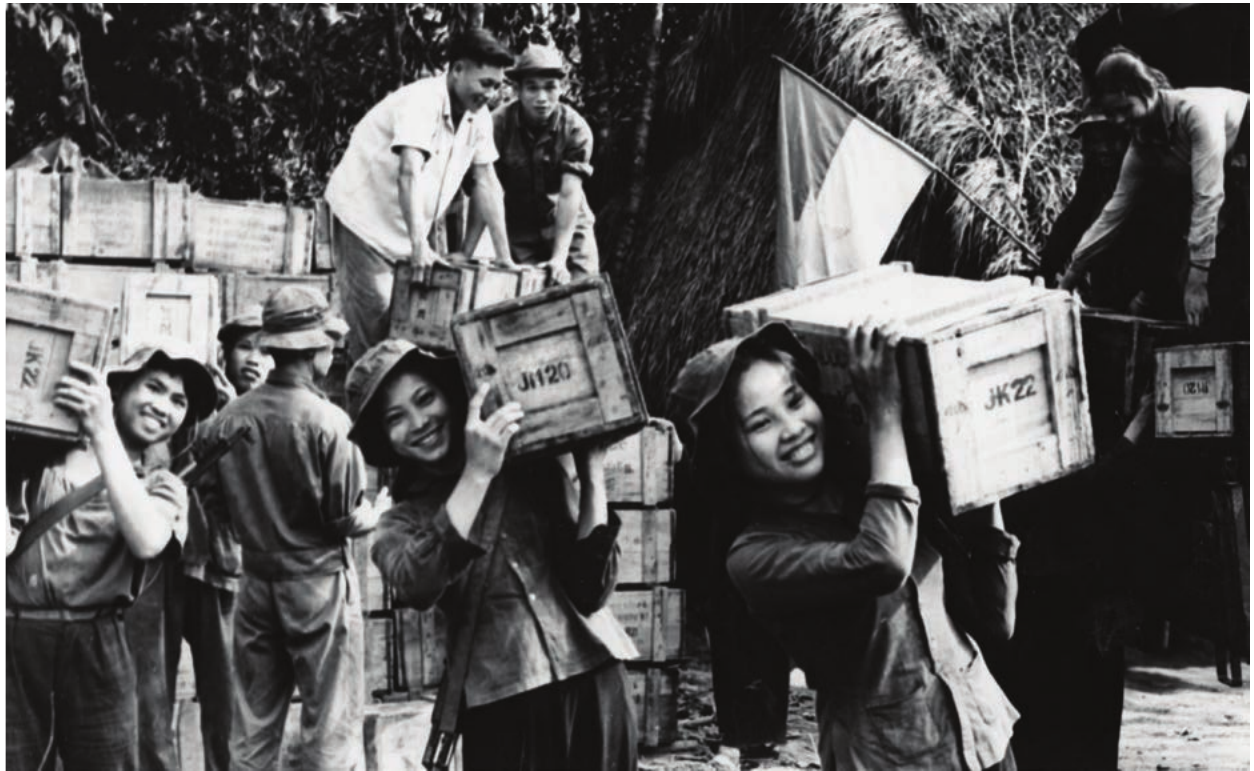
Operating since 1959, the trail represented an enormous logistical achievement. The journey from North to South took approximately two months on foot. Approximately 60,000 soldiers travelled this route annually throughout most of the war.
Conditions on the trail were extraordinarily harsh. Travellers had scarce food and could not cook (fires would attract US air strikes). They endured mosquitoes, leeches, and other insects, with many contracting malaria. Each person carried:
- Sacks of rice wrapped around their torsos
- A knapsack with 15-20 kg of food, medicine, extra clothes, a hammock and waterproof sheet
Note
Most supplies travelled by foot or bicycle. One historian who surveyed the region from helicopters in the 1960s noted: "nothing was discernible, even from low altitudes." The trail was built with such secrecy that canvas sheets were used to hide footprints in mud.
Once American bombing began, life on the trail became even more dangerous as it was constantly targeted by US aircraft.
The Tet Offensive (1968)
Context: late 1967
By the end of 1967, the American public were being told by politicians and media that they were winning the war and there was "light at the end of the tunnel". Statistics were provided as proof:
- Over 485,000 US personnel were in Vietnam
- "Kill ratios" suggested Americans were eliminating communist forces in large numbers
However, a counter-narrative was developing:
- Over 16,000 Americans had been killed
- More than 150,000 people attended growing anti-war protests
- Images of burning villages and soldiers in body bags were affecting public opinion
- Young people increasingly viewed the war as immoral
Khe Sanh (January-July 1968)
1968 began with an unexpected NVA assault on the US base at Khe Sanh. This was both surprising and exciting for American military leaders, as open battles typically allowed US forces to use their technological superiority to devastating effect.
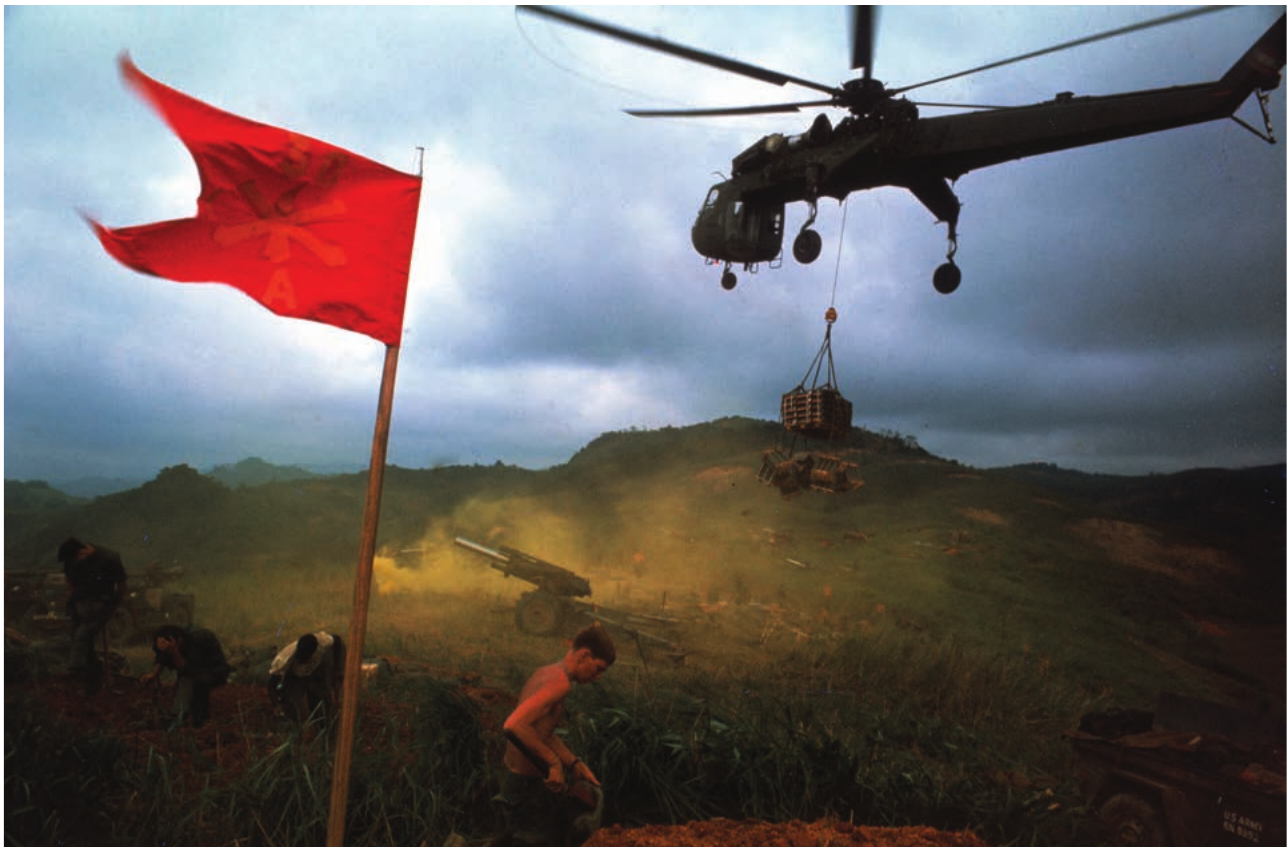
However, the NVA force was much larger than usual, and the assault lasted far longer than expected. The NVA pounded the US Marine base for five months. The fighting became so intense that leaders inside and outside Vietnam grew sceptical that the Marines could withstand the siege.
Note
President Johnson was determined that Khe Sanh would not fall, declaring he did not want "another Dien Bien Phu." However, the attack on Khe Sanh was merely a smokescreen for a much larger and more shocking offensive that would change the course of the war.
The Tet Offensive begins (31 January 1968)
Note
Tet Offensive: the surprise communist attack on 44 provincial capitals and major cities in South Vietnam that started on 30 January 1968.
On 31 January 1968, during the Vietnamese Tet (New Year) holiday, communist forces launched coordinated attacks on 44 of South Vietnam's 64 provincial capitals, including Saigon itself.
Using weapons hidden inside trucks and buried around cities, the Viet Cong swept into urban areas. They assumed that South Vietnamese residents would rise up to support them in a "general uprising." With most ARVN forces away on holiday leave, Americans were caught completely by surprise.
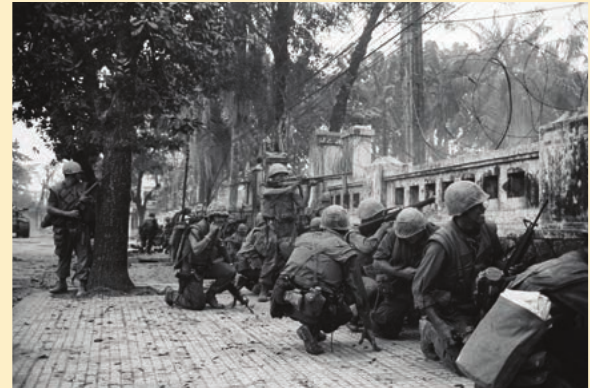
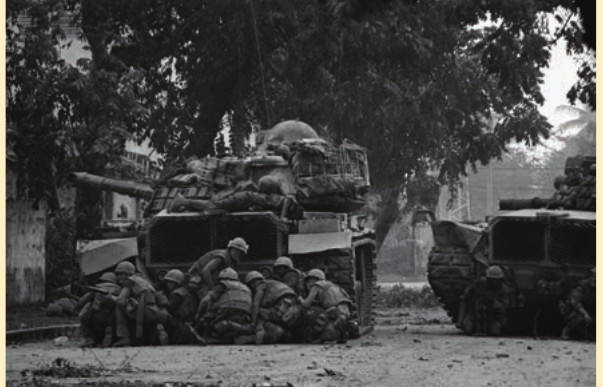
During the chaotic battles:
- Over 3,000 South Vietnamese government officials were executed by the Viet Cong
- A suicide squad fought their way into the grounds of the US Embassy before being killed
- Fierce fighting occurred in streets across South Vietnam
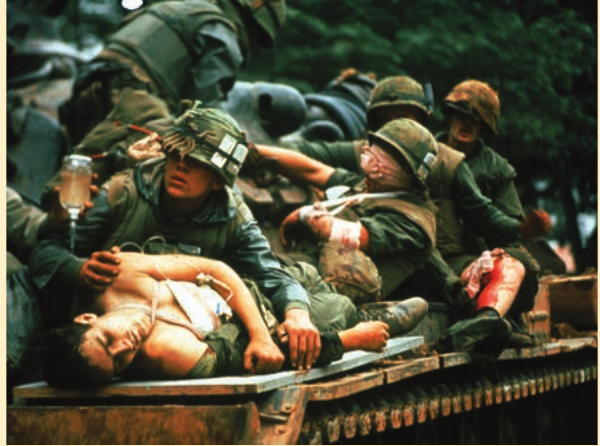
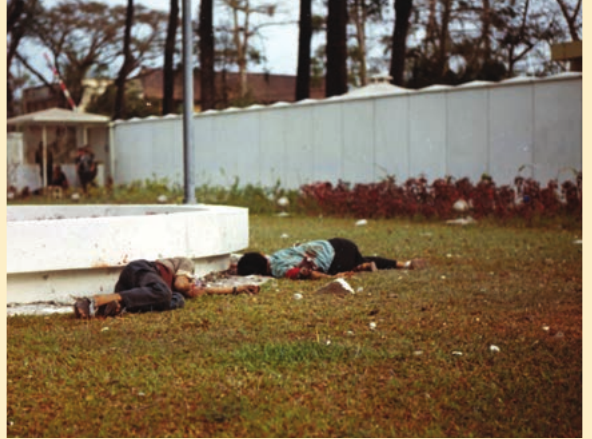
To the communists' surprise, the South Vietnamese population did not join the uprising. The US and ARVN response proved much swifter and stronger than North Vietnamese leader Le Duan expected.
While the attack on Saigon was suppressed within days, the entire Tet Offensive took almost a month to end, concluding when the ancient capital of Hue was finally recaptured from communist forces.
Military vs propaganda victory
From a purely military perspective, Tet was a disaster for communist forces:
Communist losses:
- 45,000 casualties out of 84,000 soldiers who participated
- The Viet Cong never fully recovered their strength
- Operations were severely limited for years afterward
US and ARVN losses:
- Combined casualties of approximately 3,500
- The assault on Khe Sanh cost 10,000 NVA lives
Important
However, the true communist victory lay in how the media reported these events.
Media impact
The execution of a Viet Cong prisoner by South Vietnamese General Nguyễn Ngọc Loan in a Saigon street was photographed and filmed, making international headlines.
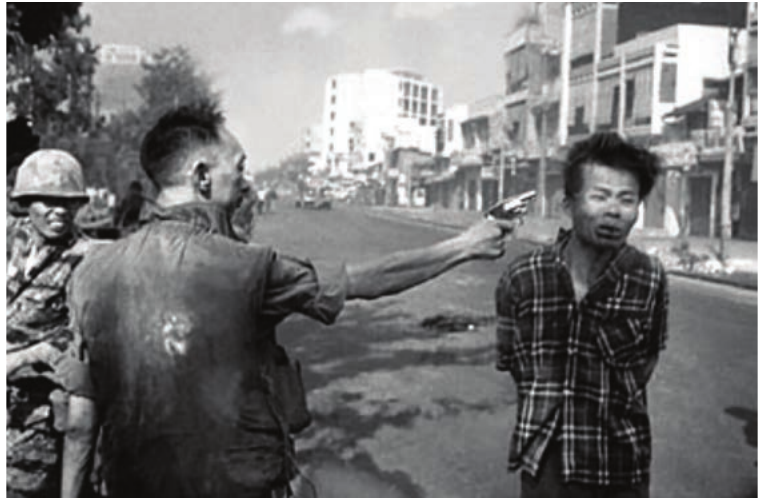
Television broadcasts showed:
- Suicide squads raiding the US Embassy
- Urban street fighting in Saigon
- Wounded American soldiers
- The scale of communist forces that could launch such coordinated attacks
Important
After years of being told the war was being won, the American public saw communist forces attacking throughout South Vietnam, including the heavily fortified US Embassy. The images completely contradicted official statements about progress in the war.
Growing opposition to the war
Rising anti-war sentiment
Opposition to the war had existed in the United States long before 1968, taking various forms:
- Protests against violence in the context of nuclear Cold War tensions
- Resistance to conscription for what many viewed as an immoral war
- Student-led demonstrations at colleges and universities
Throughout the 1960s, the anti-war movement grew substantially. Johnson's administration became convinced that communist forces were driving the movement, leading the FBI to compile files on over 7,000 American anti-war campaigners.
Note
College students visibly led the anti-war movement. However, this increased alienation among working-class and military families who still believed in the war and the fight against communism. Returning soldiers and families of those killed felt shunned by a population increasingly influenced by the radical student movement.
A deep divide was forming in American society between college students (many of whom had avoided the draft) and families whose sons had fought and died as their country requested.
Political assassinations (1968)
Martin Luther King Jr (April 1968)
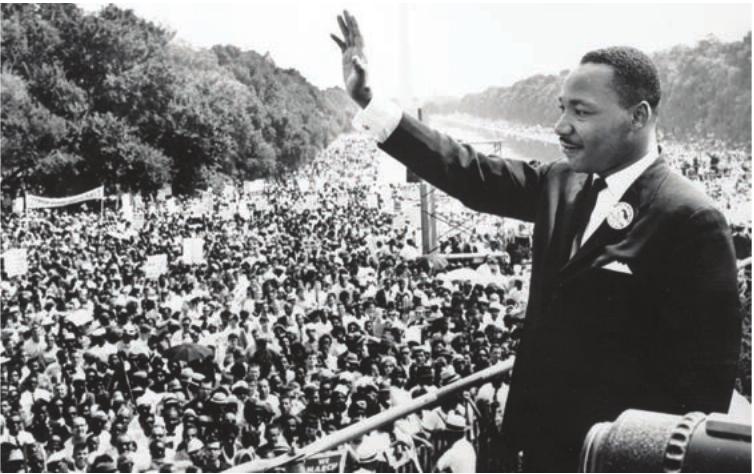
In April 1968, civil rights leader Martin Luther King Jr (MLK) was assassinated by James Earl Ray. After a decade leading the civil rights movement in the 1950s and 1960s, MLK had turned his attention to opposing the Vietnam War.
Weeks before his death, MLK delivered a speech recommending that all young men facing military conscription declare themselves conscientious objectors. He called for the United States to:
- Halt all bombing of North Vietnam
- Announce a unilateral ceasefire
- Prepare to make reparations for damage caused
King's assassination sparked riots in black communities across America and devastated the civil rights movement.
Robert Kennedy (June 1968)
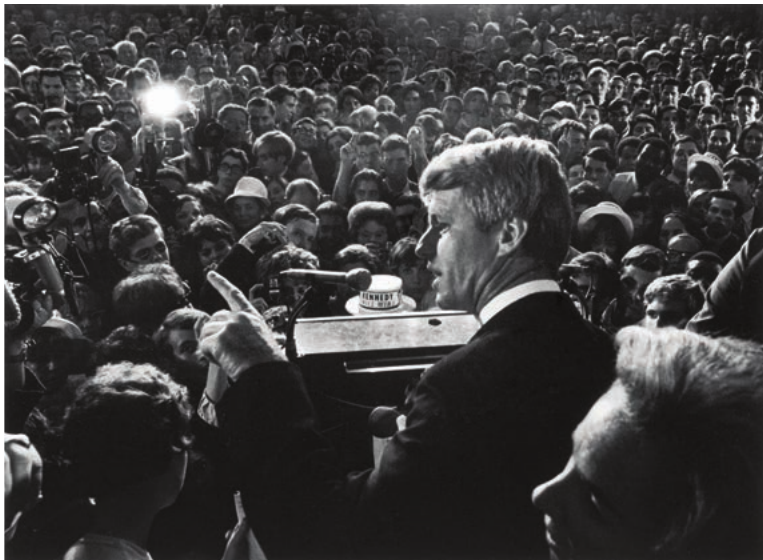
Robert "Bobby" Kennedy, JFK's younger brother, was gaining significant momentum in his presidential campaign when he was assassinated on 5 June 1968 by Sirhan Sirhan, a Palestinian protesting American support for Israel.
Bobby Kennedy had been a key adviser during the Cuban Missile Crisis and represented hope for a peaceful future. His death shocked America and dealt another devastating blow to the Kennedy family.
Democratic National Convention chaos (August 1968)
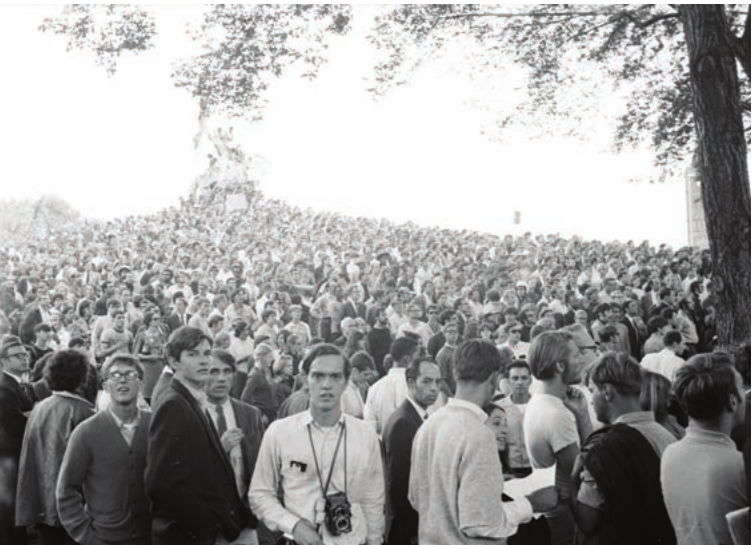
In August 1968, the Democratic National Convention (DNC) was held in Chicago to select the party's presidential candidate. Thousands protested the Vietnam War, and the city descended into chaos.
Example
The Chicago "Police Riot"
In what was officially termed a "police riot", 12,000 Chicago police faced 10,000 anti-war protesters in an inner-city park. When protesters lowered the US flag from a flagpole, police attacked the crowd with tear gas and batons.
The violence was broadcast to millions of American homes. Debate within the DNC convention itself was bitter. Many Americans witnessed what appeared to be a breakdown of both the Democratic Party and law and order itself over the Vietnam War issue.
1968 summary
For the Indochina conflict, 1968 was a defining year:
Military perspective:
- Tet Offensive was a near-mortal blow to communist forces
- Viet Cong never regained their pre-Tet strength
- US forces had achieved a decisive military victory
Public perception:
- Television showed suicide squads raiding the US Embassy
- The offensive appeared to be an American defeat
- Protests against the war increased in size and intensity
- Public questioned the war's morality, conscription practices, and ultimate purpose
Political outcome:
- Republican candidate Richard Nixon won the 1968 election promising to end the war and restore law and order
- Paradoxically, both the war and domestic chaos would continue for another seven years
- By year's end: 536,000 Americans were in Vietnam and over 30,000 had been killed
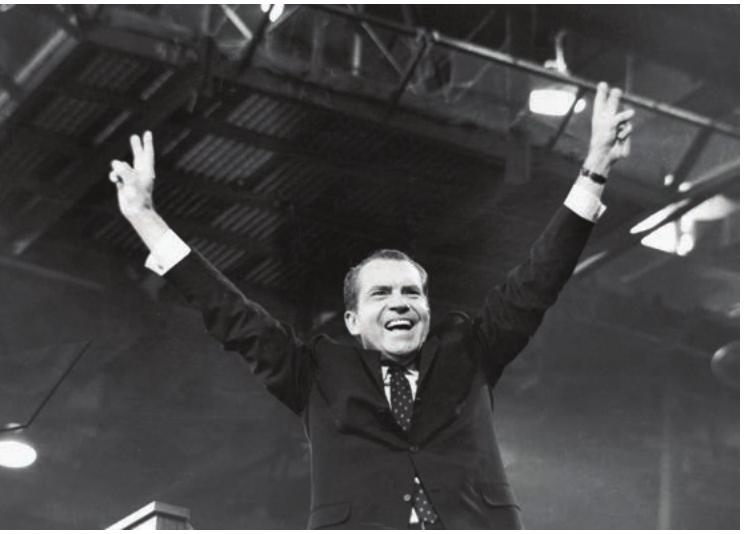
Nixon and the path to withdrawal
Nixon's challenges (1969)
President Nixon faced two major struggles:
- Managing domestic anger about the war
- Saving face against communist enemies
His desire to achieve both goals would lead to further disasters. When North Vietnamese leader Ho Chi Minh died in September 1969 (aged 79), the North Vietnamese hardened their negotiating position.
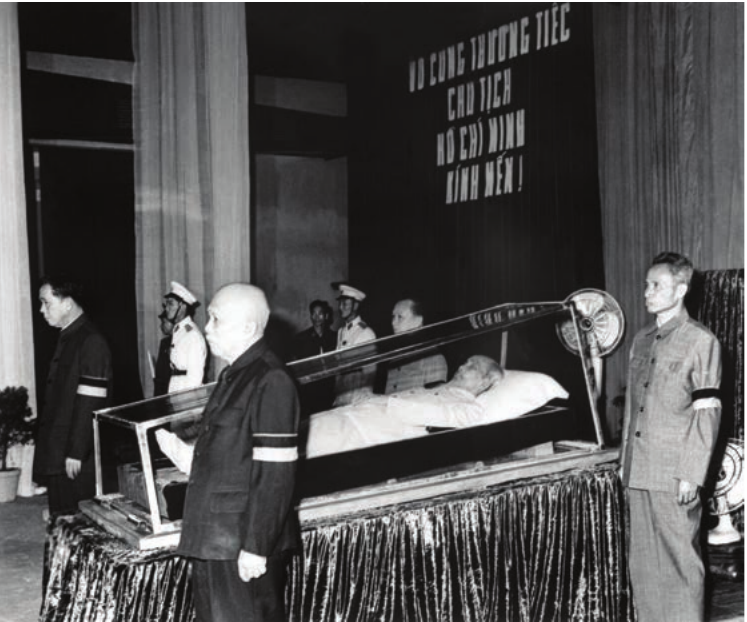
North Vietnam had survived the worst of the war. After recovering from the Tet Offensive failure, they returned to guerrilla warfare methods and refused to compromise at peace talks while:
- The South Vietnamese military dictatorship remained in power
- US forces remained in Vietnam
Vietnamisation strategy
Nixon's public strategy centred on "Vietnamisation" - reducing US involvement and transferring responsibility to the South Vietnamese Army.
Note
Vietnamisation: Nixon administration policy to make South Vietnam militarily self-sufficient and enable the United States to pull out of the war.
Nixon attempted to reframe the American purpose in Vietnam, declaring: "The nations of Asia can and must increasingly shoulder the responsibility for achieving peace and progress in the area with whatever cooperation we can provide. Asian countries must seek their own destiny, for if domination by the aggressor can destroy the freedom of a nation, too much dependence on a protector can eventually erode its dignity."
Important
However, Vietnamisation proved to be a failure. One historian noted: "The multi-faced scheme did not work. Although US ships, planes, rifles and helicopters poured in, South Vietnam became dependent on US aid to keep its Army in the field. As the ranks of the ARVN swelled to more than one million, some Vietnamese groups complained that 'Vietnamisation is only the change in the colour of the dead'. 'We're no longer here to win', said one US military officer, 'We're merely campaigning to keep the [American] casualties down'."
Nixon's "madman theory"
Privately, Nixon pursued a contradictory strategy. He wanted to project an image of unpredictable strength to communist enemies in Vietnam and the Soviet Union.
By escalating bombing in Cambodia and North Vietnam, Nixon wanted the North Vietnamese to believe he was "mad" enough to dramatically escalate the war if necessary - even considering nuclear options. He instructed his Secretary of State Henry Kissinger to make the Soviets worry "about the possibility that we are losing our patience and may get out of control."
Note
While publicly calling for patience from the "silent majority" of peaceful Americans, Nixon privately threatened his enemies with potential chaos.
My Lai Massacre revealed (1969)
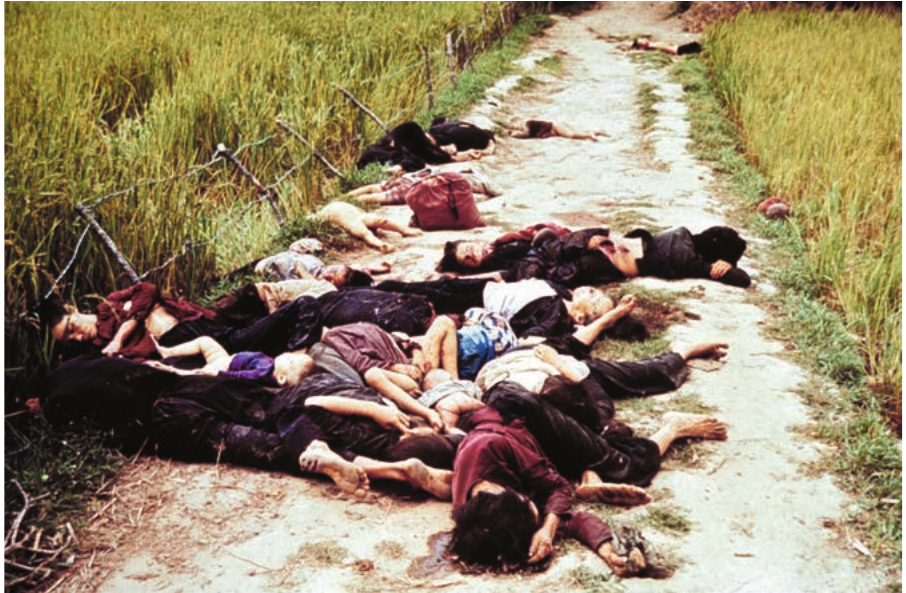
In November 1969, Life magazine published details of an atrocity that occurred in March 1968. US soldiers had stormed the strategic hamlet of My Lai 4, frustrated by their inability to locate a deadly Viet Cong unit.
Finding only elderly men, women and children in the village, the soldiers:
- Herded villagers into groups
- Shot them and dumped bodies into ditches
- Committed acts of "murder, rape, sodomy, maiming and assault on non-combatants"
Important
The massacre only stopped when a US helicopter gunner opened fire on the American soldiers to protect the villagers.
Example
Eyewitness Account
One sergeant described the scene: "Setting fire to the hootches and huts and waiting for people to come out and then shooting them... going into the hootches and shooting them up... gathering people in groups and shooting them... They were shooting women and children just like anybody else. We met no resistance and I only saw three captured weapons. We had no casualties."
The revelation outraged people worldwide due to:
- The horrific nature of the atrocity (with suspicions of other similar incidents)
- The initial military cover-up
- Only one American, Lieutenant William L Calley Jr, being charged (convicted of murdering 109 Vietnamese civilians)
Operation Menu: secret bombing of Cambodia (1969)
In March 1969, Nixon authorised the secret bombing of Cambodia, code-named Operation Menu. Although the Ho Chi Minh Trail passed through Cambodia, the United States had not previously attacked this neutral country with a friendly government.
Important
Using B-52 bombers, more explosives were dropped on Cambodia during this campaign than were used against Germany and Japan combined in all of World War II. One observer noted: "No country has ever experienced such concentrated bombing... President Nixon and Mr Kissinger unleashed 100,000 tons of bombs, the equivalent of five Hiroshimas. The bombing was their personal decision, made illegally and secretly. They bombed Cambodia, a neutral country, back to the Stone Age."
Operation Menu would directly contribute to the violent Khmer Rouge revolution in Cambodia in 1970.
Deteriorating US soldier morale (1969)
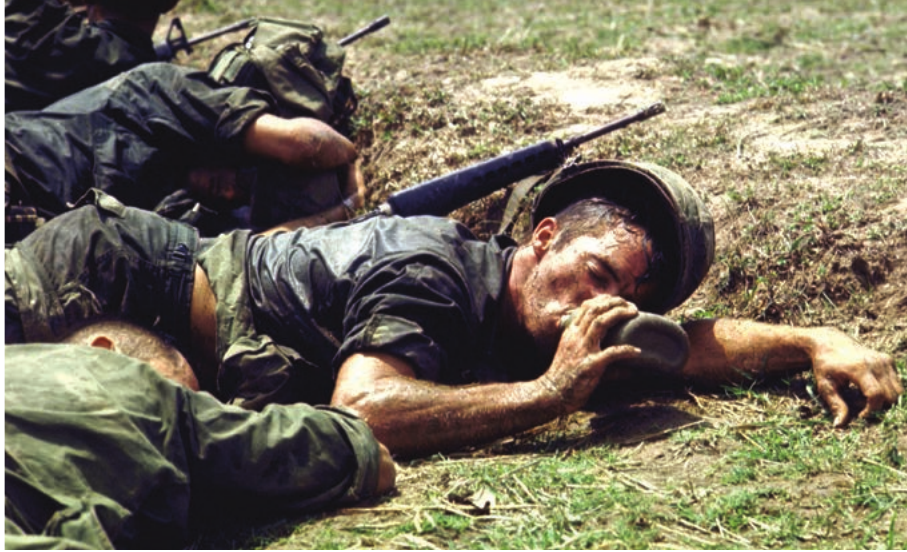
As US forces began withdrawing from Vietnam, with the government pledging to de-escalate the conflict while millions of Americans marched in opposition to the war, soldier morale reached an all-time low.
Few soldiers wanted to engage in combat when there seemed little left to fight for. Problems emerged:
- Rumours of widespread heroin addiction among US soldiers
- Soldiers becoming unwilling to follow orders from aggressive officers seeking military glory
- Growing incidents of "fragging" - soldiers attempting to hurt or kill their superior officers
Example
Fragging Incidents
One soldier explained: "Mostly from what I've heard, if an officer messes with a grunt too much, they get shot out there."
In 1969, the US Army investigated over 800 cases of fragging (named after the fragmentation grenades often used). Most incidents occurred in army bases and stemmed from disputes over drugs or racial tensions. Fragging incidents increased from 96 cases in 1969 to 542 cases in 1971.
Cambodia invasion (1970)
Despite beginning troop withdrawals, Nixon shocked the world by announcing an expansion of the war into Cambodia.
The bombing of Cambodia remained secret. However, military strategy suggested that cutting the Ho Chi Minh Trail could contain North Vietnamese forces and improve the US negotiating position.
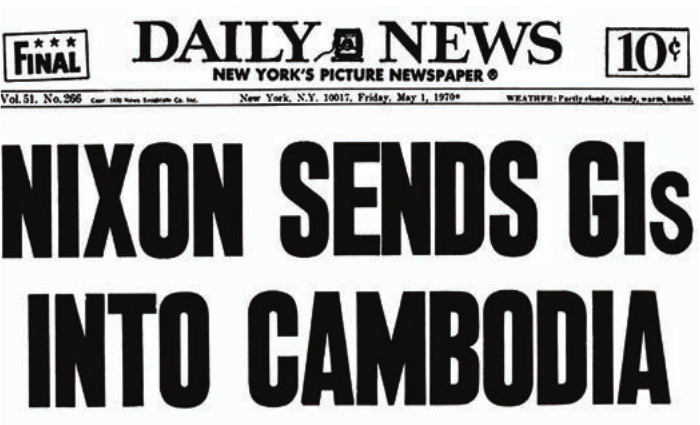
Nixon declared on 30 April 1970: "American policy has been to scrupulously respect the neutrality of the Cambodian people. North Vietnam, however, has not respected that neutrality... Tonight American and South Vietnamese units will attack the headquarters for the entire Communist military operation in South Vietnam... This is not an invasion of Cambodia... Our purpose is not to occupy these areas."
Vietnam Moratoriums
Within days of Nixon's Cambodia announcement, the anti-war movement exploded in strikes and demonstrations across the United States and internationally, including Australia.
The first US Vietnam Moratorium Day was held on 15 October 1969, with protest numbers in Boston and New York reaching 250,000. By 1970, these protests were no longer led primarily by college students but included middle-class Americans of all ages.
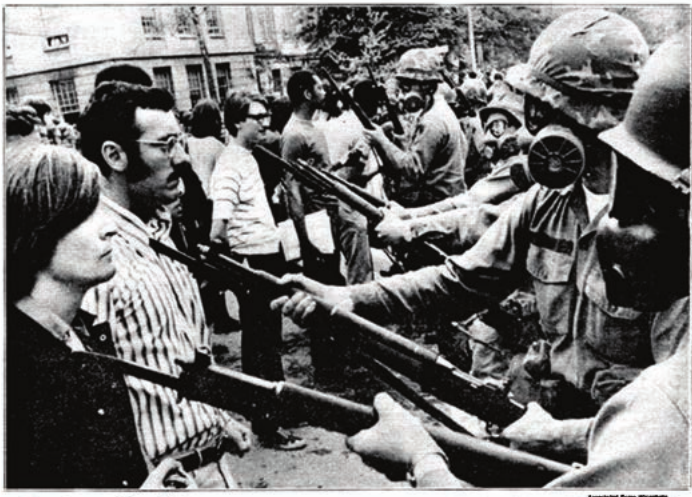
Kent State shootings (May 1970)
On 4 May 1970, at Kent State University in Ohio, National Guard soldiers (part-time troops) were deployed to maintain peace during student protests. Students were demonstrating because they felt Nixon had lied about Vietnamisation.
Important
Without warning or orders, a small group of Guardsmen opened fire on students, killing four and injuring nine.
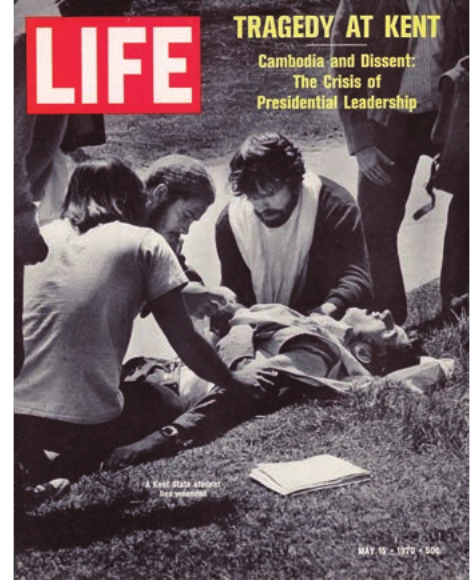
The Kent State shootings became one of the most iconic moments of the Vietnam era, capturing the violent division within American society over the war.
Pentagon Papers released (1971)
By May 1971, Gallup Polls showed that 61% of Americans believed US involvement in Vietnam was "a mistake".
In June, the New York Times and Washington Post began publishing excerpts from a 7,000-page classified document leaked by Daniel Ellsberg, a disillusioned former military analyst. This secret report, known as the "Pentagon Papers", contained a complete history of the Vietnam conflict and military decisions made behind closed doors.
The Pentagon Papers revealed that from the beginning, US political and military leaders never had clear goals for the Vietnam War. Key revelations included:
- President Truman had secretly funded the French fight against the Viet Minh
- Presidents Eisenhower and Kennedy actively tried to undermine North Vietnam
- President Johnson knew in advance that Operation Rolling Thunder would not work
- The Gulf of Tonkin incident and many other events had been misrepresented to the public
Important
The Pentagon Papers completely undermined public perception that Vietnam was a defensive war against communist aggression. Instead, it appeared the US government had sought war without knowing how to win it. The documents portrayed the depths of deception used by four different presidents since 1954.
Even though Nixon's presidency was not covered in the papers, public faith in the US government was shattered.
Watergate scandal (1972)
In 1972, the Nixon administration faced allegations that the president had authorised extensive spying and burglary against his political opponents. The Watergate Scandal, broken by Washington Post reporters, revealed criminal activity by an already controversial president.
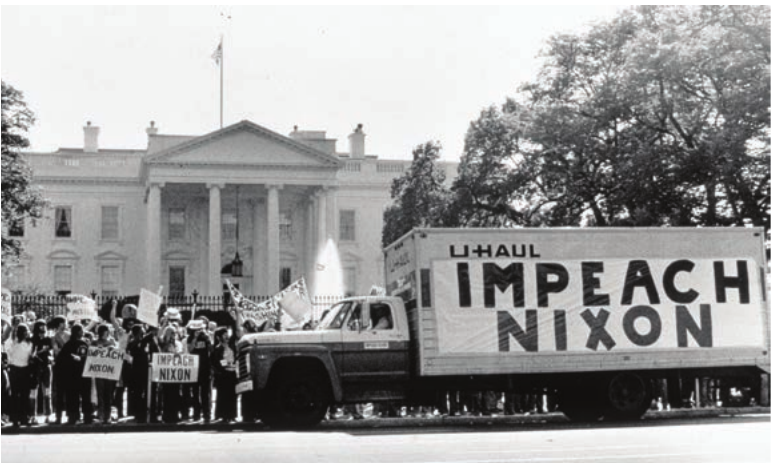
Meanwhile, it emerged that Secretary of State Kissinger had maintained secret communication with North Vietnamese officials since 1969, without the South Vietnamese government's knowledge. While American soldiers continued dying in combat and bombs still fell on North Vietnam, Nixon faced greater domestic problems as the scandal developed.
The "Napalm Girl" photograph (1972)
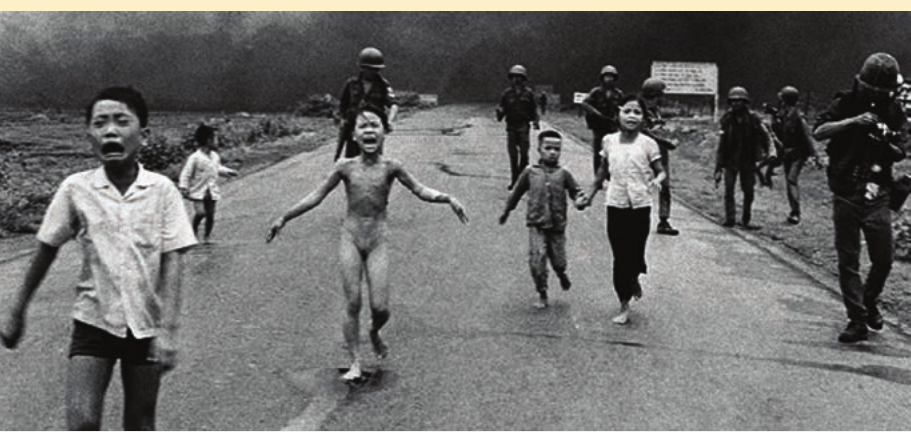
One of the most powerful anti-war images showed 9-year-old Phan Thi Kim Phuc running in terror after her village was napalmed by the South Vietnamese air force. Her clothes had been burned off by the napalm. This photograph brought the suffering of Vietnamese children into American homes and further damaged public support for the war.
Summary
Summary
Key Points to Remember:
-
The Gulf of Tonkin incident (August 1964) provided justification for US military escalation, though the second attack never actually occurred. The subsequent resolution gave the president authority to use military force without a formal declaration of war.
-
US forces relied on technological superiority through tactics like Rolling Thunder bombing, search-and-destroy missions, and chemical warfare (Agent Orange, napalm), but these proved largely ineffective against guerrilla warfare.
-
Viet Cong and NVA forces used guerrilla tactics including booby traps, tunnel systems, and the Ho Chi Minh Trail to frustrate American military power and avoid open battles where US firepower would be decisive.
-
The 1968 Tet Offensive was a military disaster for communist forces (45,000 casualties out of 84,000) but a propaganda victory that shocked the American public and undermined claims that the war was being won.
-
Growing anti-war movements, political assassinations (MLK, Robert Kennedy), the My Lai Massacre revelation, and the Pentagon Papers all eroded American public support for the war throughout the late 1960s and early 1970s.
-
Nixon's contradictory strategies of public "Vietnamisation" and private escalation (Cambodia bombing and invasion, "madman theory") ultimately failed to achieve "peace with honour," while domestic events like Kent State and Watergate further divided American society.
-
By 1971, 61% of Americans believed US involvement in Vietnam was "a mistake," demonstrating how completely public opinion had shifted from the early optimism of 1964-65.