Détente (HSC SSCE Modern History): Revision Notes
📚Revision Notes
Détente
What was détente?
After nearly twenty-five years of Cold War hostility, tensions between the United States and Soviet Union began to ease in the late 1960s and 1970s. This period of reduced tension became known as détente, which refers to an improvement in relations between two countries that previously did not trust each other. The word comes from French and literally means a "relaxation" or "easing" of strained relations.
Note
Détente emerged gradually after the Cuban Missile Crisis of 1962, when both superpowers realised how close they had come to nuclear catastrophe. The crisis served as a wake-up call, demonstrating the very real danger of nuclear annihilation if tensions continued to escalate unchecked.
However, American involvement in the Vietnam War initially prevented significant progress. By the end of the 1960s, several important factors encouraged both sides to pursue better relations and reduce the risk of nuclear conflict.
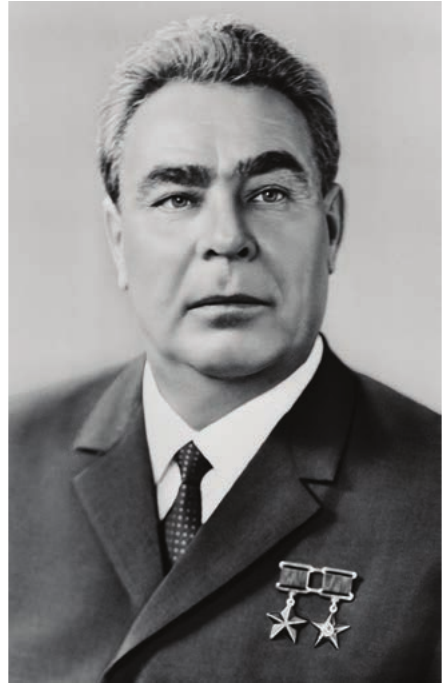
The Soviet leader during most of the détente period was Leonid Brezhnev, who became General Secretary of the Communist Party in 1964. While Brezhnev maintained Soviet control over Eastern Europe, he also recognised the need for improved relations with the West.
The Brezhnev Doctrine and Czechoslovakia
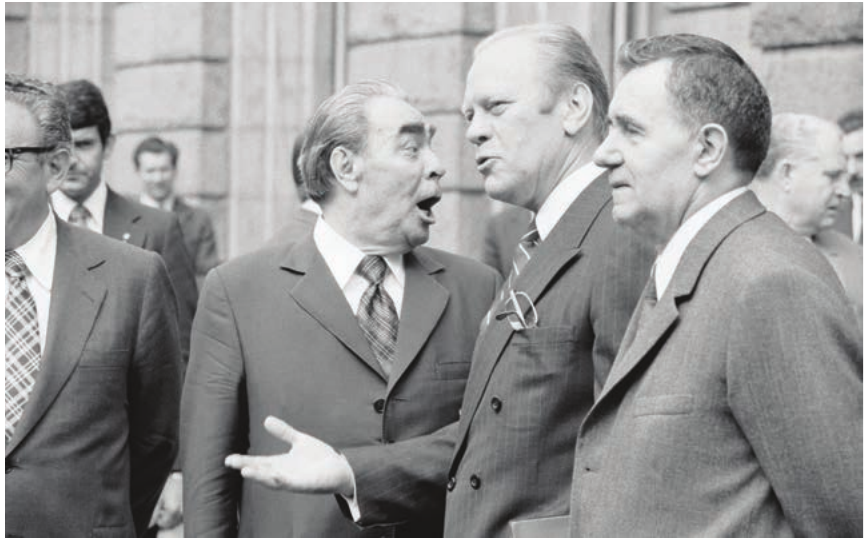
Before examining détente's achievements, it is important to understand the limits the Soviet Union placed on improved relations. In 1968, the Soviet Union invaded Czechoslovakia to crush the Prague Spring reform movement. The USSR justified this action through what became known as the Brezhnev Doctrine.
Important
The Brezhnev Doctrine stated that the Soviet Union had the right to use military force in neighbouring countries to maintain communist rule. This doctrine established clear boundaries for Soviet tolerance of reform within its sphere of influence and demonstrated that détente had definite limitations when Soviet interests were threatened.
Although the United States and Western nations condemned the invasion, they took no action because Czechoslovakia was considered part of the Soviet sphere of influence. The invasion temporarily derailed progress towards détente. However, Brezhnev expected this setback and accepted it as necessary to maintain Soviet control over the Eastern bloc.
Note
The United States was not overly concerned about the Brezhnev Doctrine because it only applied to defending existing Soviet-controlled territory, not expanding Soviet influence into new areas. This understanding helped both superpowers maintain the momentum toward improved relations despite the Czechoslovakia crisis.
Why détente emerged: economic and political reasons
Several interconnected factors led both superpowers to pursue détente in the late 1960s:
Note
Economic pressures from the arms race
The nuclear arms race had become extremely expensive for both nations. New weapons systems required enormous investment in research, development, and production. Both the United States and Soviet Union faced domestic economic challenges and could not sustain indefinite military spending at Cold War levels. Additionally, the emergence of new nuclear powers - Britain, France, and China - concerned both superpowers, who preferred to limit the number of countries with nuclear weapons.
Note
The Sino-Soviet split
Relations between China and the Soviet Union had deteriorated dramatically by the 1960s. This split in the communist world made improved relations with the United States an attractive proposition for the Soviet Union. From the American perspective, the division between communist powers created opportunities to play one against the other.
Note
Vietnam War difficulties
The United States was struggling to bring the Vietnam War to a successful conclusion. American leaders believed that closer relations with the Soviet Union might help them negotiate an exit from Vietnam, as the Soviets had influence over North Vietnam.
Note
Soviet economic needs
The Soviet Union needed to increase international trade to keep pace with Western technological and economic development. Better relations with the West could open up trade opportunities and access to Western technology.
These factors created a window of opportunity for meaningful negotiations and agreements between the superpowers.
Key achievements of détente
Détente produced several significant arms control treaties and diplomatic agreements that reduced Cold War tensions:
Nuclear Non-Proliferation Treaty (1968-1970)
The first major achievement of détente was the Nuclear Non-Proliferation Treaty, signed in 1968 and entering into force in 1970. Through this treaty, the United States and Soviet Union aimed to limit nuclear weapons to the existing five nuclear powers: the United States, Soviet Union, United Kingdom, France, and China.
Note
The treaty sought to prevent the spread of nuclear weapons to additional countries, which both superpowers feared could make the world more dangerous and unpredictable. This represented a rare area of genuine cooperation where American and Soviet interests aligned perfectly.
Strategic Arms Limitation Talks (SALT I)
The Strategic Arms Limitation Talks produced the SALT I treaty, which placed limits on intercontinental ballistic missiles (ICBMs) and other strategic weapons. This marked the first time the superpowers agreed to actual limits on their nuclear arsenals rather than simply managing the arms race. SALT I demonstrated that both sides recognised the futility of continuing unlimited nuclear weapons development.
Anti-Ballistic Missile (ABM) Treaty
The ABM Treaty banned defensive missile systems designed to shoot down incoming nuclear missiles. This agreement was based on the concept of Mutual Assured Destruction (MAD) - if neither side could defend against a nuclear attack, both would be deterred from launching a first strike.
Important
By banning defensive systems, the treaty aimed to maintain strategic stability. The logic was counterintuitive but crucial: defensive weapons could actually make war more likely by making one side believe it could survive a nuclear exchange. Maintaining mutual vulnerability paradoxically maintained peace.
Helsinki Final Act (1975)
The Helsinki Final Act, negotiated in 1975, represented a comprehensive agreement on European security and cooperation. The accord achieved several important objectives:
- Recognition of existing political borders in Europe (which the Soviet Union particularly wanted)
- Creation of opportunities for cultural exchange between East and West
- Expansion of trade relationships
- Promotion of human rights (which proved most significant in the long term)
Note
The human rights provisions of the Helsinki Final Act became particularly important, as they gave dissidents in the Soviet Union and Eastern Europe a framework to demand greater freedoms from their governments. What initially seemed like a Soviet diplomatic victory eventually became a tool for undermining communist control.
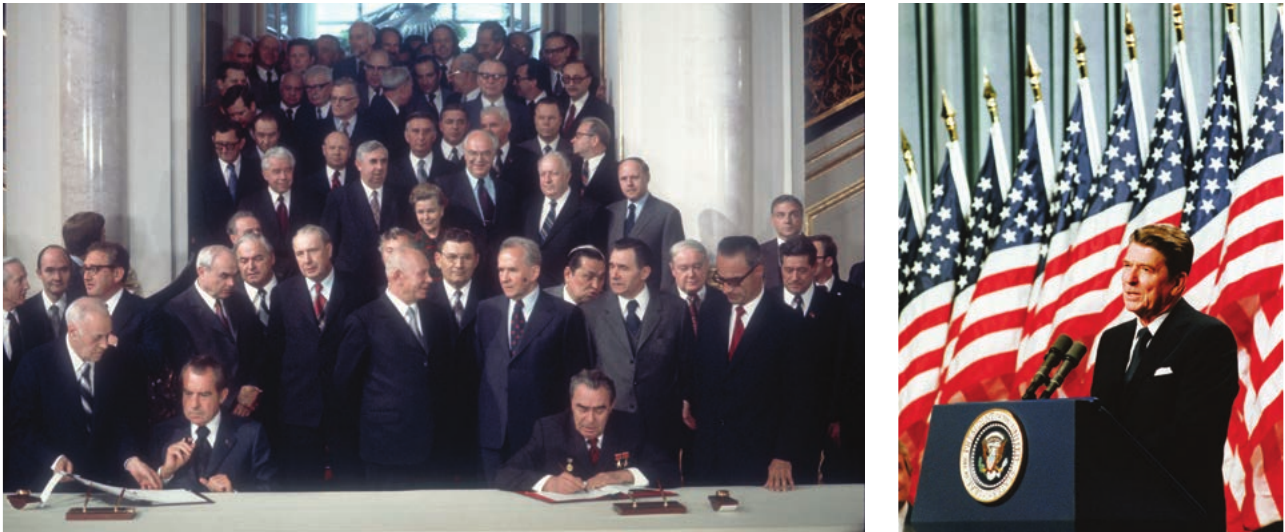
A second SALT treaty (SALT II) was negotiated in the late 1970s but was never ratified by the United States Senate. By 1979, events in Afghanistan had undermined the spirit of cooperation necessary for arms control agreements.
The Vietnam War and its impact on détente
The Vietnam War significantly influenced American foreign policy during the détente period. Understanding this conflict helps explain why the United States sought improved relations with the Soviet Union.
American escalation under President Johnson
The United States became deeply involved in Vietnam through a combination of rigid Cold War thinking, domestic political pressures, American overconfidence, and poor leadership decisions. The Containment Policy and the Domino Theory - the belief that if one country fell to communism, neighbouring countries would follow - directed American strategic thinking in the 1950s and 1960s.
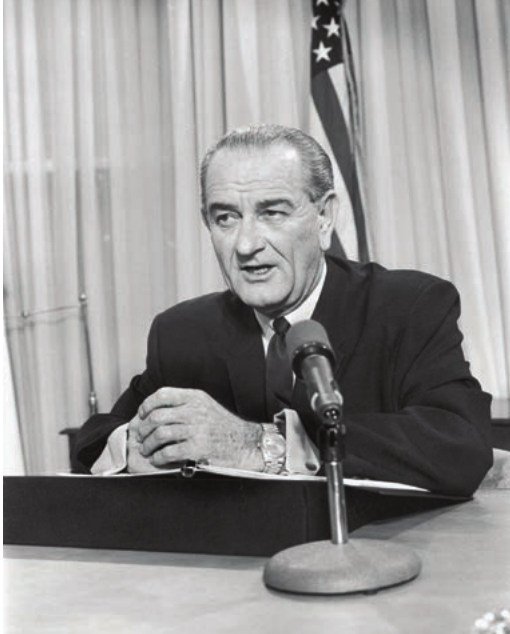
President Lyndon B Johnson (LBJ), who took office after President Kennedy's assassination in November 1963, had no doubts about increasing American intervention in Vietnam. Driven by both genuine belief in stopping communist expansion and the political need to appear tough on communism to win the 1964 presidential election, LBJ escalated American involvement following the questionable Gulf of Tonkin incident in 1964. Congress passed the Gulf of Tonkin Resolution, which gave the president authority to use whatever force was necessary in Vietnam.
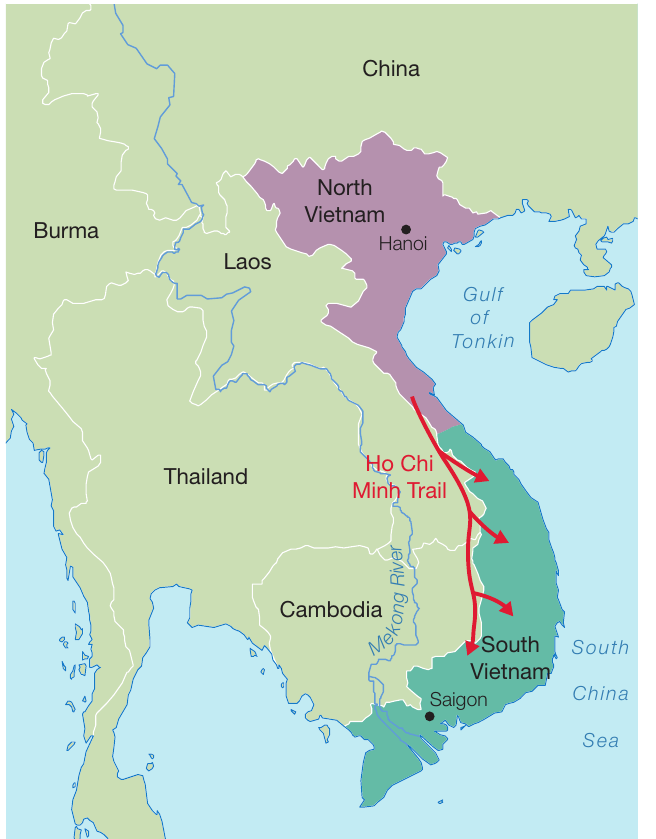
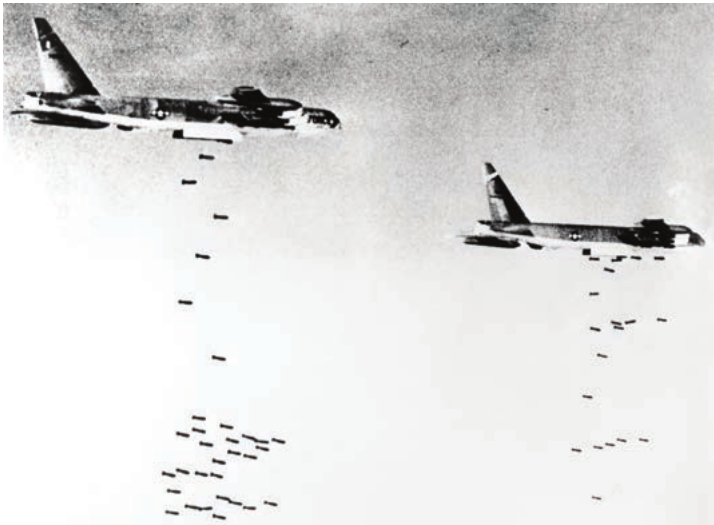
From 1965 onwards, the United States became more deeply mired in the Vietnam conflict. American leaders believed that overwhelming military superiority would ensure victory and create a stable, non-communist South Vietnam. While presidents avoided using nuclear weapons, they showed no restraint with conventional weapons. Over the decade of war, the US military deployed massive firepower, including napalm (which had not been used since the bombing of Japan in 1945).
Note
By 1968, American forces in Vietnam had increased to 600,000 troops. However, the military lacked objective strategic information about the war's progress. The 1968 communist Tet Offensive demonstrated that the United States had failed to win "hearts and minds" in Vietnam. Self-doubt gripped the Johnson administration in the lead-up to the 1968 presidential elections.
The anti-war peace movement grew in strength and influence. President Johnson, worn down by the Vietnam conflict, announced he would not contest the 1968 elections and offered to negotiate peace with North Vietnam.
Nixon's approach: Vietnamisation and continued bombing
In 1968, presidential candidate Richard Nixon promised war-weary Americans that he would end the Vietnam War with "peace with honour". However, once elected president, the war continued for several more years.
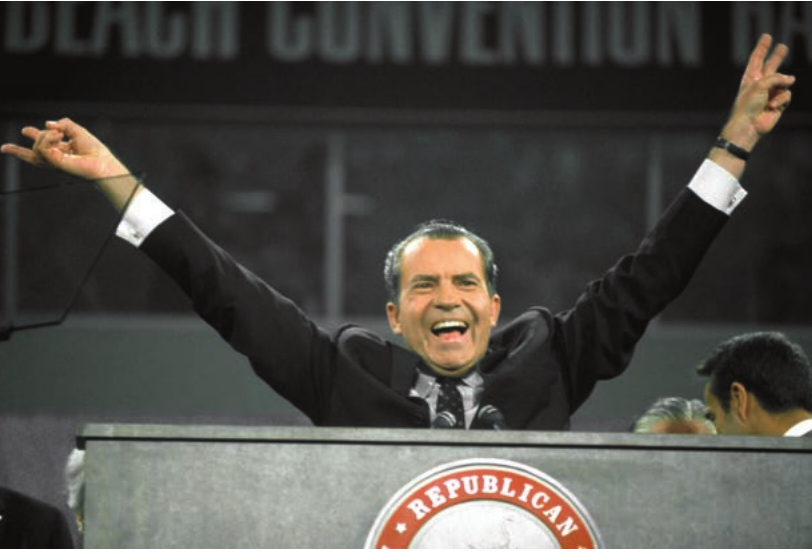
Nixon implemented a policy of "Vietnamisation", which gradually turned more of the fighting over to South Vietnamese forces while bringing American troops home. To compensate for fewer American ground troops, Nixon increased the use of airpower, which meant massive bombing campaigns. He expanded the war into Cambodia in 1970 with a land invasion, followed by secret B-52 bombing raids of Laos and Cambodia.
Important
By 1972, Nixon recognised that South Vietnam could not survive in the long run without American support. However, he wanted to make South Vietnam strong enough that the United States could withdraw without the country immediately collapsing, which would avoid America losing face internationally. This became the core challenge of his Vietnam strategy.
Nixon conducted peace negotiations with North Vietnam, but frustrated by their unwillingness to compromise, he ordered a massive attack on North Vietnam in the "Christmas bombings" of December 1972. Over 20,000 tons of bombs were dropped on North Vietnam over a two-week period. On 29 December, the North Vietnamese resumed the Paris Peace Talks.
Example
The Vietnam War Timeline: Key Events
- 1964: Gulf of Tonkin incident leads to congressional resolution authorising force
- 1965: Major escalation begins with deployment of combat troops
- 1968: Tet Offensive shakes American confidence; 600,000 troops deployed
- 1969: Nixon takes office and implements Vietnamisation policy
- 1970: War expands into Cambodia
- 1972: Christmas bombings force North Vietnam back to negotiations
- January 1973: Paris Peace Accords signed; US troops withdraw
- April 1975: North Vietnam conquers Saigon; South Vietnam falls
On 27 January 1973, the Paris Peace Accords were signed and US troops withdrew from Vietnam. However, in March 1975 - almost three years after American forces had left - North Vietnam resumed the war. In April 1975, the North Vietnamese army entered Saigon and the South Vietnamese government collapsed. The war was finally over.
President Nixon had achieved what he wanted: an exit from Vietnam that saved face for America. However, this came at a cost of 22,000 American lives lost since 1969, plus a massive toll in Vietnamese lives. After over a decade of intervention in Indochina, the United States had failed to contain communism. The dominos fell - South Vietnam, Laos, and Cambodia all came under communist control. However, the dominos fell no further, and by this time, the changing geopolitical landscape of détente meant the result seemed less catastrophic than predicted.
The Sino-Soviet split and triangulation
One of the most significant developments that enabled détente was the breakdown of relations between the two major communist powers, China and the Soviet Union. This split created opportunities for American diplomacy.
Deteriorating relations between China and the USSR
By the late 1950s, relations between China and the Soviet Union had become increasingly tense. Chinese leader Mao Zedong had never developed a warm relationship with Soviet leader Joseph Stalin, though he respected Stalin's authority. When Stalin died in 1953, Mao felt disrespected by the new Soviet leadership. When Nikita Khrushchev denounced Stalin in 1956, Mao was privately furious.
Note
Tensions escalated further when Mao became annoyed that the Soviets had not honoured promises to provide aid to China. When Khrushchev visited China in 1959 after touring the United States, Mao was infuriated that Khrushchev had been so accommodating to American demands but would not accommodate China's requests, such as assistance in building an atomic bomb.
The split became public in June 1960. It escalated further when Mao criticised Khrushchev for showing weakness during the Cuban Missile Crisis of 1962. By 1965, the Sino-Soviet split had reached the point of no return, as Mao severed all contact with the Soviet Union during the Cultural Revolution.
Important
From 1969 onwards, China viewed the Soviet Union as a major threat, particularly after a two-week border war in March 1969 brought the two communist nations to the brink of all-out war. The Chinese even built an underground network of tunnels and bunkers in Beijing to provide protection in case of a nuclear attack from the Soviet Union. This fear of Soviet aggression made China receptive to American overtures.
Nixon's historic visit to China
By 1970, Mao was open to approaches from the Americans for dialogue. In July 1971, Foreign Minister Henry Kissinger made a secret visit to China and arranged for President Nixon to visit. In February 1972, Nixon made an historic trip to China, meeting with Mao Zedong and other Chinese leaders.
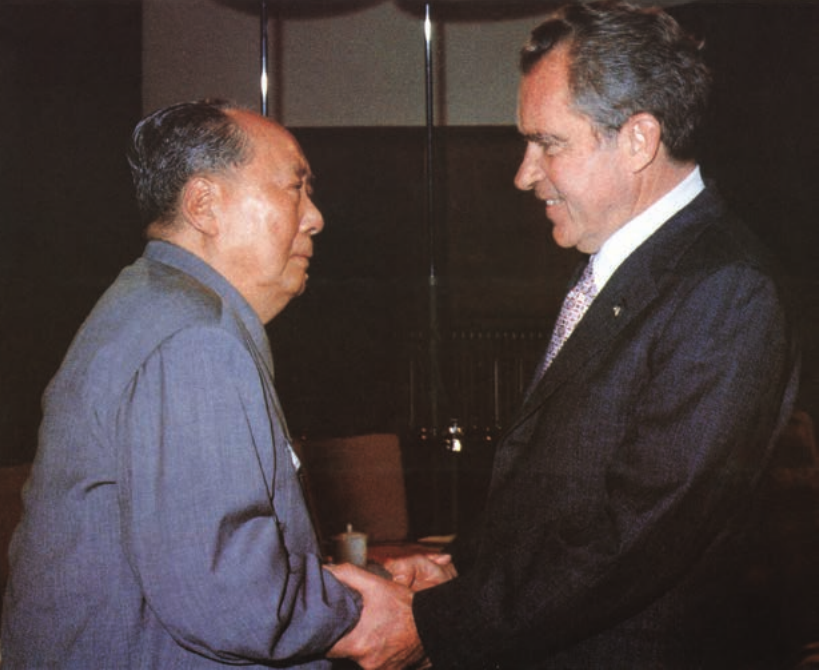
This visit carried enormous geopolitical significance. Nixon pursued a policy of "triangulation", which exploited the rivalry between the two communist powers.
Note
Triangulation strategy explained
Triangulation was based on the idea that since the communist world was divided between two rival powers with a history of animosity, the United States could play one communist power against the other to gain diplomatic and strategic advantages. By improving relations with China, the US gained leverage in negotiations with the Soviet Union, and vice versa.
Nixon's strategy was bold: he was simultaneously pursuing improved relations with two communist rivals who were hostile to each other. This gave the United States greater leverage in negotiations with both countries and demonstrated that the communist bloc was no longer unified.
Superpower rivalry in the Middle East
While not part of either superpower's direct sphere of influence, the Middle East became a crucial location for Cold War competition, including dangerous proxy wars that nearly escalated into direct superpower conflict.
Entry of the Cold War into the Middle East
The 1956 Suez Crisis marked the introduction of Cold War tensions into the Middle East. It also resulted in the withdrawal of the traditional colonial powers, Britain and France, creating a power vacuum that the superpowers sought to fill.
Note
Initially, Western-oriented states like Lebanon and Jordan aligned with the United States, while more revolutionary Arab states such as Egypt and Syria, along with Palestinian groups, received support from the Soviet Union. Israel joined the Western camp in 1962 and began receiving American aid. After the 1967 Six-Day War, the relationship between the United States and Israel deepened significantly.
The Six-Day War (1967)
The Six-Day War, though brief, had lasting impacts on the Middle East and superpower relations. Soviet arms sales to Arab allies prompted President Johnson to sell tanks and fighter jets to Israel in 1965 and 1966. In May 1967, false Soviet intelligence reported that Israeli forces were massing on Syria's border. This led Egypt's President Nasser to request withdrawal of UN peacekeeping troops from the Sinai Peninsula and Gaza Strip, where they had been stationed since 1957.
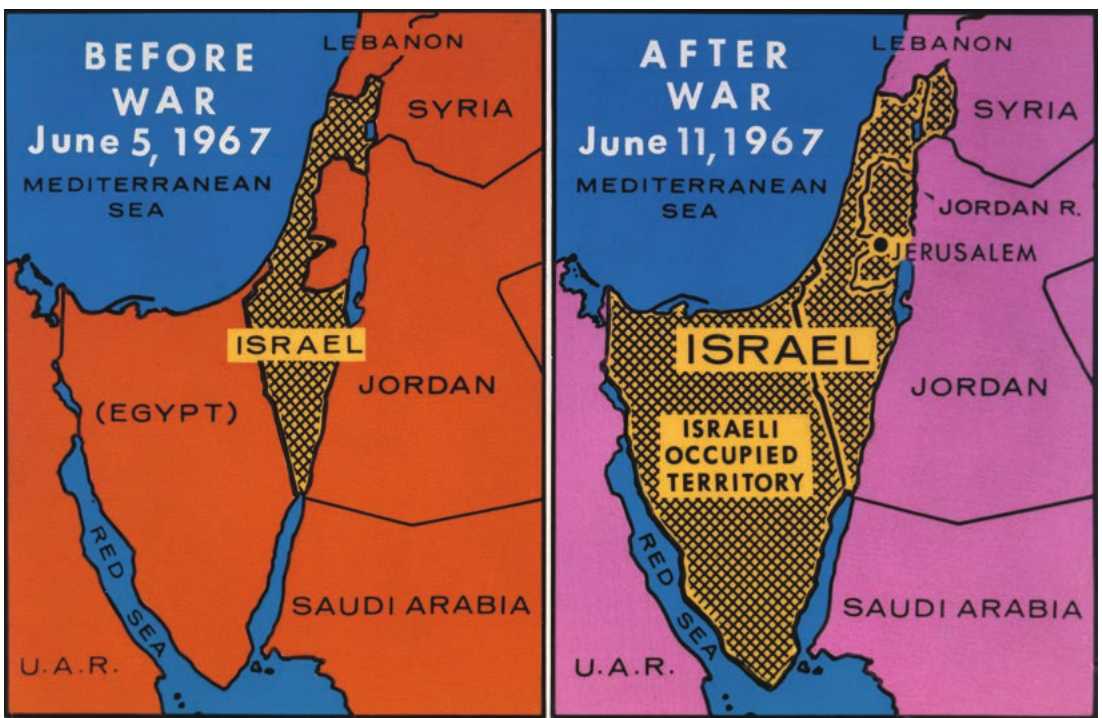
Fearing imminent attack by Arab neighbours, Israel launched a pre-emptive strike on 5 June 1967. Israeli forces defeated the armies of Egypt, Jordan, and Syria in just six days. Israel gained control of the Gaza Strip, the Sinai Peninsula, the West Bank of the Jordan River, Jerusalem, and the Golan Heights.
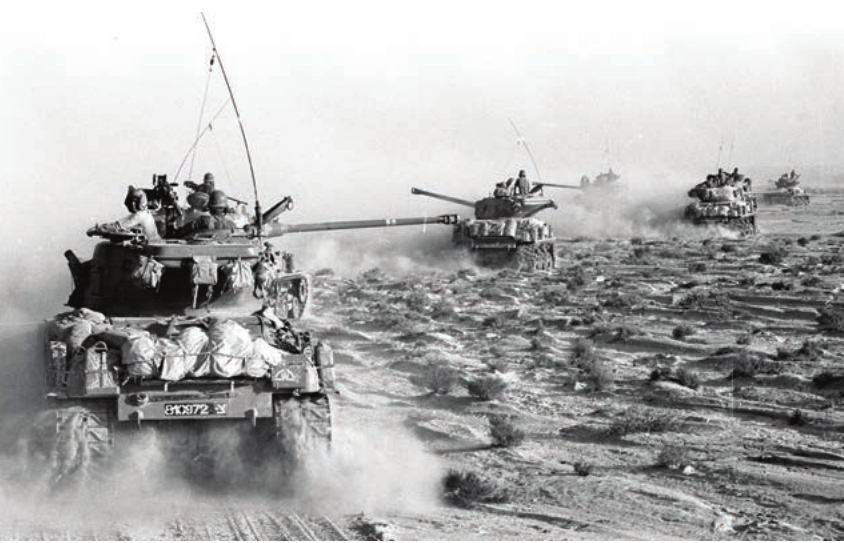
The United States pressured Israel to agree to a ceasefire, as American leaders did not want to alienate pro-American Arab nations. There was initial admiration for Israel's stunning military victory, and the United States became even more committed to supporting Israel. Meanwhile, the Soviet Union armed its Arab allies, particularly Egypt and Syria, with more weapons.
Note
The UN Security Council passed Resolution 242, which called for occupied territories to be returned in exchange for Israel's right to live in peace. This resolution established the "land for peace" framework that would guide future negotiations for decades to come.
The Yom Kippur War (1973)
The Yom Kippur War began on Saturday, 6 October 1973, during Yom Kippur, a Jewish holy day. Egyptian and Syrian forces launched a surprise attack on the Golan Heights and Sinai, catching Israeli forces unprepared. The Syrians deployed a force of 1,400 tanks against only 150 Israeli tanks. In the Sinai, 500 Israeli soldiers faced 80,000 Egyptians. Other Arab nations also sent forces to fight against Israel.
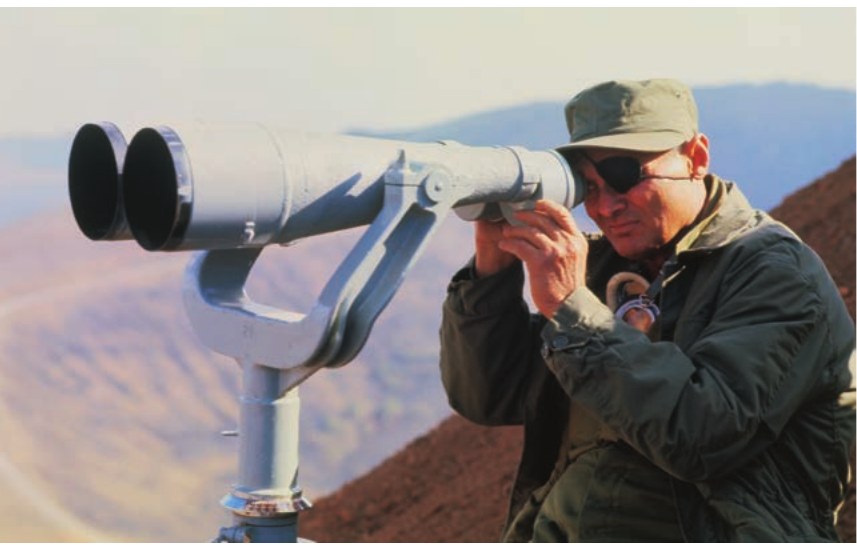
Israeli forces were initially overwhelmed. However, on 8 October, Israel launched a surprise counter-attack in the Sinai using reserve forces. They broke through Egyptian lines and advanced through the Sinai Peninsula, getting to within 100 kilometres of Cairo. The Israeli counter-attack in the Golan Heights also achieved spectacular success, advancing to within 56 kilometres of Damascus.
Important
Near nuclear confrontation
The war brought the superpowers dangerously close to direct conflict. The Soviet Union threatened military involvement and put airborne divisions on high alert. In response, on 25 October, the United States placed all military forces on DEFCON 3 alert, bringing the world to the brink of nuclear war. Both nations mobilised air and naval forces. Eventually, the Soviets backed down from taking military action and were convinced by the United States to use the UN Security Council to resolve the crisis.
The Yom Kippur War was considered so important to both superpowers that they were willing to risk nuclear confrontation over it. This was the closest the two nations had come to nuclear war since the Cuban Missile Crisis in 1962. The war ended in an Israeli victory, but it could have ended in global disaster.
In the war's aftermath, Soviet influence in the Middle East declined significantly. This decline resulted from the Soviet Union's failure to help its Arab allies defeat Israel in both the 1967 and 1973 wars. Arab countries rejected Soviet communism, and since the Soviet Union could not assist them effectively against Israel, they lost interest in maintaining Soviet ties.
Camp David Peace Agreement (1979)
In March 1979, Israel and Egypt sealed a historic agreement that promised peace and security in the Middle East. This became known as the Camp David Accords, negotiated at President Jimmy Carter's Camp David retreat in September 1978.
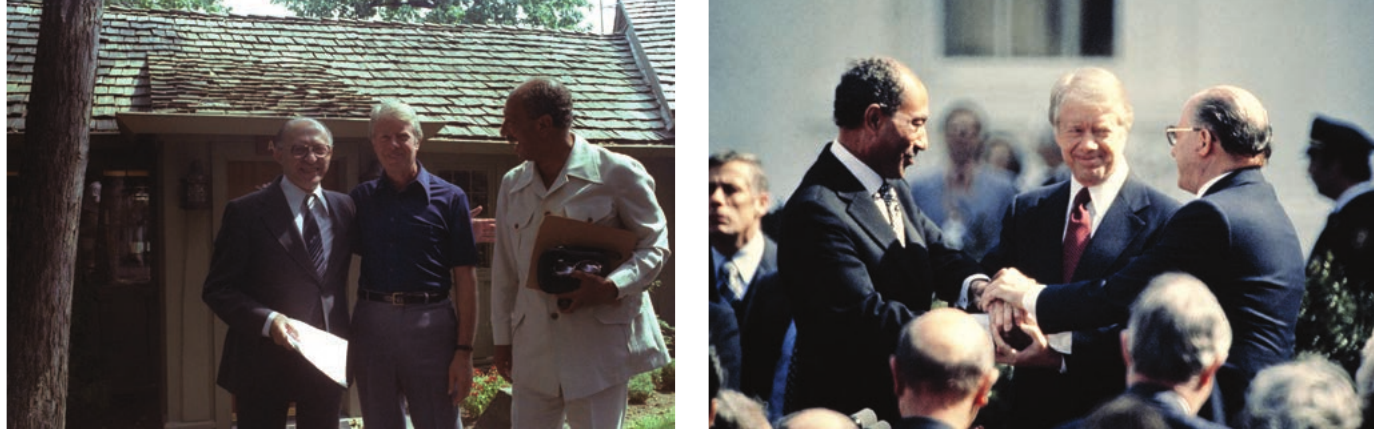
The agreement represented a stunning foreign policy achievement by President Carter, who skilfully managed two weeks of difficult negotiations. To have the leaders of two implacable enemies - Israel and Egypt - embrace, shake hands, and make such a historic agreement was remarkable. The agreement included mutual recognition, establishment of diplomatic relations, and Israel's withdrawal from the Sinai Peninsula in exchange for peace.
Note
Cold War significance of Camp David
In terms of the Cold War, the Camp David Accords had major significance: Egypt abandoned its alliance with the Soviet Union and became a United States ally. From this point forward, Soviet influence in the Middle East was seriously weakened. The fact that the Soviet Union had no involvement in the Camp David negotiations demonstrated its diminished role in the region.
The end of détente
Détente had certainly been more productive than earlier periods of peaceful coexistence. The Cuban Missile Crisis and Yom Kippur War had brought the world dangerously close to nuclear catastrophe, but at least during the détente period, the leadership of both superpowers maintained communication and dialogue. This changed dramatically in the early 1980s.
Important
Many historians view the early 1980s as the most dangerous period of the entire Cold War. The year 1983 contained two separate incidents that could have ended human civilisation, though the public remained largely unaware of how close the world came to disaster.
The Soviet invasion of Afghanistan (1979)
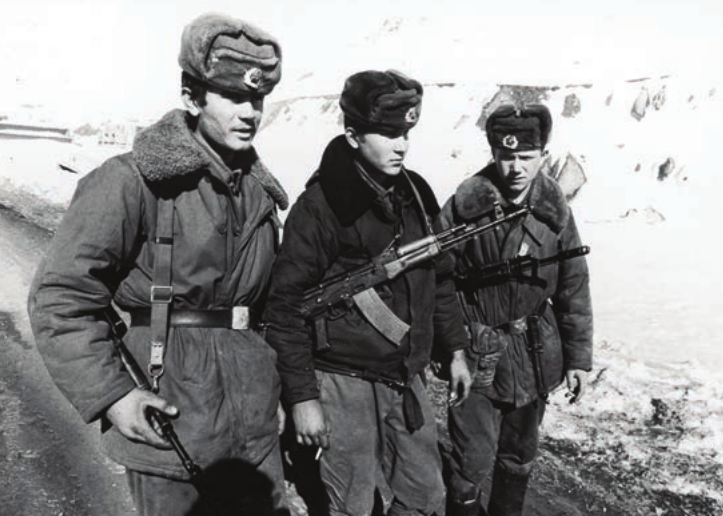
The event that destroyed détente was the Soviet invasion of Afghanistan in December 1979. The Soviets intervened to prop up a pro-Soviet government in Afghanistan. Like the Americans before them, the Soviets had been shaken by the Islamic Revolution in Iran in 1979. They feared that if the pro-Soviet regime in Afghanistan fell to Islamic insurgents, instability could spread to Soviet Central Asian republics with large Muslim populations.
Important
Why Afghanistan ended détente
Though the Soviets viewed this as a defensive action to protect their southern border and sphere of influence, the rest of the world saw it differently. The invasion appeared to be Soviet expansion into a new region, violating the understanding that had underpinned détente. President Carter was enraged by the invasion and responded with strong measures, including boycotting the 1980 Moscow Olympics and providing support to Afghan resistance fighters.
When Ronald Reagan became president in 1981, he promised to be much tougher on the Soviet Union than his predecessors. Reagan pursued a policy of "peace through strength", which meant significant increases in military spending and a more confrontational approach to Soviet actions around the world. The atmosphere of cooperation that had characterised détente was replaced by renewed hostility and mistrust.
Note
The Soviet intervention in Afghanistan would prove costly for the USSR. The conflict dragged on for nearly a decade, draining Soviet resources and morale. It became known as "the Soviet Union's Vietnam" - an unwinnable war that undermined public support and contributed to the eventual collapse of the Soviet system.
Summary
Summary
Key points about détente:
-
Détente represented a period of reduced tensions between the United States and Soviet Union from the late 1960s to 1979, emerging after the Cuban Missile Crisis and driven by economic pressures, the Sino-Soviet split, and mutual recognition of the dangers of nuclear war.
-
Major achievements included the Nuclear Non-Proliferation Treaty (1968-1970), SALT I and the ABM Treaty limiting strategic weapons, and the Helsinki Final Act (1975) which promoted human rights and recognised European borders.
-
The Vietnam War influenced American foreign policy during détente, as the United States sought Soviet assistance in ending the conflict, while Nixon's visit to China in 1972 exploited the Sino-Soviet split through triangulation.
-
The Middle East became a dangerous arena for superpower rivalry, with the Six-Day War (1967) and especially the Yom Kippur War (1973) bringing the superpowers to the brink of nuclear confrontation, while the Camp David Accords (1979) diminished Soviet influence in the region.
-
Détente ended with the Soviet invasion of Afghanistan in December 1979, which was seen as Soviet expansion rather than defensive action, destroying the trust and cooperation that had developed and ushering in a new period of Cold War hostility under President Reagan.