The First Rumblings of Dissent (HSC SSCE Modern History): Revision Notes
📚Revision Notes
The First Rumblings of Dissent
Introduction: Suspicion about the war's origins
When World War I broke out in August 1914, many people on both sides questioned whether their governments were being truthful about why they had gone to war. The path to full-scale conflict between the Great Powers was unclear and confusing, making citizens deeply suspicious of their leaders' claims that the war was purely defensive.
Note
This suspicion grew stronger because neither side clearly explained what they hoped to achieve through the war. The Allied powers did not publicly state their war aims until 10 January 1917, more than two years after fighting began. This silence led many to wonder what their governments were really fighting for.
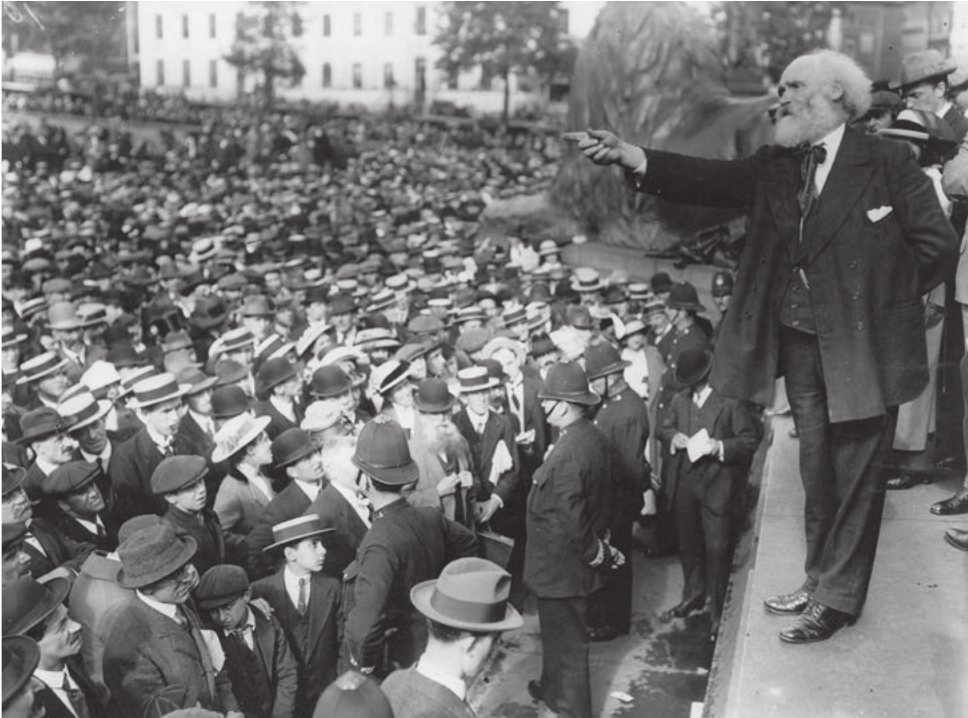
From the very beginning of the war, voices of dissent could be heard in the countries fighting on the Allied side. There was widespread speculation that governments had deceived their citizens about their nations' roles in the July Crisis that led to war.
British opposition to the war
CP Scott and the Manchester Guardian
In Britain, opposition to the war emerged even before the country officially entered the conflict. Charles Prestwick Scott (known as CP Scott), editor of the Manchester Guardian newspaper, passionately opposed British intervention in what he saw as a European war.
On 31 July 1914, just days before Britain's commitment to war, Scott wrote a powerful editorial against intervention. The next day, as war drew closer, he became even more pessimistic and critical.
Important
Scott accused certain groups of running an organised conspiracy to drag Britain into the war. He argued that this conspiracy was disloyal to Parliament, which should be the constitutional guardian of national interests during times of crisis. Instead, the conspirators preferred to share information with selected newspaper editors rather than with the people's elected representatives.
The liberal publicist opposition
Many others shared CP Scott's views. Within his circle of Liberal publicists (journalists and writers), there were emotional declarations, both private and public, right up to 2 August 1914, that strongly opposed British intervention.
These critics described the impending war as:
- A causeless and unpular war
- Ruinous madness
- A wicked gamble
- A war in the darkness
- Based on conspiracy and hidden contracts
They argued that the only sensible course of action was strict neutrality for Britain.
Note
Exam tip: Don't assume that everyone in Britain welcomed the war in 1914. While war enthusiasm did exist, there was also significant opposition, particularly among Radicals and Liberal intellectuals.
The radical perspective
These anti-war sentiments reflected a minority view in August 1914, but this minority had deep roots. They came from the traditional Liberal opposition to foreign entanglements, believing that Britain should not become involved in continental European conflicts.
Note
Key term: Radicals were those on the left wing of the Liberal Party in Britain who opposed imperialism and promoted a liberal-internationalist world order. The term also included people outside the Liberal Party who held similar views.
Although war hysteria swept these voices aside initially, their ideas remained important. Within two years, radical prescriptions for securing a just peace and creating a reformed international order had become central to national debate.
German dissent
Britain was not the only country where people questioned their government's narrative about the war. In Germany too, many citizens were suspicious about their government's claims that this was a war of self-defence and had doubts about what Germany's true war aims were.
Hans Gatzke on German war aims
German historian Hans Gatzke, writing in 1966, emphasized the central importance of war aims to understanding German policy during World War I. He argued that the question of war aims was the most important problem of German foreign policy during the First World War. All other issues, while significant, were secondary and in some way related to this central question.
Karl Liebknecht's opposition
Karl Liebknecht, speaking to the Reichstag (German parliament) on 2 December 1914, challenged the official narrative. He made several key points:
Important
- This war was not a defensive war for Germany
- Citizens could not trust a capitalist government when it claimed to be defending the country
- Peace should be made as soon as possible
- Any peace settlement should not humiliate any nation
- All efforts toward such a peace should be supported
- A simultaneous and continual demand for peace in all belligerent countries could stop the bloody massacre
Albert Einstein's vision
Albert Einstein, a member of the New Fatherland League (Bund Neues Vaterland or BNV), wrote in October 1915 about his hopes for Europe's future. He believed it was possible to create a state-like organization in Europe that would make European wars impossible, just as war between Bavaria and Württemberg had become impossible within the unified German Reich. Einstein argued that no friend of spiritual evolution should fail to stand up for this most important political aim of the time.
Key British voices of dissent
Four British intellectuals played particularly important roles in challenging their government's war policy and promoting ideas about how to achieve lasting peace. Though their voices were barely heard above the clamour for war in August 1914, their ideas became very influential throughout the war with peace groups and even with American President Woodrow Wilson.
Goldsworthy Dickinson
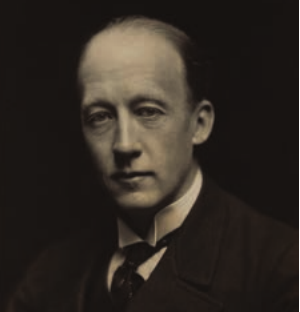
Goldsworthy Lowes Dickinson (1862-1932) was a Cambridge academic who became a member of the Union of Democratic Control (UDC) and the Bryce Group. He is credited with coining the term 'league of nations' in 1915.
In an article titled 'The holy war' published in The Nation on 8 August 1914, Dickinson made powerful arguments:
Important
- Although people themselves are sane, their actions have become mad
- This has happened because everyone is in the hands of about twenty individuals called Governments
- These men have willed this war over the heads of ordinary people
Dickinson called for the friends of reason to wage their own eternal and holy war. He urged them to drive home the lessons of what was happening, first into their own hearts and minds, and then, if given strength, into the conscience of all humankind. Even in this dark hour of defeat for reason, he insisted people must not forget this mission.
Arthur Ponsonby
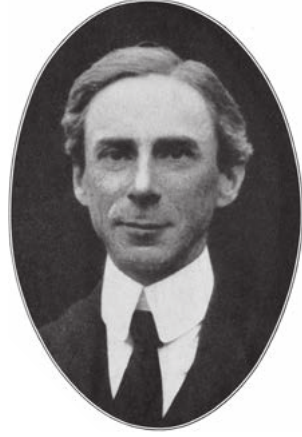
Arthur Ponsonby (1871-1946) was a Liberal politician and Radical who became one of the five founding members of the Union of Democratic Control.
Note
In his diary entry on 13 August 1914, Ponsonby expressed shock at what had happened. He found it utterly incredible that the long-expected European war had actually come. He observed that about a dozen diplomats, a score of ministers, and two or three monarchs had been offending one another. To make things straight, they had ordered out millions of peaceful citizens to go and get massacred.
Bertrand Russell
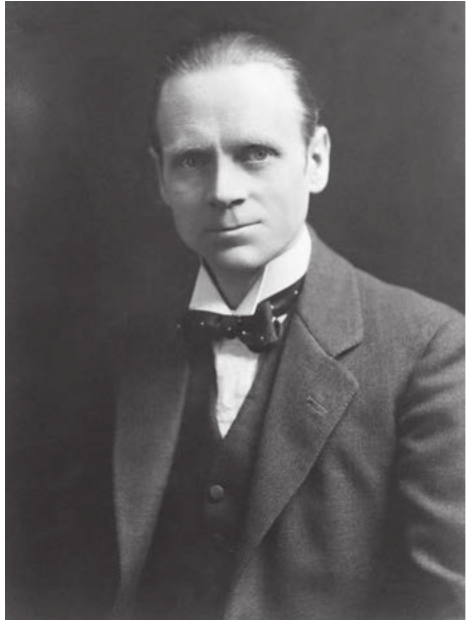
Bertrand Russell (1872-1970) was an English mathematician and philosopher. He was a member of the UDC and later became Chairman of the No-Conscription Fellowship (NCF).
In a letter to the editor of The Nation published on 15 August 1914, Russell identified the forces he believed were responsible for the war. He wrote about vast forces of national greed and national hatred that were:
- Directed by governments and the press
- Fostered by the upper class as a distraction from social discontent
- Artificially nourished by the sinister influence of armaments makers
- Encouraged by a whole foul literature of glory
- Promoted by every history textbook that polluted children's minds
Russell's analysis blamed the war on elite manipulation of public opinion and the promotion of militaristic values.
Norman Angell
Norman Angell (1872-1967) had become famous through his book The Great Illusion, published in 1910. He was one of the five founding members of the UDC in 1914 and was well known on both sides of the Atlantic, especially in anti-war circles.
In an article titled 'The unsound foundations' published in The Nation on 8 August 1914, Angell made several sophisticated arguments:
On the paradox of war: Angell pointed out that this was not a question of two rights colliding. Rather, everybody had wanted not to go to war, yet everybody had gone to war. The action which people did not intend, they had taken. The action they did intend, they had not taken.
Note
On the foundations of peace: Angell argued that the problem of peace was the same as the problem of laying the foundations of civilized society so that a stable and secure superstructure became possible. It was all one general interdependent problem. Constructive social work depended upon making peace secure, peace depended upon an educated democracy, while militarism in the long run was fatal to democracy. If democracy was to survive, the general war problem must find a solution.
On international interdependence: Angell observed that the interdependence of the modern world had made the whole conception of society as conglomerations of rival states an absurdity. This was an impossible foundation for work in the world. What was happening to the credit system of the world demonstrated the unity of humankind and the need for confidence and cooperation if states were to fulfill the functions for which they were created.
The significance of these dissenting voices
These four thinkers shared several common beliefs:
Important
- The war was not inevitable and could have been avoided
- Governments had acted without proper democratic control
- Secret diplomacy and hidden agreements had led nations into war
- The international system based on rival nation-states was fundamentally flawed
- A new international order based on cooperation was both necessary and possible
- Democracy required popular control over foreign policy
Although these voices represented a minority in August 1914, they laid the groundwork for important developments. Their ideas about democratic control of foreign policy, open diplomacy, international cooperation, and collective security would influence peace movements throughout the war. They would also influence the peace settlement, particularly through their impact on President Woodrow Wilson's Fourteen Points.
Note
Exam tip: When discussing opposition to the war, explain that these dissenters were not simply pacifists who opposed all war. They had sophisticated arguments about how the international system needed to change to prevent future wars.
Remember!
Summary
Key Points to Remember:
-
The unclear origins of World War I and the lack of stated war aims made many people suspicious of their governments' claims that the war was defensive.
-
Significant voices of dissent existed from the very beginning of the war in both Britain and Germany, challenging official narratives.
-
Key British dissenters included Goldsworthy Dickinson, Arthur Ponsonby, Bertrand Russell, and Norman Angell, who all questioned how Britain entered the war and promoted ideas for lasting peace.
-
These dissenters argued that the war resulted from government conspiracy, secret diplomacy, and an outdated international system based on rival nation-states.
-
Although representing a minority view in August 1914, these ideas became increasingly influential throughout the war and helped shape thinking about the post-war international order.