The Complex Nature of World War I (HSC SSCE Modern History): Revision Notes
📚Revision Notes
The Complex Nature of World War I
Understanding the complexity of World War I
World War I stands out as one of history's most complex and difficult-to-understand conflicts. Unlike later wars, many aspects of WWI remain subjects of intense historical debate, with scholars unable to reach consensus on fundamental questions about the war's nature and purpose. This complexity makes it challenging for students to grasp what the conflict was truly about.
The fact that a single assassination could trigger a global war of unprecedented destruction strikes many people today as absurd. Historian Christopher Clark describes WWI's origins as the most complex event in modern times, but the entire war shares this bewildering complexity. This has created real obstacles to understanding what the participants were fighting for and why the conflict continued for so long.
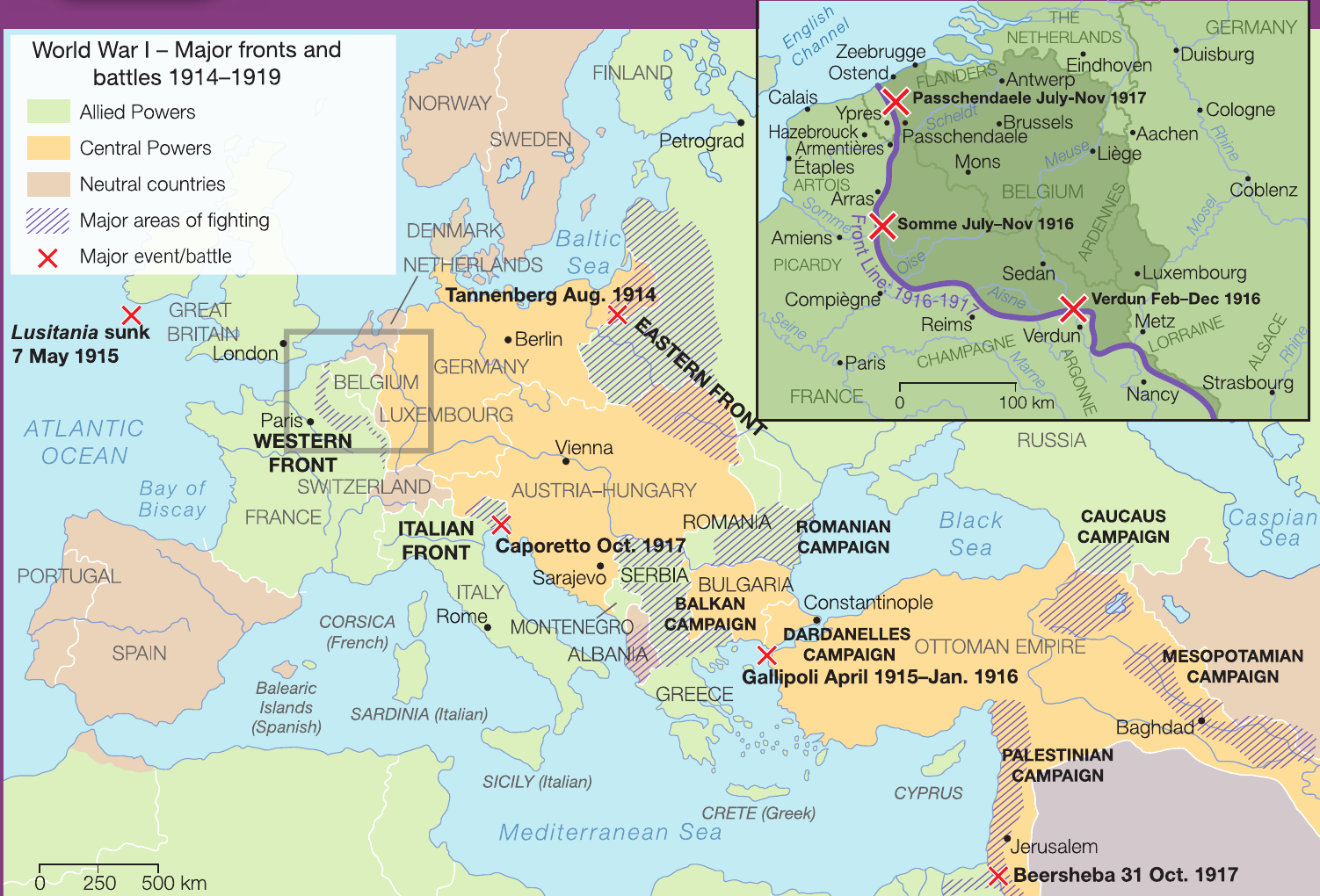
Despite over a century of extensive historical research covering diplomatic, political, economic, military and social dimensions of the war, clarity remains elusive for most people. National myths surrounding the war's commemoration have often obscured rather than illuminated its true nature.
Note
Key term: Commemorate means to remember officially and give respect to a great person or event, especially through public ceremonies or memorials.
Comparing WWI with WWII
Origins: clarity versus confusion
To understand WWI's complexity, it helps to compare it with World War II. The differences are striking:
World War II:
- Clear origins through military aggression by Italy, Germany and Japan
- No debate about how it started
- Obvious aggressor nations
World War I:
- Origins remain hotly debated by historians
- Multiple interconnected causes
- Responsibility disputed among nations
- Debate will likely continue indefinitely
War aims: clear versus unclear
The purposes behind each war also differ dramatically:
World War II:
- Clear ideological struggle between fascism/Nazism and Allied democratic values
- War aims spelled out in the Declaration of the United Nations (1 January 1942)
- Fight against clearly evil regimes
World War I:
- War aims remained unclear throughout most of the conflict
- Appeared to be about geopolitical and imperialist rivalry
- Many war aims kept secret
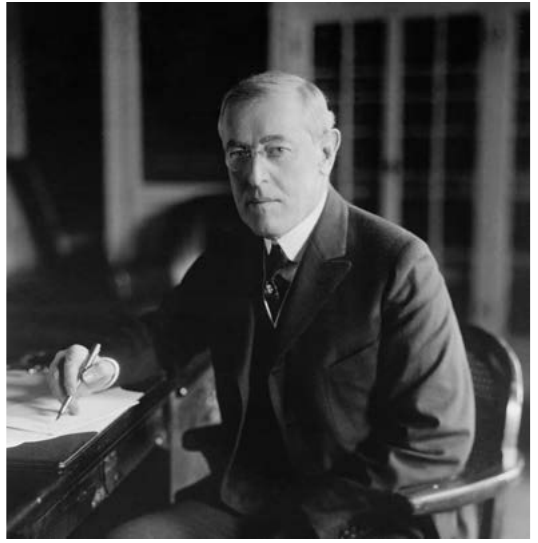
- High ideals only emerged late in the war (1917-1918) with Wilson's and Lenin's competing visions
Important
Critical Difference: The fundamental distinction between WWI and WWII lies in clarity. WWII had clear aggressors, clear purposes, and clear battlefield turning points. WWI had none of these characteristics, making it inherently more complex to understand and explain in examinations.
Battlefields and endings: decisive versus indecisive
Even the military dimensions show stark contrasts:
World War II battlefield progression:
- Clear two-phase structure:
- 1939-1942: Axis powers winning
- 1942-1945: Allies gaining upper hand
- Three decisive turning-point battles: El Alamein, Stalingrad and Midway
- Victory seemed assured after these battles
World War I battlefield progression:
- No clear turning points indicating certain victory
- Massive inconclusive battles lasting months
- Horrendous casualties without decisive outcomes
- Beginning of 1918: still unclear who would win
- Allied generals expected fighting into 1919-1920
- War ended suddenly and unexpectedly in November 1918

Note
Exam tip: When comparing the two world wars, focus on the fundamental differences in clarity. WWII had clear aggressors, clear purposes, and clear battlefield turning points. WWI had none of these, making it inherently more complex to understand and explain.
How the wars ended: straightforward versus complicated
World War II's ending:
- American and Soviet forces overran Nazi Germany
- Japan bombed into submission through four campaigns plus two atomic bombs
- Clear military defeat of Axis powers
World War I's ending:
- Sudden armistice in November 1918
- German army still capable of fighting
- Allied commanders surprised by German collapse
- Multiple factors contributed, not just battlefield defeats
- German High Command's decision to seek peace proved decisive
Note
Key term: An armistice is an agreement between warring countries or groups to stop fighting temporarily, especially to discuss possible peace terms.
The nature of WWI's complexity
Why was there no negotiated peace?
A puzzling aspect of WWI is why it continued for years despite:
- Ongoing stalemate with no prospect of victory
- Massive casualties
- Both sides claiming to fight defensive wars, not wars of conquest
If neither side sought territorial conquest and both claimed self-defence, why couldn't they negotiate peace? This question highlights the war's fundamental complexity. Several factors explain this paradox:
- Secret treaties committing nations to specific outcomes
- Domestic political pressures preventing compromise
- Fear of appearing weak to enemies
- Belief that one more offensive might achieve breakthrough
- Unwillingness to accept that millions had died for nothing
The turning points at grand strategy level
Unlike WWII's battlefield turning points, WWI's decisive moments occurred at the level of grand strategy – the overall approach to achieving war aims through military, political, economic and diplomatic means.
Important
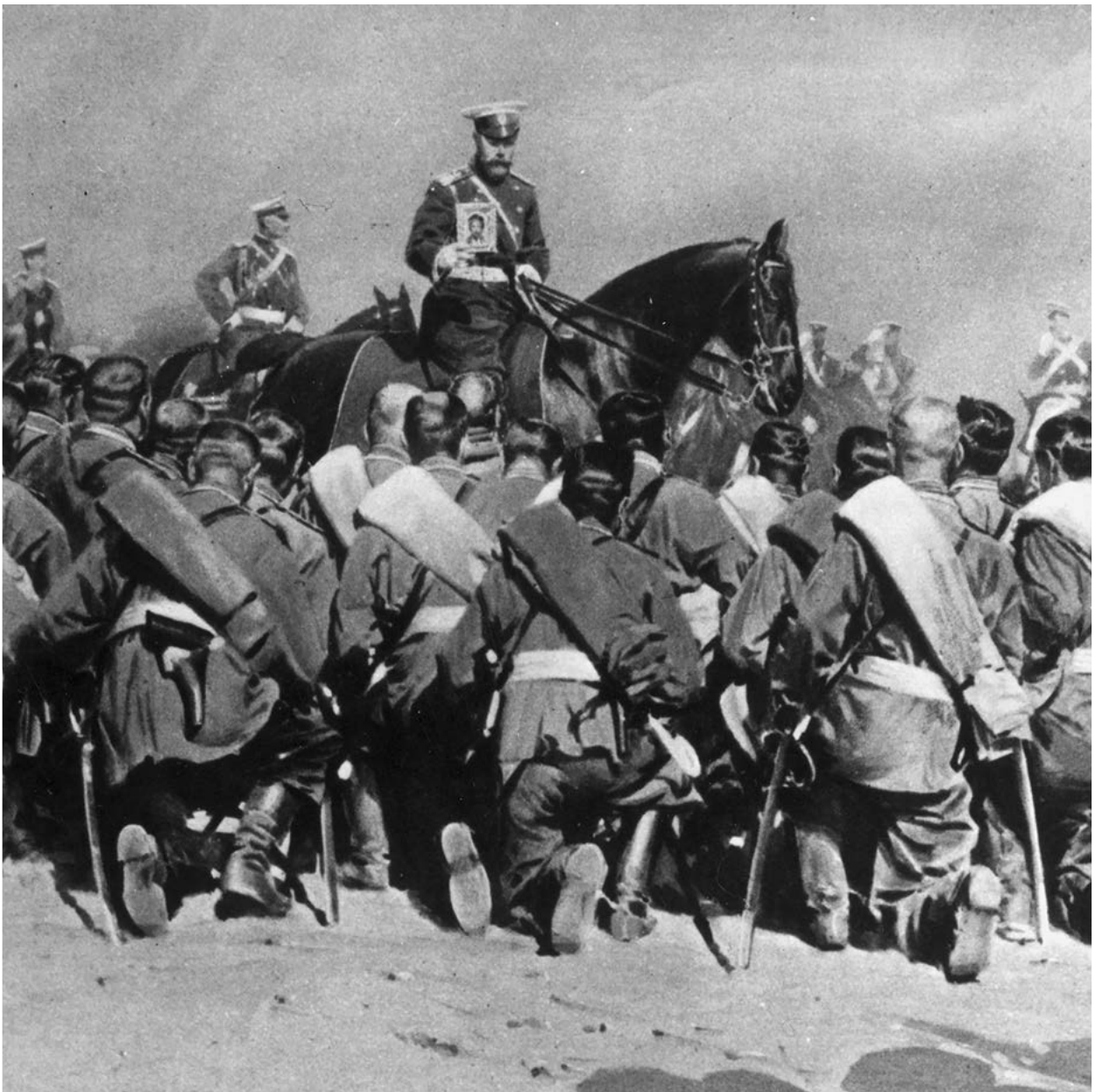
First turning point: mid-war decision to fight to the end (late 1916)
Both sides rejected negotiated peace and committed to victory at any cost. This decision fundamentally changed the war's nature and made a negotiated settlement impossible.
Central Powers' approach:
- Reintroduced unrestricted submarine warfare
- Aimed to starve Britain into submission
Allied approach:
- Lloyd George became British Prime Minister
- Led Conservative-dominated coalition government
- Pledged to fight until achieving a "knock-out blow"
- Government became known as "Knock-Out Blow" coalition
- Supporters called "Bitter-enders"
In Germany:
- Politics shifted rightward
- Hindenburg and Ludendorff gained increasing influence
- Hardline military approach dominated decision-making
Important
Second turning point: Russia and America (1917)
Two dramatic developments in 1917 potentially changed everything, creating a race between opposing forces:
Russian Revolution (March 1917):
- Favoured Germany
- Weakened Allied eastern front
- Eventually led to Russian withdrawal
American entry (April 1917):
- Favoured Allies
- Brought massive resources and manpower
- Tipped long-term balance against Central Powers
The critical question: Which would prove more decisive – Russian withdrawal or American entry?
Note
Key term: The Bolsheviks were a revolutionary political party led by Lenin. After splitting with the Mensheviks in 1903, they seized power in Russia in November 1917 and became the Communist Party.
Both developments were potential game-changers, but throughout 1917-1918 it remained unclear which would prove more decisive.
The situation at the start of 1918
By January 1918, Germany appeared in a stronger position:
- Negotiated armistice with Bolshevik Russia
- Lenin had promised to end the war
- Bolsheviks signed ceasefire after seizing power (November 1917)
- Fighting ended on Eastern Front
- Over one million German soldiers could transfer to Western Front
Meanwhile for the Allies:
- American forces gradually building up
- Full mobilisation would take time
- Industrial production ramping up
The critical question became: which factor would prove decisive – Russian withdrawal or American entry?
Competing visions for the postwar world
The emergence of ideological war aims
War weariness grew on both sides, leading to increased popularity of antiwar movements. These groups opposed their governments' war aims and pressured for revision, believing this would enable a just and lasting negotiated peace.
The League of Nations concept
Antiwar movements on both sides proposed establishing a "league of nations" to maintain peace after the war. This idea only became realistic when championed by US President Woodrow Wilson.
Note
Wilson's vision: democracy and international cooperation
In his Fourteen Points speech (8 January 1918), Wilson outlined his postwar vision:
- Establishment of a League of Nations
- Self-determination for peoples
- Open diplomacy (no secret treaties)
- Freedom of the seas
- "Making the world safe for democracy"
Lenin's vision: communist revolution
Lenin proclaimed an opposing vision:
- International working-class communist revolution
- Destruction of the capitalist system
- Capitalism as the root cause of war
- Soviet-style governments replacing monarchies and democracies
Important
Significance: By 1918, competing ideological visions emerged that had not existed at the war's beginning. This gave the conflict new dimensions beyond territorial and geopolitical disputes. The war evolved from a struggle over territory and power to a clash of fundamentally different visions for humanity's future.
Tactical developments in 1918
The German Spring Offensive (March-April 1918)
Ludendorff gambled everything on one massive offensive:
- Threw all available forces, including one million men from Eastern Front, at the Allies
- Aimed to break the British army before Americans arrived in sufficient numbers
- For the first time since 1914, war of movement resumed
- Used innovative storm trooper tactics
- Achieved stunning initial successes
Note
Storm trooper tactics:
- Elite infantry units trained for infiltration
- Bypassed strong points
- Penetrated deep into enemy lines
- Followed by regular infantry to consolidate gains
- Avoided getting bogged down in costly frontal assaults
Despite winning many battles and forcing Allied retreats, Ludendorff's offensive failed to achieve decisive victory. By April 1918 it had run out of steam, and the Allies began counter-attacking.
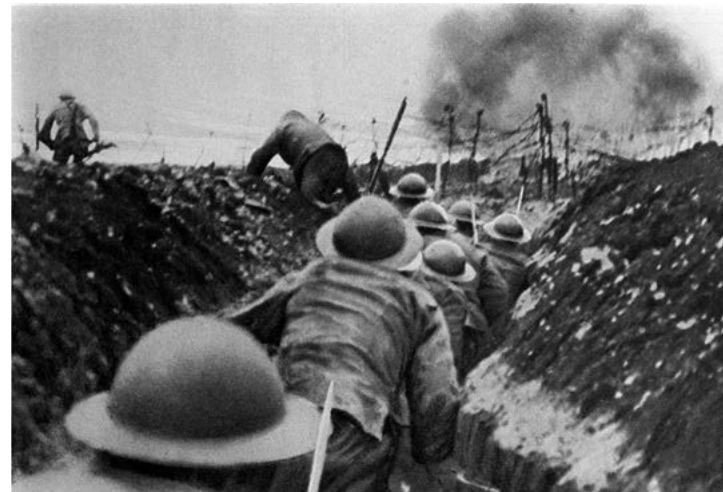
Allied tactical innovations
Example
Battle of Le Hamel (4 July 1918)
Australian General Monash pioneered new combined-arms tactics that revolutionized warfare:
Key innovations:
- Coordinated infantry, artillery, tanks and aircraft
- Precise timing and communication
- Limited objectives clearly defined
- All arms working together as integrated force
- Captured village with minimal casualties
Impact: These tactics were adopted by other Allied commanders and proved highly effective in subsequent battles.
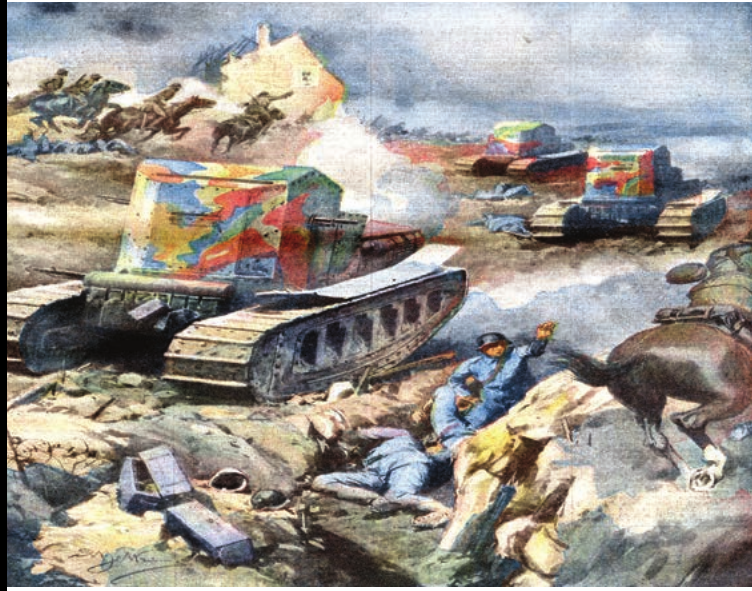
Battle of Amiens (8 August 1918)
The first major Allied breakthrough since 1914:
- Three-day battle spearheaded by Canadian and Australian forces
- Supported by 500 tanks
- Broke through German lines
- Marked beginning of Hundred Days Offensive
Important
Significance: Ludendorff called 8 August 1918 the "black day of the German army," recognising it as a major turning point. This was the first time German military leadership acknowledged that victory was no longer achievable.
The Hundred Days Offensive (8 August - 11 November 1918)
Allied forces remained on the offensive for the next 100 days:
- Heavy Allied casualties but consistent forward movement
- First time in the war with sustained advance
- Large numbers of German prisoners taken
- Germans retreated in disciplined manner
- German front line shortened, becoming easier to defend
- German army by no means beaten
Note
Important context: Allied commanders expected fighting to continue into 1919 and possibly 1920. Americans planned to increase forces from two million to four million troops for a final 1919 offensive. The war's sudden end surprised military planners on both sides.
Reasons for the end of the war
Multiple factors in Allied victory
The Allied victory cannot be explained by battlefield events alone. Historians have identified several interconnected factors:
1. Battlefield successes
- Hundred Days Offensive pushed Germans back
- Demonstrated improving Allied tactics
- Showed German army could be defeated
- However, German forces remained disciplined and capable
2. The Allied naval blockade
- Prevented food and supplies reaching Central Powers
- Also blocked neutral countries trading with Germany
- Aimed to starve enemy home fronts
- Economist Maynard Keynes called it the "perfect instrument"
- Effectiveness greatly increased with American entry
- Created severe shortages and malnutrition in Germany
3. Political unrest on the German home front
- War weariness and starvation fueled discontent
- Socialist and revolutionary movements grew
- Eventually erupted into revolution on 9 November 1918
- Weakened government authority
- Made continuing the war politically impossible
Important
The decisive factor: German High Command's decision
Probably the most important reason the war ended in November 1918 rather than later was a decision by Germany's military leadership. This demonstrates that WWI did not end through simple military defeat, but through a complex combination of military, economic, and political pressures that convinced German leaders they could not win.
Timeline of Germany's armistice request:
- 29 September 1918: Ludendorff recommended Germany ask for armistice
- Kaiser agreed to the request
- Prince Max of Baden appointed as new Chancellor
- Germany requested peace based on Wilson's Fourteen Points
- Six weeks of negotiations followed:
- Between Wilson and German government
- Between Wilson and Allied leaders
- 11 November 1918: Armistice agreed
Critical analysis: If the German High Command had not lost its nerve, continuing the war into 1919 might have been possible. The German army remained capable of fighting, the front line was shortening, and defensive positions were being strengthened.
Note
Exam tip: When explaining why WWI ended, emphasise that it was not a simple military defeat. Multiple factors combined: battlefield pressure, the blockade, political unrest, and crucially, the German leadership's decision that they could not win. This multi-causal explanation demonstrates the war's complex nature and is essential for achieving high marks in examinations.
Learning aids for revision
Key battles table
Create your own summary table for major WWI battles:
| Battle | Dates | Location | Key Details | Significance |
|---|---|---|---|---|
| Frontiers | ||||
| Mons | ||||
| Marne | ||||
| Race to the Sea | ||||
| Tannenberg | ||||
| Verdun | ||||
| Somme | ||||
| Passchendaele | ||||
| Le Hamel | July 1918 | France | Monash's combined-arms tactics | New tactical approach |
| Amiens | 8 Aug 1918 | France | Allied breakthrough | Beginning of Hundred Days |
Note
Study tip: When filling in this table, focus on how each battle illustrates WWI's complex nature – massive casualties, unclear outcomes, stalemate conditions, or tactical innovations. Connect each battle to the broader themes of complexity and unclear war aims.
Timeline of key events (1917-1918)
1917:
- March: Russian Revolution (weakened Allies)
- April: USA entered war (strengthened Allies)
- November: Bolshevik Revolution (led to Russian withdrawal)
1918:
- January: Wilson's Fourteen Points speech
- March-April: German Spring Offensive
- July: Battle of Le Hamel (tactical innovations)
- August: Battle of Amiens (Allied breakthrough)
- August-November: Hundred Days Offensive
- 29 September: Ludendorff recommended armistice
- 9 November: German Revolution
- 11 November: Armistice signed
Key terms summary
- Grand strategy: Overall approach to achieving war aims through military, political, economic and diplomatic means
- War of attrition: Prolonged warfare aimed at wearing down the enemy through continuous losses
- Entente Powers: Britain, France, Russia and their allies (also called Allied Powers)
- Central Powers: Germany, Austria-Hungary, Ottoman Empire and Bulgaria
- Provisional Government: Temporary Russian government between the March and November 1917 revolutions
Summary
Key points about WWI's complex nature:
-
WWI is fundamentally more complex and harder to understand than WWII because it lacks clear origins, clear war aims, clear battlefield turning points, and a clear path to victory for either side throughout most of the conflict.
-
The decisive turning points in WWI occurred at the level of grand strategy rather than on the battlefield – the mid-1916 decision to fight to the end, Russia's withdrawal versus America's entry in 1917, and Germany's decision to seek an armistice in 1918.
-
Allied victory resulted from multiple interconnected factors: battlefield successes in the Hundred Days Offensive, the devastating effect of the naval blockade, political unrest in Germany, and crucially, the German High Command's decision to seek an armistice rather than fight on into 1919.
-
The war's nature changed significantly over time, with competing ideological visions (Wilson's democratic internationalism versus Lenin's communist revolution) only emerging in 1917-1918, long after the war began.
-
Understanding WWI requires moving beyond battlefield narratives to examine the complex interplay of military, political, economic and diplomatic factors that shaped its course and outcome. This multifaceted approach is essential for SSCE examinations.