Jesus Christ (Jesus of Nazareth) (HSC SSCE Studies of Religion): Revision Notes
📚Revision Notes
Jesus Christ (Jesus of Nazareth)
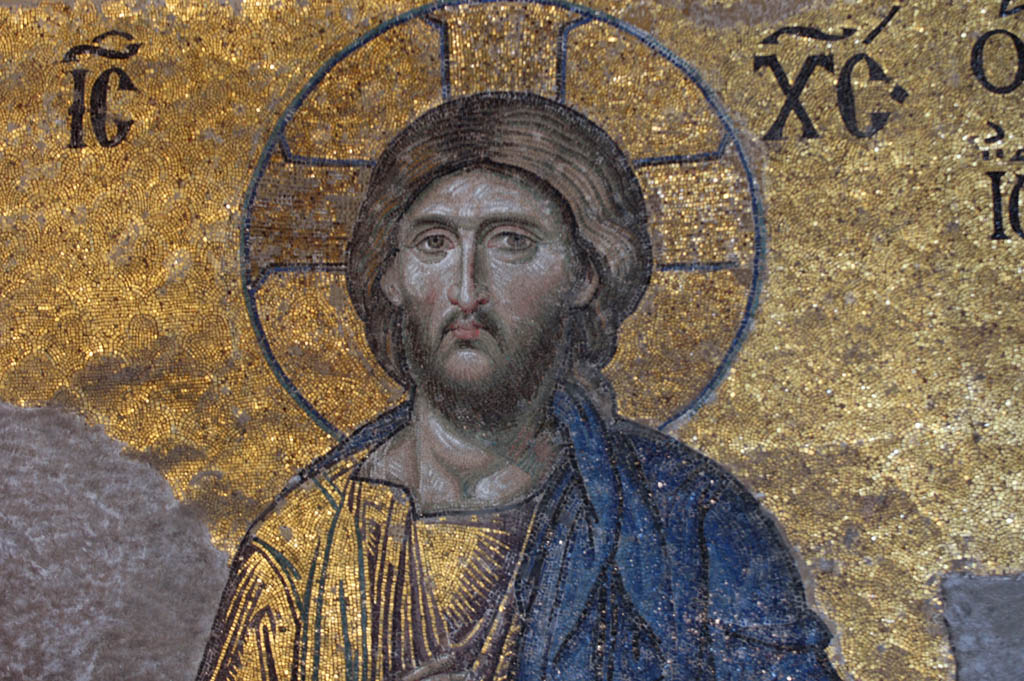
Understanding the sources about Jesus
Nearly everything we know about Jesus comes from the New Testament, a collection of texts written by early Christians approximately 30 to 70 years after Jesus' death. This time gap is important to understand when studying Jesus' life. Some references to Jesus exist outside Christian writings, including mentions in the works of the Jewish historian Josephus and in Roman official documents. However, scholars have found evidence that Christian editors may have altered some of these non-Christian texts.
Note
When studying historical figures like Jesus, we must carefully consider both the mythological and literary aspects of the story alongside historical facts. This doesn't mean dismissing the accounts, but rather understanding how different types of narrative work together to convey meaning.
This means students and scholars must carefully consider both the mythological and literary aspects of Jesus' story alongside the historical facts. It is important to understand that "myth" in religious studies does not mean "made-up story". Instead, myth refers to spiritual or religious ideas expressed in human language – the great stories that help people understand cosmic events and supernatural occurrences in understandable terms.
Important
Understanding "Myth" in Religious Studies
The term "myth" has a very specific meaning in religious and academic contexts. It does not mean "false" or "made-up." Rather, it refers to sacred stories that express profound spiritual truths through narrative form. These stories help believers understand divine realities and cosmic events in human, comprehensible terms.
Most academics agree that Jesus was a real historical figure. However, whether he was the Son of God, as the Gospels declare, is a theological question rather than a historical one. Jewish and Muslim people, for example, deny the divinity of Jesus whilst acknowledging his historical existence. The New Testament itself reveals that very little was known about Jesus except for the final three years of his life. Ironically, the most mythologised parts of Jesus' story – his birth, childhood and adolescence – are the least known by his early followers.
Principal events of Jesus' life
Birth and early years
According to Gospel records, Jesus was born around 6 BCE. He is commonly known as "Jesus of Nazareth", which suggests he may not actually have been born in Bethlehem as the birth narrative states, but rather in Nazareth. The connection to Bethlehem is significant because it was the hometown of King David (circa 900 BCE), a famous Jewish monarch and Messiah figure. Matthew's Gospel opens with an extensive genealogy linking Jesus to King David's family through Joseph, Jesus' legal father.
Note
The Bethlehem-Nazareth Question
The title "Jesus of Nazareth" suggests he may have actually been from Nazareth, not Bethlehem. However, the Gospel writers emphasized the Bethlehem birth to establish Jesus' connection to King David's lineage, which was crucial for establishing his credentials as the prophesied Messiah.
The birth narrative describes how angels visited Jesus' mother, Mary, predicting that she would give birth to the Son of God through parthenogenesis – a virgin birth (Luke 1:26–38, Matthew 1:18–25). The story also mentions the Magi or wise men, possibly star worshippers from Zoroastrianism, the Persian religion. These visitors were said to have arrived soon after Jesus' birth. Interestingly, the Persian Zoroastrian tradition had long predicted the birth of a chosen figure from the womb of a virgin.
Shortly after Jesus was born, the narrative continues that his family fled to Egypt. This flight occurred because King Herod I, a client king acting for the Romans, reportedly ordered the killing of all male babies in Bethlehem. Historical records outside the Bible do not confirm this massacre actually occurred. However, the story parallels a similar account of the Egyptian pharaoh killing babies at the time of Moses, and it aligns with what historians know about Herod the Great's violent character. Following this period in Egypt, Jesus appears to have grown up in or around Nazareth.
Ministry begins: baptism and early teaching
At approximately 30 years of age, Jesus was baptized by John the Baptist. John was likely a Gnostic, Mandaean or Essene – religious groups that emphasized wisdom and purification rituals. Baptism is a religious act of purification by water that allows recipients membership into the Christian community. After his baptism, Jesus wandered in the wilderness for a period of time, where he was tempted by the devil (Luke 3:21–23, 4:1–15).
Following this wilderness experience, Jesus returned to Judea and began preaching. His public ministry lasted approximately three years. During this time, he selected a small band of 12 apostles – followers whom he chose and trained specifically for missions of healing and preaching. Unusually for that historical period, Jesus also included female disciples in his group. Mary Magdalene was particularly prominent, appearing to have been present at most major events during Jesus' final three years.
Example
Jesus' Radical Inclusivity
Jesus' teaching approach broke with traditional practices in several ways:
Step 1: Including the Marginalized
- Mixed freely with "sinners and outcasts"
- Included women as disciples (unusual for the time)
- Elevated Mary Magdalene to a prominent position
Step 2: Challenging Strict Legalism
- Moved beyond rigid rule-following
- Focused on the motives behind actions
- Emphasized compassion over strict adherence to law
Jesus became known as both a teacher and a miracle worker. His approach to Judaism was distinctive. He encouraged his listeners to move beyond the strict legalism that dominated Judaism at the time and instead focus on the motives behind actions. Jesus declared that he had come to fulfil the law of Judaism rather than abolish it. He mixed freely with people considered "sinners and outcasts" by mainstream Jewish society (Matthew 5:17, Mark 2:15–16). Many of Jesus' teachings reflect those of Hillel, a Jewish teacher who had developed a more liberal interpretation of Torah laws in the years before Jesus' birth.
Teaching methods and message
Jesus' teachings were both politically and socially radical. The Sermon on the Mount provides excellent examples of his inspiring message – a moral discourse where he unveiled his theology and philosophy to an assembled crowd. Jesus frequently used parables as his primary teaching device – short stories with religious lessons that could have various meanings for different listeners (Mark 4:1–20). This teaching method made his message accessible to ordinary people whilst also containing deeper spiritual truths for those ready to understand them.
Note
The Power of Parables
Jesus used parables as a sophisticated teaching tool because they:
- Made complex spiritual concepts accessible to ordinary people
- Allowed listeners at different spiritual levels to understand at their capacity
- Contained multiple layers of meaning
- Encouraged active thinking and interpretation rather than passive listening
Jesus also performed miracles that demonstrated his authority and power – manifestations of the sacred or holy that produced effects seemingly contrary to natural laws. These included healing the sick, casting out demons, showing power over nature and even raising the dead (Mark 2:32–34, 4:35–41, John 11:1–44). Unsurprisingly, these dramatic actions soon brought Jesus into conflict with both Jewish religious authorities and Roman political powers.
The final week: confrontation and arrest
In the last weeks of his life, Jesus made what Christians call a "triumphal entry" into Jerusalem. This event is now celebrated as Palm Sunday (Mark 11:1–11). Once in the city, Jesus visited the Temple and dramatically overturned the stalls of moneychangers and other market vendors in the Temple courtyard (Mark 11:15–19). This provocative action challenged the religious establishment's authority and may have been a key factor leading to his arrest and execution.
Jesus then engaged in a series of public arguments with the Pharisees and Sadducees, two major Jewish religious groups (Mark 12:13–40). After what became known as the Last Supper – possibly a Jewish Passover meal celebrating the Exodus and the ideal of freedom – Jesus offered his disciples communion of bread and wine. He compared these elements to his body and blood, an act that became the foundation for the Christian celebration of Holy Communion in churches today.
Note
The Last Supper's Significance
The Last Supper holds multiple layers of meaning:
- It was likely a Passover meal, connecting Jesus' sacrifice to the Exodus liberation
- The bread and wine became symbols of Jesus' body and blood
- It established the practice of Holy Communion that continues in Christian worship
- It represented Jesus' final teaching moment with his closest followers
On Thursday evening, Jesus was arrested by soldiers in the Garden of Gethsemane, just outside Jerusalem (Mark 14:12–50). He was brought to trial before Pontius Pilate, the Roman procurator. Although no Roman historical sources independently record this event, the Gospels state that Jesus was sentenced to death and crucified by Pontius Pilate on what Christians call Good Friday (Mark 15:21–41).
Death and resurrection
Christians believe Jesus' death was necessary to bring salvation for all people – saving them from the punishment of sin. Jesus was hastily buried on Friday evening. On Sunday morning, several women went to the tomb to prepare Jesus' body for permanent burial according to Jewish custom. They discovered the tomb was empty, and angels declared that Jesus had risen from the dead (Mark 16:1–8).
Over the following weeks, Jesus appeared on several occasions to his followers. The apostle Paul records that Jesus was once seen by more than 500 people at the same time (1 Corinthians 15:3–8). Forty days after his resurrection, Jesus was said to have ascended into heaven (Acts 1:6–11). This resurrection is regarded by believers as Jesus' greatest miracle and the central proof of his divinity. It is re-enacted during Easter celebrations, from Good Friday through to Easter Sunday.
Important
The Centrality of the Resurrection
For Christians, the resurrection is not merely one miracle among many—it is the foundational event that validates everything else:
- It proves Jesus' divinity according to Christian belief
- It demonstrates victory over death and sin
- It forms the basis for Christian hope in eternal life
- Without the resurrection, Christianity as a faith system would collapse
Interpreting the principal events in Jesus' life
The New Testament sources
The New Testament forms the central set of texts that make up Christian scripture or sacred writing. Along with possibly some contemporary Gnostic texts, the New Testament provides the main sources for studying the stories of Jesus. The words and deeds credited to Jesus have revolutionized Western society, which for centuries has been considered "Christian". Many people have responded to Jesus' teachings and sought to implement them in their lives.
However, interpreting these sources is complex. There is no single, simple account of Jesus' life. Instead, four Gospels written by early followers provide different perspectives, though these were composed sometime after the period in which Jesus actually lived. Each Gospel concentrates on various aspects of Jesus' life and message.
Dating the Christian writings
Scholars have developed a timeline for when different parts of the New Testament were written. The Letters of Paul are the oldest Christian sources (from the 50s CE), but they provide few details about Jesus' actual life. Mark is considered the earliest Gospel account, written possibly 30 to 50 years after Jesus' death (65-75 CE). His account concentrates primarily on the last three or four years of Jesus' life. Luke's Gospel (85-95 CE), written after Mark's, contains additional details about Jesus' birth. Some scholars today understand these birth details in mythological terms rather than as strictly biographical facts.
Note
Understanding the Timeline
The order in which texts were written doesn't match their order in the Bible:
- Paul's Letters came first but contain little biographical detail
- Mark was the first Gospel, focusing on Jesus' ministry years
- Matthew and Luke came next, adding birth narratives and more teachings
- John came last, offering the most theological interpretation
| Book | Accepted date of composition |
|---|---|
| Letters of Paul | from the 50s CE |
| Q (source for Matthew and Luke) | before 65 CE |
| Mark | 65–75 CE |
| Matthew | 70–85 CE |
| Luke | 85–95 CE |
The hypothetical Q source
A text called Q is believed to be one of the earliest accounts of Jesus' teachings. The name comes from the German word "Quelle", meaning "source". However, Q was only ever a hypothetical construct developed by scholars. Both Matthew's and Luke's Gospels appear to borrow sayings and stories about Jesus from this common source, as evidenced by their sometimes very similar wording.
Important
The Q Source Mystery
The Q source represents one of biblical scholarship's fascinating puzzles:
- It's a hypothetical text that no one has ever found
- Scholars deduce its existence from similarities between Matthew and Luke
- Both Gospels contain material not found in Mark but identical to each other
- This suggests they drew from a common source, dubbed "Q"
- Modern scholarship now focuses more on oral traditions than reconstructing Q
Most modern scholarship has moved away from simply trying to reconstruct this hypothetical Q document. Instead, scholars now focus on assessing how oral traditions – stories passed down by word of mouth – came to be written down in the Gospels we have today.
The Synoptic Gospels and John
The Gospels of Mark, Luke and Matthew are called the Synoptic Gospels because they are "seen together" – they take similar views of Jesus' life with much material in common. John's Gospel is quite different from these first three. It is a later and more theologically reflective document, which makes sense given that Christianity was approaching a hundred years old when it was written.
John begins his account by introducing the Logos – the word of God that created the world. Logos is a Greek philosophical concept, illustrating how Greek thought influenced the Judaism and Christianity of the first century. Philo, a Jewish theologian living at the time of Jesus, also wrote about the Logos and may have influenced John's writing. John presents Jesus as this Word made flesh – moving from being a Jewish Messiah to being God in human form.
Example
The Development of Jesus' Identity in the Gospels
In Mark (earliest Gospel):
- Jesus is careful about claiming to be the Messiah
- His messiahship is somewhat ambiguous
- Focus on his human ministry and teachings
In John (latest Gospel):
- Jesus openly declares his divine nature
- He speaks with divine authority
- He is presented as the Logos (Word) made flesh
- His identity as God incarnate is explicit
What this shows: The Jesus story developed and expanded over the first century of Christianity, with later texts offering more explicit theological interpretations.
John introduces Greek elements and calls Jesus "the Christ", meaning "the anointed one". This was previously a title Greeks used to refer to the god Apollo, and it is the Greek translation of the Hebrew word "Messiah". In Mark's Gospel, Jesus is careful and somewhat ambiguous about whether he is the Messiah, but in John's Gospel his messiahship is declared openly. This illustrates how Christian texts may have developed and expanded Jesus' story during the hundred years after his death.
In John's account, Jesus speaks with divine authority rather than merely as a historical figure. The message becomes mystical on one level whilst remaining very clear on another. John's development of the Jesus story provides the foundation for the doctrine of the Trinity – the belief that God is one but exists in three persons (Father, Son and Holy Spirit), and these three persons form an indivisible whole.
Alternative texts
Some texts written close to Jesus' time but not included in the New Testament present Jesus as a central character. Scholars continue to discover these alternative sources. For example, several religious books written around Jesus' time were found in Nag Hammadi, Egypt, in 1945. These discoveries help scholars understand the diversity of early Christian beliefs and how the Jesus story was interpreted differently by various groups.
The ministry of Jesus
Understanding Jesus' miracles and teachings
Understanding the complex and highly literate nature of the Gospel accounts allows us to identify what was most important to those who wrote down and told Jesus' story. The crucial part of Jesus' life begins with his contact with John the Baptist. From that point, Jesus performed numerous miracles, including driving out demons, healing the sick, raising the dead and turning water into wine.
Different Christians interpret these miracles in various ways. Sceptical scholars suggest these accounts were later exaggerations written into the story, misunderstandings or only partially true. Some Christians agree that Jesus' miracles, like his parables, may not have actually happened but are part of the myth that helps people understand essential spiritual truths. Other Christians maintain that because Jesus was God in human form, he could actually perform these miracles and overturn the laws of science.
Note
Different Interpretations of Miracles
Christians approach Jesus' miracles in several ways:
- Literal interpretation: The miracles happened exactly as described because Jesus was divine
- Symbolic interpretation: The miracles represent spiritual truths rather than physical events
- Sceptical view: The accounts were exaggerations or misunderstandings added later
- Mixed approach: Some miracles may be literal while others are symbolic
Each interpretation reflects different understandings of scripture, history, and faith.
The Kingdom of God
On both religious and political levels, particularly in the first three Gospels, Jesus spoke extensively about the "Kingdom of God" (Matthew 6:33, Luke 18:28). This is a highly metaphorical term that could be understood in multiple ways. A Jewish person at the time might have interpreted it as the re-establishment of an independent Jewish state. Later Christians understood it as referring to Heaven or to God's rule in the lives of his people.
Example
Three Dimensions of the Kingdom of God
Pope Benedict XVI, in his book "Jesus of Nazareth", identifies how early Church Fathers interpreted the Kingdom:
First Dimension: Jesus as the Kingdom Jesus himself embodies the kingdom in person. Where Jesus is, the kingdom is present.
Second Dimension: Internal Reality The kingdom exists "within you" – as an internal spiritual reality in the hearts of believers.
Third Dimension: Community Expression The Kingdom of God is expressed in the relationship between God's reign and the Church community.
These three dimensions show how a single concept can have multiple layers of meaning in religious teaching.
Political and social revolution
As a religious figure who was also a political revolutionary, Jesus said and did radical things that challenged existing authorities. His sermons to gathered crowds, such as the famous Sermon on the Mount, preached universal love and gave hope to the downtrodden and oppressed. The story of his entry into Jerusalem when the city was filled with festival crowds was a provocative act toward the authorities. The disturbance with the Temple stalls may have been the immediate trigger for his arrest and execution.
Important
Crucifixion Was Roman, Not Jewish
It is crucial to understand that crucifixion was the Roman method of execution, not the Jewish one. Jewish law prescribed stoning as the method of capital punishment. This fact is significant when considering who was actually responsible for Jesus' death.
The method of execution tells us who had the authority to carry out the sentence—the Roman government, not Jewish religious leaders.
The question of responsibility for Jesus' death
The New Testament, particularly Matthew 27:24–25, suggests that the Jewish people were responsible for Jesus' death. This interpretation has had terrible consequences throughout history, particularly in Christian Europe, leading to anti-Semitism – prejudice against Jewish people based on racial theories that developed in Western Europe in the modern period. Before modern anti-Semitism, a similar prejudice called anti-Judaism existed, which was religious prejudice against Judaism as a belief system and consequently against Jewish people.
Important
Historical Responsibility and Modern Understanding
Historical facts make clear that it was the Roman governor, Pontius Pilate, who actually passed the death sentence on Jesus. Understanding this distinction is important for:
- Addressing historical injustices
- Promoting better interfaith relations today
- Combating anti-Semitism
- Reading the Gospel accounts with proper historical context
The misinterpretation of these texts has caused immense suffering throughout history, making accurate historical understanding crucial.
Jesus as the model of Christian life
The perfect example
In Christianity, Jesus is regarded as sinless and represents the example that Christians strive to emulate. His teachings emphasize Christian commands that apply to ethical behaviour, and his life serves as a model that Christian adherents should follow. Jesus showed compassion to people in need, healed the sick, lived selflessly and taught about God's love. He was described as both a good man and a holy man (Acts 3:14).
Christians are expected to follow this example and live good lives so that others are drawn toward God (Matthew 5:16). The writer of Hebrews in the New Testament describes Jesus as "the pioneer and perfector of our faith", suggesting that Christians should run the race of faith by looking to Jesus as their example:
Note
Jesus as the Ultimate Example
"Let us run with perseverance the race that is set before us, looking to Jesus the pioneer and perfector of our faith." (Hebrews 12:1-2)
This passage presents Jesus as both:
- The pioneer who blazes the trail of faith
- The perfector who completes and perfects that faith
Christians are called to fix their eyes on Jesus as they navigate their own faith journey.
Following mature Christians
The apostle Paul introduced an additional dimension to Christian discipleship by urging his follower Timothy to imitate him as he imitated Christ. This suggests that Christians should not only look directly to Jesus but also to mature, faithful Christians as examples of how to live:
"Therefore I urge you to imitate me. For this reason I have sent to you Timothy, my son whom I love, who is faithful in the Lord. He will remind you of my way of life in Christ Jesus, which agrees with what I teach everywhere in every church." (1 Corinthians 4:16-17)
Note
The Chain of Discipleship
Paul's teaching creates a practical model for Christian growth:
- Jesus provides the perfect example
- Mature Christians model Christ-like living
- Newer believers learn from these mature Christians
- This chain continues as believers mature and help others
This approach recognizes that while Jesus is the ultimate model, having contemporary examples of faithful living helps believers understand how to apply Jesus' teachings in practical, everyday situations.
Remember!
Summary
Key Points to Remember:
- Jesus was born around 6 BCE; virtually all information about him comes from the New Testament, written 30–70 years after his death by early Christian followers
- Jesus' public ministry lasted approximately three years, from age 30, beginning with baptism by John the Baptist and ending with crucifixion under Pontius Pilate
- The four Gospels (Matthew, Mark, Luke and John) were written between 65–95 CE and provide different perspectives; the Synoptic Gospels share similar content, whilst John offers a more theological interpretation
- Jesus' teachings were radical, emphasizing compassion, love, moving beyond strict legalism and including outcasts; he used parables and performed miracles to convey his message
- The resurrection three days after crucifixion is considered Jesus' greatest miracle and proof of his divinity by believers, forming the foundation of Christian faith
Key Terms:
- Myth – Spiritual idea expressed in human terms
- Parthenogenesis – Virgin birth
- Baptism – Religious purification ritual allowing Christian membership
- Apostle – Follower chosen and trained by Jesus for healing and preaching
- Disciple – Follower of a leader or teacher
- Parable – Short story containing a religious lesson
- Miracle – Manifestation contrary to natural laws
- Synoptic Gospels – Matthew, Mark and Luke (sharing similar content)
- Christ/Messiah – "The anointed one"
- Trinity – One God in three persons (Father, Son and Holy Spirit)
- Resurrection – Coming back to life after death
- Salvation – Deliverance from punishment of sin