Significant People and Schools of Thought (HSC SSCE Studies of Religion): Revision Notes
📚Revision Notes
Significant People and Schools of Thought
Introduction
Hinduism has been shaped by numerous influential figures and philosophical movements throughout its long history. The syllabus for this topic allows flexibility in choosing which significant people or schools of thought to study. This could include modern figures like Swami Vivekananda, who introduced Hinduism to the West, or Sarada Devi, a nineteenth-century female spiritual leader. Schools of thought might include Balinese Hinduism or the Bhakti devotional movement.
When studying any significant person or school of thought, you need to examine both their life and contributions, and analyse their broader impact on Hinduism as a religious tradition. This section focuses on two particularly important figures: Adi Shankara, an ancient philosopher who shaped Hindu theology, and Mohandas Gandhi, a modern leader who applied Hindu principles to social reform.
Adi Shankara (circa 788-820 CE)
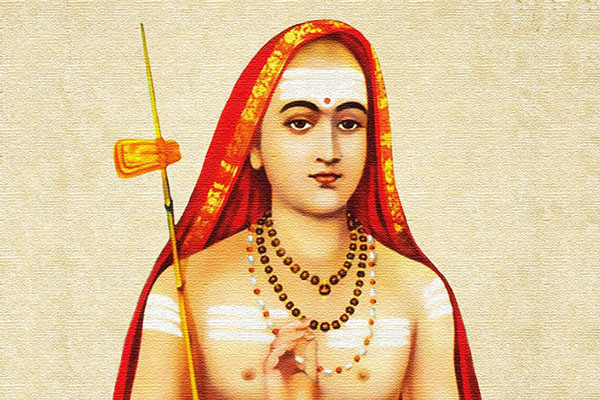
Background and early life
Adi Shankara, also called Sankara or Shankaracharya, was born in Kerala, southern India, most likely between 788 and 820 CE, though these dates remain uncertain. Some scholars suggest he may have lived much earlier, around 80 BCE, but modern research tends to favor the later period. He came from a Brahmin family and would become one of Hinduism's most important philosophers and theologians.
Note
Much of what we know about Shankara comes from legends and later writings, so separating historical fact from religious tradition can be challenging. The accounts of his life blend biographical information with spiritual narratives that emphasize his extraordinary nature and divine purpose.
According to these accounts, his birth was itself extraordinary. His parents had prayed for a brilliant son who would live a short but meaningful life, rather than an ordinary son who would live long. This unusual prayer was said to have been answered.
Shankara's father died when he was only seven years old. His mother then took charge of his education, which progressed at a remarkable pace. He underwent the upanayana (sacred thread ceremony) at seven, unusually young for this important Hindu initiation rite. By age sixteen, he had already mastered theology and philosophy, and had written detailed commentaries on the Bhagavad Gita and the Upanishads. This extraordinary intellectual achievement at such a young age marked him as someone special.
Becoming a sannyasi
At a young age, Shankara chose to become a sannyasi - someone who renounces worldly life to dedicate themselves entirely to spiritual pursuits. This decision was significant because it meant giving up family life and material comforts to focus solely on religious truth. He traveled to Varanasi, the holy city situated on the banks of the Ganges River. There, he established himself as a teacher, gathering disciples around him and producing written works that would influence Hinduism for centuries to come.
During this period, Shankara journeyed to the source of the Ganges in the Himalayan foothills. In this remote and spiritually significant location, he wrote his famous commentary on the Brahma Sutra, one of the foundational texts of Hindu philosophy. His writings were recognized even in his own time as containing deeply significant insights, and they continue to be studied and revered today.
Travels and debates
Shankara embarked on extensive travels throughout India, proclaiming his philosophical ideas and engaging in debates with scholars from various traditions. He debated not only with fellow Hindus representing different schools of thought, but also with Buddhists and followers of Jainism, another Indian religion. His skill as a debater was legendary.
Example
Worked Example: Shankara's Debate Method
One particularly famous debate involved Mandana Misra (also called Visvarupa) and his wife Bharati, who was considered an incarnation of Saraswati, the goddess of wisdom.
The Challenge: During this debate, Shankara needed to explain his theory of creation, which categorized life into four different types.
The Method: To prove his teachings about creation through practical demonstration, Shankara is said to have performed a month-long experiment. He temporarily left his own body and entered the body of a king at the exact moment of that king's death.
The Purpose: This unusual method was necessary because, as a sannyasi, Shankara had taken vows of renunciation that prevented him from experiencing certain aspects of worldly life directly. A king (raja) and a family man (grihastha) had very different responsibilities and commitments from a renunciate.
The Result: After experiencing life as a king, he returned to his own body, thus demonstrating his teachings about the nature of the soul and creation through direct experience. Both Mandana Misra and his wife became Shankara's disciples.
After his mother's death, Shankara fulfilled his promise to perform her funeral rites. This created significant difficulty because the Brahmins in his hometown strongly opposed a sannyasi performing such ceremonies. Despite this opposition, he completed the rituals as promised. He then returned to the ashram at Sringeri, where he lived and taught for twelve years. Among his disciples was Vidyaranya, who became an important commentator on the Vedas.
Shankara's travels eventually took him to Kashmir, where he is said to have ascended the throne of all knowledge, indicating his recognition as a supreme scholar. He then journeyed to Mount Kailas, considered the legendary home of the god Shiva. There, he attained moksha (liberation) in death at approximately age 32.
Shankara's contribution to Hinduism
As a highly skilled debater, Shankara won numerous intellectual contests with philosophers from other schools of Hindu thought and from other religious traditions entirely. Despite his short life, he traveled extensively across India and is credited with founding many temples and four mathas (monasteries). These institutions became centers of Hindu learning and spiritual practice.
Shankara established the Order of Dasanami Sannyasi to spread his philosophy, though modern scholars suggest this order may actually have been founded later than Shankara's time. His central philosophical contribution was the development and promotion of Advaita, a concept considered an expression of Vedanta Hinduism.
Important
The Philosophy of Advaita
Advaita, which literally means "not two," represents a form of monistic philosophy. This is Shankara's most significant contribution to Hindu thought.
Core Principle: Shankara argued that there is only one ultimate reality: Brahman. He taught that atman (the individual soul) is actually identical to Brahman, not separate from it.
Key Teachings:
The nature of reality: The self is not separate from existence but rather part of the whole of existence. There is one unified being, which he called the "Brahman-atman reality" - the unity between the individual soul and the great universal soul.
Brahman as everything: Brahman is everything that exists. Nothing can exist separately from Brahman. While Brahman is real and eternal, the physical world we perceive is ultimately unreal or illusory - it is temporary and ever-changing, while only Brahman is permanent.
Identity of soul and ultimate reality: The individual soul (atman) is not different from Brahman. It is Brahman itself, though we may not realize this truth until we achieve spiritual enlightenment.
Shankara's teaching is considered monism - the philosophical view that everything, including religion, is fundamentally one unified reality without true divisions. He taught that striving toward contemplation and understanding of this higher truth, particularly through yoga and meditation, is central to Hindu spiritual practice.
Impact of Shankara on Hinduism
Shankara's writings remain influential in contemporary Hinduism. A traditional saying about his work states: "For learning, logic and metaphysics, go to Shankara's commentaries; for gaining practical knowledge, which unfolds and strengthens devotion, go to his other works." His original poetic works have been described as "matchless in sweetness, melody and thought."
He is recognized as an intellectual genius, a profound philosopher, an unsurpassed teacher and preacher, a gifted poet, and a great religious reformer. His influence continues to shape Hinduism more than 1300 years after his death.
Note
Shankara's Role in Hinduism's Development
Shankara played a crucial role in drawing together different schools and expressions of Hinduism that were developing in India during his time, synthesizing them into the coherent philosophy of Advaita Vedanta. His work was particularly important in reinforcing significant aspects of Hindu philosophy when Buddhism was posing serious intellectual challenges to Hinduism. He also contributed substantially to reviving Hinduism and promoting serious study of the Vedas.
Some Hindus regard Shankara as an avatar (divine manifestation) of Shiva, though interestingly, Shankara himself was actually a Vaishnava (follower of Vishnu). Tradition holds that during his short life, he established four monasteries at the four directional points of India: in the Himalayas, at Sringeri, at Dwaraka, and in Orissa. However, Shankara himself never mentions these establishments in his own writings, leading scholars to question whether he actually founded all four.
Summary
Key Exam Guidance: Shankara's Impact
When analyzing Shankara's impact, focus on three main areas:
- Philosophical contribution: Development and promotion of Advaita Vedanta, teaching that Brahman and atman are identical
- Institutional legacy: Establishment of mathas (monasteries) as centers of Hindu learning
- Religious revival: His role in countering Buddhism and reviving serious study of Hindu texts
Be prepared to explain what monism means and how it differs from dualistic approaches to understanding reality. Remember that monism teaches everything is fundamentally one unified reality, whereas dualism maintains fundamental distinctions between different aspects of existence.
Mohandas Gandhi (1869-1948 CE)

Background and early life
Mohandas Karamchand Gandhi, known as Mahatma Gandhi, was one of the most significant figures of the twentieth century. His influence extended far beyond India, touching people and movements across the entire world. While Gandhi is famous for his political achievements, it is important to examine his specific impact on Hinduism as a religious tradition, not just his role on the world stage.
Gandhi was born on 2 October 1869 in Porbander, in what is now the state of Gujarat. His father served as diwan (senior minister) to the local ruler in the native state of Rajkot, where young Mohandas received his schooling. He grew up as a member of a Hindu sect that practiced ahimsa (non-violence) and vegetarianism, values that would profoundly shape his entire life.
Following traditional practice, Gandhi was married at the age of thirteen to Kasturba, who would remain his lifelong partner. In 1888, he left his family behind to study law in London, qualifying for the bar in 1891. His time in London proved intellectually formative. He encountered groups of people who were critical of industrialization and its effects on society and the environment. More significantly for his spiritual development, he was exposed to the sacred texts of various world religions, including the Christian New Testament and the Hindu Bhagavad Gita. These readings would profoundly influence his thinking.
The South Africa experience
In 1893, Gandhi traveled to South Africa to practice law, intending to stay briefly. Instead, he remained there for twenty-one years, and this period transformed him from a lawyer into a social reformer and political activist.
Note
Systematic Discrimination in South Africa
Gandhi was shocked and appalled by the systematic discrimination against the Indian population in South Africa. Under apartheid-era laws, Indians were classified as "coloured" and pejoratively called coolies (unskilled laborers). A defining moment came when Gandhi was thrown off a train despite holding a first-class ticket, simply because of his ethnicity. This personal experience of injustice galvanized him into action.
In 1913, Gandhi organized resistance to improve conditions for Indian workers in South Africa. When the government demanded that Indian residents register as aliens, he refused to comply and encouraged others to burn their registration cards as an act of civil disobedience. This defiance led to imprisonment, but Gandhi did not retreat from his principles.
During this period, Gandhi developed his concept of satyagraha, which literally means "grasping at truth" and is often translated as "soul force" or "truth force." He became convinced that satyagraha was the most powerful force in the world - more powerful than physical force or violence. To strengthen this spiritual power within himself, Gandhi gave up sex, meat, alcohol, tobacco, threats, violence, and all forms of coercion. These renunciations were not just personal choices but represented a comprehensive philosophy of how to create social change through moral purity and non-violent resistance.
Return to India and political involvement
When Gandhi returned to India in 1915, he quickly became involved in politics. He was elected President of the Indian National Congress Party and began promoting non-violence, non-cooperation, and strikes against British colonial rule. His methods included prayer and fasting, and he became increasingly recognizable due to his distinctive appearance and practices.
Rejecting Western clothing, Gandhi adopted the dress of India's poorest people: a simple loin-cloth, shawl, cheap watch, and sandals. Significantly, he wove the material himself from Indian cotton, making this a form of protest against British demands that India import cloth from England. This spinning of cloth became a powerful symbol of Indian self-sufficiency and resistance to colonial economic exploitation.
Gandhi actively engaged in civil disobedience, which frequently resulted in imprisonment. One of his most famous protests was the salt march of 1930.
Example
Worked Example: The Salt March of 1930
The Issue: The British government imposed a salt tax that placed a heavy burden on poor Indian peasants and farmers. This tax prevented Indians from freely collecting or producing their own salt.
Gandhi's Action: Gandhi led followers to the sea to collect salt, directly violating the salt law. This simple act became a powerful symbol of resistance.
The Cost: Approximately 60,000 people were jailed during this campaign, including Gandhi himself.
The Result: Despite the mass imprisonment, the protest succeeded, and the salt law was relaxed. This demonstrated how non-violent resistance could achieve concrete political victories against a powerful colonial government.
The Significance: The salt march showed that ordinary people could challenge unjust laws through peaceful civil disobedience, inspiring independence movements worldwide.
Struggle for independence
In 1931, Gandhi was invited to London to participate in a conference negotiating terms for Indian independence. These talks occurred largely because of his growing influence and the pressure his movement had created. However, achieving independence would prove to be a long and difficult struggle.
Gandhi worked tirelessly to preserve Hindu-Muslim unity in India. In 1932, he began what he called his "epic fast unto death" to try to prevent divisions within Indian society. This fasting practice was connected to the Jain religious tradition and known as santhara or sallekhana - a form of protest through voluntary starvation. While Gandhi achieved many short-term victories through such methods, often at great personal cost, he ultimately could not prevent the partition of British India into separate Muslim and Hindu states.
Important
The Tragedy of Partition
When India gained independence in 1947, it was divided into India (predominantly Hindu) and Pakistan (predominantly Muslim). This partition resulted in:
- Massive violence between religious communities
- Displacement of millions of people from their homes
- Deaths of millions during the migration and conflicts
- Deep trauma that continues to affect the region today
Gandhi was particularly devastated by this outcome, as he had devoted much of his life to promoting Hindu-Muslim harmony. The partition represented a failure of his vision for a unified, religiously tolerant India.
Advocacy for the oppressed
Gandhi was deeply concerned with the plight of the Dalits, who were traditionally called "untouchables" in India's caste system. He fought vigorously to improve their conditions, often facing opposition from fellow Indians who supported traditional caste hierarchies. Gandhi coined the term Harijans, meaning "Children of God," and applied it to the Dalits.
Note
It is important to note that some people today find the term "Harijans" condescending and prefer to be called Dalits, which means "oppressed" or "broken." This reflects ongoing debates about how to address caste discrimination respectfully.
Despite his message of peace, Gandhi was nevertheless a strong and controversial political symbol. He represented peaceful opposition to colonialism, but some Indians felt that this approach was too passive. They believed Indian nationalism needed to be expressed through more forceful, masculine, and aggressive means. In this way, Gandhi fundamentally shaped the nature of modern Indian politics, even among those who disagreed with his methods.
Final years and assassination
Although Gandhi tried to remain free of party politics, many of his followers joined the Congress Party, which ruled India for most of the second half of the twentieth century after independence. Gandhi was instrumental in winning that independence from Britain.
When independence approached after World War II, Gandhi strongly opposed partition. He understood that dividing the country along religious lines would lead to tremendous violence. His prediction proved tragically correct. When violence erupted between Hindus and Muslims in 1947, Gandhi nursed the wounded in Noakhali and Calcutta, where fighting largely stopped due to his personal efforts and moral authority.
On 15 August 1947, when India's independence was officially declared, Gandhi was not celebrating but still working to care for those suffering from partition violence. The new government declared him "the father of the nation", recognizing his central role in India's freedom.
On 30 January 1948, at age seventy-nine, Gandhi was assassinated while on his way to prayers. His killer was Nathuram Godse, a Hindu nationalist who believed Gandhi was favoring other religious groups at the expense of Hindu lives. This assassination revealed deep tensions within Indian society. Some schools of thought opposed to Gandhi believed he represented weakness and passivity rather than the strong symbol needed to represent Hinduism in the modern world.
Contribution to Hinduism
Gandhi's thinking was shaped by multiple Hindu texts. The Bhagavad Gita, with its emphasis on spiritual life and non-possession of material wealth, profoundly influenced him. He also drew extensively from the Upanishads and especially the Ramayana, with Rama being his personal deity. However, Gandhi's thought was not narrowly Hindu - he was also influenced by Jesus Christ's Sermon on the Mount from the Christian New Testament, and by contemporary authors such as Leo Tolstoy and John Ruskin.
His main principle of ahimsa (non-violence) had roots in both Jain and Hindu traditions. Gandhi synthesized these influences into a coherent philosophy that he applied to social and political life.
While not generally considered a great Hindu philosopher in the traditional theological sense, Gandhi's ideas gained wide acceptance, and his influence earned him recognition as someone who made significant contributions to Hinduism's expression in the twentieth century. His contributions to Hinduism specifically include:
Emphasis on ahimsa and satyagraha: Gandhi elevated these concepts from abstract religious principles to practical tools for social transformation. He demonstrated how ancient Hindu values could address modern political and social problems.
Fasting and ascetic practices: Gandhi practiced and promoted fasting as a spiritual and political tool. However, he was critical of sannyasis who completely withdrew from society, believing spiritual practice should engage with social problems rather than escape them.
Theistic Advaitism: Gandhi believed in unity between God and the universe, showing how ancient philosophical concepts like Advaita could inform modern spirituality.
Opposition to caste discrimination: Gandhi strongly opposed discrimination based on the caste system and actively supported Dalits, calling them Harijans. This challenged traditional Hindu social structures from within the religion itself.
Interfaith openness: Gandhi was open to other faiths and actively sought cooperation between religious traditions. This reflected and reinforced Hinduism's generally pluralistic approach to religion.
Opposition to sectarian violence: Gandhi consistently worked against religious violence between Hindus and Muslims.
Internal reform of Hinduism: Gandhi advocated reforming Hinduism from within rather than abandoning it. For instance, he supported the remarriage of Hindu widows, who were traditionally shunned by society and forced to live in isolation.
Gandhi promoted the spinning wheel as a national symbol for India. It represented a simple, self-sufficient, non-industrial way of life through which people could supply their own needs and earn modest income. This symbol typified Gandhi himself - both practical and idealistic.
The title Mahatma, meaning "great soul," was given to Mohandas Gandhi by Rabindranath Tagore, one of India's most celebrated writers. This title of great respect has endured, and he is generally known today as Mahatma Gandhi rather than by his given name.
Impact on Hinduism
Gandhi's impact on Hinduism is reflected in several significant contributions:
Reaffirming religious tolerance: Gandhi emphasized Hinduism as a tolerant and inclusive religion rather than an exclusive one. This countered trends toward Hindu exclusivism and nationalism.
Social reform: He influenced attitudes toward Dalits and challenged practices such as the isolation of Hindu widows. These reforms came from within Hindu tradition rather than through Western intervention.
Personal devotion over ritual: Gandhi affirmed the importance of sincere personal devotion in contrast to merely performing rituals mechanically.
Promoting the Bhagavad Gita: Gandhi's love of this text and his frequent references to it helped promote the Bhagavad Gita as one of Hinduism's most revered and popular sacred writings.
Influential writings: Gandhi's extensive writings are freely available and have influenced many Hindu leaders and scholars, especially through his emphasis on ahimsa and satyagraha.
Emphasis on non-violence and tolerance: These values, which Gandhi promoted, stand in marked contrast to the rising Hindu nationalism evident in India today, making his legacy particularly relevant.
Impact on the world
Gandhi is particularly well-known for his work promoting peace globally. He was one of the strongest opponents of British colonialism, and his philosophy of passive resistance influenced not only India's independence movement but also independence movements in many colonized countries around the world.
His teachings on non-violence have influenced numerous other significant historical figures, including Albert Einstein, Martin Luther King Jr, the Dalai Lama, John Lennon, Nelson Mandela, Aung San Suu Kyi, and Al Gore.
Important
Gandhi's Seven Social Sins (1925)
In 1925, Gandhi developed his influential concept of the Seven Social Sins, which he believed formed the basis for injustice in the world:
- Politics without principle
- Wealth without work
- Pleasure without conscience
- Knowledge without character
- Commerce without morality
- Science without humanity
- Worship without sacrifice
These seven sins continue to be cited as a framework for understanding social injustice and moral decay in modern society. Each represents a separation between action and ethical foundation, showing how activities divorced from moral principles lead to societal harm.
Summary
Key Exam Guidance: Gandhi's Impact
When evaluating Gandhi's impact, distinguish clearly between his influence on Hinduism as a religion versus his broader political and social impact.
Religious Impact:
- Elevated ahimsa and satyagraha to practical principles
- Challenged caste discrimination from within Hindu tradition
- Promoted interfaith harmony and religious tolerance
- Emphasized personal devotion over mechanical ritual
Broader Impact:
- Led India's independence movement
- Influenced global civil rights and peace movements
- Developed philosophy of non-violent resistance
Critical Perspectives to Consider:
- Whether Gandhi's views were genuinely Hindu or a synthesis of multiple traditions
- Whether his approach was too passive or truly effective
- Debates about the term "Harijan" and his approach to caste reform
- Whether he truly represented Hindu values or modernized them
Be prepared to discuss both positive assessments of Gandhi and critical perspectives on his methods and philosophy.
Other significant people and schools of thought
The following people and schools of thought are briefly mentioned as alternatives that could be studied in depth:
Ramanuja (circa 1017-1137 CE): An Indian philosopher and theologian who popularized bhakti (devotion) and developed the concept of vishisha advaita (qualified monism), which modified Shankara's strict non-dualism.
Madhva (circa 1199-1278 CE): Developed Dvaita Vedanta (dualism), which argued for a fundamental distinction between individual souls and God. He instituted significant social reforms and his writings remain influential.
Mirabai (circa 1498-1547 CE): A female Hindu mystic and poet noted for her intense devotion to Krishna and her important contribution to the Bhakti movement.
Ram Mohan Roy (1774-1833 CE): An Indian reformer concerned with political and religious reform who worked with the British to oppose sati (the practice where widows threw themselves onto their husbands' funeral pyres).
Ramakrishna (1836-1886 CE): A Hindu teacher who emphasized God-realization, the oneness of existence, harmony between religions, and love and devotion to God.
Swami Vivekananda (1863-1902 CE): A disciple of Ramakrishna who is credited with bringing Hinduism to global attention through his famous speech at the 1893 Parliament of the World's Religions.
Bhakti movement: A devotional movement within Hinduism that emphasizes personal devotion to a particular deity rather than ritual or philosophical knowledge.
Purva Mimamsa: A school of philosophy that investigates dharma through enquiry into the first part of the Veda, emphasizing ritual practice.
Vedanta: A school of philosophy seeking to understand the true nature of reality, emphasizing the Upanishads as sacred texts.
Shaiva Siddhanta: An ancient form of monotheistic Hinduism focusing on Shiva, mainly associated with Tamil Hinduism.
Balinese Hinduism: A distinctive form of Hinduism that developed on the Indonesian island of Bali, combining animism, Buddhism, and unique Hindu practices.
Summary
Remember: Key Points for Significant People and Schools of Thought
Adi Shankara (circa 788-820 CE):
- Developed the philosophy of Advaita Vedanta, teaching that Brahman (ultimate reality) and atman (individual soul) are identical
- His writings and establishment of four mathas profoundly influenced Hinduism's philosophical development
- Helped counter Buddhist challenges and revived serious study of Hindu texts
- Taught monism - everything is fundamentally one unified reality
Advaita (non-dualism):
- Means there is only one reality - Brahman
- The physical world is ultimately illusory
- This monistic philosophy emphasizes meditation and contemplation as paths to understanding ultimate truth
Mohandas Gandhi (1869-1948):
- Applied Hindu principles of ahimsa (non-violence) to social and political change
- Developed satyagraha (soul force) as a tool for peaceful resistance
- Worked for Indian independence and opposed caste discrimination
- Promoted interfaith harmony and religious tolerance
- Called Dalits "Harijans" (Children of God)
- Given the title Mahatma ("great soul") by Rabindranath Tagore
Seven Social Sins (1925): Identify fundamental sources of injustice:
- Politics without principle
- Wealth without work
- Pleasure without conscience
- Knowledge without character
- Commerce without morality
- Science without humanity
- Worship without sacrifice
Exam Strategy:
- When analyzing impact on Hinduism, distinguish between influence on the religion itself (theological, philosophical, devotional changes) and broader social or political influence
- Both Shankara and Gandhi shaped how Hinduism is understood and practiced, but in very different ways and historical contexts
- Be prepared to discuss both positive assessments and critical perspectives
- Understand the difference between monism (one unified reality) and dualism (fundamental distinctions between aspects of existence)