Significant Practices in the Lives of Adherents (HSC SSCE Studies of Religion): Revision Notes
📚Revision Notes
Significant Practices in the Lives of Adherents
Muslims express their faith through various rites and rituals that mark both daily devotion and major life stages. These practices allow Muslims to affirm their belief in Allah and demonstrate their continued submission to Him. Three key practices are particularly significant: Friday prayers at the mosque, funerals, and the Hajj pilgrimage. Each combines personal devotion with community participation, strengthening both individual faith and collective Muslim identity.
Note
The three practices explored in this chapter—Friday prayers, funerals, and the Hajj—represent different aspects of Muslim devotional life: weekly communal worship, death rites marking life's final transition, and the once-in-a-lifetime pilgrimage journey. Together, they illustrate how Islamic practices integrate personal spirituality with community participation across the stages of life.
Friday prayers at the mosque
Understanding the practice
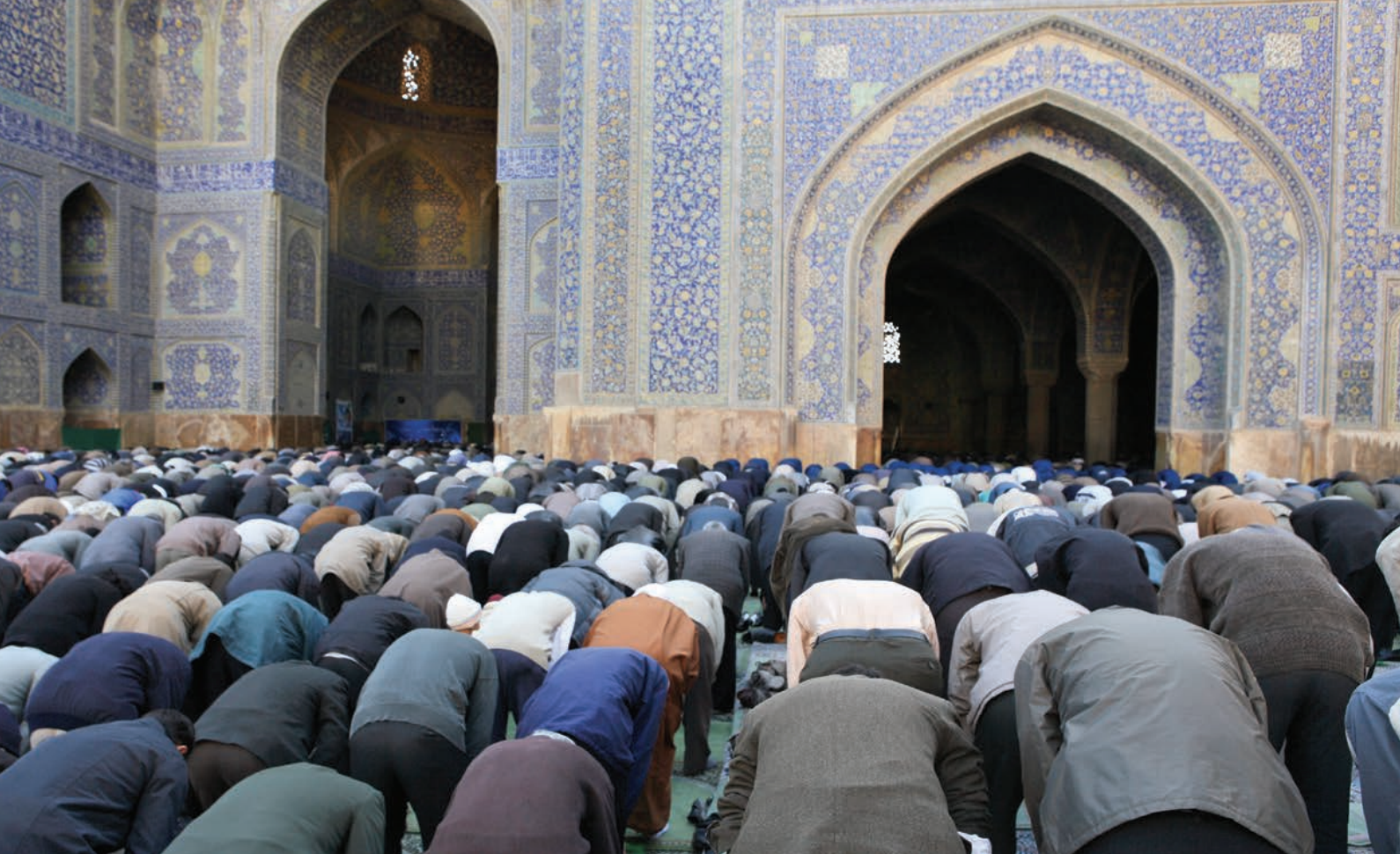
Friday prayers, known as Salat al-Jum'ah (or simply Jum'ah), represent a central weekly gathering for the Muslim community. The Qur'an directly commands this practice: "All you who believe! When the call is proclaimed to prayer on Friday [the day of assembly], hasten to the remembrance of Allah, and leave off business [and traffic]: that is best for you if you but know!" (Qur'an 62:9).
These congregational prayers take place each Friday just after noon at the mosque. The Arabic word for mosque, masjid, literally means "place of prostration", reflecting the way Muslims pray by bowing and placing their foreheads on the ground. While prayer is also an individual daily requirement, Friday prayers represent the communal celebration of Muslim devotional life, combining collective worship with religious instruction.
Important
All Muslim men are expected to attend Jum'ah unless they are sick or face significant difficulty in attending. Women have the option to perform their daily prayers either privately at home or at the mosque. The Friday prayer can replace the second daily prayer (zuhr), though the service includes additional elements not found in regular daily prayers.
The structure of Friday prayers
The Friday prayer service differs from regular daily prayers in several important ways. The prayer itself is shorter than the normal zuhr prayer. However, it incorporates a sermon called the khutba, delivered by the khatib (speaker), who is usually the imam (prayer leader). This sermon replaces the shortened portions of the normal prayer and typically offers practical guidance on applying Muslim teachings to everyday life. In some contexts, these sermons also address political or communal matters affecting the Muslim community.
Muslims prepare for prayer through ritual washing called wudu'. This purification ritual involves washing the hands and arms to the elbows, rinsing the mouth, nose and ears, wiping the hair, and washing the feet. Some circumstances require washing the whole body and hair. Where water is unavailable, Muslims can perform symbolic washing using clean earth, sand or stone. This washing serves two purposes: it signifies inner spiritual purity, and it distinguishes the sacred time of prayer from ordinary daily routines.
Note
The wudu' ritual demonstrates the Islamic principle that physical cleanliness reflects spiritual purity. This ritual preparation creates a psychological and spiritual transition from the ordinary activities of daily life to the sacred time of prayer, helping worshippers focus their minds and hearts on Allah.
When Muslims pray, they may use a prayer mat and must face towards Mecca, specifically towards the Ka'ba. Modest dress is required: men should be covered at least from navel to knees, while women should cover their entire body except for the face, hands and feet. The ritual actions used during prayer are called rak'ah (plural: rak'at), and these standardized movements, combined with the direction faced (qibla), create unity among Muslims worldwide. Regardless of where Muslims pray, they share the common experience of praying at particular times, facing Mecca, and performing identical actions.
Daily prayer in Muslim life
Friday prayers connect to the broader Islamic requirement of daily prayer, one of the Five Pillars of Islam. All Muslims are called to pray five times each day:
- At dawn (fajr)
- Noon (zuhr)
- Late afternoon (asr)
- After sunset (maghrib)
- At night (isha)
Life in Muslim-majority countries revolves around these prayer times. The muezzin announces each prayer time through the call to prayer, traditionally made from a tower called a minaret at the mosque. These calls resound throughout Islamic countries and form a natural part of the daily routine. In Australia, municipal noise pollution ordinances generally prevent the public call to prayer from being made.
Note
Beyond the five obligatory prayers, Muslims may engage in a distinct form of worship called zikr (remembrance of God). During zikr, some Muslims use prayer beads called tasbih (or subha). These comprise 99 beads on a string, representing the 99 names of Allah. After every 33 beads, a larger bead allows a pause to recite "Glory be to Allah, thanks be to Allah, Allah is great". Zikr practices are particularly popular among Sufi Muslims.
The mosque as community centre
The mosque serves as the focal point for the Muslim community. It functions not only as a place of worship but also as an educational and social centre. In Australia, mosques (sometimes called Markaz Islami, meaning Islamic centre) host community dinners, weddings, weekend schools, and meetings of Muslim community organizations.
A mosque is typically furnished simply. Major features include:
- A prayer hall (musalla)
- An area for ritual washing before prayers (wudu')
- A small niche (mihrab) in the wall indicating the direction of Mecca
- A raised pulpit (minbar)
- Separate areas for men and women to pray
- Sometimes separate offices or rooms for schooling and administration
The mosque may also include facilities for eating, sleeping, and education. Mosques do not feature statues or paintings; instead, decorative art takes the form of calligraphy and geometric designs. The leader of a mosque, called an imam, is an educated Muslim chosen by the community, usually for his knowledge of Islam.
Most mosques welcome visitors who can respect Islam and follow guidelines for appropriate dress and behavior in a religious building.
Beliefs underlying Friday prayers
The Jum'ah holds deep significance because it represents the time set apart by God for all Muslims to meet, review their spiritual growth, and affirm the Muslim community. Attending Friday prayers demonstrates a Muslim's willingness to give God precedence over all other aspects of life and fulfil the commands of the Qur'an.
Friday prayers affirm the fundamental importance of salat (prayer) in Muslim life. Prayer represents one of the Five Pillars of Islam and is extremely important in the life of every Muslim. It is not possible to be an observant Muslim and neglect prayer. Many parts of the world have built facilities to accommodate Muslims' prayer needs, recognizing that prayer is a non-negotiable aspect of Muslim practice.
Important
Prayer represents one of the Five Pillars of Islam and is extremely important in the life of every Muslim. It is not possible to be an observant Muslim and neglect prayer. This demonstrates that salat is not merely a recommended practice but an essential obligation that defines Muslim identity.
Significance for the individual
For individual Muslims, Friday prayers offer an opportunity to step away from busy lives and dedicate 30-60 minutes to meditation and worship. This weekly practice serves as a reminder to be clean before God and obedient to His commands. It provides time for personal devotion and spiritual reflection.
The khutba delivers instruction in the faith, helping individuals understand how to apply Islamic teachings to contemporary challenges. This regular religious education strengthens individual understanding of Islam and helps Muslims navigate the complexities of modern life while maintaining their faith commitments.
Significance for the community
Friday prayers serve as the primary weekly gathering when the Muslim community comes together in one particular place. This regular assembly strengthens beliefs and practice through shared experience. Muslims can enjoy one another's company as a community, offering mutual support and encouragement.
The universal nature of Friday prayers reinforces the global Muslim community (ummah). All over the world, Muslims perform the same actions at the same time, affirming their connection to a worldwide community of believers. This shared practice creates solidarity among Muslims regardless of their cultural background, ethnicity, or geographic location.
Funerals
Muslim funeral practices
In Islam, death is not to be feared but rather accepted as a natural part of God's plan. Muslim funerals are held as soon as possible after death, reflecting the belief that the body should be treated with respect and buried promptly. Burials are usually simple, attended by family, friends and members of the community. The body is buried on its right side, facing Mecca, and touching the ground. Simple graves and headstones are the norm, emphasizing equality in death regardless of one's status in life.
While death brings pain and emotion to families, in Islam it also carries hope of paradise and trust in Allah's bountiful mercy. Death represents the time for the deceased Muslim to experience eternal life and the peace, happiness and rewards it brings.
Note
Funeral ceremonies can reflect the cultural traditions of different Muslim communities. For example, in many countries, funerals are not held at the mosque itself; in Australia they are often held on mosque grounds just in front of the building. In many countries, funerals are conducted in silence with few tears, but in Palestine or Iran they can be occasions of great noise and obvious grieving. Muslim graves are commonly very plain, though notable exceptions exist, such as the Taj Mahal in India, one of the world's most elaborate Muslim funerary monuments.
The dying process and immediate aftermath
Muslims believe that as their first sound in life was of Allah, so too should be their last sound at the time of death. It is the wish of all Muslims to die saying the shahada: "There is no god but the God and Muhammad is his messenger". The family gathers to read the Qur'an and say prayers with the dying person, supporting them in their final moments.
Considerable respect is shown to the human body after death. When a person dies, their eyes are closed, their hands are laid across their chest in an attitude of worship, and the body is covered with a clean sheet. Muslims believe the soul departs at the moment of death and that the body must be treated with dignity throughout the funeral process.
Preparation of the body
The body is washed three times by members of the same sex (or by their spouse). This washing represents both physical cleanliness and spiritual purification. After washing, the body is wrapped in plain sheets of cloth called kafn. Sometimes these wrappings are the clothes worn by the deceased when they performed the Hajj pilgrimage, connecting the funeral to this important Islamic practice.
Important
The use of plain cloths demonstrates that everyone is equal in death, regardless of their wealth or social status in life. The hair, hands, feet, forehead and knees of the deceased are anointed with perfume. The head is turned to face Mecca, maintaining the directional orientation that guided the person's prayers throughout life.
The funeral service
A short service is conducted, consisting mainly of prayers with little ritual complexity. The prayers at the funeral service are said standing rather than by prostration or bowing, distinguishing funeral prayers from regular daily prayers. This standing position may reflect the immediacy of the deceased's journey to the afterlife.
Muslims draw comfort from the Qur'an at the time of death, particularly passages that speak of reward for the righteous. Qur'an 16:30-32 offers consolation: "To the righteous it is said, 'What is it that your Lord has revealed?' They say, 'all that is good'. To those who do good, there is good in this world, and the home of the hereafter is even better and excellent indeed is the home of the righteous. Gardens of eternity which they will enter: beneath them flow pleasant rivers: they will have therein all they wish: thus does Allah reward the righteous."
Burial procedures
The funeral procession is usually conducted in silence. Typically, men lower the deceased into the grave while everyone present throws a shovel of earth onto the body. Women often do not attend the burial itself, though they may participate in the funeral prayer service. This gender separation in funeral attendance varies across different Muslim cultures.
Important
Because of the belief in the resurrection of the dead, bodies must be buried, not cremated. The body requires contact with the earth for resurrection to occur. Australian law now accommodates this requirement, allowing Muslims to be buried without a coffin. The body is buried on its right side, with the grave facing Mecca, maintaining the directional orientation central to Muslim practice.
As the grave is filled with earth, passages from the Qur'an are recited. Qur'an 20:55 is traditionally read as the first three handfuls of dirt are thrown into the grave: "From the earth did we create you, and into it shall we return you, and from it shall we bring you out once again." This verse emphasizes the cyclical nature of human existence from Allah's perspective.
The grave is covered with a simple mound of earth, and only a plain headstone is permitted. In some communities the graves are raised above ground level to prevent people from walking on them. Money should not be spent on elaborate graves but should rather be given to the poor, reflecting Islamic values of charity and equality.
Mourning practices
In some Muslim cultures, seven days of mourning are observed and the grave is visited frequently during this period. However, grief should not be too obvious, as excessive mourning might suggest a lack of faith in Allah's promise of an afterlife. Widows often observe an extended mourning period of four months and ten days, called idda, during which they typically remain in the home and refrain from remarrying.
Beliefs about death and the afterlife
The funeral rite in Islam serves two main purposes: to show respect and offer a collective prayer for the deceased, and to fulfil the necessary rituals to ensure proper transition to the afterlife. Funerals also provide an opportunity for family and friends to grieve and demonstrate respect for the deceased.
Note
Three things that continue after death:
While the deceased can no longer contribute to the world, Muhammad noted three things that continue to benefit a person after death:
- Charity given during life that continues to help others
- Knowledge given that continues to benefit others
- A righteous child who will pray for their deceased parent
This teaching emphasizes the lasting impact of good deeds and the importance of living a life that benefits others.
The major focus at a funeral is that the soul of the deceased now awaits the Day of Judgement. On that day, God will judge each person according to their beliefs and actions during life. The body will be resurrected on the Day of Judgement, which explains why Muslims do not practice cremation—the body must be preserved for resurrection.
Significance for the individual
For the deceased individual, death represents the time to meet God and face judgement. The actions and rituals performed at death and during the funeral prepare the deceased for that judgement. Proper funeral rites help ensure a good outcome in the afterlife.
For the family, death is a time to trust in God and draw strength from faith. It is a moment to recognize one's own mortality and the need to continue the family line. Funerals provide an opportunity to remember the good works the deceased performed and to reflect on the importance of submitting to Allah's will. The loss prompts family members to consider their own readiness for death and judgement.
Significance for the community
For the broader Muslim community, a funeral serves as a collective recognition of each person's mortality and the importance of caring for the bereaved. It represents a communal celebration of the deceased person's life and contributions to the community.
The community thanks God for the life of the deceased and acknowledges their role in the ummah. The funeral is a reminder that all Muslims will face judgement after death, encouraging community members to live righteously. Through participating in funeral rites, the community demonstrates solidarity with the grieving family and reaffirms shared beliefs about death, resurrection, and the afterlife.
Hajj (pilgrimage)
Understanding the Hajj
The fifth Pillar of Islam commands all Muslims, if they are physically and financially able, to participate in the Hajj at least once in their lifetime. The Hajj is a pilgrimage to Mecca that includes circumambulation (walking around) the Ka'ba, a sacred cube-shaped structure that predates Islam itself. The Hajj presents opportunities for Muslims to express devotion to God, seek forgiveness for sins committed throughout life, meet with other Muslims from around the world, worship Allah collectively, and fulfil one of the important obligations of Islam.
The Hajj offers a chance to reflect on one's life and have sins forgiven. It provides new opportunities to experience the togetherness of the Islamic community and gives a sense of what it will be like when Allah assembles all humanity for judgement on the last day. The Hajj re-enacts significant events and beliefs in Islam, particularly stories connected to the Prophet Abraham. It is a time for simplicity, self-renewal, re-dedication and generosity.
Sacred sites of Islam
Muslims have several sacred places, mostly relating to the story of Abraham, the life of Muhammad, the lives of other prophets, and significant leaders of Islam. The most sacred sites are the cities of Mecca and Medina in modern Saudi Arabia.
Mecca is the city of Muhammad's birth and where he spent much of his early life. Medina is the city that Muhammad and his early followers fled to in order to escape religious persecution. Today, Mecca and parts of Medina are private cities—only Muslims are allowed to enter them. This exclusivity protects the sacred nature of these sites and ensures that pilgrimage rituals can be performed without disruption.

Note
Mecca's central shrine is the Ka'ba, the black-covered cube believed to have been built by Abraham and his son Ishmael. Some traditions trace its origins back to Adam, the first man. The Ka'ba is the focus of Muslim prayer worldwide; it is the direction Muslims face during their daily prayers and represents the unity of God (tawhid) and the oneness of all believers.
Qur'anic commands for Hajj
The Qur'an contains specific instructions for the Hajj. Muslims are told to "perform the visit and pilgrimage to Mecca for Allah" (Qur'an 2:196). Extensive instructions appear in Qur'an 2:196-203 and Qur'an 22:26-33. Muslims believe the Hajj was designed and commanded by God, not invented by humans. Thus, every Muslim, male and female, will attempt to make the pilgrimage at least once in their lives if possible. The Hajj applies to both Sunni and Shi'a Muslims, making it one of the most unifying practices in Islam.
Note
Evidence suggests that some form of pilgrimage existed in pre-Islamic Arabia, as the Ka'ba was a major religious site before Muhammad's time. However, the current meaning and purpose of the Hajj apply specifically to Islamic beliefs and practices.
Timing and preparation
The Hajj should be performed at the beginning of the month of Dhul Hijjah, the twelfth month of the Islamic lunar calendar. This timing is not flexible—Hajj performed at other times of the year is not considered valid. Before setting out on the Hajj, pilgrims should:
- Redress all wrongs committed against others
- Pay all debts owed
- Plan enough money for the journey
- Leave enough money behind for their family's needs during their absence
- Prepare to behave well while on the Hajj, avoiding arguments and conflicts
Important
This preparation reflects the spiritual dimensions of the pilgrimage. A Muslim cannot properly perform Hajj while still owing debts or having unresolved conflicts with others. The pilgrimage requires both physical presence in Mecca and spiritual readiness.
The stages of Hajj
There are several steps, both physical and spiritual, that must be undertaken during the Hajj. On arrival at Mecca, pilgrims join in the great pilgrimage of Abraham, following in his footsteps. Pilgrims re-enact much of the story of Abraham bringing Hagar and their son Ishmael to Arabia. Muslims believe that Hagar is Abraham's legitimate wife and Ishmael his legitimate heir, a point of theological distinction from Jewish and Christian traditions.
Entering the state of ihram
As pilgrims approach Mecca, they may bathe and cut their hair in preparation. Men put on a white robe called an ihram, consisting of two pieces of cloth with no stitching. This uniform dress makes all male pilgrims identical, symbolizing equality regardless of wealth, social status, or ethnic background. Women may wear other appropriate modest clothing. While on the Hajj, pilgrims should not fight, argue, or bother anyone. They must maintain an attitude of humility, prayer, and devotion throughout the pilgrimage.
Tawaf - circling the Ka'ba
Pilgrims are transported to Mecca by bus, chanting special passages that pledge service to God. One of the central rituals is walking seven times around the Ka'ba in a counter-clockwise direction. This circumambulation is known as tawaf. If possible, pilgrims kiss the black stone embedded in the corner of the Ka'ba, or touch the Ka'ba itself. If the crowds make this impossible, it is sufficient to point at the stone. This ritual connects modern Muslims to the practices of Muhammad and earlier prophets.
Sa'y - running between Safa and Marwah
Pilgrims then re-enact Hagar's desperate search for water by running (or walking, for safety reasons) between two hills called Safa and Marwah. This ritual is known as sa'y. According to Islamic tradition, Ishmael kicked the ground during this search and water sprang from the Well of Zamzam. The Well of Zamzam still exists in Mecca, and pilgrims drink its water, which is considered blessed. Time is also spent in prayer, study and reflection during this stage.
Journey to Mina, Arafat and Muzdalifah
Pilgrims travel to the valley of Mina for the night, then journey to the Plain of Arafat and Mount Arafat (the Mount of Mercy). Pilgrims pray on the plain, just below the Mount of Mercy, from midday to sunset. This is the most important day of the Hajj. The Mount of Mercy is where Muhammad delivered his last sermon, so many pilgrims use this time for intensive prayer and reflection.
Important
As part of the Hajj requirements, pilgrims must spend the entire afternoon at Arafat in prayer. Muslims believe that past sins are forgiven as a result of this day of prayer. For many Muslims, this stage represents the highlight of the Hajj. Muhammad stated, "Hajj is Arafat," emphasizing the central importance of this day. Pilgrims continue the rest of the pilgrimage with their sins forgiven, creating a profound sense of spiritual renewal.
Stoning the pillars at Mina
The pilgrims return to Mina, stopping at Muzdalifah where they collect small stones. At Mina, these stones are thrown at three pillars that represent Satan (the devil). This ritual symbolizes Abraham's resistance to Satan's temptation not to sacrifice Ishmael to God. (In Jewish and Christian traditions, Abraham was asked to sacrifice Isaac rather than Ishmael.)
The act of stoning the pillars represents a Muslim's personal rejection of Satan's temptation and commitment to following God's commands, even when they are difficult. This powerful symbolic action allows pilgrims to physically express their determination to resist evil.
Animal sacrifice
Outside Mecca, animals are sacrificed to commemorate how Allah provided an animal so Abraham did not have to sacrifice Ishmael. Most pilgrims are not personally involved in sacrificing the animals but instead buy a sacrifice voucher for the ritual to be performed on their behalf. The meat from these sacrifices is used to feed the pilgrims or is sent to poor Muslims in other countries, fulfilling the Islamic obligation of charity.
Final tawaf
The pilgrims may then circle the Ka'ba another seven times in a final tawaf. They return to Mina where they stay for two (or sometimes three) nights, repeating the stoning of the devil each day. Then they return to Mecca for a final tawaf, completing the required rituals of Hajj.
Note
Although the Hajj is now technically complete, many pilgrims travel to Medina to visit the Mosque of the Prophet, where Muhammad is buried and where other important events in Islamic history took place. This additional journey allows pilgrims to connect more deeply with Islamic history and Muhammad's legacy.
Duration and recognition
While the Hajj can last up to 14 days including the journey to and from Mecca and optional visits to Medina, the core rituals can be completed in a minimum of five days. Muslims believe that upon sincere completion of the Hajj, a pilgrim's past sins have been forgiven, offering a fresh spiritual start.
Those who have completed the Hajj at some stage in their lives earn the honorific title Hajji (for men) or Hajja (for women) attached to their names. This title is used with respect throughout the person's life, signifying their fulfillment of this important religious obligation.
Beliefs underlying the Hajj
The Hajj serves as an acknowledgement of tawhid, the oneness of Allah and the central concept of Islamic monotheism. It expresses belief in the Qur'an and acknowledges the prophets, creating a living link to the events in the lives of Adam, Abraham, Ishmael and Muhammad. The Hajj functions as both an act of worship and a reminder of the Muslim community's unity and diversity.
Note
Particularly significant is the Hajj's role in reminding Muslims of the gathering of humanity on the Day of Judgement. The massive crowds, the uniformity of dress, and the shared rituals give pilgrims a glimpse of what it will be like when all of humanity stands before Allah for judgement. This eschatological dimension adds profound meaning to the pilgrimage experience.
Significance for the individual
The Hajj represents a deeply significant personal experience for Muslims, who use it to reaffirm their devotion to Allah and their personal commitment to Islam. The preparation for Hajj demands significant dedication from the pilgrim, both financially and in terms of resolving personal matters before departing.
While on Hajj, pilgrims acknowledge the great people of faith and the prophets who came before them, connecting their individual journey to the long history of Islamic faith. Muslims believe that those who complete the Hajj can experience true purity, with their sins forgiven. The pilgrimage is an act of obedience to Allah's command.
Stoning the pillars represents a personal commitment to rejecting Satan's temptation. For many adherents, performing the Hajj represents a completion of the Five Pillars of Islam, fulfilling all the major obligations required of Muslims. The forgiveness of sins at Arafat and the personal peace it brings constitute major spiritual goals for individual pilgrims. Many Muslims describe the Hajj as a life-changing experience that deepens their faith and commitment.
Significance for the community
The Hajj reaffirms the importance of the Muslim community (ummah) on multiple levels. The power of the shared experience, combined with the mending of relationships required before the Hajj, helps strengthen community bonds both locally and globally.
Hajj provides an opportunity to encounter the diversity within the worldwide Muslim community. Pilgrims from different countries, cultures, and ethnic backgrounds share experiences and ideas, learning from one another and supporting Muslim organizations financially. The pilgrimage offers opportunities to perform charity (sadaka); when animals are sacrificed, the meat is distributed across the Muslim community, feeding both pilgrims and the poor.
The Hajj represents an acknowledgement of the Muslim community that transcends time, creating a common experience across the centuries. Contemporary Muslims perform the same rituals in the same places as their ancestors did generations ago. Dressing in ihram signifies the commonality and equality that exists in the ummah, temporarily erasing distinctions of wealth, nationality, and social status.
Other sacred sites
Several other places are considered sacred sites and are often visited in connection with the Hajj. Medina holds a special place in Muslims' hearts because it was the first city to welcome Muhammad, his early followers, and his new religious ideas. The Mosque of the Prophet in Medina contains Muhammad's grave and the graves of the first two caliphs, making Medina a significant sacred city for Muslims.
Jerusalem in modern Israel represents another important sacred site, where Muslims believe Muhammad ascended into heaven on his "night journey". The Al-Aqsa Mosque was built in Jerusalem to commemorate this event, and the Dome of the Rock (built in 691 CE, the earliest Muslim monument) covers the rock from which Muhammad ascended. Jerusalem is also sacred to Jewish and Christian people, making it a potential source for conflict but also for interreligious dialogue.
In modern Iraq, the city of Karbala is particularly sacred to Shi'a Muslims. It is the burial place of Muhammad's grandson Hussein, the third Shi'a imam. While Karbala is not part of the Hajj route, many Shi'a Muslims make separate pilgrimages to this site.
Remember!
Summary
Key points to remember:
-
Friday prayers (Jum'ah) are compulsory for men and optional for women, held at noon on Fridays. They combine prayer (salat) with a sermon (khutba) and strengthen both individual faith and community bonds. Muslims pray five times daily facing Mecca, performing ritual washing (wudu') before each prayer.
-
Muslim funerals are held as soon as possible after death. The body is washed, wrapped in plain cloth (kafn), and buried on its right side facing Mecca. Simple graves emphasize equality. Funerals express hope in Allah's mercy and the resurrection on the Day of Judgement. Three things continue after death: charity given, knowledge shared, and righteous children who pray for their parents.
-
The Hajj is the fifth Pillar of Islam, required once in a lifetime if physically and financially possible. Key rituals include wearing ihram, performing tawaf (circling the Ka'ba seven times), conducting sa'y (running between Safa and Marwah), praying at Mount Arafat, stoning pillars representing Satan, and sacrificing animals. Completing Hajj brings forgiveness of sins and the title Hajji/Hajja.
-
All three practices reinforce tawhid (God's oneness) and the unity of the ummah (Muslim community). They connect individual Muslims to their faith tradition and to Muslims worldwide, providing both personal spiritual benefits and collective identity strengthening.
-
For examinations, be prepared to describe each practice in detail, explain the beliefs that underpin them, and analyse their significance for both individuals and the community. Be able to reference Qur'anic passages that support these practices and understand how they connect to the Five Pillars and core Islamic beliefs.