The Contribution of Christianity to Aspects of Australian Life (HSC SSCE Studies of Religion): Revision Notes
📚Revision Notes
The Contribution of Christianity to Aspects of Australian Life
Introduction
During the development of the Australian nation before 1945, Christianity was the dominant religious tradition and made significant contributions to Australian life. Religious groups, particularly Christian denominations, helped meet the needs of the Australian people in three key areas:
- Rural and outback communities
- Education
- Public morality
This period established the foundation for many social services and institutions that continue to shape Australian society today.
Rural and outback communities
Christian missions in the outback
Christian groups played a crucial role in providing services to isolated communities in outback Australia. These religious organisations sent missionaries and community support workers into remote areas to spread Christianity and provide practical assistance.
German Lutheran missions were particularly significant. Encouraged by their European home churches, German Lutherans established missions such as Hermannsburg in central Australia. These missions served multiple purposes:
- Centres for Christian activity and worship
- Community hubs providing social support
- Educational facilities for Aboriginal and Torres Strait Islander children
- Healthcare provision
- Protection and shelter for Aboriginal and Torres Strait Islander peoples facing mistreatment
- Documentation and preservation of Aboriginal and Torres Strait Islander history and culture
Note
While some missionary work had problematic impacts on Indigenous cultures, missions did provide a sense of community in the remote isolation of the outback. Christians were particularly concerned about the isolation and practical needs of people living in these harsh environments.
Reverend John Flynn and the Australian Inland Mission
Reverend John Flynn (1880–1951) of the Presbyterian Church made an outstanding contribution to rural Australian life. Born in Moliagul, Victoria, Flynn was ordained as a Presbyterian minister in 1911.
Identifying the needs of the outback
In 1912, the Presbyterian Church commissioned Flynn to investigate and report on the needs of outback Australia. His report identified critical problems:
- Extreme isolation of communities
- Poor or non-existent medical care
- Inadequate communication systems
- Lack of spiritual guidance and ministry
Establishing the Australian Inland Mission (AIM)
Following his report, Flynn was appointed as the first superintendent of the Australian Inland Mission (AIM) in 1912. In this role, he worked to address both spiritual and practical needs of outback populations.
AIM patrol padres travelled through the outback using various means of transport:
- Horses
- Camels
- Motor vehicles
These travelling ministers provided ministry services across vast distances.
Technological innovations
Flynn recognised that communication was essential for providing effective services. Working with Alf Traeger, AIM developed a pedal wireless – a radio powered by bicycle pedals. This innovation allowed:
- Communication between isolated communities
- Contact with medical services
- Emergency response coordination
AIM also established educational facilities, boarding hostels, aged care services and other community support programs.
The Royal Flying Doctor Service
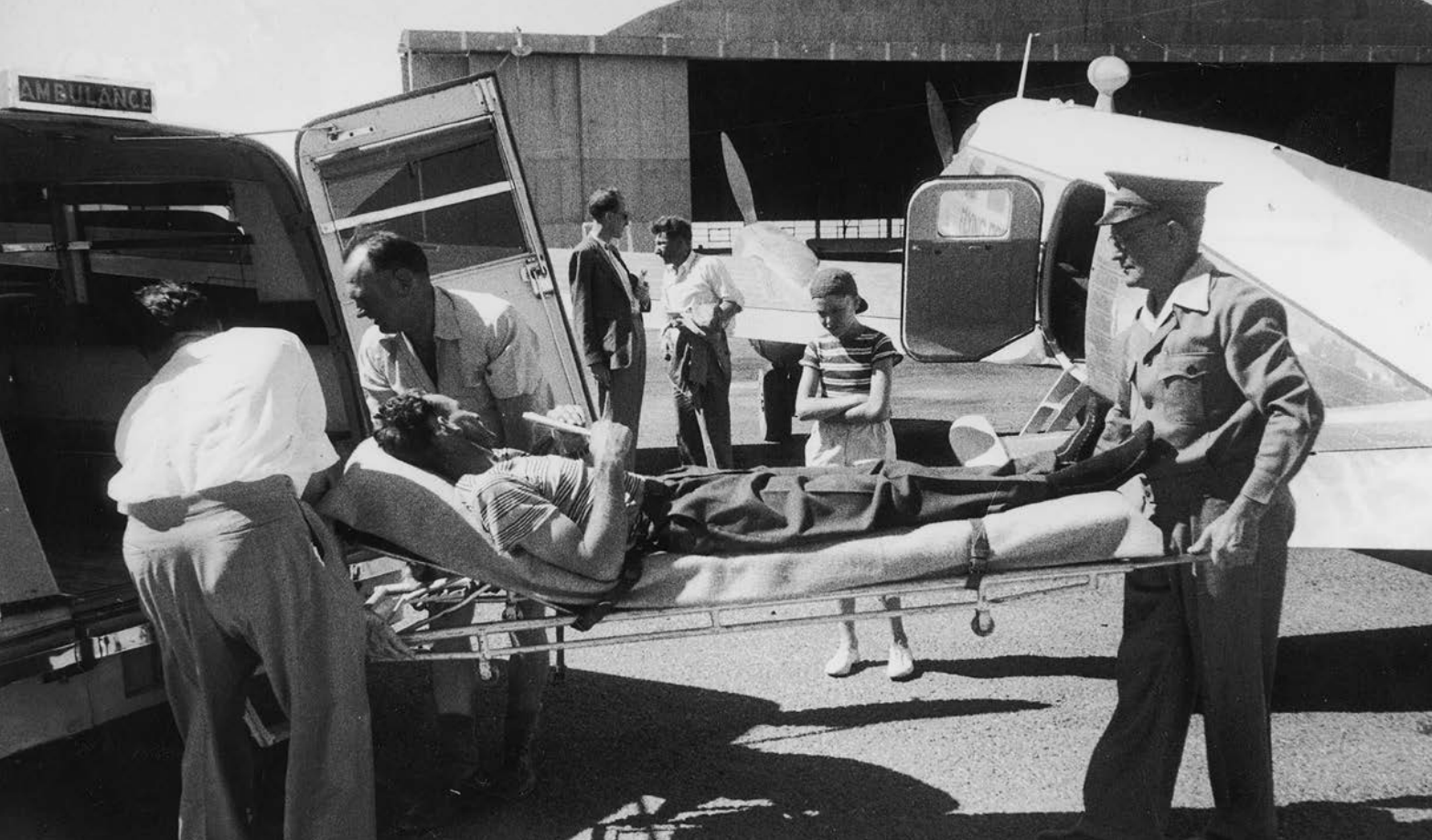
Flynn collaborated with Clifford Peel, an Australian World War I air force veteran, to establish an aerial medical service. This revolutionary development addressed the medical emergency needs of the outback.
Example
Key Timeline: The Royal Flying Doctor Service
- 1928: First flight departed from Cloncurry, Queensland
- 1934: Australian Aerial Medical Service officially formed with nationwide bases
- Received backing from both clergy and politicians
- 1951: By Flynn's death, Australia was covered by what he called a 'mantle of safety'
The service continues today as the Frontier Services of the Uniting Church of Australia. Flynn's work has been credited with enabling the development and settlement of the Australian outback.
Important
Exam tip: When discussing Flynn's contribution, emphasise the combination of practical and spiritual support, and the innovative use of technology (pedal wireless and aircraft) to overcome the challenges of distance.
Other Christian denominations in the outback
The Presbyterian Church was not alone in providing outback ministry. Other Christian churches established similar services:
Church of England:
- High-Church Bush Brotherhoods
- Evangelical Bush Church Aid Society
Catholic orders:
- Sisters of Mercy
- Sisters of St Joseph
These organisations provided education, healthcare, and spiritual support to remote communities.
Education
Early colonial education
In early colonial Australia, the government initially saw little need for educational provision. This was because:
- Most convicts were illiterate
- Convicts did not recognise the potential benefits of education
- Even young convicts were not treated as children
- Education was considered the preserve of wealthy families who could afford private teachers and tutors
Richard Johnson, the first chaplain, and other early chaplains provided religious education. However, as the colony grew with more free settlers and emancipated convicts, the importance of education became increasingly evident.
Legislative timeline affecting education
The government introduced legislation that significantly impacted educational provision, even though the churches initially took primary responsibility for education:
Example
Legislative Timeline: Education in Colonial Australia
1825 – Schools Estate Corporation Charter
- Gave one-seventh of all land in the colony to the Church of England and its schools
- Established the Church of England as the dominant educational provider
1836 – Church Act
- Provided pound-for-pound funding for four churches in NSW to support clergy and education
- Supported churches: Church of England, Catholic, Presbyterian, Methodist
- Meant the Church of England could no longer be considered the 'state' church of NSW
- Recognised religious diversity in the colony
1862 – Public Institutions Act
- Withdrew government funding from churches
- Created financial crisis for church schools
1880 – Public Instruction Act
- Introduced by Henry Parkes
- Abolished funding to denominational education
- State now provided education that was to be 'compulsory, free and secular'
- Churches retained the right to provide special religious education
- Marked a fundamental shift in Australian education
Important
Exam tip: Remember the three characteristics of state education after 1880 using the acronym CFS: Compulsory, Free, Secular.
Catholic response to secular education
The Catholic Church strongly objected to secular education. Catholic leaders condemned government schools as 'seed-plots of future immorality, infidelity and lawlessness'. This opposition reflected the Catholic commitment to integrating religious teaching with general education.
Development of the Catholic school system
The impact of the 1880 Public Instruction Act galvanised the Catholic community. Catholics became determined to maintain their own educational institutions despite the loss of government funding.
Catholic response included:
- Establishing schools in every parish
- Catholics contributing wages and labour to build and maintain schools
- Bishops travelling to Europe and America to recruit Catholic teachers
- Establishing Catholic education offices to oversee school administration
- Recruiting religious orders of brothers, nuns and priests as teachers
Note
Despite being taxpayers, Catholics felt cheated that their tax money supported government schools but not their own schools. Nevertheless, they persevered in funding their own system through community contributions.
Growth of the Catholic system
Through sustained effort and sacrifice, the Catholic education system became:
- The most extensive non-government education system in Australia
- One of Australia's biggest employers
- A vital part of Catholic parishes and community life
Staffed by nuns, brothers and priests, Catholic schools received no government funding until after the 1960s. Today, government funding is available to schools of all established faiths.
Important
Exam tip: When evaluating the Catholic response to the 1880 Act, consider both the religious motivations (maintaining Catholic education) and the sense of injustice (paying taxes but receiving no educational funding).
Private Protestant schools
Private schools, mainly run by Protestant clergy, continued to educate the upper classes of colonial society. These schools were fee-paying and served wealthy families who could afford them.
The education system in New South Wales developed into three competing systems:
- Private Protestant schools (fee-paying, for upper classes)
- Colonial government schools (free, secular, compulsory)
- Catholic systemic schools (self-funded by Catholic community)
European tradition of church education
Within the Catholic Church, there was a long European tradition of linking education to the clergy. Some of Europe's most famous schools were run by church members. Religious orders, such as the Jesuits, became famous for their intellectual and pedagogical (teaching) abilities.
Note
Key term: Pedagogical – Relating to the science of teaching
The Christian Brothers, an Irish order, took a major role in Australian Catholic education. This European tradition meant that Catholic families valued religious education highly and were willing to make financial sacrifices to maintain Catholic schools.
Mary MacKillop and the Sisters of St Joseph
Founding the Sisters of St Joseph
Sister Mary MacKillop made one of the most significant contributions to Catholic education in Australia. In the mid-nineteenth century, she co-founded the Sisters of St Joseph with Father Julian Tenison Woods in South Australia. The order was devoted to:
- Caring for disadvantaged children
- Teaching in schools
- Operating orphanages
- Running children's refuges
Rapid growth
The Sisters of St Joseph experienced remarkable growth:
- By 1870: 20 schools, orphanages and children's refuges operating throughout Australia
- By 1909: More than 1000 nuns working in schools across the nation
This rapid expansion demonstrated the demand for Catholic education and the dedication of the Sisters.
Challenges and conflicts
Mary MacKillop's work was not without controversy. She faced significant challenges:
- Excommunication by the Bishop of Adelaide (later lifted)
- Clashes with the Bishop of Queensland
- Falling out with Father Julian Tenison Woods (co-founder)
- Accusations of financial and moral lapses
Note
Many of these problems arose because of the tremendous growth and popularity of the schools, which threatened some church authorities who wanted more control over the order.
Papal recognition and independence
Mary MacKillop successfully gained papal support for the Sisters of St Joseph's independence from interference by Australian bishops. This meant the order could continue its educational mission without local ecclesiastical control.
Legacy and canonisation
The Sisters of St Joseph continued to develop their schools and have influenced the lives of many Australians. Mary MacKillop's contributions were recognised through:
- 1995: Beatification
- 2010: Canonisation as St Mary of the Cross, Australia's first Catholic saint
Note
Key term: Canonisation – The process whereby a person is declared a saint in the Roman Catholic Church
Summary
Case study summary: Mary MacKillop demonstrates how individual religious figures could make lasting contributions to Australian society through dedication to education, particularly for disadvantaged children. Her work established a model of Catholic education that continues today.
Other denominational schools
During the period before 1945, many other Christian denominations also developed schools. Many of these continue today as significant independent schools. To serve rural and outback communities, several denominational schools included boarding houses for students from remote areas.
Public morality
Focus on ethical issues
Before 1945, the ethical concerns of religious groups differed from contemporary issues. Modern bioethical concerns such as abortion and stem-cell research were not relevant, as biotechnology did not exist. While abortion was practised, it was not openly discussed.
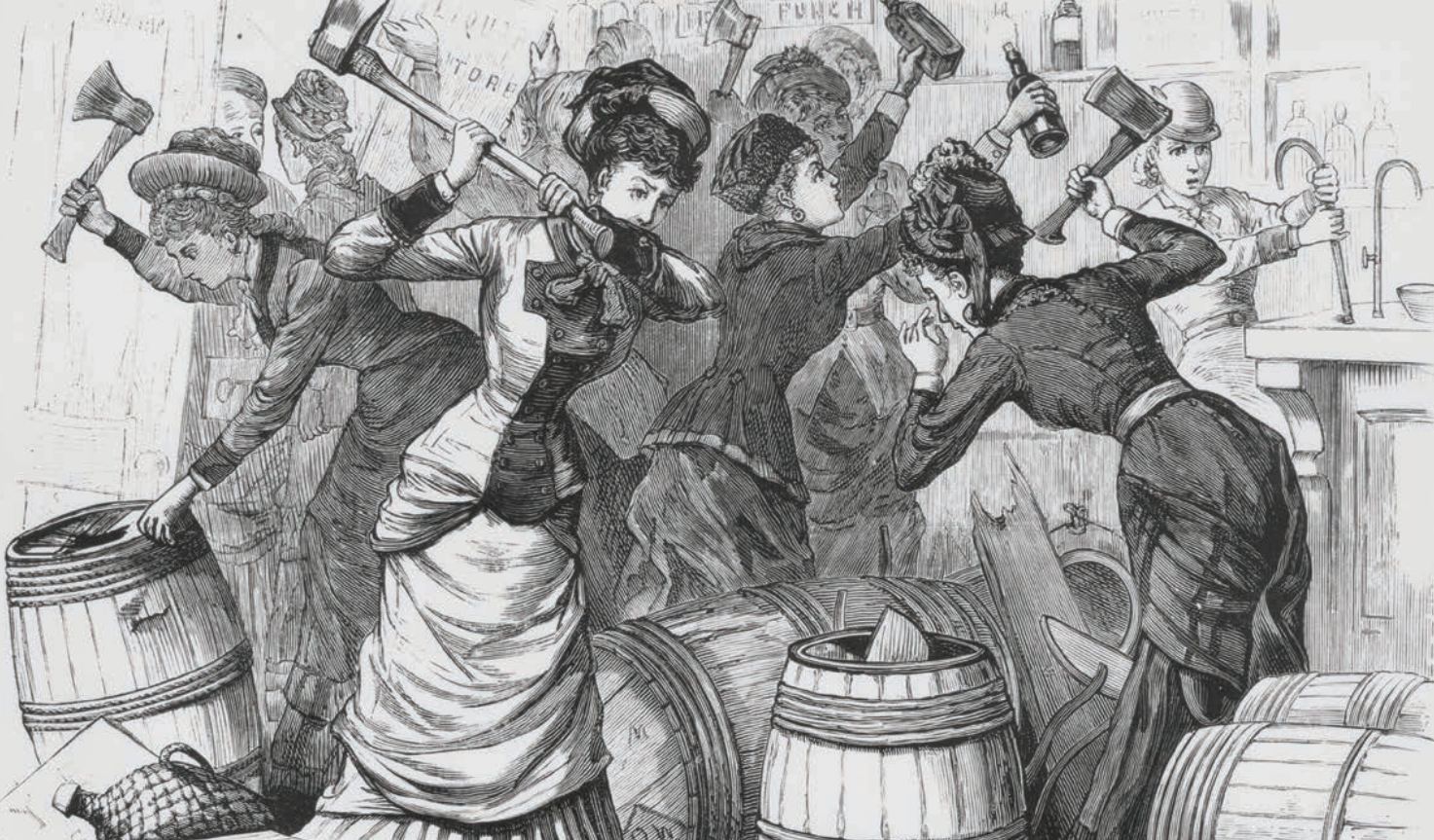
Instead, many religious groups focused on alcoholism as one of the most serious problems facing Australian society. Before 1945, alcoholism was viewed as a moral failing rather than a medical condition. Today, numerous programs treat alcoholism as a disease, but in this earlier period, many religious groups focused on the ethics of alcohol use itself.
The temperance movement and 'wowsers'
Definition and origins
Many non-Catholic religious groups believed alcohol should be banned outright. Members of these groups were known by the derisive term 'wowsers'.
Note
Key term: Wowser – Australian term referring to a puritanical fanatic or spoilsport
The origin of the term 'wowser' is debated. Possible sources include:
- An acrostic for 'We only want social evils remedied'
- Claimed invention by John Norton, editor of The Truth newspaper, in 1899
- Old English term 'to wow' meaning 'to mew as a cat, howl or bark as a dog, wail, whine, grumble, complain'
The Cambridge Dictionary defines a wowser as 'someone who disapproves of people enjoying themselves, particularly if this involves alcohol'.
Key organisations
Groups promoting anti-alcohol policies included:
- Salvation Army
- Woman's Christian Temperance Union (Australian branch)
Temperance unions worked for a range of ethical issues beyond alcohol restriction. They believed that banning alcohol would:
- Keep men from spending time in pubs
- Increase time men spent with their families
- Reduce domestic violence
- Improve public health
The temperance movement was closely connected to women's movements, as many women believed alcohol restriction would protect them and their families from male violence and neglect.
Broader social concerns
Temperance unions and similar organisations also provided practical services:
- Friendly Societies: Non-profit organisations providing insurance against illness
- Health promotion messages
- Opposition to alcohol as part of general wellbeing campaigns
Note
However, temperance movements also sought to impose very censorious attitudes on society, to the extent of stifling creative and cultural expression.
Impact on Australian society
The six o'clock swill
Temperance unions were very successful in limiting alcohol sales. Their campaigns resulted in legislation requiring pubs to close at 6 p.m. This restriction lasted until the 1960s and led to a phenomenon known as the 'six o'clock rush' or 'six o'clock swill'.
Example
How the six o'clock swill worked:
- Working-class men finished work in the late afternoon
- They rushed to the nearest public house
- They consumed large amounts of alcohol quickly before the 6 p.m. closing time
- This encouraged binge drinking rather than moderate, social drinking
Important
Exam tip: The six o'clock swill is an example of unintended consequences of moral reform – restrictions meant to reduce alcohol consumption actually encouraged harmful drinking patterns.
Class divisions
A number of restaurants were licensed to serve alcohol with food at any hour. However, these establishments tended to be frequented by middle-class men and women. This created a class division in alcohol access:
- Working-class, often Catholic customers: Faced alcohol restrictions, limited to pubs closing at 6 p.m.
- Middle-class restaurant patrons: Allowed to drink freely at any hour
The temperance campaign reinforced existing social class divisions in Australia. Working-class Australians had restricted access to entertainment, while wealthier Australians could enjoy alcohol and entertainment more freely.
Restrictions on entertainment and commerce
Temperance movements pressured governments to limit opening hours of various venues:
- Cinemas
- Theatres
- Shops
In cities around Australia, particularly on Sundays and in the evenings, little entertainment was available for economically and socially disadvantaged people.
Protestant and anti-Catholic character
The wowser campaigns were markedly Protestant in character, both in their moral authoritarianism and their overt anti-Catholicism. Campaign leaders were often strongly anti-Catholic themselves.
Example: Australian Protestant Defence Association
W.M. Dill Macky, who was Grand Chaplain of the fiercely Protestant Loyal Orange Lodge (1899-1904), founded the Australian Protestant Defence Association (APDA) in June 1901. The organisation aimed to achieve Protestant 'union in political action'.
The APDA manifesto spoke of 'the secret tactics and open aggressiveness of Roman Catholicism as an element of danger to the civil and religious liberties of the people of this state'.
Growth of the APDA:
- By the end of 1903: 135 branches in New South Wales
- Claimed membership: Over 22,000
This demonstrates how public morality campaigns were intertwined with religious sectarianism and anti-Catholic sentiment.
Sabbatarianism and Sunday trading
Definition and intentions
Many Christians were Sabbatarians – supporters of keeping the Sabbath (interpreted as Sunday) holy. They believed Sunday should be:
- A day for worship
- A day for rest
- Free from ordinary activities and work
- A time when people were not forced to work
- An opportunity to attend church and be with families
Restrictions imposed
Unfortunately, good intentions became an opportunity to impose restrictions on others' enjoyment:
- Shops not allowed to open on Sundays
- Hotels not allowed to trade
- Sport not allowed to be played
- Entertainment venues closed
Note
These restrictions meant that wowsers were seen as wanting to spoil people's enjoyment of life.
Other moral concerns
Wowsers and moral reform movements were also concerned with:
- Gambling
- Public bathing (modesty concerns)
- Censorship of literature, art and entertainment
- 'Unconventional' sexual expression
Criticism of narrow focus
Critics argued that these mainly Protestant Christians were so concerned with specific individual actions that they ignored greater social ills. The focus on personal morality came at the expense of addressing systemic social problems such as poverty, inequality, and poor working conditions.
Opposition to wowsers
Cultural figures
Anti-wowser figures took great delight in provoking wowsers and challenging their restrictions. Norman Lindsay (1879–1969), an artist and writer, was particularly controversial. His paintings and writings deliberately challenged wowser sensibilities and tested censorship boundaries.
Public perception
Over time, wowsers came to be seen as:
- Killjoys interfering in private lives
- Imposing their morality on others
- Spoiling people's enjoyment of life
- Out of touch with Australian culture
Legacy of public morality campaigns
Public morality has remained an ongoing divisive issue in Australia, due in part to:
- Religious sectarianism of the early colony
- Persistent anti-authoritarian views of many Australians
- Memory of wowser restrictions
Note
While the temperance movement demonstrated some noble intentions (disapproval of excessive alcohol use, promotion of family values), members were eventually seen as interfering in others' private lives. The legacy of the wowser movement contributed to Australian attitudes toward moral regulation and religious authority.
Important
Exam tip: When evaluating the public morality campaigns, consider both the positive intentions (reducing alcohol-related harm, protecting families) and the negative impacts (class divisions, cultural restrictions, sectarian tensions). This demonstrates the complexity of moral reform movements.
Remember!
Summary
Key points:
- Christianity made three major contributions to Australian life before 1945: supporting rural/outback communities, providing education, and promoting public morality.
- Reverend John Flynn established the Australian Inland Mission and pioneered the Royal Flying Doctor Service, using innovative technology like the pedal wireless to serve isolated communities.
- The 1880 Public Instruction Act made education compulsory, free and secular, prompting the Catholic Church to establish its own comprehensive school system funded by the Catholic community.
- Mary MacKillop co-founded the Sisters of St Joseph, which ran schools for disadvantaged children, and became Australia's first Catholic saint in 2010.
- The temperance movement ('wowsers') successfully restricted alcohol sales, leading to the 'six o'clock swill', but were seen as killjoys imposing morality on others and reinforcing class divisions.
Key terms to remember:
- Australian Inland Mission (AIM)
- Royal Flying Doctor Service
- Pedagogical
- Canonisation
- Wowser
- Temperance movement
- Six o'clock swill
- Sabbatarianism
Critical framework:
When analysing Christianity's contribution to Australian life, consider:
- The balance between positive contributions (services, education, health) and problematic impacts (cultural restrictions, sectarianism)
- The role of class divisions in both education provision and moral reform
- The tension between religious authority and Australian anti-authoritarian culture
- How good intentions (protecting families, improving health) sometimes led to unintended negative consequences