Organelles (VCE SSCE Biology): Revision Notes
📚Revision Notes
Organelles
What are organelles?
Cells contain many different specialized structures that work together to keep the cell functioning efficiently. These compartments are called organelles, and each has a distinct structure designed to perform specific tasks.
Note
Think of a cell like a football team
If everyone just ran after the ball with no plan, the team would never win. But when players have specific positions and roles, the team performs much better. Similarly, each organelle has a particular job, and when they work together, the cell operates efficiently and effectively.
Every cell is surrounded by a plasma membrane that controls what enters and exits the cell. Inside the cell is a fluid substance called the cytosol, which contains dissolved salts, nutrients, and molecules necessary for cellular function. The term cytoplasm refers to all the organelles (except the nucleus) plus the cytosol in which they are suspended.
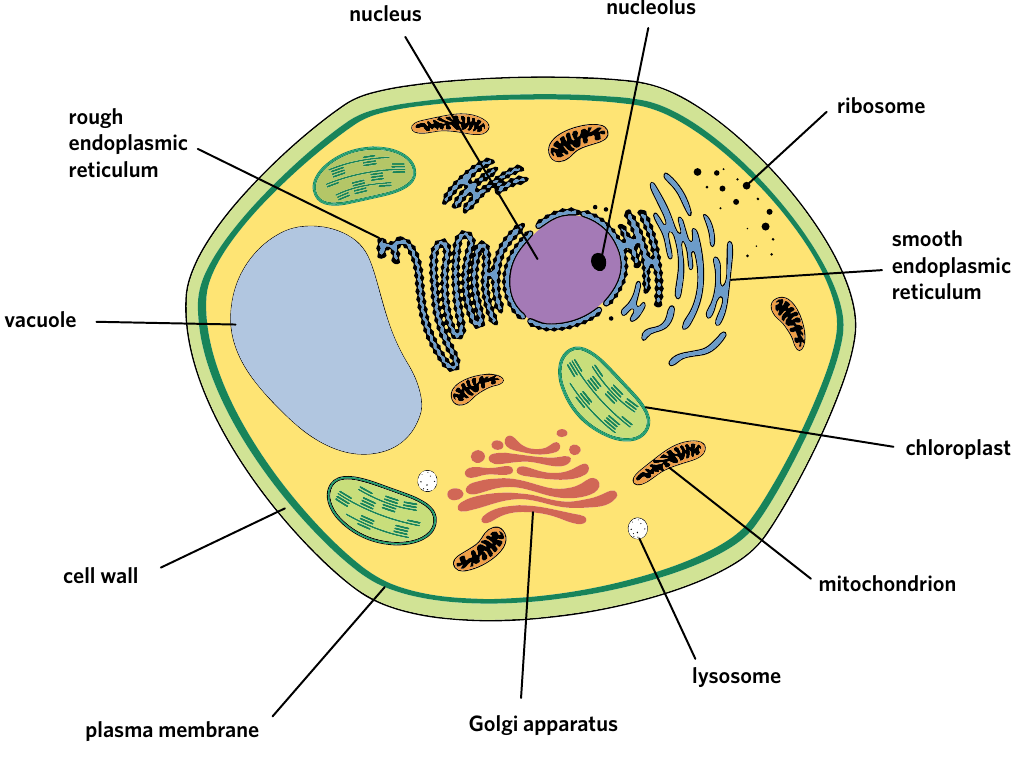
Structure and function of organelles
The following sections describe the major organelles found in eukaryotic cells, their structures, and their specific functions.
Nucleus
The nucleus serves as the control centre of the cell. It is surrounded by a double membrane called the nuclear envelope, which contains pores that allow materials to move in and out. The nucleus's primary role is to protect and confine the cell's genetic information (DNA).
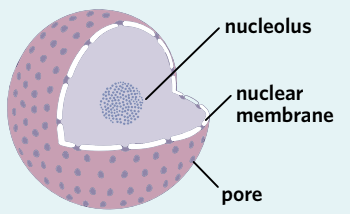
Inside the nucleus is a smaller structure called the nucleolus, which is the site where ribosomes are produced. The nucleolus manufactures ribosomal RNA (rRNA) and assembles it with proteins to form ribosome subunits.
Ribosomes
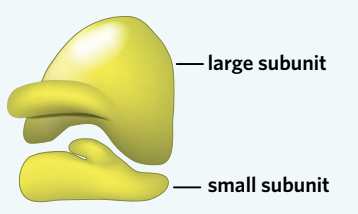
Ribosomes are tiny structures composed of ribosomal RNA (rRNA) and proteins. They consist of two parts: a large subunit and a small subunit. These subunits work together to assemble amino acids into proteins, making ribosomes the protein-making factories of the cell.
Note
Cells contain many ribosomes. Some float freely in the cytoplasm, whilst others attach to the rough endoplasmic reticulum. The location of ribosomes often relates to where their protein products will be used.
Rough endoplasmic reticulum (RER)
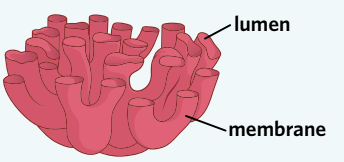
The rough endoplasmic reticulum is a network of connected, flattened sacs that are studded with ribosomes. This gives it a "rough" appearance under the microscope. The attached ribosomes allow the RER to synthesise and modify proteins. The RER typically surrounds the nucleus or sits very close to it, allowing efficient transfer of genetic instructions for protein production.
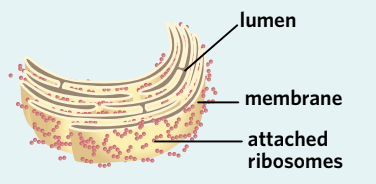
The interior space of the RER is called the lumen, and the proteins made here can be packaged for transport to other parts of the cell or for secretion outside the cell.
Smooth endoplasmic reticulum (SER)
The smooth endoplasmic reticulum is also a network of connected, flattened sacs, but unlike the RER, it lacks attached ribosomes. This gives it a smooth appearance. The SER is responsible for producing lipids (fats) and certain hormones. It also plays a role in detoxifying harmful substances in some cell types.
Golgi apparatus
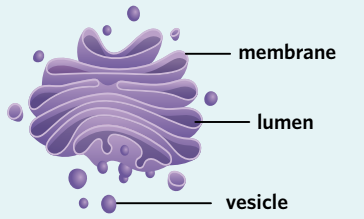
The Golgi apparatus (also called the Golgi body) consists of stacked, flattened sacs. It functions as the cell's processing and packaging centre. Proteins produced by the RER are often transported to the Golgi apparatus in small vesicles. Here, the proteins are sorted, modified, and packaged into new vesicles for use within the cell or for export outside the cell.
Note
The Post Office Analogy
You can think of the Golgi apparatus as a post office, receiving packages (proteins), adding address labels (modifications), and sending them to their correct destinations.
Lysosome
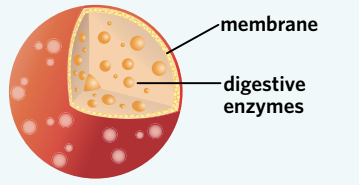
Lysosomes are membrane-bound vesicles containing powerful digestive enzymes. They function like the cell's waste disposal system, breaking down old cell parts, waste materials, and toxins.
Important
The membrane surrounding the lysosome prevents these destructive enzymes from damaging other parts of the cell. Without this protective barrier, the enzymes would destroy the cell itself.
Mitochondrion
Mitochondria (singular: mitochondrion) are often called the "powerhouses of the cell" because they produce most of the cell's energy through a process called aerobic cellular respiration. Each mitochondrion has a highly folded inner membrane surrounded by a smooth outer membrane.
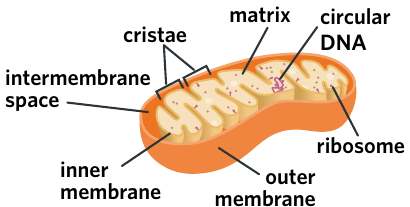
The folds of the inner membrane are called cristae, and they increase the surface area available for energy production. The space inside the inner membrane is called the matrix. The narrow space between the inner and outer membranes is the intermembrane space.
Note
Interestingly, mitochondria contain their own DNA and ribosomes, which allows them to produce some of their own proteins independently from the rest of the cell. This unique characteristic provides important evidence for the endosymbiosis theory discussed later.
Chloroplast
Chloroplasts are found in plant cells and algae cells. They are the sites of photosynthesis, the process that converts light energy into chemical energy stored in glucose molecules. Like mitochondria, chloroplasts have a double membrane structure with an inner and outer membrane.
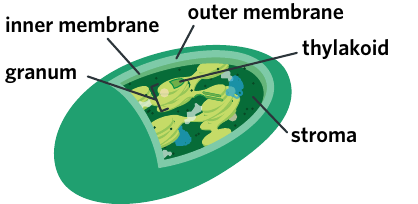
Inside the chloroplast, you will find stacks of flattened sacs called thylakoids. A stack of thylakoids is called a granum (plural: grana). The thylakoid membranes contain a green pigment called chlorophyll, which absorbs light energy to power photosynthesis.
The fluid substance filling the interior of the chloroplast is called the stroma. Like mitochondria, chloroplasts also contain their own DNA and ribosomes.
Vacuole
Vacuoles are membrane-bound sacs used for storage. In plant cells, there is typically one large central vacuole that stores water, nutrients, and waste products. The large vacuole also helps maintain plant cell structure by pressing against the cell wall when filled with fluid.
Animal cells may have multiple small vacuoles or none at all. In animal cells, vacuoles primarily store water and dissolved substances rather than providing structural support.
Plasma membrane
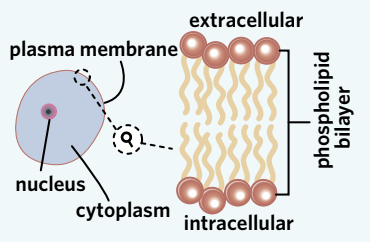
The plasma membrane is a selectively permeable barrier that separates the cell's interior from its external environment. It is composed of a phospholipid bilayer studded with various proteins and other molecules. The plasma membrane controls what substances can enter and exit the cell, maintaining the cell's internal environment.
Cell wall
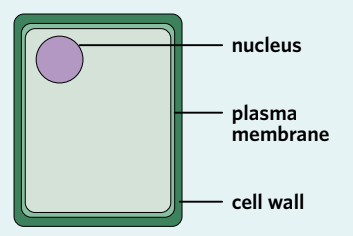
The cell wall is a sturdy outer layer found in plant cells, bacterial cells, and fungal cells, but not in animal cells. In plants, the cell wall is made primarily of cellulose and provides strength and structural support. The cell wall sits outside the plasma membrane and helps the cell maintain its shape, even under changing environmental conditions.
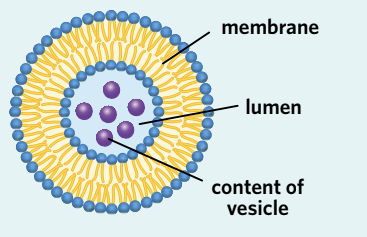
Vesicle
Vesicles are small, membrane-bound sacs that transport substances into or out of the cell. They can also store substances within the cell. Vesicles act like delivery trucks, moving materials from one part of the cell to another or carrying substances to the plasma membrane for secretion.
Cytoskeleton
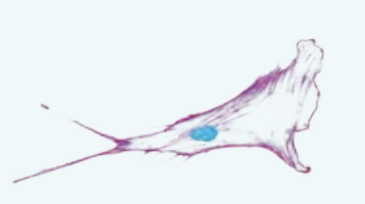
The cytoskeleton is a large network of protein filaments that extends from the nucleus to the plasma membrane. It serves as the cell's scaffolding, maintaining cell shape and providing structural support. The cytoskeleton also acts as a transport system, helping to move vesicles and organelles around the cell. Under fluorescence microscopy, the cytoskeleton appears as a web of filaments throughout the cell.
Membrane-bound organelles
Some organelles are surrounded by a membrane, whilst others are not. Membrane-bound organelles are enclosed by a phospholipid bilayer that controls what enters and exits the organelle. This compartmentalisation allows different chemical reactions to occur simultaneously in different parts of the cell without interference.
| Membrane-bound organelles | Not membrane-bound |
|---|---|
| Nucleus | Ribosomes |
| Rough endoplasmic reticulum | Cell wall |
| Smooth endoplasmic reticulum | Cytoskeleton |
| Golgi apparatus | |
| Lysosomes | |
| Mitochondria | |
| Chloroplasts | |
| Vacuoles | |
| Vesicles |
Important
Only eukaryotic cells have membrane-bound organelles. Prokaryotic cells do have some organelles (such as ribosomes), but these are not enclosed by membranes. This is one of the key structural differences between prokaryotic and eukaryotic cells.
Mitochondria and cellular respiration
Mitochondria are essential organelles found in nearly all eukaryotic cells. Their primary function is to produce energy through cellular respiration, the process that converts glucose into ATP (adenosine triphosphate), the cell's main energy currency.
Cellular respiration can occur aerobically (with oxygen) or anaerobically (without oxygen). Mitochondria are only involved in aerobic cellular respiration. This process is much more efficient than anaerobic respiration, producing 36 ATP molecules from one glucose molecule.
Example
Chemical Equation for Aerobic Cellular Respiration
In words: glucose + oxygen → carbon dioxide + water + energy (ATP)
The highly folded inner membrane of mitochondria (the cristae) provides a large surface area for the chemical reactions of cellular respiration to take place. This efficient structure allows cells to produce the energy they need to function.
Note
Elite Athletes and Mitochondria
Interestingly, elite athletes often have more mitochondria in their muscle cells than non-athletes. This allows their cells to produce more energy, enabling them to work at higher intensities for longer periods.
Chloroplasts and photosynthesis
Chloroplasts are the sites of photosynthesis in plant and algae cells. Photosynthesis is the process that uses light energy from the sun, carbon dioxide from the air, and water to produce glucose and oxygen.
Example
Chemical Equation for Photosynthesis
In words: carbon dioxide + water + light energy → glucose + oxygen
Note
Notice that photosynthesis is essentially the reverse of cellular respiration. Plants use photosynthesis to create glucose, which they can then break down through cellular respiration to produce ATP energy when needed.
The thylakoid membranes inside chloroplasts contain chlorophyll, the green pigment that absorbs light energy. This absorbed energy powers the chemical reactions of photosynthesis. The glucose produced can be used immediately for cellular respiration, used to build cell walls, or stored as starch for later use.
The endosymbiosis theory
Strong scientific evidence suggests that mitochondria and chloroplasts were once free-living bacteria that existed billions of years ago. According to the endosymbiosis theory, these bacteria were engulfed by larger cells, establishing a mutually beneficial relationship where one organism lives inside another.
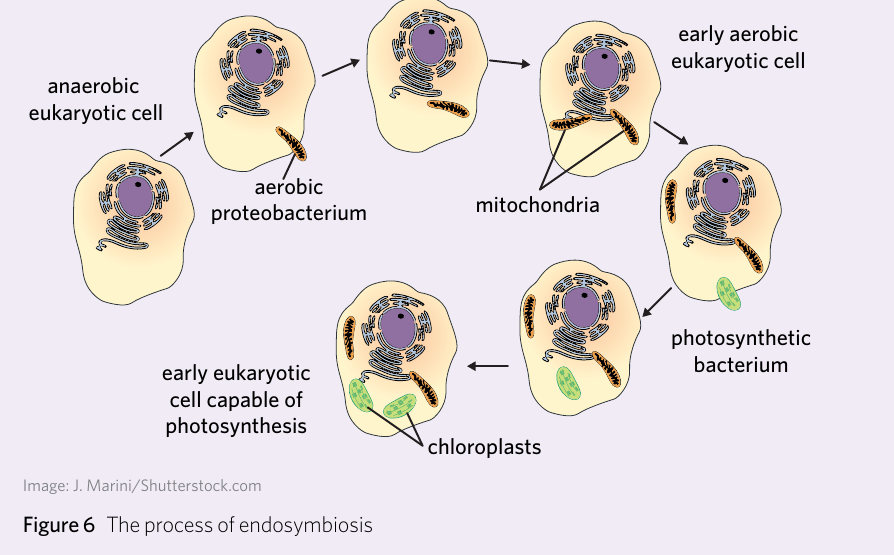
Several pieces of evidence support this theory:
Important
Key Evidence for Endosymbiosis
-
Double membrane structure: Both mitochondria and chloroplasts have two membranes, which makes sense if they were engulfed by another cell through endocytosis. The inner membrane would be the original bacterial membrane, whilst the outer membrane came from the host cell.
-
Own DNA and ribosomes: Both organelles contain their own DNA and ribosomes, allowing them to produce some proteins independently from the rest of the cell. This is unusual for organelles and suggests they were once independent organisms.
-
Circular DNA: The DNA in mitochondria and chloroplasts is circular and not enclosed in a nuclear membrane, just like bacterial DNA. This differs from eukaryotic DNA, which is linear and enclosed in a nucleus.
-
Similar ribosomes: The ribosomes in mitochondria and chloroplasts share characteristics with bacterial ribosomes rather than eukaryotic ribosomes.
-
Binary fission: Mitochondria and chloroplasts replicate through binary fission, the same method bacteria use. Plant and animal cells replicate through mitosis or meiosis.
-
Transport proteins: The outer membranes of mitochondria and chloroplasts contain transport proteins called porins, which are otherwise found only in prokaryotic cell membranes.
This endosymbiotic relationship proved beneficial for both organisms. The host cell gained the ability to produce energy more efficiently (mitochondria) or to produce its own food (chloroplasts), whilst the engulfed bacteria gained protection and a stable environment.
Comparing plant and animal cells
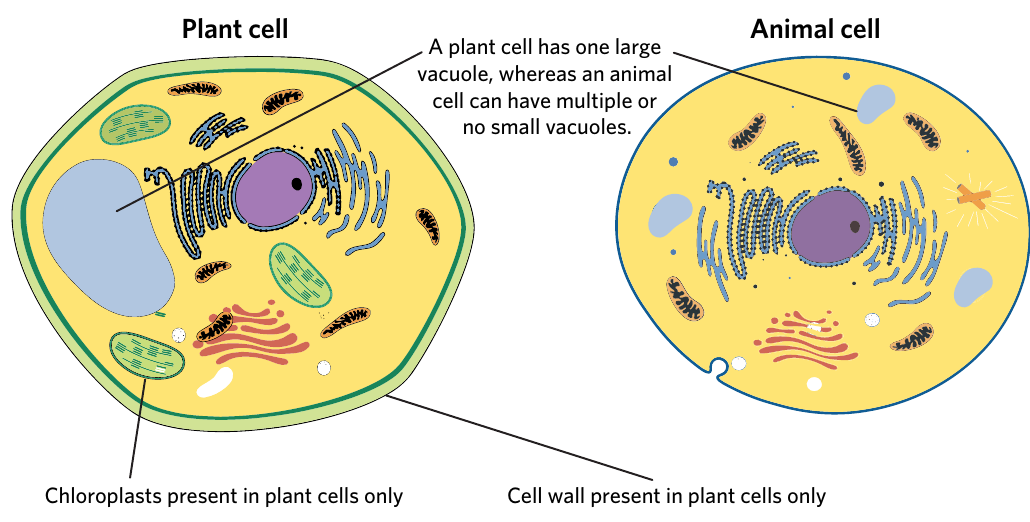
Whilst plant and animal cells share many organelles, there are several important differences between them that reflect their different lifestyles and needs.
Key differences between plant and animal cells
Cell wall presence
Plant cells have a rigid cell wall made of cellulose outside their plasma membrane, whilst animal cells do not. Unlike plants, most animals have evolved internal skeletons that provide structural support for the organism. Plants rely on their strong cell walls to perform this function, allowing them to stand upright and maintain their shape.
Chloroplasts
Chloroplasts are present in plant cells but absent in animal cells. This makes sense because plants produce their own food through photosynthesis, which occurs in chloroplasts. Animals cannot photosynthesise and must obtain their food by consuming other organisms.
Vacuole size
Plant cells typically have one large central vacuole that can occupy up to 90% of the cell's volume. This vacuole must remain full of fluid to prevent the plant from wilting, as it presses against the cell wall to provide structural support.
Animal cells, in contrast, have multiple small vacuoles or sometimes none at all. In animal cells, vacuoles are primarily used for water and solute storage rather than structural support.
Summary of organelles in eukaryotic cells
The table below summarises which organelles are found in plant cells, animal cells, or both:
| Organelle | Membrane-bound? | Present in plants? | Present in animals? |
|---|---|---|---|
| Nucleus | Yes | Yes | Yes |
| Rough endoplasmic reticulum (RER) | Yes | Yes | Yes |
| Smooth endoplasmic reticulum (SER) | Yes | Yes | Yes |
| Ribosomes | No | Yes | Yes |
| Golgi apparatus | Yes | Yes | Yes |
| Lysosome | Yes | Yes | Yes |
| Mitochondria | Yes | Yes | Yes |
| Chloroplast | Yes | Yes | No |
| Vacuoles | Yes | Yes | Yes |
| Plasma membrane | No | Yes | Yes |
| Cell wall | No | Yes | No |
| Vesicle | Yes | Yes | Yes |
| Cytoskeleton | No | Yes | Yes |
Note
Whilst both plant and animal cells have vacuoles, they differ significantly in size and number, as described above.
Remember!
Summary
Key Points to Remember:
-
Organelles are specialized structures within cells that perform specific functions, allowing cells to operate efficiently.
-
Mitochondria produce energy through aerobic cellular respiration, converting glucose and oxygen into ATP, carbon dioxide, and water.
-
Chloroplasts carry out photosynthesis in plant cells, using light energy, carbon dioxide, and water to produce glucose and oxygen.
-
The endosymbiosis theory explains that mitochondria and chloroplasts were once free-living bacteria that were engulfed by larger cells billions of years ago, supported by evidence such as their double membranes, own DNA, and circular genetic material.
-
Plant and animal cells differ in three main ways: plant cells have cell walls (animals don't), plant cells have chloroplasts (animals don't), and plant cells have one large vacuole (animals have multiple small vacuoles or none).