Principles of Volumetric Analysis (VCE SSCE Chemistry): Revision Notes
📚Revision Notes
Principles of Volumetric Analysis
What is volumetric analysis?
Volumetric analysis is a laboratory technique used to determine the concentration of a dissolved substance in a solution. The method involves carefully measuring the volumes of solutions that react together. One solution has a known concentration (called a standard solution) and the other has an unknown concentration that you want to find.
Note
Although modern laboratories have access to faster, more sophisticated instruments, volumetric analysis remains widely used because it is simple, inexpensive, and reliable.
Preparing standard solutions
Primary standards
To perform volumetric analysis, you need a solution with an accurately known concentration. This is called a standard solution. Standard solutions are often prepared from substances called primary standards.
Important
A primary standard is a pure substance where the amount of substance (in moles) can be calculated accurately from its mass.
For a substance to be used as a primary standard, it should have these characteristics:
- Be readily available in a very pure form
- Have a known chemical formula
- Be easy to store without deteriorating or reacting with substances in the atmosphere
- Have a high molar mass to minimise the effect of weighing errors
- Be inexpensive
Examples of primary standards:
Acids:
- Hydrated oxalic acid ()
- Potassium hydrogen phthalate ()
Bases:
- Sodium borate ()
- Anhydrous sodium carbonate ()
Note
The term anhydrous means there is no water present in the compound. For example, sodium carbonate may naturally contain water molecules in its crystal structure. To obtain anhydrous sodium carbonate, you heat a sample above to remove any water, then store it in a desiccator to prevent it from absorbing moisture from the atmosphere.
Making a standard solution
Standard solutions are prepared by dissolving an accurately measured mass of a primary standard in deionised water to make an accurately measured volume of solution.
Deionised water is water that has had all ions removed. Its high purity makes it ideal for cleaning glassware and preparing solutions.
Equipment for preparing standard solutions:
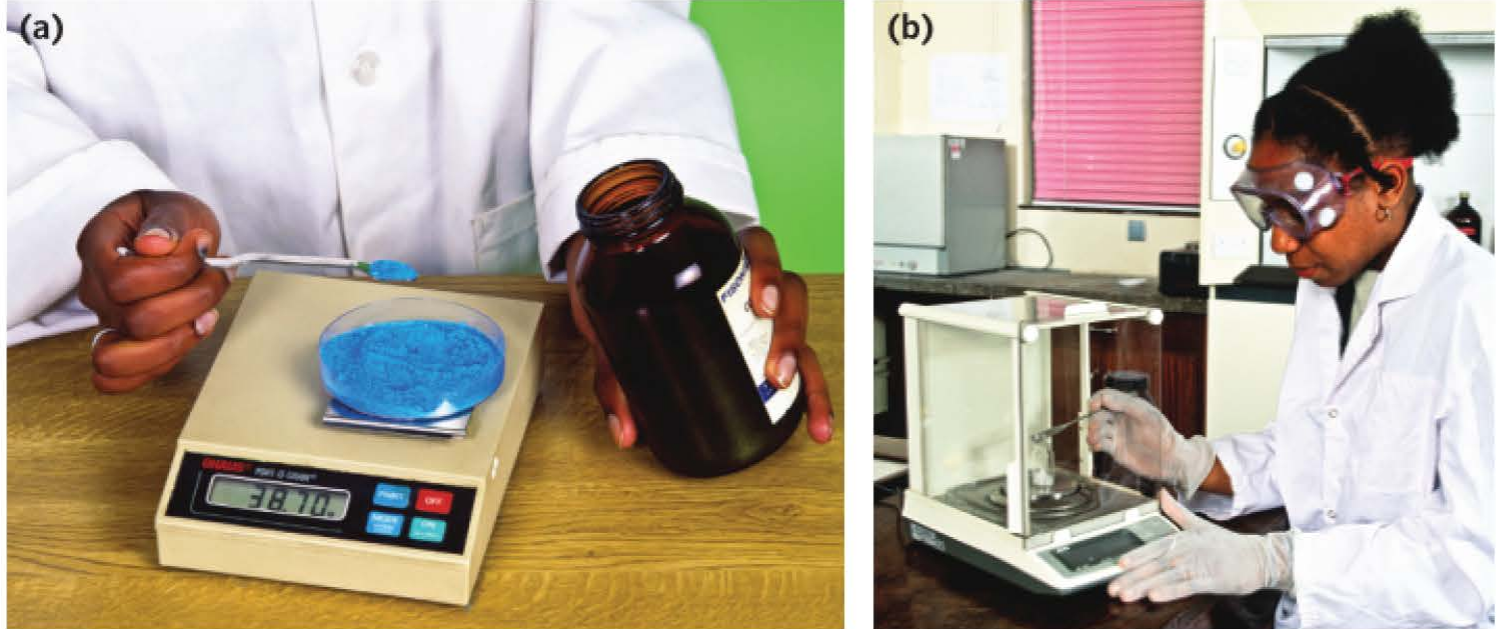
Digital balances are used to accurately weigh primary standards:
- Top-loading balances can weigh to an accuracy of g to g
- Analytical balances can weigh to an accuracy of g to g
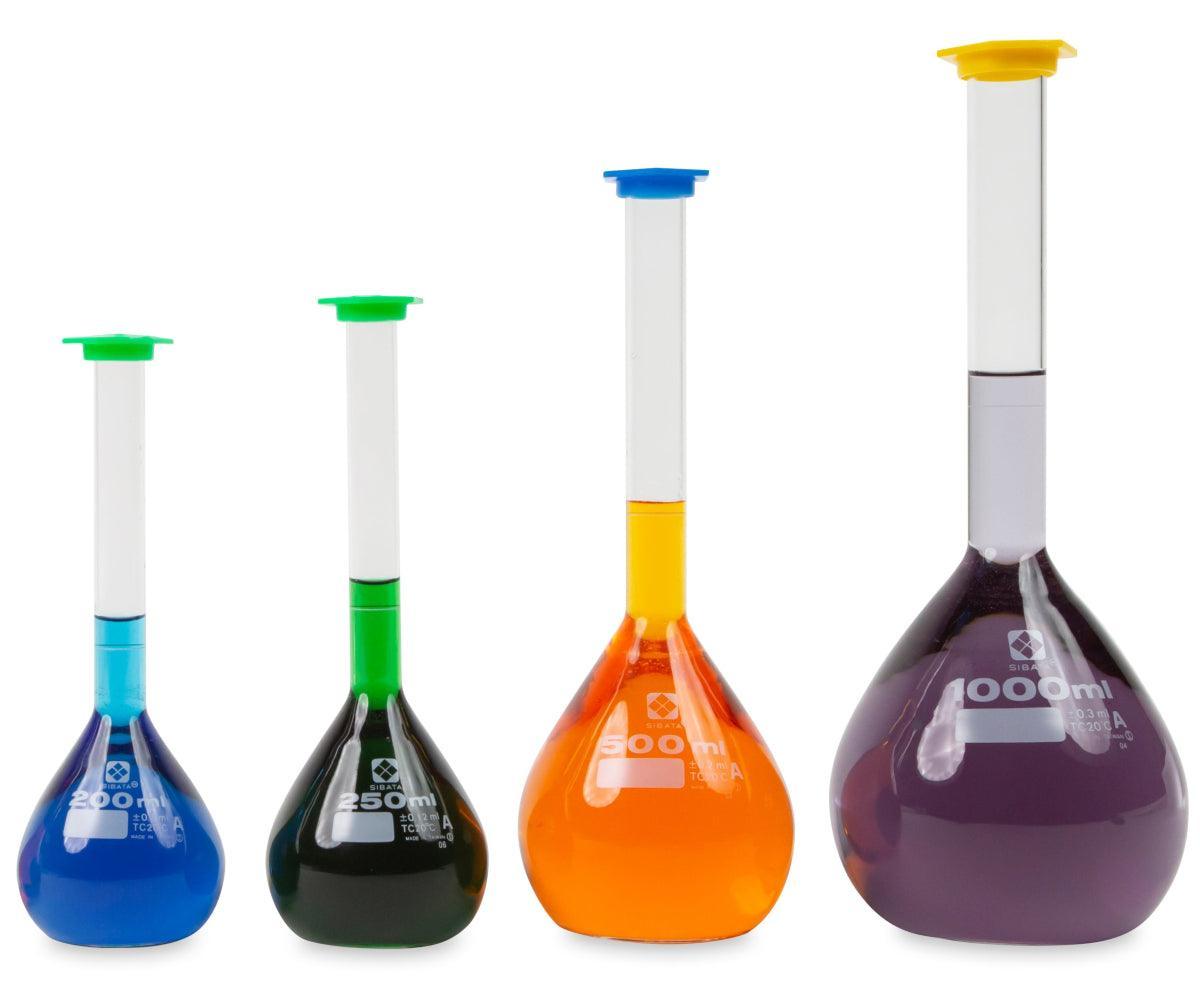
Volumetric flasks (also called standard flasks) are used to prepare solutions with accurately known volumes. Common sizes include mL, mL, and mL.
Note
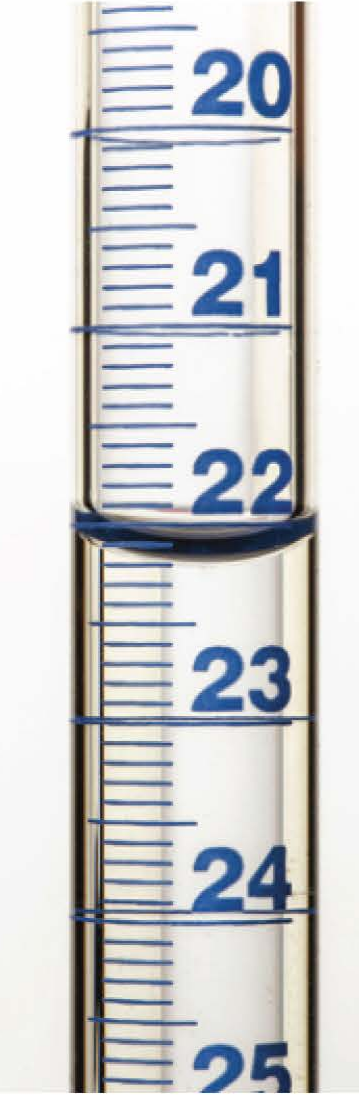
A volumetric flask is filled so that the bottom of the meniscus (the curved surface of the solution) is level with the graduation line on the neck of the flask. Your eye should be level with the line to avoid parallax errors (errors caused by viewing from an angle).
Procedure for preparing a standard solution:
The following diagram shows the steps involved in preparing a standard solution from a primary standard:
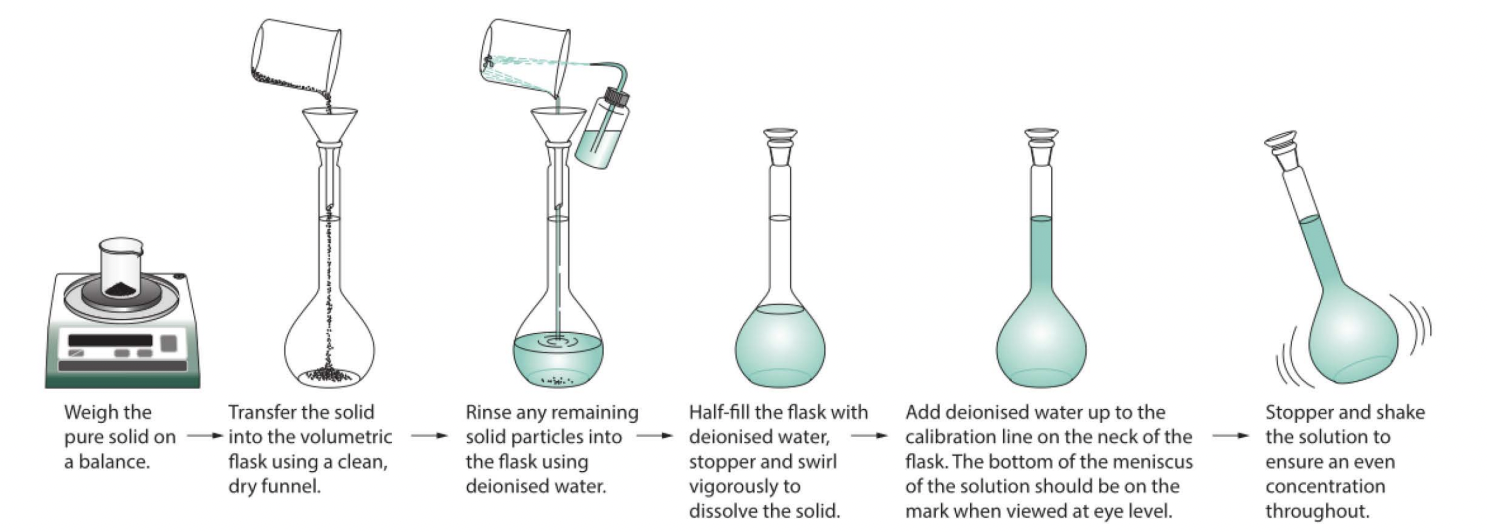
- Weigh the pure solid primary standard on a balance
- Transfer the solid into the volumetric flask using a clean, dry funnel
- Rinse any remaining solid particles into the flask using deionised water
- Half-fill the flask with deionised water, stopper and swirl vigorously to dissolve the solid
- Add deionised water up to the calibration line on the neck of the flask. The bottom of the meniscus should be level with the mark when viewed at eye level
- Stopper and shake the solution to ensure an even concentration throughout
Calculating the concentration of a standard solution
The concentration of a standard solution is calculated using these formulas:
Amount in moles:
where is the mass of solute in grams and is the molar mass in
Concentration:
where is the amount in moles, is the volume in litres, and is the concentration in or M.
Example
Worked Example: Calculating Standard Solution Concentration
Calculation steps:
- Use the chemical formula to determine the molar mass of the primary standard
- Use the mass and molar mass to calculate the amount in moles
- Use the amount in moles and the volume of the flask to calculate the concentration
Here is a worked example showing these steps:
Use the chemical formula to determine the molar mass (M) of the compound.
Use the mass (m) and molar mass (M) of the compound and the formula (n = \frac{m}{M}) to determine the amount, in mol.
Use the amount, in mol, to determine the concentration of the solution using the formula (c = \frac{n}{V}). Express your answer to the appropriate number of significant figures.
The final result is rounded to three significant figures, corresponding to the smallest number of significant figures in the original data. Four significant figures are used in the earlier steps of the calculation to avoid rounding errors.
Important
Note on standardisation: Many chemicals cannot be used as primary standards because they are impure or react with atmospheric gases. For example:
- Strong bases like and absorb water and react with carbon dioxide from the air
- Many hydrated salts lose water to the atmosphere over time
- Commercial supplies of strong acids (, , ) cannot be accurately specified
Solutions of these substances must be standardised by titration against a known amount of a standard solution to determine their concentration.
Stock solutions are large volumes of commonly used reagents with known concentrations. These are often diluted to obtain convenient concentrations for volumetric analysis.
Conducting volumetric analyses
The titration process
Titration is the process of reacting a measured volume of a standard solution with a measured volume of a solution of unknown concentration.
The solutions are mixed until they have just reacted completely in the mole ratio shown in the balanced chemical equation. This point is called the equivalence point.
From the concentration and volume of the standard solution, you can calculate the number of moles of that substance. Using the mole ratio from the balanced equation, you can then determine the number of moles of the unknown substance. Finally, from the number of moles and the measured volume, you can calculate the unknown concentration.
Key terms:
- Aliquot: A specific, accurately measured volume of solution, usually measured with a pipette
- Titre: The accurately known volume of solution delivered from the burette during a titration
- Equivalence point: The point where the reactants have reacted in the exact mole ratio shown in the balanced chemical equation
- End point: The point during the titration when the indicator changes colour
Important
For accurate analysis, the end point should occur at the same time as the equivalence point.
Equipment used in titrations
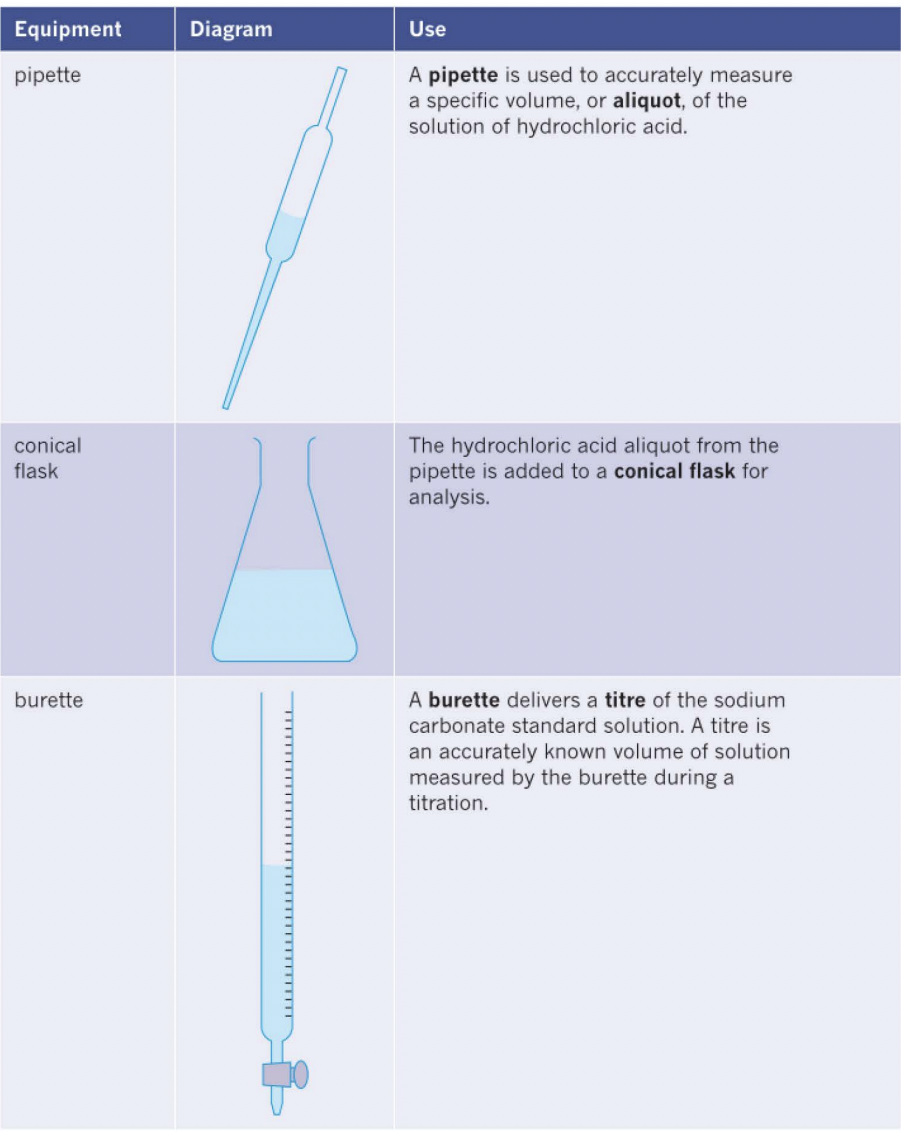
The following table describes the main pieces of glassware used in acid-base titrations:
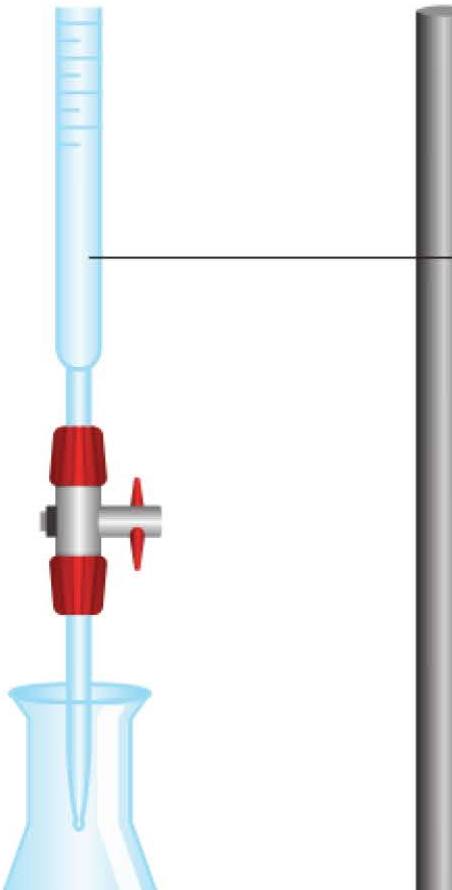
A typical titration setup showing all the equipment together:
Titration procedure
The steps involved in an acid-base titration are:
1. Measure an aliquot using a pipette
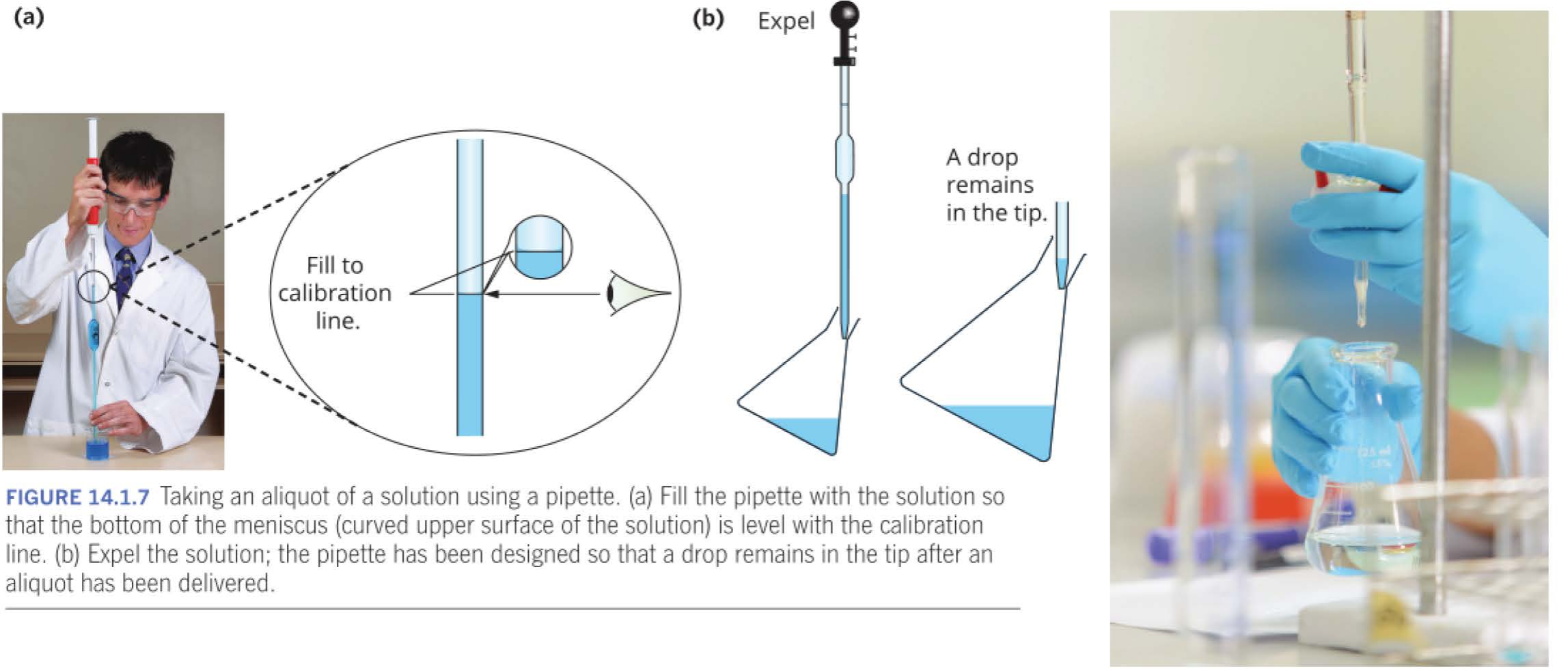
A known volume of one solution is measured using a pipette and transferred into a conical flask.
Note
To use a pipette correctly:
- Fill the pipette so the bottom of the meniscus is level with the calibration line
- Expel the solution into the conical flask
- A drop should remain in the tip (the pipette is designed this way)
2. Add indicator
A few drops of an appropriate acid-base indicator are added to the conical flask. The indicator will signal when to stop the titration by changing colour.
3. Titrate from the burette
The other solution is slowly dispensed from a burette into the conical flask until the indicator changes colour permanently.
Reading a burette scale
Burettes are calibrated in intervals of mL. The volume is measured at the bottom of the meniscus and estimated to the nearest mL.
The titre delivered from the burette is calculated by:
Concordant titres and averaging
To minimise errors, the titration is repeated several times. The average titre is calculated from three concordant titres.
Important
Concordant titres are titres that are within a range of mL from highest to lowest of each other.
Example:
Consider this titration data:
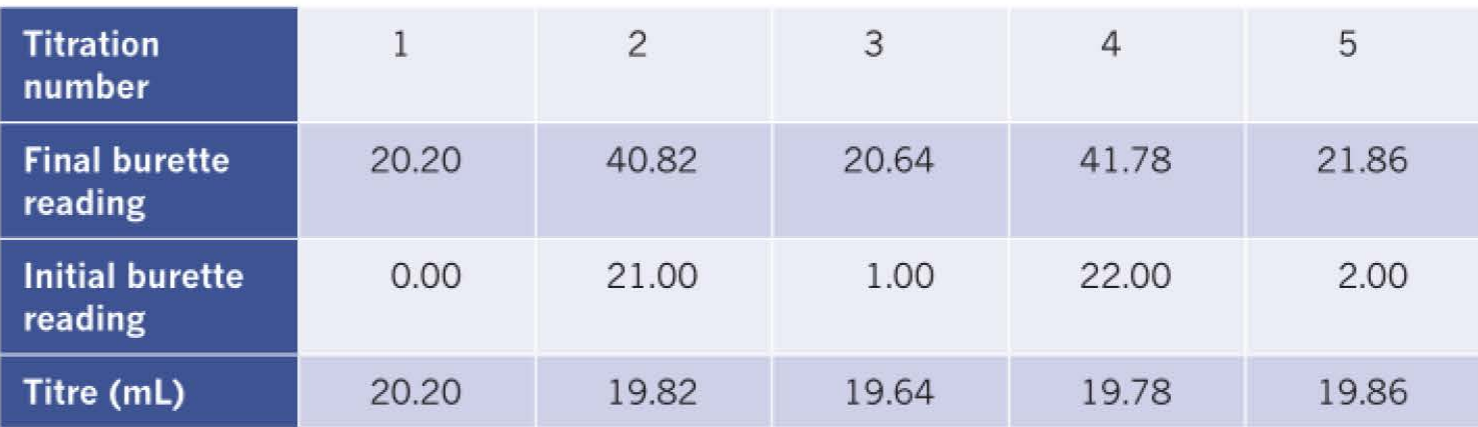
- Titration 1 ( mL) is a rough titration to find the approximate end point
- Titrations 2, 4, and 5 are concordant: mL (within mL range)
- Average titre = mL
Selecting an indicator
Understanding pH curves
During a titration, the pH of the solution in the conical flask changes as solution is added from the burette. A graph showing this change is called a pH curve or titration curve.
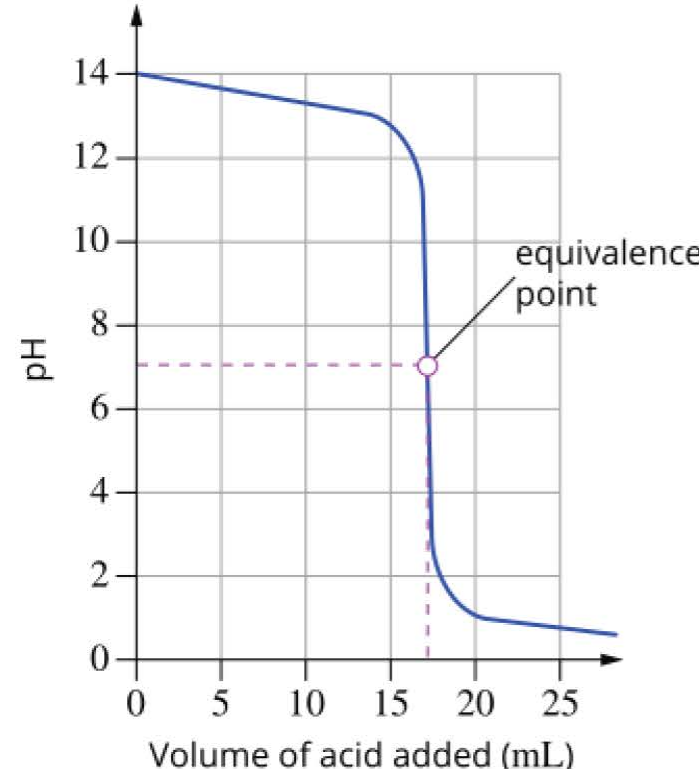
In this example, sodium hydroxide (a strong base, pH 14) is in the conical flask. As hydrochloric acid is added from the burette:
- The pH decreases slowly at first
- Near the equivalence point, a very small volume of acid causes a large pH change
- The pH drops from 10 to 4 with just one drop of acid
- This is called a sharp end point
Note
The equivalence point occurs where the gradient of the pH curve is steepest.
Common indicators
Different indicators change colour at different pH ranges:
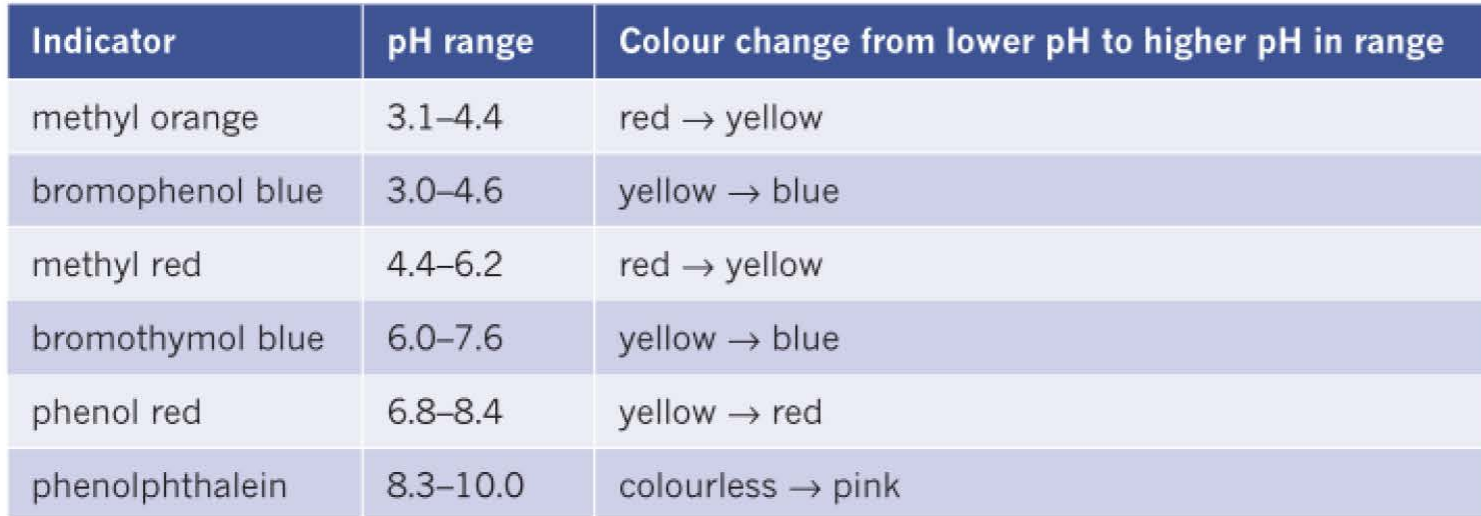
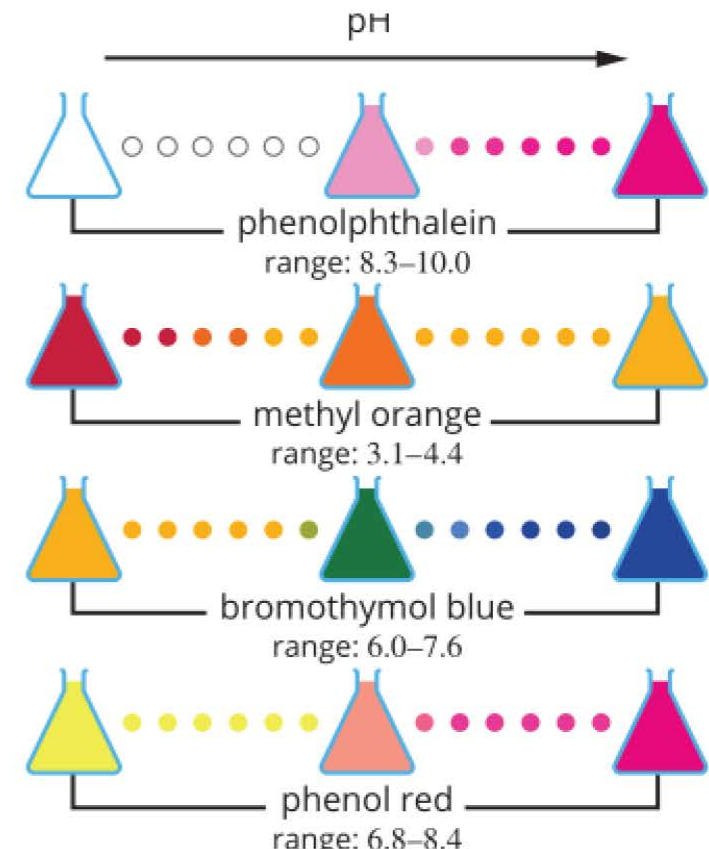
Matching indicators to titrations
Important
It is essential to select an indicator that changes colour during the steep section of the pH curve. This ensures the end point and equivalence point occur together.
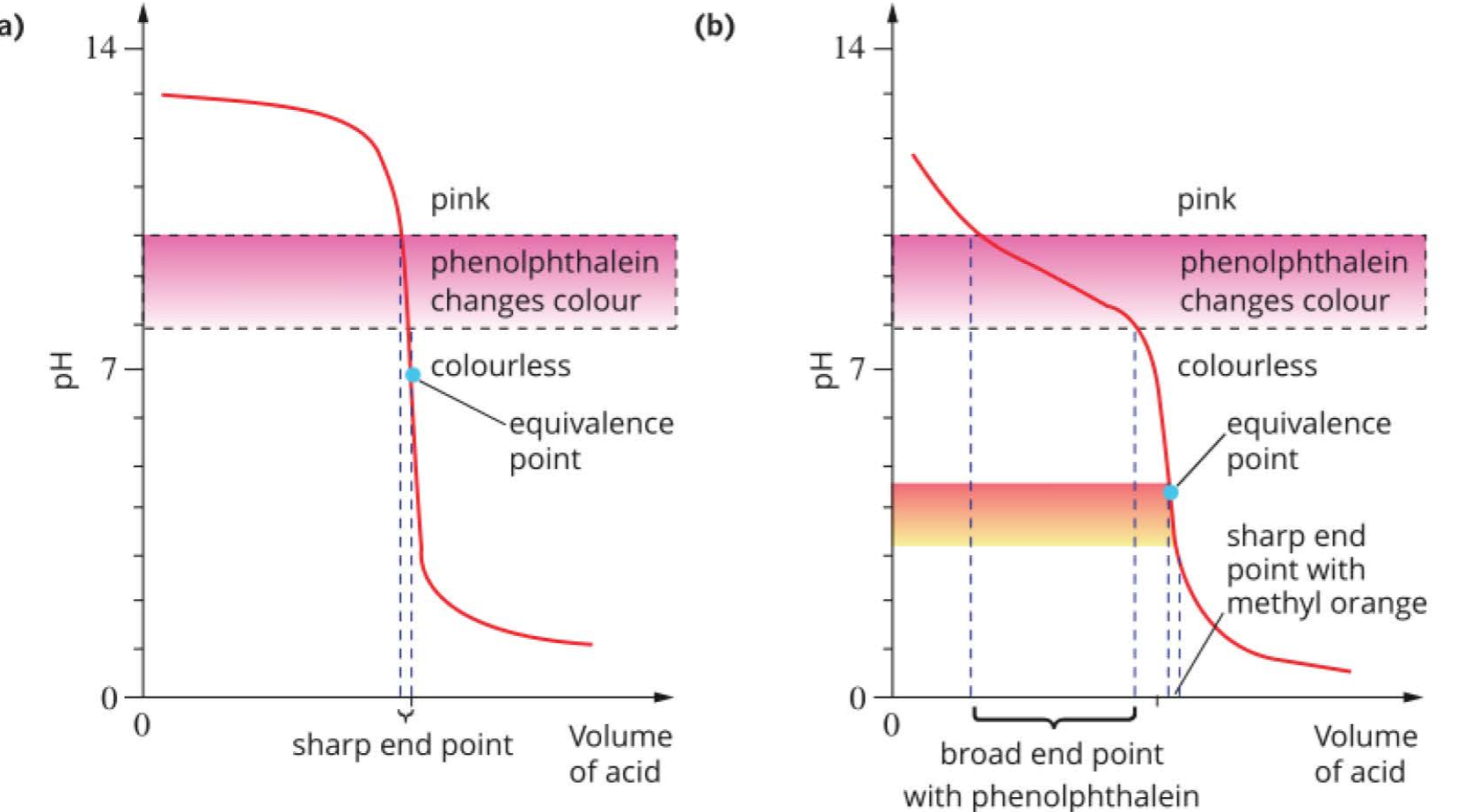
Graph (a) shows a strong acid-strong base titration with a sharp pH drop from pH 10 to pH 4. Phenolphthalein (pH range 8.3-10.0) gives a sharp end point.
Graph (b) shows a strong acid-weak base titration with a less steep pH change. Phenolphthalein would give a broad, inaccurate end point. Methyl orange (pH range 3.1-4.4) is more suitable.
Guidelines for indicator selection:
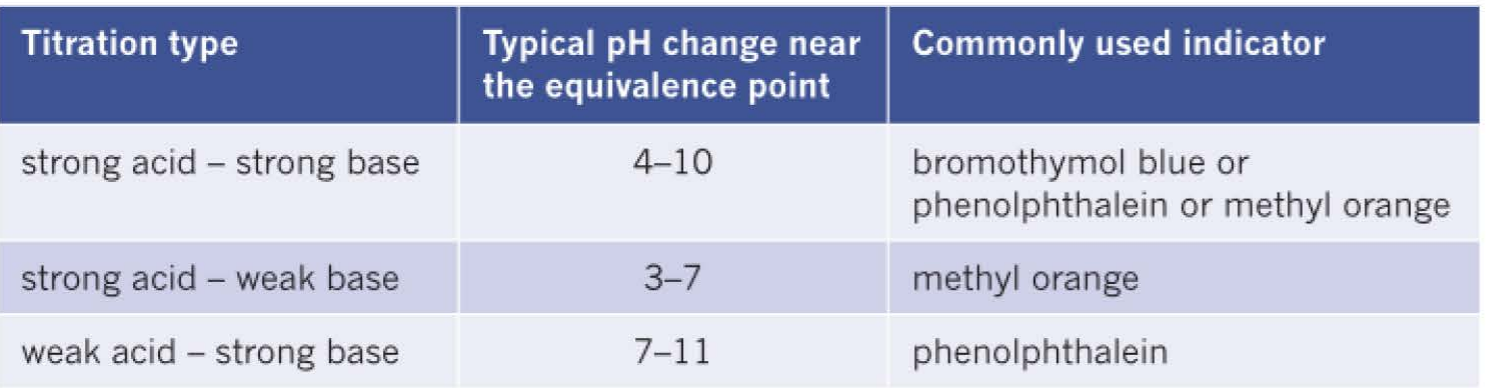
Important
Critical: No indicator is suitable when titrating a weak acid with a weak base, because there is no sharp pH change at the end point.
Accuracy and precision in volumetric analysis
Types of errors
Understanding errors helps improve the quality of analytical results. It's important to distinguish between mistakes and experimental errors.
Mistakes
Mistakes are avoidable errors that should be eliminated by careful technique. Examples include:
- Misreading the numbers on a scale
- Using a pipette of incorrect volume
- Spilling part of a sample
- Incorrect rinsing of glassware
Important
Any measurement involving a mistake should be rejected and not included in calculations.
Systematic errors
A systematic error produces a constant bias that cannot be eliminated by repeating the measurement. The error is always in the same direction, making the average either consistently higher or lower than the true value.
Note
Examples in titrations:
- Using a mL pipette that actually delivers mL
- Using an unsuitable indicator
- The presence of extra substances in the sample that also react during the titration
Random errors
Random errors follow no regular pattern. Sometimes the measurement is too large, sometimes too small.
Note
Examples in titrations:
- Mass uncertainties from balances (usually ± 1 in the last decimal place)
- Changes in titre volume due to temperature fluctuations
- Difficulty judging the fraction between scale markings on a burette
The effects of random errors can be reduced by averaging several observations. This is why we use the average of three concordant titres.
Rinsing glassware correctly
Proper rinsing removes trace chemicals from glassware, making results more accurate and precise. However, rinsing with the wrong liquid can introduce errors.
Important
Key rinsing rules:
Burettes and pipettes:
- Rinse with the acid or base solution they will contain
- DO NOT rinse with water (this would dilute the solution)
Volumetric flasks and conical flasks:
- Rinse only with deionised water
- DO NOT rinse with acidic or basic solutions (this would introduce unmeasured amounts of chemicals that could react and affect results)
Remember!
Summary
Key Points to Remember:
- Volumetric analysis determines unknown concentrations by reacting measured volumes of a standard solution with a solution of unknown concentration
- Primary standards are pure substances that can be accurately weighed to prepare standard solutions. They must be pure, stable, have known formulas, and high molar masses
- Standard solutions are prepared by dissolving a precisely weighed amount of primary standard in a volumetric flask and making up to a known volume with deionised water
- A titration involves slowly adding one solution from a burette to an aliquot of another solution in a conical flask until the equivalence point is reached
- The indicator must be chosen so its colour change (end point) occurs at the same pH as the equivalence point. Use phenolphthalein for weak acid-strong base titrations, methyl orange for strong acid-weak base titrations, and either for strong acid-strong base titrations
- Concordant titres (within mL of each other) are averaged to reduce random errors. Always rinse burettes and pipettes with the solution they will contain, but rinse volumetric and conical flasks only with deionised water