Producing ‘Green’ Hydrogen Gas (VCE SSCE Chemistry): Revision Notes
📚Revision Notes
Producing 'Green' Hydrogen Gas
Why hydrogen as a fuel?
As society works to reduce carbon dioxide emissions from traditional fuels, hydrogen gas has become an important alternative fuel option. Unlike fuels such as methane, petrol and biodiesel, the combustion of hydrogen produces only water as a product.
The thermochemical equation for hydrogen combustion is:
Hydrogen releases significantly more energy per gram than other fuels. When 1 g of hydrogen gas burns completely, it releases 141 kJ of energy, compared to just 55.6 kJ from burning 1 g of methane.
Note
Fuel cells can convert hydrogen into electrical energy for vehicles, houses or industry, though technical challenges have slowed widespread adoption of this technology. The main challenge lies in creating efficient and cost-effective conversion systems that can compete with existing energy infrastructure.
Advantages and disadvantages of hydrogen gas as a fuel
Understanding both the benefits and challenges of hydrogen fuel is essential for evaluating its potential as an alternative energy source.
| Advantages of hydrogen gas as a fuel | Disadvantages of hydrogen gas as a fuel |
|---|---|
| High energy density: | Not found naturally as an element, so energy is needed to produce it |
| Abundant on Earth: present in water and most carbon compounds | Very low boiling point of , requiring significant energy to liquefy it. High pressures needed for efficient gas storage |
| Sole combustion product is water: | Explosive, requiring careful handling and storage |
| Difficult to transport safely as either gas or liquid |
Important
While hydrogen burns cleanly, its production method determines its overall environmental impact. The energy required to produce, liquefy, and transport hydrogen must come from renewable sources to achieve true emission reductions.
Hydrogen colour classification system
While hydrogen itself burns cleanly, its production methods vary in environmental impact. Hydrogen is classified by colour according to how it is produced:
Brown hydrogen is derived from fossil fuels. Historically, most hydrogen has been produced by steam reforming of methane:
The carbon monoxide produced is then converted to carbon dioxide. This process releases as a by-product, which is harmful to the environment.
Grey hydrogen is derived from industrial processes.
Blue hydrogen is derived from fossil fuels but with carbon capture technology, reducing emissions.
Green hydrogen is produced using renewable energy sources and represents the cleanest production method.
Note
Generally, the greener the production process, the more expensive the hydrogen is to produce using current technology. This revision note focuses on green hydrogen production, as it offers the greatest potential for emission reductions.
Electrolysis of water
In the laboratory, producing hydrogen by electrolysis of dilute sulfuric acid () solution is straightforward. Two electrodes are placed in the acid solution and connected to a power supply.
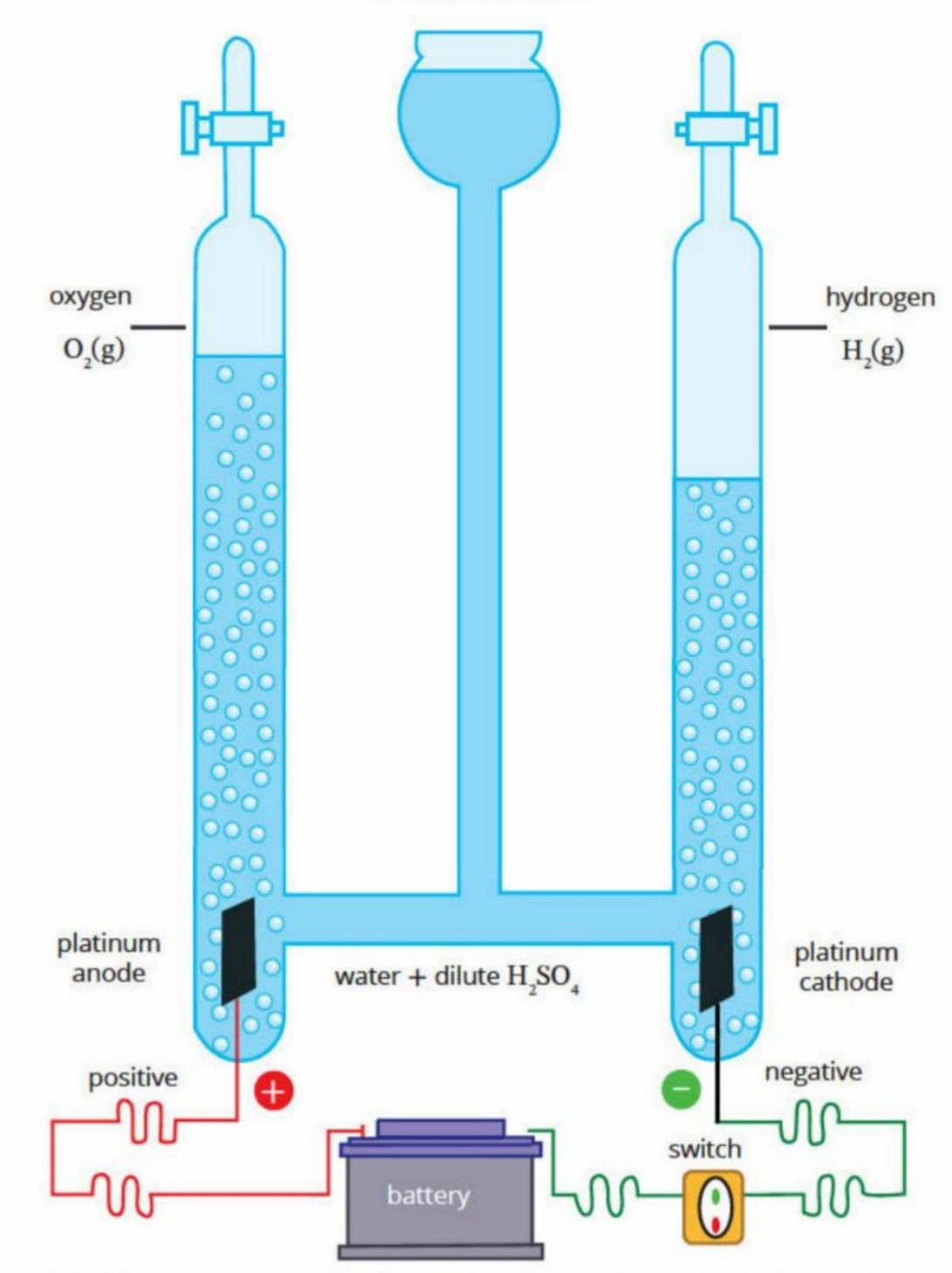
The overall equation for water electrolysis is:
This is an acidic electrolytic cell. The half-equations occurring at each electrode are:
Example
Half-Equations in Acidic Electrolysis
Anode (positive electrode):
At the anode, water molecules are oxidised, releasing oxygen gas and hydrogen ions.
Cathode (negative electrode):
At the cathode, hydrogen ions are reduced to form hydrogen gas.
The process produces two useful products: hydrogen gas and oxygen gas. According to the overall equation, the volume of oxygen gas produced should be half the volume of hydrogen gas.
Important
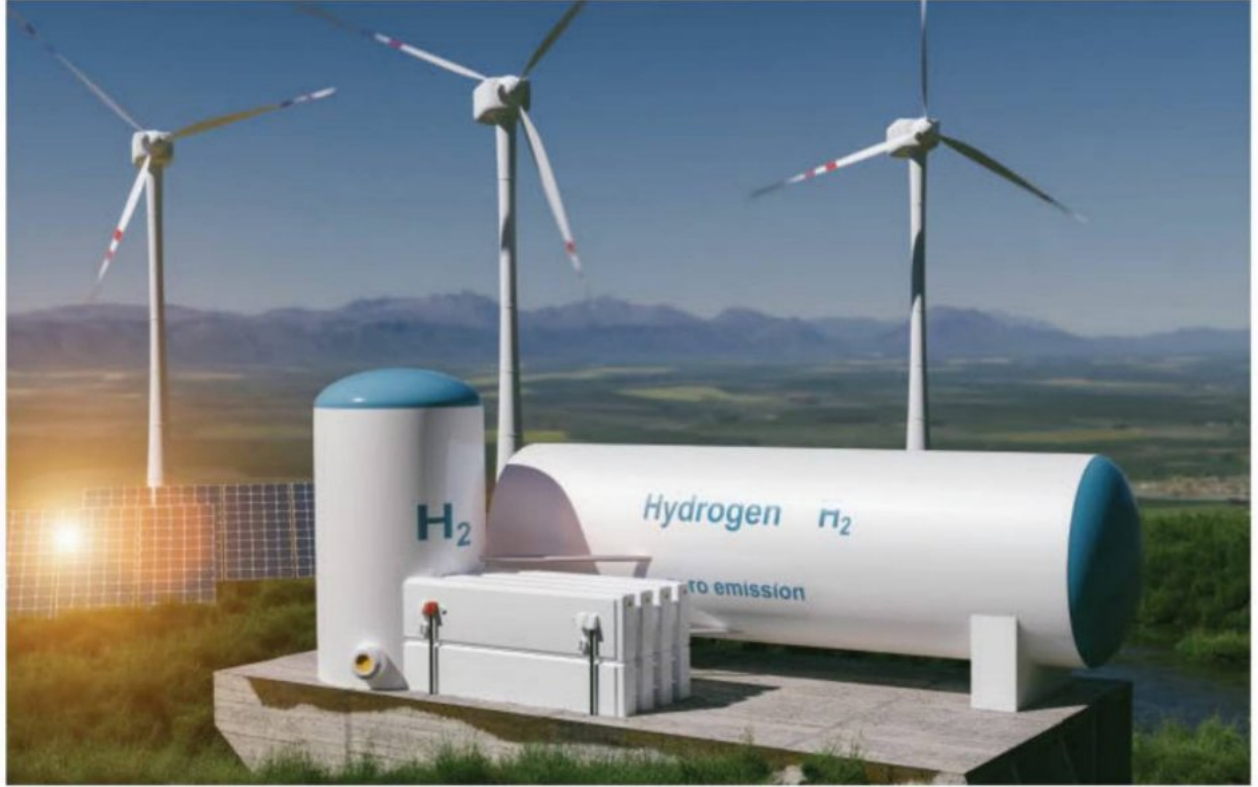
When the electrical energy for this electrolysis comes from renewable sources such as wind or solar power, the hydrogen fuel produced is classified as green hydrogen.
Industrial production of green hydrogen
Industry cannot use simple electrolysis of acidic or alkaline solutions for large-scale hydrogen production because:
- The process cannot easily accommodate the intermittent nature of renewable energy sources like solar arrays and wind turbines
- The solutions used are corrosive to equipment
- The hydrogen gas produced is not compressed, requiring additional processing
Polymer electrolyte membrane (PEM) electrolyser
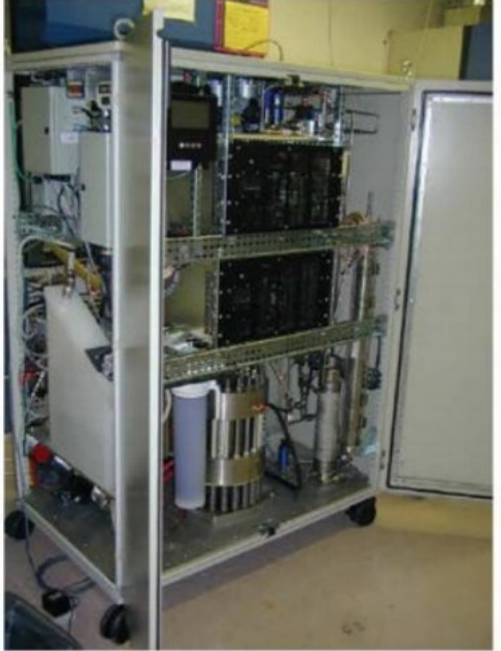
Modern industrial hydrogen production uses advanced electrolysers. An electrolyser is a system that uses electricity to decompose water into hydrogen and oxygen through electrolysis.
A polymer electrolyte membrane (PEM) electrolyser uses a solid electrolyte instead of a liquid solution. The initials PEM can also stand for proton exchange membrane, as the membrane allows protons to flow through to complete the electrical circuit.
Note
How PEM Electrolysers Work:
In a PEM electrolyser:
- Water reacts at the anode to produce oxygen gas and hydrogen ions
- Hydrogen ions migrate through the conducting polymer electrolyte to the cathode
- At the cathode, hydrogen ions are reduced to hydrogen gas
- The electrolyser can be designed to produce compressed hydrogen gas directly
The half-equations for PEM electrolysis are:
Anode:
Cathode:
Overall equation:
PEM electrolysers are high-technology devices. The electrodes are made from expensive metals such as ruthenium and iridium. These metals must be porous enough to allow gas passage while preventing liquid flow. They also act as catalysts to improve the efficiency of gas production. The membrane contains advanced polymers called polysulfones, which conduct protons but not electrons.

Electrolyser stacks and hydrogen hubs
A single electrolyser does not produce enough hydrogen to be economically viable. Modern electrolysers are designed to be assembled in clusters called electrolyser stacks. Multiple units can be combined into a large hydrogen plant, making them more cost-effective.
A hydrogen hub is a facility where renewable electrical energy powers an electrolyser stack to produce compressed hydrogen for storage. The concept behind hubs is to locate as many connected industries as possible in one area, so hydrogen can be produced and used without requiring transport or liquefaction.
Australian hydrogen projects
Several Australian states are developing hydrogen production facilities:
- Hydrogen Park South Australia: Australian Gas Networks (AGN) is investing $12 million in a demonstration project with a 1.25 MW electrolyser. Plans exist for a 50 MW plant linked to South Australia's wind energy and battery storage network.
- Victoria and Western Australia: The Australian Renewable Energy Agency (ARENA) is investing over $100 million to build 10 MW electrolysers.
- Port of Gladstone: This location is emerging as a potential world leader in hydrogen production, with multiple companies planning manufacturing and export facilities.
How hydrogen hubs operate
Hydrogen hubs follow a systematic production and distribution process:
- Water is purified
- Purified water is split into hydrogen and oxygen using an electrolyser powered by electrical current
- The electrolyser is powered by green energy sources such as solar panels, wind turbines or tidal energy
- Hydrogen is used locally as fuel, or converted into ammonia or synthetic natural gas (SNG) for easier transport
- Ammonia or SNG can be shipped overseas, then converted back to hydrogen and used as fuel
Note
SNG (syngas) is a mixture of hydrogen and carbon monoxide gases. Converting hydrogen to ammonia or SNG makes it easier and safer to transport over long distances, as these compounds can be handled at less extreme temperatures and pressures.
Hydrogen cars
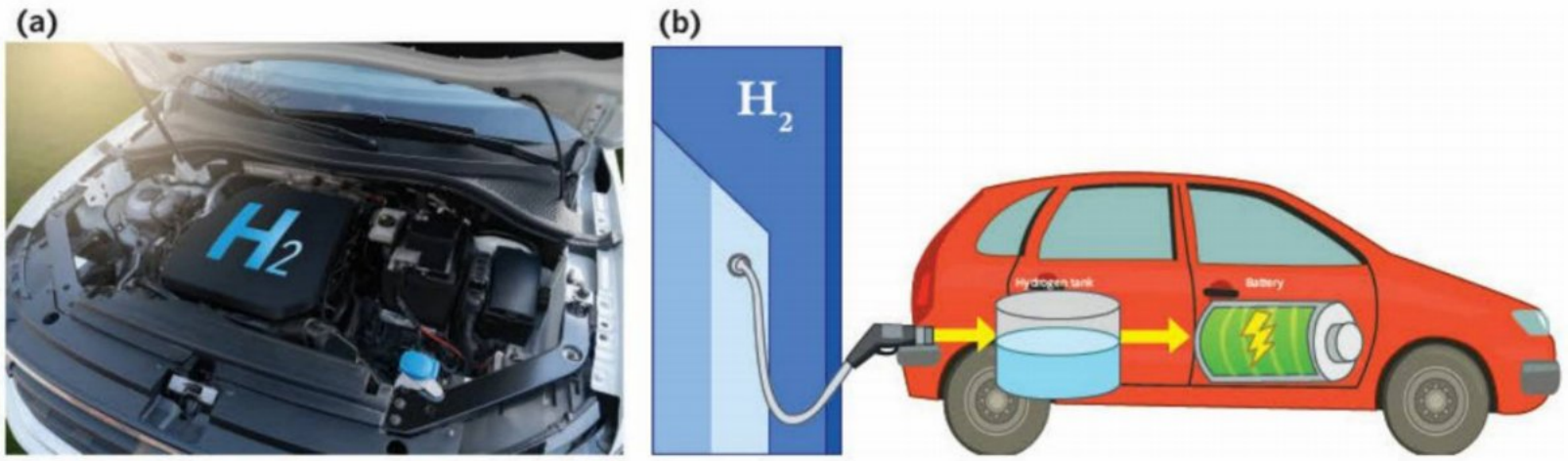
When a hydrogen fuel cell is installed in an electric car, the hydrogen gas generates the electrical energy needed to power the vehicle. The only emission from the car is water vapour.
For hydrogen vehicles to become practical, two key requirements must be met:
- A hydrogen gas distribution system (refuelling stations) must be established
- Hydrogen storage tanks must be safely installed in vehicles to prevent explosions in crashes
Note
The range and performance of hydrogen vehicles is comparable to conventional vehicles. However, greater investment has been made in electric vehicles running on battery power rather than hydrogen fuel cells, which affects the current availability and infrastructure for hydrogen vehicles.
Artificial photosynthesis
While producing hydrogen from renewable energy is a major advancement in reducing emissions, scientists are developing an even more efficient approach. Current solar panel systems require energy storage in batteries before the electricity can be used in an electrolyser. Artificial photosynthesis eliminates this intermediate step by using solar energy directly to produce fuel.
Photoelectrochemical cells
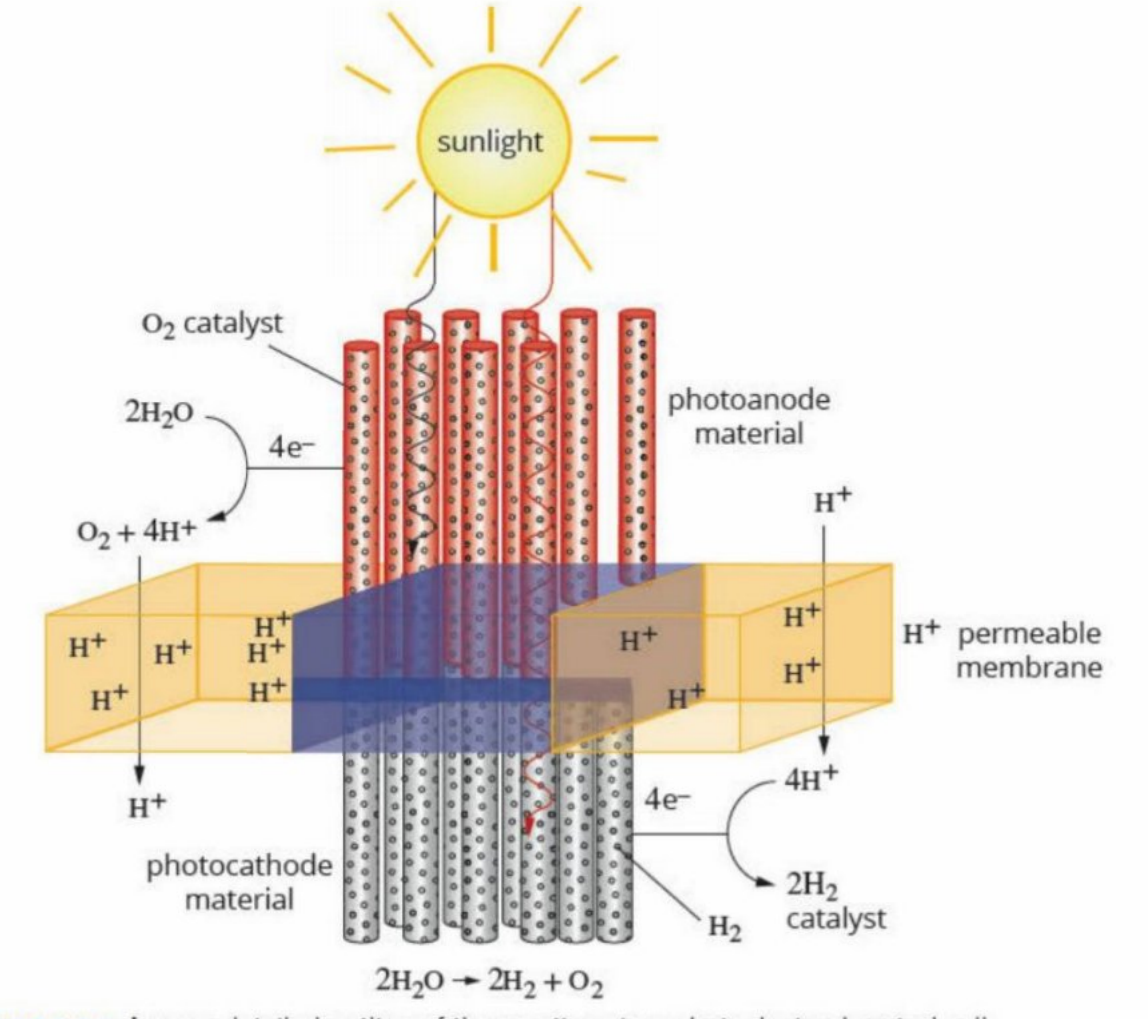
A photoelectrochemical cell operates like a solar panel immersed in solution:
- Sunlight strikes the anode
- Solar energy excites the metal atoms in the electrode
- This energy oxidises water to produce oxygen gas and hydrogen ions:
- Hydrogen ions migrate to the cathode
- At the cathode, hydrogen ions are reduced to hydrogen gas:
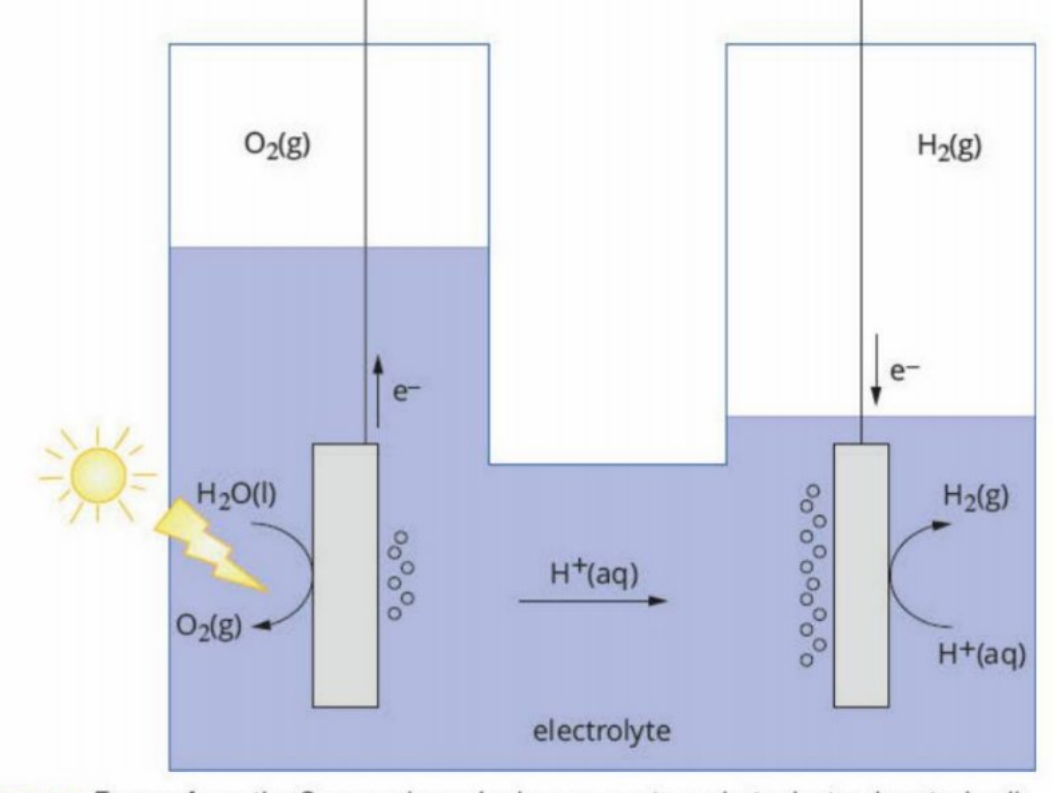
The overall result is that solar radiation directly produces hydrogen gas. This process mimics natural photosynthesis. In plants, sunlight converts carbon dioxide and water into glucose. In artificial photosynthesis, the end-product is hydrogen gas instead of glucose.
Important
The half-equations are identical to those in PEM electrolysers, but the key difference is that the cell is driven directly by sunlight rather than by electricity from an external source. This eliminates energy losses associated with intermediate conversion and storage steps.
Challenges and future potential
Like fuel cells and lithium-ion batteries, photoelectrochemical cells use complex combinations of metals in the electrodes, catalysts and conducting membrane polymers. Energy efficiencies of up to 30% have been achieved for converting solar energy to the chemical energy of hydrogen.
Note
However, this technology is estimated to be about 10 years away from being commercially viable. Continued research is needed to improve efficiency and reduce costs before artificial photosynthesis can be used on an industrial scale.
Alternative method: microbial production of hydrogen
An alternative research approach for commercial hydrogen production involves using bacteria to produce hydrogen gas from biomass such as forest waste. Microorganisms break down cellulose in the waste into glucose at the anode of an electrolysis cell, where it is then converted to ethanoic acid. The hydrogen ions produced migrate to the cathode, where they are reduced to hydrogen gas.
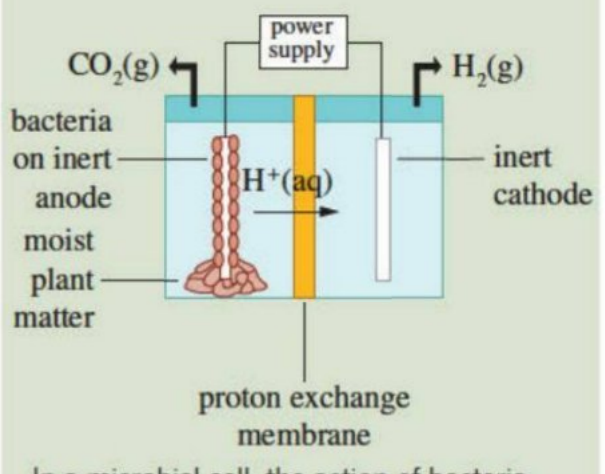
This process is called dark fermentation because no light is required for the bacteria to function. A typical equation for this process is:
Note
The carbon dioxide produced is not considered problematic because was absorbed during the growth of the original biomass. This creates a carbon-neutral cycle, unlike burning fossil fuels which releases previously stored carbon.
Currently, the low reaction rate makes this process commercially non-viable, but researchers are working to improve its efficiency. This method offers potential energy savings because the voltage required is much lower than that needed to electrolyse water.
Remember!
Summary
Key Points to Remember:
-
Green hydrogen is hydrogen fuel produced using renewable energy sources, making it the cleanest production method.
-
Electrolysis of water splits water into hydrogen and oxygen gases using electrical energy. The volume of hydrogen produced is twice the volume of oxygen.
-
PEM electrolysers use solid polymer membranes instead of liquid electrolytes, making them suitable for industrial production. They can produce compressed hydrogen directly.
-
Hydrogen hubs integrate renewable energy generation, hydrogen production, storage and use in one location to minimise transport costs and energy losses.
-
Artificial photosynthesis using photoelectrochemical cells represents future technology that could produce hydrogen directly from sunlight without intermediate battery storage, though it is about 10 years from commercial viability.