Rechargeable Cells and Batteries (VCE SSCE Chemistry): Revision Notes
📚Revision Notes
Rechargeable Cells and Batteries
What are rechargeable cells?
Rechargeable cells, also known as secondary cells or accumulators, are batteries that can have their discharge reactions reversed. Unlike primary cells that are discarded after use, secondary cells can be recharged and used many hundreds of times. This makes them much more sustainable than single-use batteries.
Common types of rechargeable cells include:
- Lithium-ion cells
- Nickel-metal hydride (NiMH) cells
- Lead-acid batteries
Note
Rechargeable batteries have become essential to modern life. They power everything from the phone in your pocket to electric vehicles on the road, and they're crucial for storing energy from renewable sources like solar and wind power.
These batteries are found in many everyday devices:
- Mobile phones and laptop computers
- Cameras and portable power tools
- Electric vehicles
- Solar-power energy-storage systems
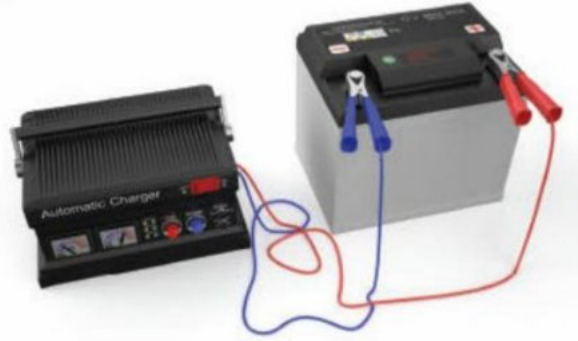
How the recharging process works
Connecting to a charger
To recharge a cell, you connect it to a charger—a source of electrical energy with a potential difference slightly greater than the cell's voltage. The connection must be made correctly:
- Positive terminal of charger → positive electrode of cell
- Negative terminal of charger → negative electrode of cell
This setup forces the cell's chemical reaction to run in reverse, converting the reaction products back into the original reactants.
Requirements for reversibility
For a cell to be rechargeable, the chemical changes at both electrodes during discharge must be efficiently reversed. Reactions are more likely to be reversible when:
- The electrodes are not damaged during discharge
- The products remain in contact with the electrodes
Important
Why electrode materials matter:
Nickel and cadmium work well in secondary cells because their hydroxides ( and ) are not highly soluble and stay in contact with the electrodes. Zinc is less suitable because migrates away from the electrode, potentially causing hydrogen gas formation during recharge.
Energy transformations during discharge and recharge
The key to understanding rechargeable batteries is recognizing that they operate as two different types of electrochemical cells:
During discharge (cell in use):
- Acts as a galvanic cell
- Spontaneous reaction
- Converts chemical energy → electrical energy
- Negative terminal is the anode (oxidation occurs here)
- Positive terminal is the cathode (reduction occurs here)
During recharge (cell being charged):
- Acts as an electrolytic cell
- Non-spontaneous reaction (requires input of energy)
- Converts electrical energy → chemical energy
- Positive terminal becomes the anode (oxidation occurs here)
- Negative terminal becomes the cathode (reduction occurs here)
Important
Electrode role reversal during recharging:
Notice how the anode and cathode switch during recharging. The terminal labels (+ and −) stay the same, but the type of reaction occurring at each electrode reverses. This is a crucial concept for understanding secondary cells.
- During discharge: Oxidation at negative terminal, reduction at positive terminal
- During recharge: Oxidation at positive terminal, reduction at negative terminal
Lead-acid batteries
History and applications
Lead-acid batteries are the oldest type of rechargeable battery, invented in 1859. They remain the most widely used secondary cell today because they are:
- Relatively cheap
- Reliable
- Capable of providing high currents
- Long-lasting
Most people know lead-acid batteries as car batteries. They serve two main purposes in vehicles:
- Starting the car's engine
- Operating electrical accessories when the engine is not running
Once the engine starts, an alternator (powered by the engine) generates electrical energy to run the car's electrical system and recharge the battery.
Note
Lead-acid batteries are also used in:
- Emergency light and power systems
- Small-scale energy storage
- Electric vehicles (golf buggies and small forklifts)
Their ability to deliver high currents quickly makes them ideal for starting engines, which require a large burst of power.
Structure of a lead-acid battery
A modern lead-acid battery contains six separate cells connected in series. Each cell produces just over 2 V, giving a total potential difference of approximately 12 V.
Components of each cell:
- Positive electrodes: Lead plates packed with lead(IV) oxide ()
- Negative electrodes: Lead plates packed with powdered lead (Pb)
- Electrolyte: Sulfuric acid solution (approximately 4 M concentration)
- Separator: Porous material preventing electrode contact
Chemistry during discharge
When a lead-acid battery discharges, it operates as a galvanic cell.
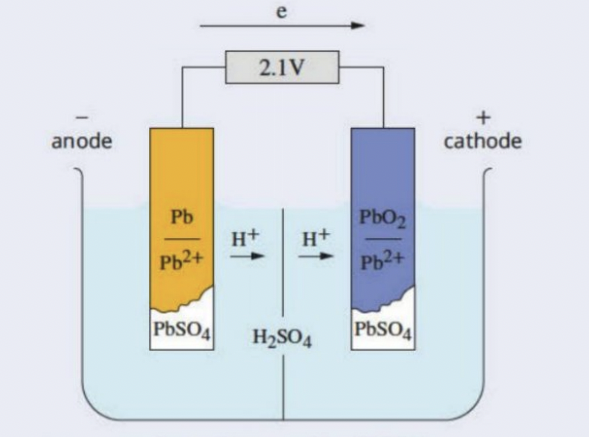
Anode reaction (negative terminal, oxidation):
Lead metal is oxidised to lead(II) ions, which immediately combine with sulfate ions to form lead(II) sulfate solid on the electrode surface.
Cathode reaction (positive terminal, reduction):
Lead(IV) in lead(IV) oxide is reduced to lead(II), also forming lead(II) sulfate on the electrode.
Overall discharge reaction:
Important
Why lead-acid batteries are rechargeable:
The product of both electrode reactions, lead(II) sulfate (), forms as a solid on the electrode surfaces. This is crucial for rechargeability—the products stay in contact with the electrodes and can be converted back to the original materials during recharging.
What happens to the electrolyte?
- Hydrogen ions () are consumed during discharge
- The pH increases (solution becomes less acidic)
- Sulfate ions are consumed, reducing electrolyte concentration
Chemistry during recharge
When connected to a charger with voltage greater than 12 V, the reactions reverse. The battery now operates as an electrolytic cell.
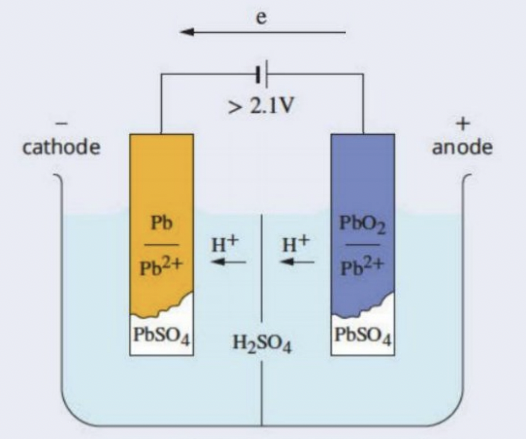
Anode reaction (positive terminal, oxidation):
Lead(II) sulfate is oxidised back to lead(IV) oxide.
Cathode reaction (negative terminal, reduction):
Lead(II) sulfate is reduced back to lead metal.
Overall recharge reaction:
The original electrodes and electrolyte composition are reformed, ready for discharge again.
Nickel-based rechargeable batteries
Nickel-cadmium (Ni-Cad) batteries
Towards the end of the 20th century, nickel-cadmium cells were marketed as rechargeable alternatives to common AA and D cells used in toys and small appliances.
Discharge reactions:
Anode:
Cathode:
Limitation—the memory effect:
A major problem with Ni-Cad cells is their "memory" issue. If the cells are not fully discharged or fully recharged, their voltage and capacity decrease. This means users had to fully drain and fully charge the batteries to maintain performance.
Nickel-metal hydride (NiMH) batteries
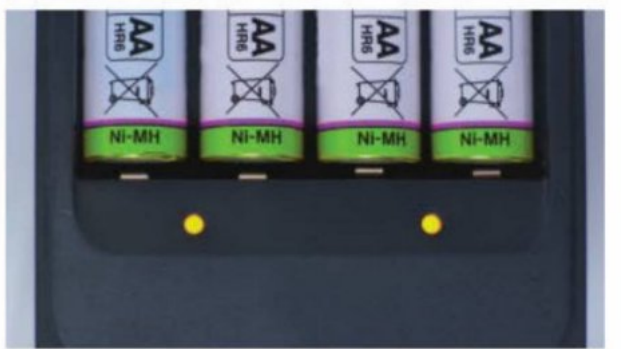
NiMH batteries have largely replaced Ni-Cad batteries because they:
- Have smaller memory effects (less sensitive to partial charging)
- Avoid the health and environmental problems associated with cadmium disposal
Important
Health concern:
Long-term exposure to cadmium and its compounds is associated with cancer formation in various organs. This is one of the main reasons why NiMH batteries have replaced Ni-Cad batteries in most consumer applications.
In NiMH batteries, cadmium is replaced by a hydrogen-absorbing metal, which stores hydrogen in its structure during operation.
Lithium-ion batteries
Development and applications
Low-density, rechargeable lithium-based batteries with high energy capacity were first sold in 1991. They weren't designed to replace larger NiMH batteries, but rather to enable the miniaturisation of electronic devices.
Lithium-ion batteries enabled the development of:
- Compact laptops and mobile phones
- Digital cameras
- Portable power tools (drills, vacuum cleaners)
- Electric vehicles
- Large-scale energy storage systems
Note
Today, approximately 37% of all batteries sold worldwide are lithium-ion batteries. This percentage continues to grow as electric vehicles and renewable energy storage systems become more common.
Structure and chemistry
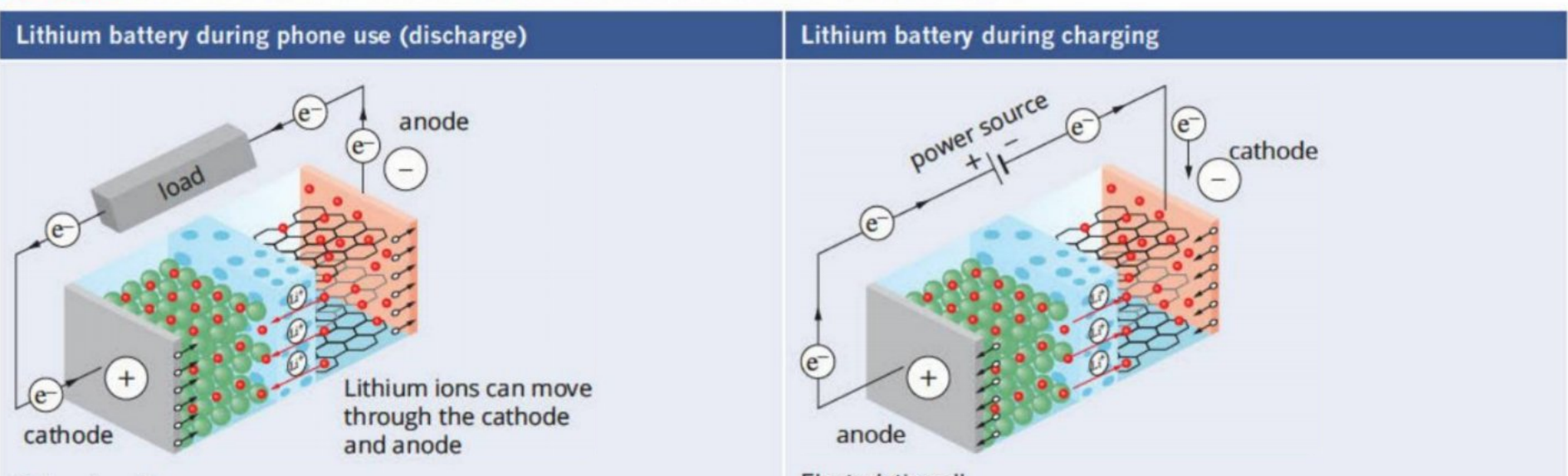
Although different types of lithium-ion batteries exist, they share common features:
- Cathode: Lithium-metal oxide (e.g., lithium cobalt oxide, )
- Anode: Lithium-carbon compound (e.g., lithium graphite, )
- Electrolyte: Allows lithium ions () to move through the battery
- Separator membrane: Separates the electrodes while allowing ion movement
Note
Important property:
Lithium ions can move through both electrodes. This movement occurs in one direction during discharge and reverses during charging. This ability to intercalate (insert between layers) in both electrode materials is what makes lithium-ion batteries so effective.
Discharge process (battery in use)
When you use a device powered by a lithium-ion battery, the battery operates as a galvanic cell:
Anode reaction (negative terminal, oxidation):
Lithium graphite compound is oxidised, releasing lithium ions that diffuse through the separator to the cathode.
Cathode reaction (positive terminal, reduction):
Cobalt oxide and lithium ions undergo reduction, forming lithium cobalt oxide.
Overall discharge reaction:
Charging process
When you purchase a new device with a lithium-ion battery, the battery is only partially charged. You must plug it into a charger and allow full charging before first use.
During charging, the battery operates as an electrolytic cell:
Anode reaction (positive terminal, oxidation):
Lithium cobalt oxide is oxidised, releasing the lithium ions it absorbed during discharge.
Cathode reaction (negative terminal, reduction):
Lithium ions and graphite are reduced to reform the lithium graphite compound.
Overall charging reaction:
This process generates the that will react during the next discharge cycle.
Advantages of lithium-ion batteries
Lithium-ion batteries offer several key advantages:
- High voltage output
- High energy storage capacity relative to mass
- Low density (lightweight)
- Can be made very small
- No significant memory effect
Note
Note on cost:
Battery technology is still expensive. For example, batteries in a Tesla electric vehicle can cost up to $10,000. This high cost reflects the need for fast recharging capability and extended driving range between charges.
Market statistics and future trends
The lithium-ion battery market is experiencing massive growth:
| Statistic | Detail |
|---|---|
| $100 billion | Value of the lithium-ion market in 2022 |
| 140 million | Number of electric vehicles predicted worldwide by 2030 |
| 11 million tonnes | Mass of lithium batteries likely to reach end-of-life by 2030 |
| 5% | Current recycling rate for lithium batteries (only metal components are actually recycled) |
| 100% | Recycling rate for lead from conventional batteries |
Note
The increased use of electric vehicles and large energy storage devices ensures that battery design will continue to improve. Scientists are constantly making small changes to electrode composition and conductive electrolytes to increase battery capacity and efficiency.
Sustainability challenges with lithium-ion batteries
While lithium-ion batteries offer many advantages, they raise significant sustainability concerns:
1. Sourcing of lithium
Meeting the demand for lithium is challenging. Australia is the world's leading producer, producing 68,000 tonnes in 2022. However, expanding production to meet the needs of the emerging electric vehicle market will be difficult.
Most Australian lithium comes from Western Australia, with the Talisman mine at Greenbushes being the largest lithium mine in the world.
2. Sourcing of scarce metals
Lithium-ion batteries require several scarce metals:
- Lithium (for both electrodes)
- Cobalt (mainly found in the Democratic Republic of the Congo)
- Nickel
Important
Ethical concern:
There is considerable concern about child labour practices in cobalt mining in the Democratic Republic of the Congo, where mining is often carried out by hand without appropriate safety measures. This raises serious ethical questions about the supply chain for lithium-ion batteries.
3. Difficulty of recycling
Recycling lithium-ion batteries is much more challenging than recycling lead-acid batteries:
Lead-acid batteries: The electrodes are large pieces of pure lead, relatively easy to separate and recycle. Lead recycling rate is 100%.
Lithium-ion batteries: The electrodes are sophisticated, composite materials. It is not currently possible to isolate individual metals from recycled batteries. Only about 5% of lithium batteries are recycled, and even then, only the metal components are recovered.
Note
Battery composition complexity:
- Anode: Graphite (22%)
- Cathode materials: Lithium cobalt oxide, lithium nickel cobalt aluminium oxide (31%)
- Copper current collector (17%)
- Aluminium current collector (8%)
- Electrolyte solution (15%)
- Separator plastics (3%)
- Carbon black and binder (4%)
The complexity of these materials makes separation and recycling extremely difficult with current technology.
4. Safety concerns
Several safety issues have been identified:
Button batteries: Toddlers swallowing button batteries can suffer serious, sometimes fatal, damage.
Fire hazards: In 2021, a fire at the Geelong electricity storage complex took several days to extinguish and emitted toxic fumes. This highlighted the fire risk associated with large-scale lithium battery installations.
Thermal runaway: Damaged lithium-ion batteries can overheat and catch fire, particularly dangerous in confined spaces like vehicles or buildings.
5. Disposal and toxicity
When batteries are added to landfill, the metals they contain (such as cobalt, nickel, and lithium) eventually leach into the surrounding soil and water system. This poses environmental and health risks.
Important
The combination of these sustainability challenges means that while lithium-ion batteries offer many benefits, society must address resource extraction, recycling technology, safety protocols, and end-of-life disposal to make their use truly sustainable.
Remember!
Summary
Key Points to Remember:
-
Secondary cells (rechargeable batteries) can reverse their discharge reactions, making them reusable for hundreds of charge-discharge cycles.
-
During discharge, secondary cells act as galvanic cells (chemical → electrical energy) with oxidation at the negative terminal (anode) and reduction at the positive terminal (cathode).
-
During recharge, secondary cells act as electrolytic cells (electrical → chemical energy) with oxidation switching to the positive terminal and reduction to the negative terminal.
-
Lead-acid batteries are the oldest and most common rechargeable batteries, using lead and lead(IV) oxide electrodes in sulfuric acid. They produce ~12 V and are widely used in vehicles.
-
Lithium-ion batteries enabled miniaturisation of electronic devices and have high energy density, but face significant sustainability challenges including resource scarcity, difficult recycling, safety concerns, and disposal toxicity.