Interrelationships Between the Dimensions of Health and Wellbeing (VCE SSCE Health and Human Development): Revision Notes
📚Revision Notes
Interrelationships Between the Dimensions of Health and Wellbeing
Understanding interrelationships
The five dimensions of health and wellbeing don't exist in isolation. They are interrelated, meaning they all influence and affect one another. When one dimension changes, it usually creates a ripple effect across the other four dimensions. The impact might not be the same across all dimensions, but there will typically be some influence. This interconnected nature means that to achieve the best possible health and wellbeing, all five dimensions need attention and care.
Note
Your overall health and wellbeing is determined by combining the levels of health and wellbeing across all five dimensions. Each dimension represents a different aspect of your health, and they all work together to create your complete health and wellbeing experience.
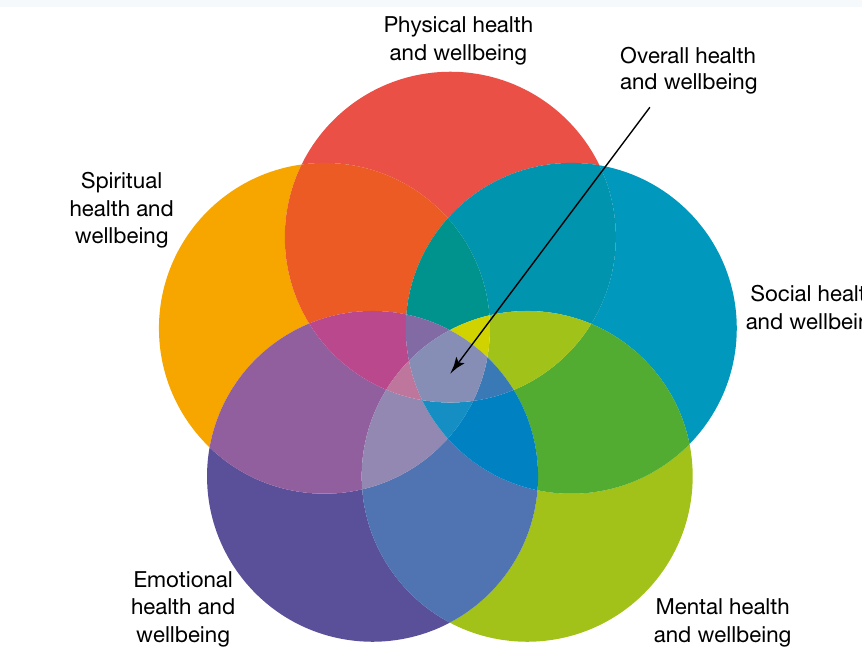
What is optimal health and wellbeing?
When all five dimensions are functioning at their best possible level, you experience what we call optimal health and wellbeing. This refers to the highest level of health and wellbeing you can realistically achieve at any particular point in time.
Important
Optimal health is unique to each individual
It's important to understand that optimal health and wellbeing looks different for everyone. We all have different genetic potential and live in different environments. These factors influence what we can realistically achieve. This means your optimal health and wellbeing will be unique to you and different from someone else's optimal level.
How the dimensions influence each other
Predicting exactly how someone's health and wellbeing will be affected by a particular event is impossible because everyone is unique and each situation is different. However, we can explore the possible effects and understand the patterns of how dimensions typically influence one another.
Note
The following table demonstrates various ways the five dimensions can influence each other. Remember that the impacts can be both positive and negative, and the specific effects will depend on the individual person and their particular situation.
| Dimension | Impact on Physical | Impact on Social | Impact on Mental | Impact on Emotional | Impact on Spiritual |
|---|---|---|---|---|---|
| Physical | - | When you have adequate energy levels, you're physically capable of participating in activities with friends, strengthening those relationships. | Being fit and able to carry out daily tasks makes you more likely to feel good about yourself and develop positive self-esteem. | When you're sick, you may experience emotions like fear and anger, and learn to respond appropriately to these feelings. | Having adequate energy levels allows you to participate in community activities, which enhances your sense of belonging. |
| Social | Strong social networks have been shown to reduce smoking rates and obesity, lowering the risk of conditions like cardiovascular disease. | - | Having a close network of friends gives you people to share problems with, which can reduce stress levels. | Close social bonds allow you to be yourself and share your emotions with others, helping you respond appropriately to them. | When you have social bonds, you're more likely to feel connected to the world you live in. |
| Mental | Stress can lower your immune system function and increase the risk of infectious diseases. | If you're optimistic, you're more likely to interact positively with friends and family, developing stronger relationships. | - | When using logic and reasoning, you may be better able to think clearly and fairly judge the emotions you're experiencing. | Stress is characterised by excessive self-focus. When you're focusing too much on yourself, you're less likely to feel connected to your community. |
| Emotional | If you can recognise that you're feeling sad and take action to deal with this emotion, you're more likely to participate in normal activities like exercise, which enhances fitness. | When you can express your emotions, you can share your feelings with friends, promoting more meaningful friendships. | If you can process emotions effectively, you may feel better about yourself, which enhances self-esteem. | - | Experiencing appropriate emotions (both positive and negative) can assist you in feeling connected to your world and the events that occur in it. |
| Spiritual | When you have purpose in life, you're more likely to take care of yourself physically so you can fulfil that purpose, promoting a healthy body weight. | If you feel connected to your society, you're more likely to treat people fairly, which can enhance relationships. | Believing that life has a positive meaning and purpose can enhance self-esteem and create a sense of optimism. | If you act according to your values and beliefs, you may feel more comfortable with the emotions you experience throughout life. | - |
Practical examples of interrelationships
Scenario: Broken leg and hospital recovery
Example
Worked Example: Analyzing Impacts Across All Five Dimensions
Consider a person who has suffered a broken leg and is recovering in hospital. This physical health event creates impacts across all five dimensions:
Physical health and wellbeing impacts:
- May not be able to exercise, causing fitness levels to decrease
- Could gain weight as physical activity levels drop
- Immune and other body systems may be affected by hospital food (this could be positive or negative depending on their previous diet)
Social health and wellbeing impacts:
- Might make new friends in hospital
- May receive visits from family members they wouldn't normally see
- Won't be able to socialise and interact with friends at school or during leisure time
Mental health and wellbeing impacts:
- May feel depressed about missing out on socialising with friends and family
- May experience negative thought patterns if they feel like a burden on their family
Emotional health and wellbeing impacts:
- Could experience a range of emotions including frustration or loneliness and learn to respond to these appropriately
- Might feel happy or sad to miss out on school and recognise these emotions accurately
- May learn to deal with negative emotions, developing resilience
Spiritual health and wellbeing impacts:
- May feel supported by family and friends, promoting a sense of belonging and connection to the world
- May accept that some aspects of life are out of their control, promoting a sense of peace and harmony
Scenario: Relationship breakup
Important
Not all impacts start with physical causes
It's important to note that impacts on health and wellbeing don't always start with a physical cause. Consider a relationship breakup:
Example
Worked Example: Non-Physical Starting Point
Physical impacts: Loss of appetite can influence energy levels
Social impacts: If the person spent time with their partner's friends, they may now need to find a new friend group
Mental impacts: The person may experience loss of confidence and doubt their own worth
Emotional impacts: They may experience emotions such as loss, loneliness and anger
Spiritual impacts: The groups in which they feel they belong may change
Key observation: Notice how not all effects are negative. Sometimes a negative event can produce positive effects on one or more dimensions. This demonstrates the complex nature of interrelationships.
Case study: Sandy's story
Example
Case Study: Sandy - Work Stress and Multiple Dimension Impact
Sandy is a 26-year-old accountant working for a large corporation in the city. She generally copes well with her many responsibilities. Recently, she received a large contract to work on. The contract's demands are substantial, and her work life has begun to dominate both her working hours and free time.
Sandy has been feeling more stressed at work. Despite this, she feels good about herself for being trusted with this important contract.
Sandy has had to cut back on her social activities and things she enjoys, such as being part of the local netball club and spending time with family. Missing these interactions has made her feel disconnected and sad at times, though she has been able to manage these emotions. She has also reduced her gym time and healthy meal preparation, causing some weight gain.
Analysis of Sandy's interrelationships:
This case study shows how an initial change (increased work demands affecting mental health through stress) creates a cascade of effects:
- Mental: Increased stress, but also improved self-esteem from being trusted
- Social: Reduced participation in netball club and family time, leading to feelings of disconnection
- Emotional: Feelings of sadness and disconnection, though she's managing them appropriately
- Physical: Reduced exercise and healthy eating, resulting in weight gain
- Spiritual: Feeling disconnected suggests impact on sense of belonging
Exam tips for demonstrating interrelationships
Showing bidirectional relationships
Important
Critical Exam Skill: Demonstrating Two-Way Flow
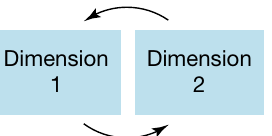
When demonstrating interrelationships between two dimensions, you must show how each dimension can affect the other. This creates a two-way flow of influence.
Example
Worked Example: Bidirectional Relationship
A person has positive self-esteem (mental health and wellbeing). With positive self-esteem, individuals are less likely to avoid social situations, which can enhance relationships, promoting social health and wellbeing. With meaningful relationships, people can share any problems they have with others, which can reduce levels of stress, promoting mental health and wellbeing.
Important points to remember
Important
Common Mistake to Avoid
When showing interrelationships, ensure the impact on the first dimension is used to show how the next dimension is affected. Simply linking a scenario to each dimension separately does not demonstrate interrelationships. True interrelationships are shown when the impact on one dimension is used to explain an impact on the second dimension.
Example
Worked Example: Proper Chain of Influence
Being educated means the individual is more likely to understand the benefits of regular physical activity and therefore exercise regularly. Regular physical activity promotes fitness levels, which is an aspect of physical health and wellbeing. Being fit can enhance self-esteem, which promotes mental health and wellbeing. Optimal self-esteem can mean the individual is less likely to avoid social situations, which can promote relationships and improve social health and wellbeing.
Showing multiple dimension interrelationships
Note
When demonstrating interrelationships between more than two dimensions, you don't necessarily need to show how each dimension affects every other dimension. Look at the mark allocation and ensure you show how one dimension affects another for each mark available.
Example
Worked Example: Three-Mark Response
A person has adequate levels of energy (physical health and wellbeing). With adequate levels of energy, individuals are more likely to socialise with friends, enhancing the quality of their relationships (social health and wellbeing). Quality relationships mean the person has more people to talk to when things go wrong, which can assist in reducing stress levels (mental health and wellbeing). Lower stress levels mean the person can focus on working towards their purpose in life, such as going to school or maintaining meaningful employment (spiritual health and wellbeing).
You have the option to finish with the dimension you started with (for example, linking lower stress back to being more likely to prioritise physical activity, contributing to higher fitness levels), but this is not compulsory.
Remember!
Summary
Key Points to Remember:
- The five dimensions of health and wellbeing are interrelated, meaning they all influence and affect each other.
- Optimal health and wellbeing refers to the highest level of health and wellbeing you can realistically achieve at any particular time, and this looks different for everyone.
- A change in one dimension usually creates impacts across the other four dimensions, though not always in the same way or to the same degree.
- Impacts can be both positive and negative, and sometimes negative events can produce positive effects on certain dimensions.
- When demonstrating interrelationships in exams, always show how the impact on one dimension leads to an impact on another dimension, creating a clear chain of influence.