Aid Programs Addressing SDG 13: Climate Action (VCE SSCE Health and Human Development): Revision Notes
📚Revision Notes
Aid Programs Addressing SDG 13: Climate Action
Introduction to SDG 13
Sustainable Development Goal 13 focuses on taking urgent action to combat climate change and its impacts. Climate change poses serious threats to communities worldwide, particularly those in vulnerable regions. Two key aid programs have been implemented to address this goal: the Kiribati Adaptation Program and a climate resilience program in Bangladesh.
Note
These two programs demonstrate different approaches to climate adaptation in vulnerable coastal communities, both prioritizing community participation and sustainable solutions to build long-term resilience.
The Kiribati Adaptation Program
Background and purpose
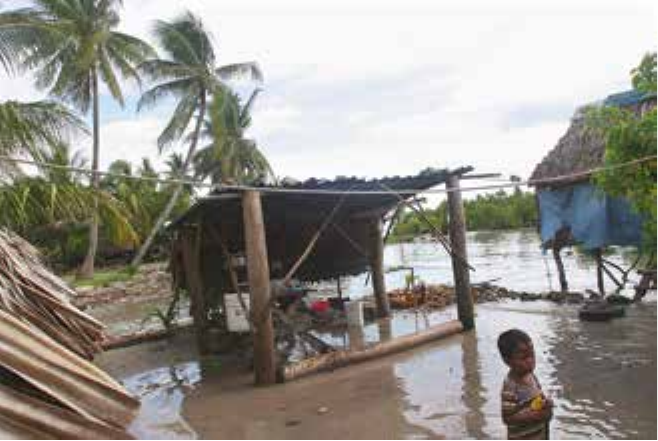
The Pacific island nation of Kiribati faces extreme vulnerability to climate change. This small country comprises 33 coral atolls spread across a vast area of ocean. The geography creates significant challenges: most islands are less than two kilometres wide and sit at an average height of only 1.8 metres above sea level. This low elevation means the entire population and infrastructure are exposed to coastal hazards.
Key climate threats facing Kiribati:
- King tides - Exceptionally high tides that can completely wash over entire islands, causing flooding that lasts for days
- Storm surges - Abnormal rises in sea level during storms that damage coastal areas
- Coastal erosion - Gradual wearing away of land by waves and weather
- Prolonged droughts - Extended periods without rainfall, causing severe water shortages
The community of North Tarawa represents a particularly vulnerable area. Accessible only by boat, residents live largely subsistence lifestyles, gathering most of their food and water from their surroundings. Traditionally, people relied on groundwater from wells for drinking, cooking and farming. However, this water supply becomes contaminated with seawater during floods and king tides, making people ill, especially children.
Important
Critical health impacts:
- Kiribati has the highest infant mortality rate in the Pacific Islands, with 43 deaths per 1000 live births
- Diarrhoeal diseases contribute to most of these infant deaths
- Water contamination during climate events significantly worsens health outcomes
- Drought periods force heavy water rationing, affecting general health and agricultural production
Implementation
The World Bank has partnered with the government of Kiribati since 2003, working through three distinct phases to build climate resilience.
Note
Phase 1: Education and policy development
- Supported education programs to raise community awareness about climate change impacts
- Helped incorporate climate change considerations into government policies
- Built foundational knowledge for long-term adaptation
Note
Phase 2: Coastal protection
- Implemented mangrove planting programs to provide natural barriers
- Constructed seawalls to address coastal erosion
- Protected vulnerable coastal areas from storm waves and flooding
Note
Phase 3: Water security
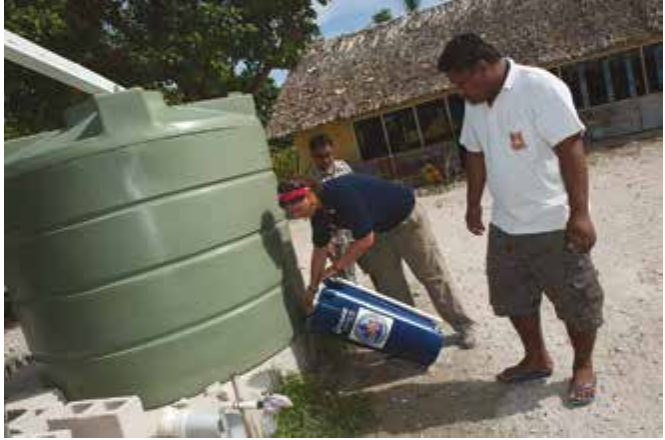
- Developed rainwater collection systems as the primary focus
- Installed rainwater tanks to provide clean water independent of contaminated groundwater
- Created sustainable water supplies resistant to climate impacts
Community participation approach:
The program prioritised meaningful community involvement throughout implementation. Extensive consultations with local authorities and community members shaped key decisions, including:
- Designing appropriate water collection systems for local conditions
- Selecting suitable buildings and locations for retrofitting with gutters and piping
- Establishing operation and maintenance committees responsible for system upkeep
- Empowering communities to decide water rationing strategies during droughts
This participatory approach ensures water systems are culturally appropriate and technically sustainable. The collected rainwater flows directly to storage tanks where it is shared among community members according to locally determined plans.
Coastal protection strategy:
Beyond water systems, the program identifies vulnerable coastal areas through locally managed adaptation plans. These plans map out infrastructure at risk and develop strategies to maintain or protect it from climate-related events.
Partnership structure:
Note
The Kiribati Adaptation Project receives support from multiple sources:
- Australian government
- Japanese government
- Kiribati government
- Global Environment Facility
- World Bank Global Facility for Disaster Reduction and Recovery
Outcomes
The program delivers significant benefits across Kiribati. More than 100,000 people will benefit from improved climate adaptation measures. By better adapting to climate change effects, Kiribati can:
- Improve water resource availability and quality
- Better protect coastal areas against storm waves and flooding
- Enhance the country's capacity to manage natural hazards
- Build long-term resilience to ongoing climate impacts
How the Kiribati program promotes health and wellbeing
Physical health and wellbeing
Clean water access is fundamental to preventing diseases like diarrhoea, which causes most infant deaths in Kiribati. An adequate supply of clean water promotes physical health in several ways:
- Reduces waterborne diseases through safe drinking water
- Enables proper hygiene practices
- Supports healthy agricultural production
- Prevents contamination-related illnesses
When children maintain good physical health, they can attend school regularly rather than being sick at home. Similarly, when parents have improved physical health, they can work consistently and provide income for their families.
Social health and wellbeing
The program creates positive social outcomes through several mechanisms:
- Children attending school can interact with peers and develop social connections
- Parents working can participate in workplace communities
- Community involvement in program design builds positive relationships
- Shared decision-making strengthens community bonds
Note
These social interactions bring a sense of belonging and purpose, promoting social health and wellbeing.
Emotional and mental health and wellbeing
Access to clean water and protected livelihoods reduces stress and anxiety about basic survival needs. The program promotes emotional and mental health through:
- Reduced worry about water contamination during climate events
- Greater optimism about the future as resilience increases
- Sense of pride from contributing to community solutions
- Self-esteem from attending school and working productively
Protecting homes and farming areas from coastal erosion and flooding gives families confidence in their future, reducing mental distress associated with potential loss of livelihoods.
Spiritual health and wellbeing
Community participation in program design and implementation creates opportunities for people to feel connected to their community and environment. When people feel this connection:
- They develop a sense of purpose and meaning
- They experience belonging to something larger than themselves
- They build relationships based on shared goals and values
- They feel their actions contribute to community wellbeing
How the Kiribati program promotes human development
Human development involves expanding people's freedoms and opportunities to live lives they value. The Kiribati Adaptation Program promotes human development in several important ways.
Participation and empowerment:
When communities are involved in designing and implementing the program, they gain greater control over decisions affecting their lives. This participation is central to human development because it enables people to actively shape their futures rather than being passive recipients of aid. People can participate more fully in the social and political life of their community when they have secure access to basic resources like water.
Education and capacity building:
Note
The program includes education about maintaining water resources and understanding climate change impacts. This knowledge building is crucial because educated individuals:
- Have increased capacity to earn higher incomes
- Can access resources like medications and nutritious food
- Make informed decisions about resource management
- Develop skills applicable to other areas of life
Standard of living improvements:
By providing clean water and protecting livelihoods, the program helps people achieve a decent standard of living. This enables them to:
- Develop to their full potential without being held back by poverty
- Live longer, healthier lives (increased life expectancy)
- Pursue productive and creative activities aligned with their interests
- Meet their basic needs consistently
Bangladesh climate resilience program
Background
Bangladesh faces exceptional vulnerability to climate change due to its geography and population density. This low-lying country is dominated by floodplains and has long experienced frequent cyclones, extreme weather events and storm surges. Climate change is intensifying these hazards, making them more severe and unpredictable.
A particularly devastating impact is salinisation - the process by which rising sea levels introduce salt into freshwater sources. This slow-onset disaster makes previously safe drinking water salty and contaminated, causing health problems like:
- Abdominal pain
- Diarrhoea
- Dysentery
- Jaundice
Important
The program focuses on coastal communities where many families live in flimsy housing with precarious livelihoods. Those who can afford to leave hazard-prone areas have done so, while the poorest families remain with nowhere to go when disasters strike.
Implementation approach
Since 2015, Bangladesh's Forest Department and UNDP have worked with eight coastal communities, supported by the Global Environment Facility-Least Developed Countries Fund. The program takes a community-led approach, working with nature to improve livelihoods and reduce disaster risk.
Sustainable livelihoods training:
Note
More than 2000 families have learned climate-resilient agricultural practices:
- Cultivating saline-tolerant rice varieties that can grow in salty conditions
- Building floating vegetable gardens that rise and fall with floodwaters
- Growing fruit and pulses suited to local climate conditions
Over 2500 households have received training in livestock-rearing techniques:
- Raising ducks that are resilient to flooding
- Establishing fisheries including cage aquaculture
- Crab fattening for additional income
Innovative farming models:
140 households have been introduced to ecosystem-based farming, including the award-winning 'Forest-Fruit-Fish-Vegetable' (3FV) model. This integrated approach uses 28 hectares of previously degraded forest land to produce multiple types of food while restoring environmental health.
Water infrastructure:
Note
The program has constructed critical water infrastructure:
- 150 tube well platforms raised above flood levels to prevent contamination
- 140 new ponds that collect rainwater and prevent saline water intrusion
- 2.9 kilometres of excavated canals to regulate drainage
- Renovated sluice gates to control water flow
These improvements significantly reduce labour for water collection and ensure access to fresh water even during flooding.
Disaster preparedness:
Six raised earthen platforms have been constructed to shelter up to 15,000 livestock during disasters. This protects valuable assets and prevents families from losing their livelihoods during cyclones and floods.
Mangrove restoration:
Mangrove forests provide the first line of defence against climate disasters. The program has:
- Raised more than 572,000 seedlings of 12 climate-resilient species
- Expanded species diversity in 650 hectares of previously single-species plantations
- Developed assessment plans to measure diversification effectiveness
- Established Forest Resource Protection Groups with 600 members (mostly women) to manage and protect mangroves
Promoting health and wellbeing and human development
The Bangladesh program promotes health and wellbeing through similar mechanisms as the Kiribati program:
Physical health: Clean water access and improved nutrition from diverse food sources prevent waterborne diseases and malnutrition.
Social health: Training programs create opportunities for community interaction and shared learning. Women's participation in Forest Resource Protection Groups builds social networks.
Mental and emotional health: More resilient livelihoods reduce stress about survival during disasters. Families feel more confident about their futures.
Human development: The program empowers communities to develop sustainable livelihoods, increasing their capacity to live productive lives. Education and skills training expand opportunities for economic participation and higher incomes.
Summary
Key Points to Remember:
-
SDG 13 Climate Action addresses urgent action needed to combat climate change and its impacts on vulnerable communities.
-
The Kiribati Adaptation Program uses a three-phase approach: education and policy development, coastal protection through seawalls and mangroves, and rainwater collection systems to ensure clean water access.
-
Community participation is central to both programs, ensuring solutions are culturally appropriate and sustainable. Local people make decisions about system design, maintenance and resource use.
-
Climate adaptation promotes health and wellbeing across all dimensions - physical (through clean water and disease prevention), social (through community participation), mental and emotional (through reduced stress), and spiritual (through community connection).
-
Human development is enhanced when people have control over their lives, access to education, improved standards of living, and opportunities to participate in community decisions. Both programs expand freedoms and capabilities for vulnerable populations facing climate change.