Aid Programs Addressing SDG 2: Zero Hunger (VCE SSCE Health and Human Development): Revision Notes
📚Revision Notes
Aid Programs Addressing SDG 2: Zero Hunger
Understanding SDG 2: Zero hunger
Sustainable Development Goal 2 aims to end hunger, achieve food security and improved nutrition, and promote sustainable agriculture. This goal recognises that access to sufficient, safe, and nutritious food is fundamental to human survival and development. Aid programs addressing SDG 2 work to increase agricultural productivity, reduce post-harvest losses, and improve food distribution systems in countries where hunger and malnutrition remain significant challenges.
Note
SDG 2 recognizes food as a fundamental human right. Without adequate nutrition, people cannot achieve their full potential, and communities cannot develop economically or socially. This goal addresses not just the quantity of food available, but also its quality, safety, and accessibility.
Agricultural Productivity and Food Security Program in Burkina Faso
Background and purpose
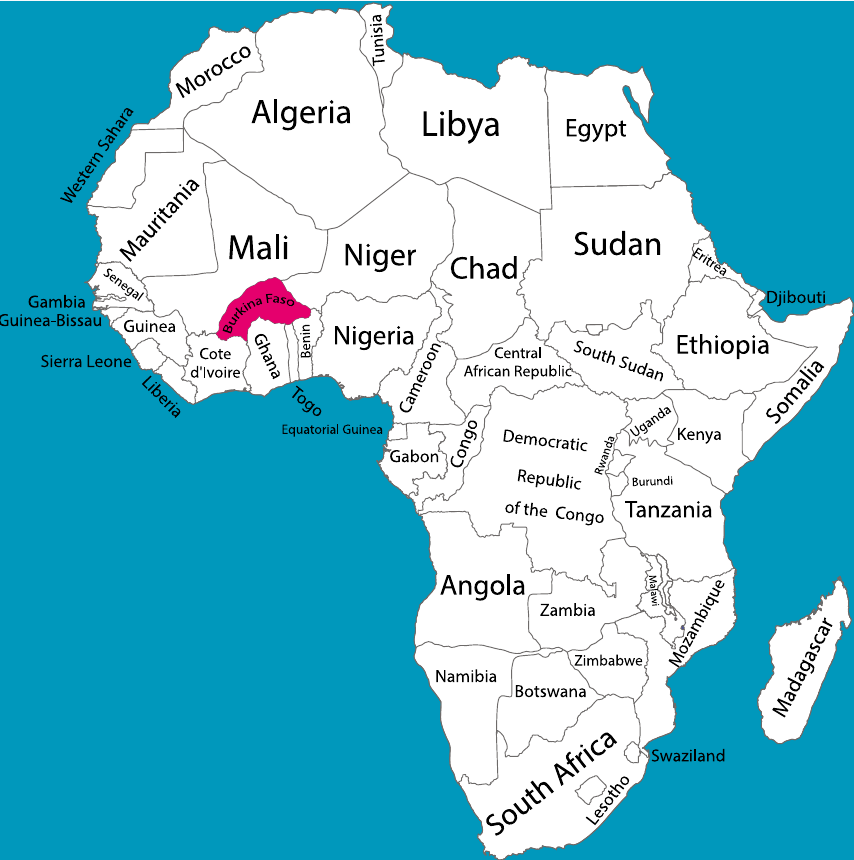
Burkina Faso is a landlocked country in western Africa that faces substantial challenges in achieving food security for its population.
Important
Most farming in Burkina Faso is subsistence farming, where individuals grow food primarily to feed themselves and their families rather than for commercial sale. This type of farming is vulnerable to environmental changes and provides limited income for farmers. More than 3.5 million people (around 20% of the population) lack food security, and 20.7% of the population are undernourished.
The country also imports much of its food, making it vulnerable to increases in global food prices. A severe drought in 2011 dramatically reduced crop yields, leaving villages with minimal food for both people and livestock. The situation worsened when refugees fled from neighbouring Mali due to conflict, placing additional strain on limited food supplies. Many people in Burkina Faso have had to rely on food aid from other countries. The combination of weak food production systems, unpredictable climate, and extreme poverty has created a cycle that perpetuates food insecurity for farmers and their communities.
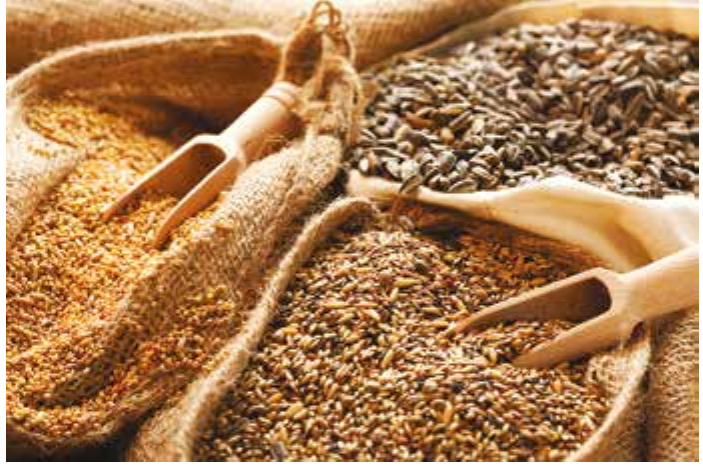
The World Bank funded the Agricultural Productivity and Food Security Program to address these challenges. The program's purpose is to improve farmers' capacity to increase food production and ensure year-round availability of cereals and livestock products in rural areas. By strengthening agricultural systems and providing resources to farmers, the program aims to break the cycle of food insecurity and reduce dependence on external food aid.
Implementation strategies
The program uses a comprehensive approach with four main action areas to achieve its objectives.
Improvement in food production and accessibility
Funding is provided to give farmers access to improved technology for food crop production. This includes better quality seeds that produce higher yields, fertiliser to enrich the soil, manure for sustainable soil management, and technologies that help farmers maintain healthy soil over time. These inputs help farmers grow more food on the same amount of land, increasing their productivity and income.
Post-harvest loss reduction
Many farmers in developing countries lose significant amounts of their harvest after it has been collected due to inadequate storage facilities. The program provides access to improved storage technologies that protect harvested crops from pests, moisture, and spoilage. By reducing post-harvest losses, farmers can keep more of what they grow, improving food availability throughout the year, especially during the lean season when fresh crops are not available.
Note
Post-harvest losses are a major problem in developing countries. Studies show that up to 30-40% of crops can be lost after harvest due to poor storage, handling, and transportation. By addressing this issue, the program helps farmers retain more of their hard-earned harvest without needing to grow additional crops.
Agricultural market coordination
The program improves existing agricultural information systems so farmers can make better decisions about what to grow and when to sell their produce. Farmers are supported to develop marketing cooperatives, which are groups of farmers who work together to sell their products and access credit. By working collectively, small farmers gain better negotiating power and can access financial services that would otherwise be unavailable to them.
Management and monitoring
Funding is provided for the equipment, technical assistance, and training needed to implement the program effectively. Regular monitoring and evaluation ensure the program is meeting its objectives and allow for adjustments to be made when needed.
Community work and women's participation
A distinctive feature of the program is its approach to land preparation and distribution. Both male and female farmers are given the opportunity to participate in community work, such as clearing and preparing lowland areas for rice farming. This work involves removing rocks from the land, turning over the soil, organising plots, and constructing water retention systems that help keep fields moist during dry periods. The work is supervised by the regional Chamber of Agriculture, local community leaders, and local authorities to ensure quality and fairness.
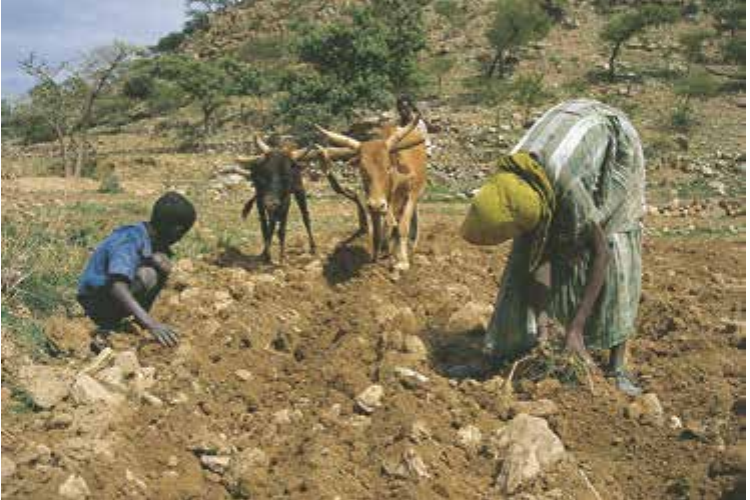
Farmers who contribute the most to these community efforts are rewarded with cleared plots of land, along with technical expertise, training, improved seed varieties, and fertiliser for growing rice. Importantly, female farmers have been the most active participants in the program. As a result, more than 45% of the prepared lowlands have been distributed to women, giving them control over productive land and the opportunity to generate income for their families.
Note
The program's approach to land distribution is merit-based rather than gender-based, yet women have emerged as the primary beneficiaries through their dedication and hard work. This demonstrates how creating equal opportunities can lead to women's empowerment when barriers to participation are removed.
Program outcomes
The program has achieved significant results that have transformed lives and improved food security in Burkina Faso.
Impact on women
For women participating in the program, the changes have been life-altering. One female farmer explained the difference it made:
Example
Real-World Impact: A Female Farmer's Story
"It is difficult for women to possess land... now I have my own plot of land from which I produced four bags of rice. I distributed one to my neighbours, I sold the second to pay school fees, and the other two are to feed my family."
This quote illustrates how land ownership enables women to feed their families, contribute to their communities, and invest in their children's education.
Production increases
The program has successfully increased agricultural productivity across participating areas. A total of 7,820 hectares of land has been cleared for rice production, providing income for 30,000 producers, of whom 45% are women. In 2014, Burkina Faso saw an increase of 15,000 tonnes in rice production. These production gains result from farmers learning new techniques, such as water retention methods to keep fields moist and optimal fertilisation practices.
Access to credit through warehouse receipt system
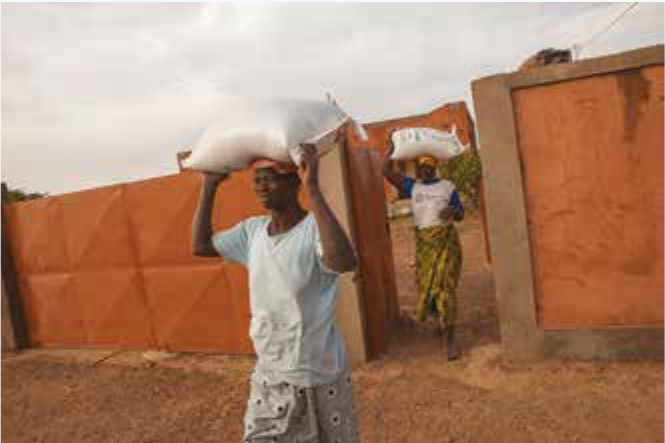
One of the program's innovative features is providing small rural farmers with access to credit from financial institutions. Banks and other lenders are typically reluctant to provide loans to small farmers who lack traditional forms of collateral (security provided to guarantee loan repayment). The program introduced a warehouse receipt system that allows farmers to use their harvests as collateral to obtain credit.
Example
Worked Example: How the Warehouse Receipt System Works
Step 1: A farmer takes their harvest to a local warehouse, which is secured with two padlocks—one held by a microfinance institution and one by a farmer's association.
Step 2: Upon delivering the harvest, the farmer receives credit that can be used to buy essential inputs for the next planting season, pay for children's school fees, or invest in other income-generating activities.
Step 3: Instead of selling immediately after harvest when prices are low due to abundant supply, farmers can wait a few months until food stocks run low and prices increase.
Step 4: Once the harvest is sold at the higher price, the farmer repays the credit and purchases supplies such as seeds and fertiliser for the next growing season, creating a sustainable cycle of improved production.
Important
The warehouse receipt system solves a critical problem: small farmers traditionally cannot access credit because they lack collateral. By treating stored grain as collateral, the program gives farmers the financial flexibility to make strategic decisions about when to sell their crops, resulting in higher incomes and improved food security.
How the program promotes health and wellbeing
The Agricultural Productivity and Food Security Program promotes health and wellbeing across multiple dimensions by addressing the fundamental need for adequate nutrition.
Physical health and wellbeing
Access to sufficient food is essential for physical health and wellbeing. Food provides the energy needed for individuals to complete daily tasks and reduces the risk of malnutrition. Many nutrients in food are crucial for strengthening the immune system, so improved food security reduces the risk of illness and disease.
Better nutrition leads to a reduction in diseases associated with micronutrient deficiencies. These include iron-deficiency anaemia, congenital abnormalities and cretinism from iodine deficiency, and blindness caused by vitamin A deficiency. Given that iron-deficiency anaemia particularly affects pregnant women, improved nutrition helps reduce maternal mortality rates. Well-nourished mothers are more likely to give birth to healthy babies with strong immune systems.
Note
Micronutrient deficiencies, sometimes called "hidden hunger," affect billions of people worldwide. Even when people have enough calories, they may lack essential vitamins and minerals. The program's focus on diverse food production, including vegetables and nutrient-rich crops, helps address both calorie needs and micronutrient requirements.
Children who are adequately fed are less likely to suffer from diseases such as pneumonia, measles, malaria, and diarrhoea. If they do contract these illnesses, well-nourished children have a better chance of recovery. With proper nutrition, children's growth is no longer stunted by malnutrition and hunger, allowing them to reach their full physical potential.
Social health and wellbeing
When people have access to sufficient quality and quantity of food, they have the energy to attend school or work regularly. This promotes social health and wellbeing by providing opportunities to develop and maintain relationships with peers, colleagues, and community members. Regular attendance at school or work creates social connections that are essential for wellbeing.
Emotional health and wellbeing
The program promotes emotional health and wellbeing by giving people a sense of pride and achievement. Farmers who successfully grow and harvest crops experience satisfaction from their accomplishments. Being able to provide for one's family and contribute to the community enhances self-esteem and emotional wellbeing.
Spiritual health and wellbeing
Through the program, women can own land, which contributes to spiritual health and wellbeing. Land ownership gives women a sense of purpose and belonging. Women involved in the program feel they are contributing meaningfully to their community, which brings a sense of connectedness and spiritual fulfilment.
Education and access to resources
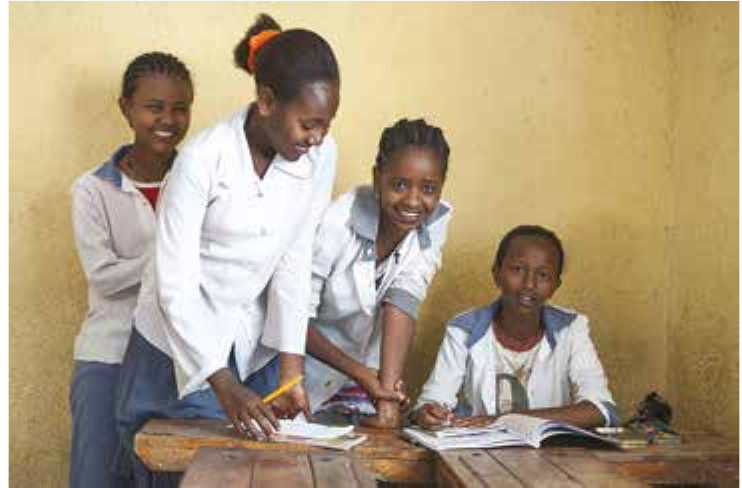
When children have the energy to attend school regularly, their literacy and numeracy skills improve. Education provides people with increased opportunities to earn higher incomes in the future. With greater income, people have better access to resources that promote physical health and wellbeing, including fresh food, healthcare services, clean water, appropriate clothing, and adequate shelter.
Note
The connection between nutrition and education creates a positive cycle. Well-fed children can concentrate better in school, leading to improved educational outcomes. Better education leads to higher incomes, which enables families to purchase more nutritious food, creating opportunities for the next generation.
How the program promotes human development
The program promotes human development by creating conditions for people to expand their capabilities and lead fulfilling lives.
Women's empowerment
Improved health and wellbeing has a positive impact on human development. Women participating in the program have become empowered, meaning they are more likely to lead productive, creative lives in accordance with their needs and interests. With greater empowerment, women become more actively involved in their communities, contributing their skills and knowledge to community development initiatives.
Economic development and GNI
The Gross National Income (GNI) of a country is linked to food security. Burkina Faso is more likely to achieve a higher GNI when communities have adequate food and adults can work productively. By generating income from their agricultural activities, adults can pay taxes to the government. These tax revenues can be invested in infrastructure that promotes health and wellbeing, such as roads for transporting goods and people, water systems for clean water supply, and healthcare facilities for medical services.
Note
Human development is about more than just economic growth—it's about expanding people's choices and capabilities. When farmers have food security, they can make choices about their children's education, invest in their health, and participate more fully in community life. These capabilities are the foundation of sustainable development.
Gender equality
The program works to achieve gender equality by allowing women to own their own plots of land. This creates essential conditions for human development. With equal rights to land ownership, women gain access to education, finance, control over other forms of property, and greater security. All of these factors contribute to improved human development by expanding women's capabilities and choices.
Case study: Food security in Chad
Background and context
The town of Gore in the southernmost part of Chad, near the border with the Central African Republic, has become a success story in addressing food security through horticulture. Large market garden plots at the northern entrance of the town now produce abundant crops including cabbage, carrots, cassava, okra, and other vegetables. The program provides fruit and vegetable seeds to refugees and returnees, who share the land with local residents.
Many refugees initially lacked experience in growing food. Emma Koningar, coordinator of the agriculture section of the Emergency Food and Livestock Crisis Response Project (PURCAE), explained that the biggest challenge was convincing refugees and returnees, many of whom were previously traders, to grow and produce their own food rather than depending on food aid. Access to adequate food is a central concern for the 70,000 people living in the Gore region refugee camp.
Implementation approach
After receiving a few hours of training in market gardening, refugees recognised its advantages.
Example
Refugee Perspective: The Benefits of Market Gardening
As refugee Malopi Decladore noted: "Market gardening is simpler than agriculture and requires less space."
This gives refugees the benefit of using less land while providing greater yield compared to large-scale agriculture.
Locals, observing the program's success, have also shifted their focus to smaller-scale horticulture, which is less vulnerable to floods and droughts than traditional large-scale farming.
Impressive results
The program has produced remarkable outcomes:
- 16 tonnes of fruit and vegetable seeds distributed
- 53,650 agricultural tools provided
- 29,664 tonnes of fruits and vegetables produced
- 255 tonnes of rice seeds producing 2,625 metric tonnes of rice
- 6,250,000 cassava cuttings producing 14,166 metric tonnes of cassava
This abundance of locally grown food contrasts sharply with the traditionally lean period in rural Chad between June and September. During this time, many families historically went hungry due to lack of food reserves, particularly impacting children.
Example
Transformation in Food Security: Expert Perspective
Molengar Ngoundo, a consultant for the Food and Agriculture Organization (FAO) of the United Nations, emphasised the transformation:
"In the past, people had virtually nothing to eat between July and August. Now their garden plots are not only providing them with food year-round but also with money from the sale of their produce."
Impact on food prices and availability
The increased number of refugees in the region had created additional food stress in recent years. The self-sufficiency promoted through the market garden program represents a shift from purely humanitarian food aid to building resilience and long-term development.
Local resident Eveline Goidje described the difference: "There is no longer a rush in Gore to stock up on grain during the lean period. We have an abundant supply of market garden produce year-round at affordable prices." Market gardeners regularly supply the town's market with tomatoes, cabbage, and maize. The increased supply has led to more affordable prices for essential foods.
Note
The program demonstrates how agricultural development can address both immediate humanitarian needs and long-term development goals. By teaching refugees and returnees to grow their own food, the program creates self-reliance while reducing pressure on humanitarian aid resources.
Germaine Memadji, a coordinator at the FAO office in Gore, noted the price changes: "Because of the availability of these fruit and vegetable seeds, the prices of certain food items, which were high during the lean period, are now tumbling. The price of a sack of sorghum was usually between CFAF 14,500 and CFAF 15,000 (roughly $25). With the current competition from market garden produce, the price is now CFAF 9,000 (approximately $15)."
Partnerships and reach
The program involves multiple organisations working together. It was implemented by the government of Chad with $16 million in financing from the International Development Association (IDA), which is the World Bank institution that helps the world's poorest countries. Technical assistance is provided by the FAO, the United Nations Children's Fund (UNICEF), and the International Organization for Migration (IOM). The benefits have reached 78,221 local households, refugees, and returnees, totalling approximately 469,326 persons.
Future development
Despite encouraging results, more work remains to be done. Francois Nankobogo, World Bank Country Manager for Chad, noted: "Overall, the results of this project have been very encouraging but are still tenuous. For this reason, we are now financing an additional project ($60 million)—the Refugees and Host Communities Support Project (PARCA). Its implementation is just beginning, and it is expected to facilitate strengthening of the gains made while expanding access to basic social services."
Important
While the Chad program has achieved impressive results, sustainability requires continued investment and support. The additional $60 million funding demonstrates the commitment to building on initial success and ensuring long-term food security for both refugees and host communities.
Summary
Key Points to Remember:
-
SDG 2 aims to end hunger by improving agricultural productivity, reducing food losses, and ensuring food security, particularly in countries facing environmental challenges and poverty.
-
The Burkina Faso program addresses multiple challenges: It provides improved seeds, fertiliser, storage technology, and market coordination to help farmers increase production and reduce losses. The warehouse receipt system enables farmers to use their harvest as collateral for credit.
-
Women's empowerment is central to success: Female farmers have contributed most to community work and received 45% of prepared land plots. Land ownership enables women to feed their families, pay school fees, and generate income, promoting gender equality.
-
Food security promotes health and wellbeing across all dimensions: Adequate nutrition strengthens immunity, reduces micronutrient deficiencies, enables school and work attendance, provides emotional satisfaction, and creates community connection. It also allows children to develop literacy and numeracy skills for future opportunities.
-
The programs promote human development: By empowering women, increasing national income through productive work, achieving gender equality in land ownership, and expanding access to education and resources, these programs create conditions for people to lead fulfilling lives and contribute to their communities.