Programs to Address the SDGs (VCE SSCE Health and Human Development): Revision Notes
📚Revision Notes
Programs to Address the SDGs
Introduction
Programs designed to address the Sustainable Development Goals (SDGs) focus on solving specific global challenges. This note examines aid programs implemented to end poverty, specifically under SDG 1 - No poverty. Two key programs will be explored: the Nuton Jibon Livelihood Improvement Program in Bangladesh and a goat farming initiative in Zambia.
Note
This note focuses on practical aid programs that demonstrate how international development initiatives address SDG 1 through targeted interventions in specific communities. Both programs emphasize women's empowerment as a key strategy for poverty reduction.
The Nuton Jibon Livelihood Improvement Program in Bangladesh
Background and purpose
Bangladesh faces significant poverty challenges. Approximately 47 million people live in poverty, with 26 million experiencing extreme poverty. Rural poverty is particularly severe, being almost three times higher than urban poverty levels. The situation is worsened by frequent natural disasters such as floods and cyclones, which cause severe damage to lives and livelihoods. Women are especially vulnerable in these circumstances.
Important
The poorest people in the poorest regions have the least ability to cope with shocks such as natural disasters. This vulnerability creates a cycle where poverty makes communities more susceptible to disaster impacts, which in turn deepens poverty.
The Empowerment and Livelihood Improvement Project, known as the Nuton Jibon project, was established to improve the livelihoods and quality of life of rural poor households, particularly the poorest and most vulnerable.
The Nuton Jibon Livelihood Improvement Program (NJLIP) provides financial support to 2500 villages across 12 districts in Bangladesh. Funded by the World Bank in partnership with the Bangladeshi government and Social Development Foundation, the program has several key purposes:
- Empower the rural poor, with particular focus on women
- Improve living conditions by increasing income from produce
- Develop skills and create employment opportunities for unemployed youth in poor households
- Provide grants directly to communities
- Establish links with financial institutions
- Support village organisations
- Prevent malnutrition through nutrition information and agricultural knowledge
Implementation
The Social Development Foundation is a government-established organisation in Bangladesh that helps people living in poverty develop their skills and overcome barriers caused by poverty. By helping people escape poverty, they can enjoy healthy lives, live with dignity, and participate in their communities.
Note
Why the program focuses on women:
The program specifically targets women because they are more likely to work collectively and repay loans. Additionally, when women control increased income, it is more likely to benefit the entire household and community. This strategic focus maximizes the program's impact across families and communities.
The program includes several major components:
Community strengthening: In selected rural areas, the program helps build and strengthen existing communities and institutions to support the poor.
Infrastructure and livelihood funding: Financial support is provided for small infrastructure projects and livelihood initiatives.
Education provision: Nutrition and agricultural production education is offered to help families improve their food security and farming practices.
Business development: The program helps people organise producer groups and cooperatives (groups of people who come together to meet their common economic, social and cultural needs through a jointly owned and democratically controlled business). Business and marketing knowledge is developed, along with links to existing markets.
Monitoring and evaluation: Progress and impact are monitored monthly, including summaries of key lessons learned, case studies and follow-up status reports.
Members of the Social Development Foundation work alongside community members, particularly women, to teach them financial management skills and business skills that enable them to escape poverty. Women receive small grants to establish income-generating activities. This income can then be used to apply for loans to expand their businesses and form cooperatives with other community members. These cooperatives provide greater efficiency, facilitate access to broader markets, and enable all members to generate additional income. The cooperatives are established and operated by the community for the community.
The program also provides women with education about nutrition and agricultural practices. Unemployed youth receive skills training that matches job opportunities being created within communities, resulting in secure and sustainable employment.
Outcomes
The NJLIP is expected to benefit around 500,000 poor households, reaching approximately 2.25 million people. Key outcomes include:
Income improvements: About 40 per cent of households have increased their income by at least 30 per cent. By 2021, 80 per cent of beneficiaries are expected to achieve at least a 10 per cent increase in their investment return.
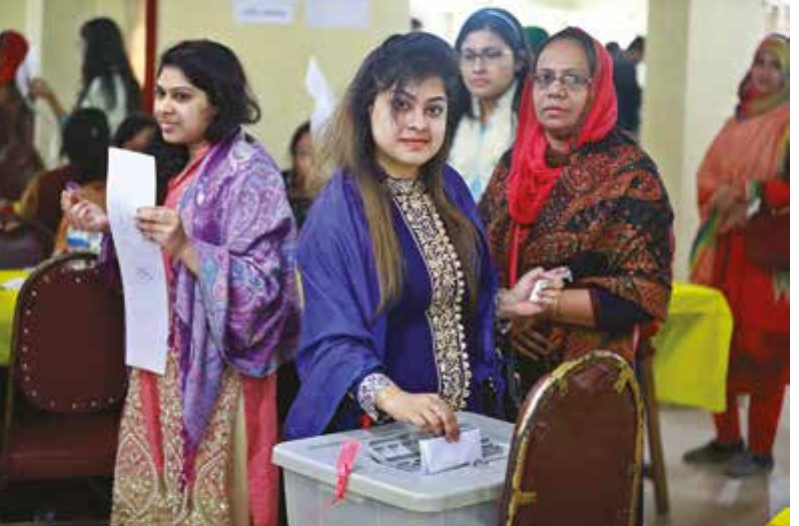
Women's empowerment: One million poor people have benefited from the program, with 95 per cent of beneficiaries being women. Women occupy most decision-making positions in village institutions. Through program participation, women are increasingly becoming household decision-makers. This has led to increased confidence, access to finance and savings among women. Women report they are more respected by their families and communities, have a larger role in household decision-making, and experience less domestic violence.
Important
Impact on women's lives:
The program has created transformative change for women participants. They report:
- Increased respect from families and communities
- Greater role in household decision-making
- Reduced domestic violence
- Enhanced confidence and self-esteem
- Improved access to finance and savings
This demonstrates how economic empowerment creates positive ripple effects across all aspects of women's lives.
Employment generation: About 25,000 youth have gained employment through the program.
Food security and nutrition: Income achievements have improved food security and diet quality. Participants report eating more, no longer going hungry, and having three meals per day. Almost 100 per cent of families are using sanitary latrines because their economic condition has improved and their consciousness and awareness have increased.
Case study: Halima's story
Example
Worked Example: Individual Impact of the NJLIP
Halima's experience demonstrates the program's transformative impact on individuals.
Initial situation: When her husband died, she was left to raise three daughters in a deteriorating house on a small plot of land. She worked hard but could only produce a meagre subsistence (self-sufficient farming to provide food for oneself and family) living. After her daughters married, Halima was alone and reduced to begging.
Program intervention: Through the Nuton Jibon program, Halima received a one-time grant of 5000 taka (local currency). This money enabled her to buy a few goats and chickens.
Outcomes achieved:
- Soon began selling eggs and goats
- Grew her income to about 50,000 taka from goats
- Generated 3000 taka per month from egg production
- Her steady income meant she could receive a small loan from a village credit organisation
- Invested this money in a nearby grocery shop, providing her with a regular income
This case demonstrates how a relatively small initial investment can create sustainable, long-term income generation.
Case study: Sheuli Begum and Anis Forayezi
Example
Worked Example: Household Transformation through NJLIP
Sheuli Begum and her husband, Anis Forayezi, struggled to farm a plot of land too small to feed their family of five. They had no house to live in, could not afford healthcare, and had to remove their children from school to help supplement the family's income.
Program participation:
- Sheuli became a member of a local NJLIP group
- Started depositing small amounts of savings to receive a loan from the village credit organisation
- Bought a dairy cow
Results:
- Sold four to five litres of milk each day
- Earned about 4500 taka each month
- Eventually saved enough to buy more cows
- Began sending her children to school
- Leased an acre of farmland for her husband to cultivate
This example shows how the program enables families to transition from extreme poverty to sustainable livelihoods through strategic investments and skills development.
How the program promotes health and wellbeing and human development
Promoting health and wellbeing
The NJLIP provides financial support and works to increase women's income while developing skills and generating employment for youth in poor households. By focusing on ending poverty, the program promotes health and wellbeing across multiple dimensions.
Physical health and wellbeing: Poverty is a major contributor to high rates of death and illness from infectious diseases, and a major cause of hunger and malnutrition. The program reduces the burden of diseases such as pneumonia, diarrhoea, malaria and measles. With regular income, program beneficiaries can afford healthcare, meaning diseases and illnesses can be diagnosed and treated. Access to healthcare also increases vaccination levels, further reducing deaths and disability from vaccine-preventable diseases.
Note
Nutrition and disease prevention:
The program prevents malnutrition by providing nutrition information and agricultural knowledge. Families now have access to food security and eat three meals each day. Preventing malnutrition results in reduced diseases associated with micronutrient deficiencies, such as:
- Iron-deficiency anaemia
- Congenital abnormalities and cretinism from iodine deficiency
- Blindness caused by vitamin A deficiency
A reduction in domestic violence also promotes physical health and wellbeing.
Social health and wellbeing: Improved physical health provides opportunities to attend school, go to work and form relationships with others, promoting social health and wellbeing. Women report enjoying greater status within their family and community, which increases relationships and communication skills.
Mental health and wellbeing: Positive self-esteem and a sense of achievement is attained, contributing to improved mental health and wellbeing. The focus on empowerment of the rural poor, particularly women, promotes mental health and wellbeing. Having greater status in the family contributes to positive self-esteem and confidence.
Emotional health and wellbeing: Empowerment contributes to resilience, increasing emotional health and wellbeing. Greater resilience also results from having a regular income and improved status within the family.
Promoting human development
The program promotes human development in several ways. A regular income, educational opportunities, work prospects and the empowerment of women contribute to all people in the village being able to enjoy a decent standard of living and a long and healthy life.
The program helps provide conditions that promote human development, including:
- Gender equality
- Human rights protection
- Opportunity to develop knowledge
- Opportunity to develop to full potential
With gender equality and women's empowerment comes greater opportunities for women to participate in the political and community life of their village and have greater control over decisions that affect their lives.
Exam tip
Important
Assessment guidance:
When discussing how a program promotes health and wellbeing, make sure you give specific examples from the program and link these to the key characteristics of the dimensions of health and wellbeing.
When discussing how a program promotes human development, provide specific examples from the program that you can link to key words and phrases in the human development definition.
Generic responses without specific program details will not achieve high marks.
Case study: Goats bring stability and income to female farmers in Zambia
Background
Sylvia Chiinda's situation illustrates the challenges faced by many women in Zambia. After her husband died, she was left with no savings or possessions - a devastating situation for a mother of seven children.
Zambia has experienced increased frequency and intensity of floods, recurrent droughts, and other climate risks that have reduced yields for farmers like Sylvia. With her maize and groundnut farm production declining, Sylvia was forced to find an alternative income to keep her family afloat. Her income - just US$15 in a good month - was barely enough to meet necessities for herself and her seven children.
The challenge of accessing finance
Important
Barriers to financial access for rural women:
Many rural families cannot obtain loans from mainstream banks to cope with weather extremes. They are poor and viewed as high risk, compounding the challenges they face.
For women, the first hurdle to establishing a business is affordable credit. Getting a loan from a commercial bank involves extensive form-filling and intrusive questioning. The absence of commercial banks in villages adds to their difficulties. Women cannot obtain loans because they have no land title to offer as collateral.
Women such as Sylvia are among the most vulnerable in Zambia's traditional communities, where age-old customs dictate women's lives. This vulnerability is worsened by the effects of climate change.
Program implementation
As part of wider government efforts, a UN coalition mobilised by UNDP, involving the Food and Agriculture Organization and the World Food Programme, together with the Ministry of Agriculture and Zambia Meteorological Department, is helping climate-stressed small-scale farmers tap into a drought-resistant source of income: goat rearing.
The project received initial funding of US$32 million from the Global Climate Fund (GCF) - the world's largest dedicated climate fund. It aims to bring new economic and social opportunities to Zambian women. This aligns with GCF's emphasis on inclusive climate action, ensuring all projects promote gender equality and women's empowerment.
Note
Program design and reach:
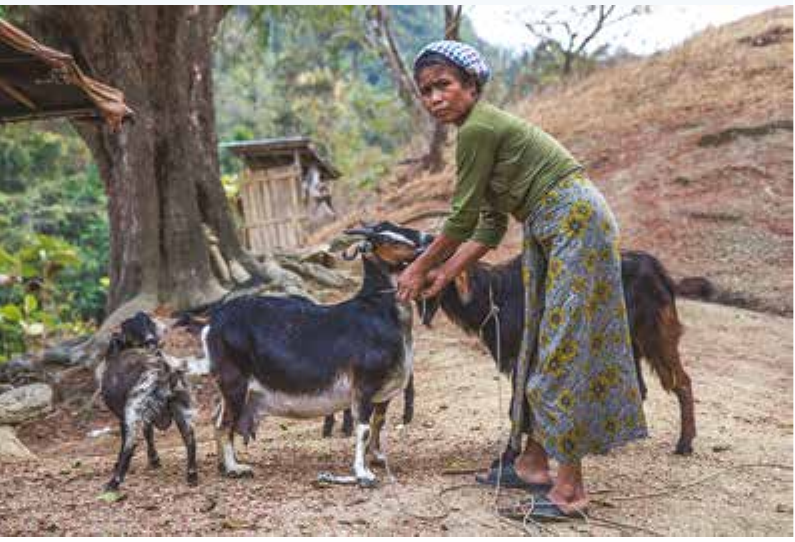
More than 8000 farmers, mostly women, were trained in goat rearing and animal husbandry. Each farmer received five goats initially and was given tools and training to prevent disease, build sheds, and manage breeding.
This approach capitalises on initial support while promoting community spirit through a "pass-it-on" model, raising income levels of farmers in the 16 districts where the project works.
Outcomes and individual stories
Example
Worked Example: Sylvia Chiinda's transformation
A year after receiving her initial goats, Sylvia had 30 goats, including additional goats she bought using proceeds from the sale of manure.
Actions taken:
- Sold 10 goats to build a steady income
- Passed on 5 kids to other women so they could begin the same journey to financial stability
Financial outcome: The US$238 Sylvia made from sales was spent on essential items, including:
- School fees for her children
- Fertiliser for farming
This demonstrates how the program creates both immediate income and long-term sustainability.
Example
Worked Example: Mpeza Phiri's experience
A single mother of six living in the Luamba Agriculture Camp in eastern Zambia reports her family has a steady income for the first time. They own 10 goats.
Key outcome: When crisis hits, farmers like Mpeza and Sylvia now have greater equity, and equity means resilience.
Additional benefits: Women not only sell goats to put food on their table, but also use goat manure as fertiliser in their gardens. This allows them to:
- Grow vitamin-rich vegetables in abundance
- Provide their children with healthier meals
- Access valuable sources of protein from goat meat and milk
- Improve climate-resilience and nature-friendly farming practices
Example
Worked Example: Charity Lungu's story
A mother of four who lives in the same camp as Mpeza has been able to support her family of 10 by selling some goats. Her children used to go to school hungry.
Impact on family wellbeing: The income has allowed her to buy them food, uniforms and books. She notes: "They are now able to focus on school, not on hunger."
This illustrates the direct link between income generation and educational outcomes.
Example
Worked Example: Anna Mumba's resilience
A woman living in Sipopa Village in Luangwa District, where people have suffered from recurring drought and poor harvests in recent years, states:
"I am not worried any more about my children going hungry or falling ill. I can always sell a goat if we have needs."
This demonstrates how the program provides both regular income and emergency financial security.
Remember!
Summary
Key Points to Remember:
-
SDG 1 aims to end poverty through targeted programs that address the specific needs of vulnerable populations, particularly women in rural areas
-
The Nuton Jibon Livelihood Improvement Program in Bangladesh provides financial support, skills training, and community infrastructure to help rural poor escape poverty, with 95 per cent of beneficiaries being women
-
Programs addressing poverty promote physical health and wellbeing by improving access to healthcare, preventing malnutrition, and reducing disease burden
-
Empowering women and increasing their income promotes all dimensions of health and wellbeing, including:
- Social (through improved relationships and status)
- Mental (through positive self-esteem)
- Emotional (through greater resilience)
-
These programs promote human development by ensuring gender equality, protecting human rights, and enabling people to develop to their full potential and enjoy a decent standard of living
-
The Zambia goat farming initiative demonstrates how providing alternative, climate-resistant income sources can help vulnerable women build financial stability and resilience while promoting community spirit through a pass-it-on approach